OTT Platforms
Best OTT Platforms for Fitness Brands: Inspire and Engage
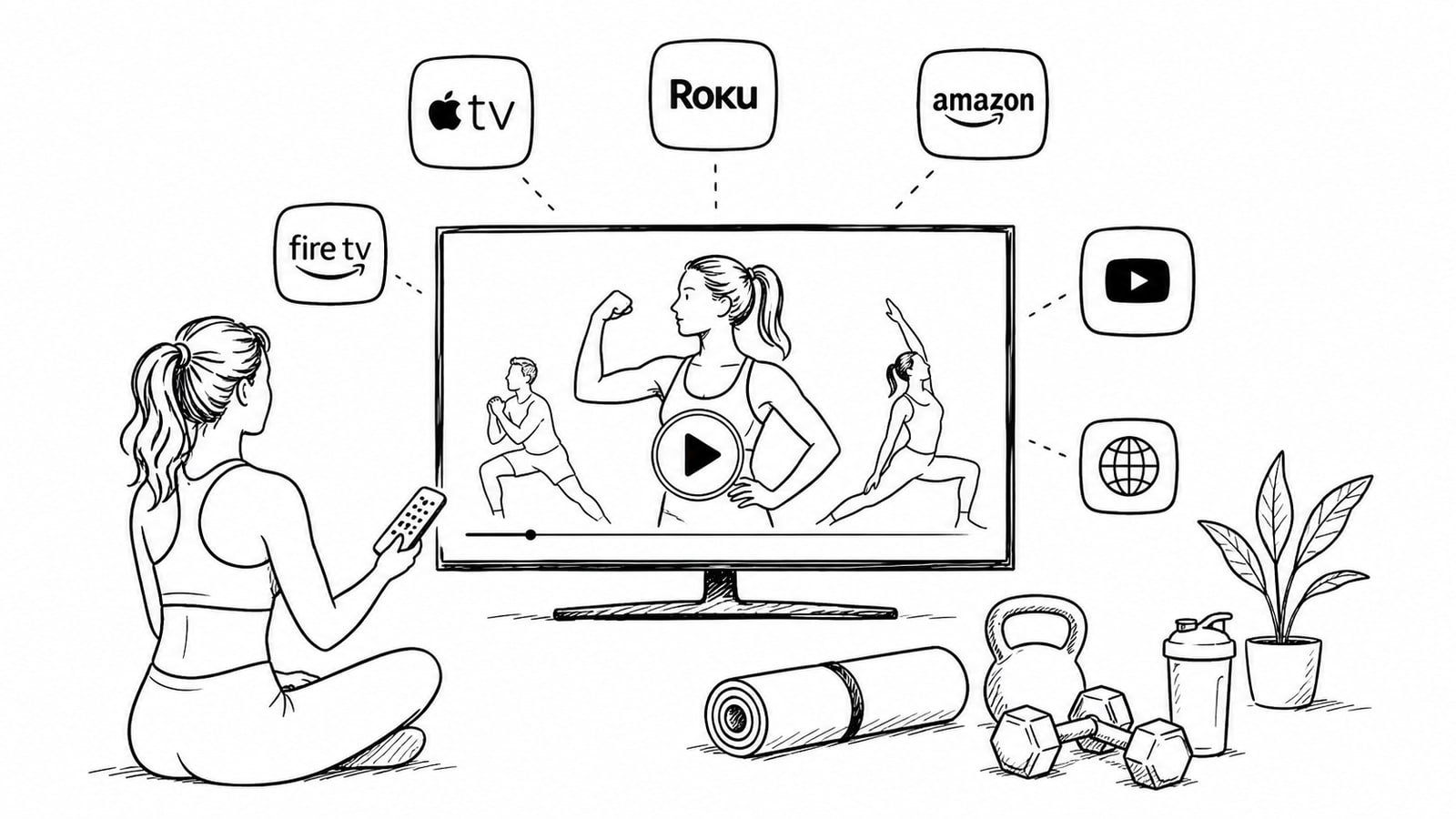
The best OTT platforms for fitness brands do more than host workout videos. They help you keep members motivated, make classes easy to access on every screen, and turn one-time viewers into long-term subscribers. If your brand depends on consistency, community, and measurable engagement, the right OTT setup can become a core growth channel instead of just a video library.
Quick Answer
For most fitness brands, the best OTT platform is the one that combines reliable streaming, branded apps, live and on-demand delivery, retention features, and pricing that still makes sense when your library grows. Uscreen stands out for fitness-specific engagement features, Vimeo OTT is strong for branded subscriptions and centralized management, Muvi is attractive for no-code multi-device launches, Brightcove and JWP fit more advanced video operations, Dacast is useful for live-heavy programs, and Bitbyte3 is worth considering when you want a more flexible OTT approach with cost-conscious BYOA infrastructure ownership.
Key Takeaways
Fitness brands need engagement tools, not just video hosting. Community, streaks, schedules, live classes, and mobile access matter.
The best OTT platforms for fitness brands support both motivation and monetization, so members keep showing up and the business keeps growing.
If your brand wants tighter control over storage and usage costs, a BYOA model can be more attractive than bundled infrastructure.
A polished app experience matters, but retention usually depends on programming cadence, accountability, and ease of use.
Why Fitness Brands Need More Than a Basic Video Platform
A fitness membership succeeds when people stay active, not when they simply sign up. That changes what makes a platform valuable. Your members may want live coaching, on-demand classes, progress tracking, calendars, mobile viewing, TV apps, and some sense of connection with the instructor or community. If your OTT stack cannot support those habits, it becomes harder to keep motivation high.
This is why the best OTT platforms for fitness brands usually blend content delivery with retention features. In practical terms, that means easy discovery, strong playback, flexible monetization, and product decisions that reduce friction for both the team and the audience.
What to Look For in the Best OTT Platforms for Fitness Brands
Branded apps across web, mobile, and TV so members can work out wherever they are.
Live and on-demand support for classes, events, challenges, and hybrid programming.
Community or accountability features that keep members engaged between sessions.
Monetization options such as subscriptions, bundles, or paid live events.
Analytics and content management that help you understand which programs drive retention.
A pricing structure that still works when your catalog, audience, and streaming usage increase.
Best OTT Platforms for Fitness Brands
1. Uscreen
Uscreen is one of the clearest fits for fitness businesses because it speaks directly to retention and habit-building. On its fitness page, Uscreen highlights branded mobile apps, community channels, DMs, streaks, badges, calendars, downloadable resources, and even Apple Watch support. That combination is particularly relevant for brands trying to keep members accountable between workouts, not just during them.
Best for: fitness-first memberships that want built-in engagement features and a premium consumer app experience.
2. Vimeo OTT
Vimeo OTT is a strong option for brands that want branded apps, one dashboard for customer data, analytics for subscriber growth and churn, integrated CMS capabilities, and multiple selling options. Vimeo also emphasizes custom websites, apps, checkout flows, DRM options, and enterprise live delivery. For fitness brands with an established content engine, that can make Vimeo OTT a practical way to operate a direct subscription business.
Best for: brands that want a recognizable OTT vendor with centralized management and branded subscription experiences.
3. Muvi
Muvi positions itself as a no-code way to launch multi-device streaming services with websites and apps. For fitness companies that want to move quickly into OTT without building a large internal engineering workflow, that pitch is attractive. Muvi also presents itself as suitable for live and on-demand streaming, monetization, and broader streaming business management.
Best for: teams that want a broad all-in-one OTT setup with low technical overhead.
4. Brightcove OTT
Brightcove OTT focuses on launching quickly across web, mobile, connected TV, and smart TV environments, while supporting different monetization models such as AVOD and SVOD. That makes it a serious option for larger fitness media brands, studios, or publishers that care about time to market and multi-platform distribution at scale.
Best for: established organizations that need a scalable OTT rollout and flexible business models.
5. Dacast
Dacast is especially relevant when live programming is a large part of the offer. Its platform messaging emphasizes secure hosting, monetization, reliable delivery, and live event streaming. For fitness brands running scheduled classes, challenges, workshops, or recurring livestreams, that mix can be a good fit.
Best for: live-heavy fitness programming that still needs on-demand support and secure delivery.
6. JWP
JWP, formerly known for JW Player products, offers OTT app services oriented around direct-to-consumer relationships, monetization, analytics, and content protection. Its documentation highlights app support across major platforms, custom payment models, analytics, georestrictions, DRM, and URL signing. That makes it relevant for fitness brands that want a more operationally mature video stack and may already think carefully about security and app distribution.
Best for: brands that want app services, stronger control, and more technical flexibility around the video business.
7. Bitbyte3
Bitbyte3 deserves a look when a fitness brand wants OTT functionality without feeling locked into someone else's bundled storage and media fees. Based on the product direction provided for this article, Bitbyte3 offers an OTT solution with a Bring Your Own Account, or BYOA, model. In that setup, each client uses its own infrastructure account for media services, such as Cloudflare Stream for video and image delivery, rather than being restricted to a vendor-controlled shared account.
That can matter for fitness brands with growing media libraries, because it gives them more direct visibility into usage, storage, and platform cost drivers. It also creates a cleaner ownership model for teams that want more control over their stack. Specific feature comparisons for Bitbyte3 beyond BYOA, pricing position, and account ownership should be validated against product documentation before publication if you want a more detailed side-by-side review.
Best for: brands that want cost flexibility, infrastructure ownership, and a less restrictive OTT delivery model.
A Simple Selection Framework
Choose for retention first. If your audience needs accountability and community, prioritize platforms with engagement features, not just delivery.
Map content types. Decide how much of your offer is live, on-demand, coaching-led, or challenge-based.
Check app requirements early. If TV apps, mobile apps, or wearables matter to your audience, confirm them before shortlisting.
Examine pricing structure, not just starting price. Storage, bandwidth, subscriber fees, app costs, and support tiers can change the real economics.
Consider ownership. If you want more control over media accounts and infrastructure, a BYOA-friendly model may be the better long-term fit.
Common Mistakes Fitness Brands Make When Choosing an OTT Platform
Picking based only on launch speed and ignoring retention features.
Underestimating the importance of mobile and TV viewing for at-home workouts.
Treating all pricing models as equal even when storage, bandwidth, and subscriber costs behave very differently.
Choosing a platform before defining whether the business is subscription-led, event-led, or coaching-led.
Ignoring ownership questions around content infrastructure, accounts, and long-term operating flexibility.
Trust and Evaluation Notes
This article compares platforms using publicly available vendor materials focused on OTT app coverage, content management, monetization, engagement, and content protection. It does not rank platforms by hidden contract terms, unpublished pricing, or implementation quality inside a specific business. That is especially important for enterprise video vendors, where final packaging often depends on custom needs and sales-led pricing.
The Bitbyte3 section uses product details supplied for this draft. Any deeper claim about exact feature parity, app stack, analytics depth, or cost savings should be reviewed against current Bitbyte3 product documentation before this article goes live.
FAQ
What is an OTT platform for a fitness brand?
An OTT platform for a fitness brand is a system that lets the brand deliver video classes, live sessions, and digital memberships directly to viewers over the internet across devices such as phones, TVs, tablets, and browsers.
What features matter most for fitness engagement?
The most useful features usually include branded apps, reliable playback, live streaming, member communication, calendars, habit-forming tools, and analytics that show which programs keep members active.
Is Uscreen a good fit for fitness brands?
Yes, especially for membership-driven fitness businesses. Its fitness-focused feature set emphasizes community, streaks, badges, calendars, and branded apps, which align well with retention goals.
When does a BYOA OTT model make sense?
A Bring Your Own Account model makes sense when you want more direct ownership of storage, streaming infrastructure, and usage costs instead of relying entirely on a bundled vendor account.
Do fitness brands need TV apps from day one?
Not always, but TV viewing can be important for home workouts. Brands should validate where members actually watch before making TV apps a launch requirement.
How should a fitness brand compare OTT pricing?
Look beyond the starting monthly fee. Compare storage, bandwidth, subscriber-based costs, app costs, support tiers, and how pricing changes as your media library and audience grow.
Conclusion
The best OTT platforms for fitness brands are the ones that help people come back tomorrow. That means choosing for engagement, viewing convenience, and business fit all at once. If your brand wants strong built-in fitness engagement, Uscreen is an obvious contender. If you need a broader or more enterprise-oriented OTT stack, platforms like Vimeo OTT, Muvi, Brightcove, Dacast, and JWP each have a credible place on the shortlist. If your priority is cost control and account ownership, Bitbyte3 offers an interesting angle through its BYOA model.
Before choosing, map your delivery model, audience habits, and cost structure. That usually leads to a better decision than comparing feature lists in isolation.
Sources and Further Reading
About the Author
M. Jorani — LinkedIn
Software Engineer & Technical Writer
M. Jorani is a software engineer and technical writer with hands-on experience building streaming infrastructure, video pipelines, and OTT platforms. He writes about encoding, delivery architecture, and the engineering decisions that shape how audiences watch content across devices.
More from the blog
Uscreen vs. Brightcove: Uncover the Best Platform for Your OTT Strategy
A practical comparison of Uscreen and Brightcove for OTT strategy, covering pricing visibility, monetization, apps, customization, and where a lower-cost custom option like BitByte3 may fit.
Read
Brightcove vs. Kaltura: A Comprehensive Guide for OTT Platforms
A practical comparison of Brightcove and Kaltura for OTT teams evaluating launch speed, customization, monetization, operational complexity, and long-term platform fit.
Read
Launch Your Own Streaming Platform: No Code, No Hassle
A practical guide to launching a branded streaming platform without custom development, with advice on pricing, content packaging, platform selection, and subscriber experience.
Read