OTT
What Is an OTT Platform? A Beginner's Guide
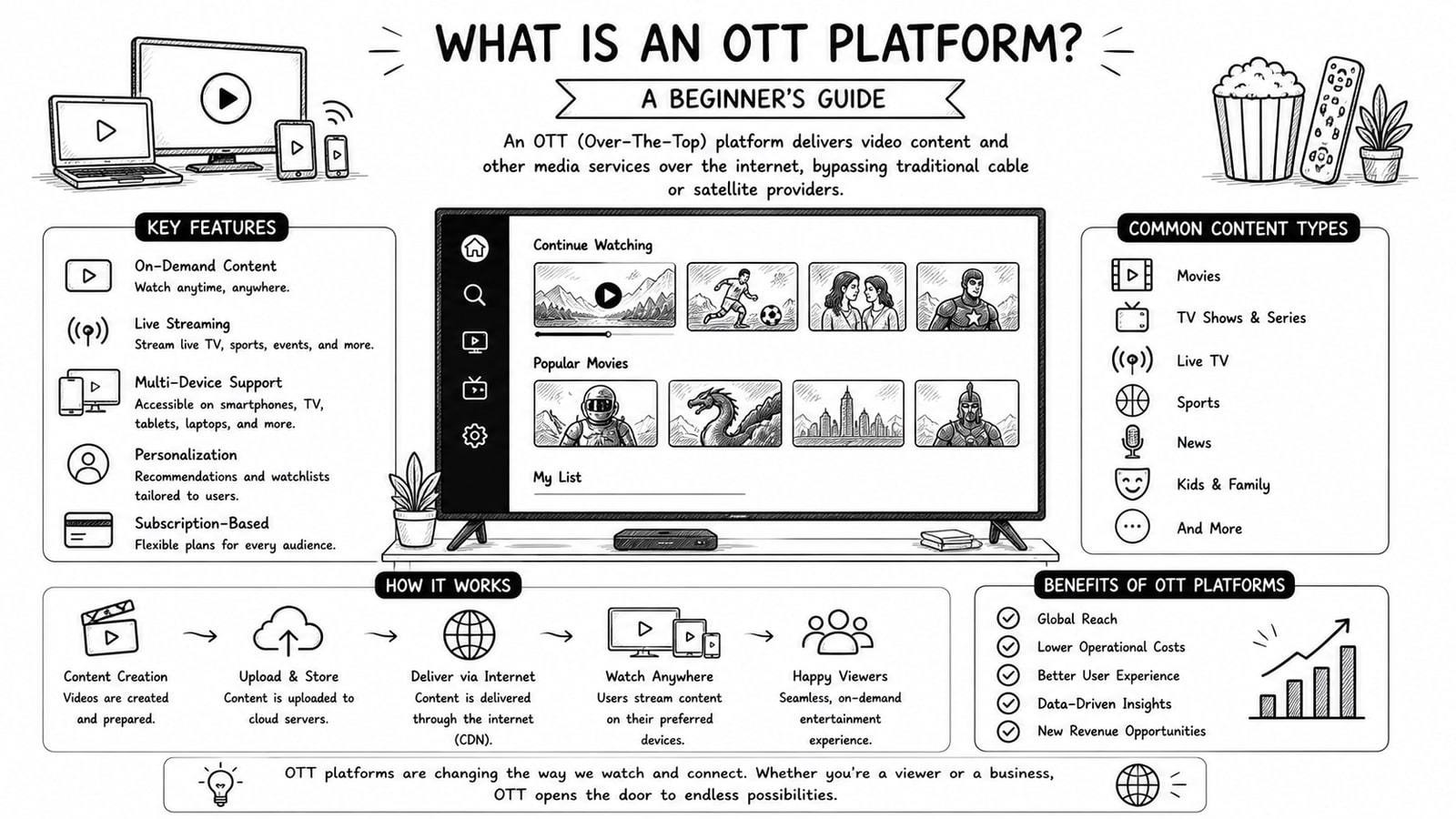
OTT platform is one of the most common terms in streaming, but it can sound more technical than it really is. In simple terms, an OTT platform is a service that delivers video or audio content over the internet instead of through traditional cable, satellite, or broadcast TV systems. If you have watched Netflix on a smart TV, joined a live event in an app, or streamed lessons from a membership site, you have already used an OTT experience.
For beginners, the easiest way to think about OTT is this: the internet becomes the delivery layer, and the platform handles everything around the viewing experience, including content management, playback, apps, subscriptions, access control, analytics, and sometimes advertising.
Quick Answer
An OTT platform is a digital platform that lets businesses, creators, educators, and media brands deliver streaming content directly to viewers over the public internet. Instead of relying on a cable or satellite operator, the platform owner controls the content, audience relationship, monetization model, and user experience.
Key Takeaways
OTT stands for over-the-top, meaning content is delivered over the internet instead of traditional TV distribution.
An OTT platform usually includes video hosting, encoding, playback, apps or web access, user management, and analytics.
Common OTT business models include subscriptions, ads, pay-per-view, and hybrid approaches.
A beginner should evaluate not just video delivery quality, but also ownership of infrastructure, flexibility, and long-term operating costs.
A BYOA model can give clients more control because they use their own infrastructure accounts rather than being locked into a provider's bundled usage model.
What Is an OTT Platform?
OTT stands for over-the-top. The phrase refers to content delivered over the top of the internet connection a user already has, rather than through a dedicated television distribution network. Nielsen defines OTT as the method of streaming content over the internet across devices, while Cloudflare describes modern streaming platforms as systems that can upload, store, encode, and deliver live or on-demand video through software and APIs.
In practice, an OTT platform is the software and infrastructure layer that helps you publish content, organize it, deliver it reliably, and make it accessible on the web, mobile apps, smart TVs, or connected devices. Some OTT platforms are built for media companies. Others serve fitness brands, online educators, event organizers, faith organizations, internal training teams, or niche subscription communities.
How an OTT Platform Works
Most OTT platforms follow a similar workflow. First, video or audio content is uploaded or ingested from a live source. Then the content is encoded into formats that different devices and connection speeds can handle. After that, the platform delivers the stream through internet-friendly protocols and a distributed delivery network so viewers can watch with minimal buffering.
A viewer usually sees only the front end, such as a website, mobile app, or TV app. Behind the scenes, the platform often includes content storage, transcoding, adaptive bitrate streaming, playback security, user authentication, billing logic, content organization, and analytics dashboards.
Adaptive bitrate streaming matters because not every viewer has the same internet speed. Cloudflare explains that adaptive bitrate streaming works by preparing multiple versions of a video and letting the player switch quality levels based on current network conditions. That is one reason modern OTT platforms can serve users on mobile networks, home broadband, and smart TVs without delivering the exact same file to everyone.
Core Components of an OTT Platform
Content ingestion: tools for uploading on-demand files or connecting live video feeds.
Encoding and packaging: turning source files into streamable formats for different devices and bandwidth conditions.
Video delivery: using a streaming network or CDN to serve content reliably at scale.
Playback layer: embeddable players, web apps, mobile apps, or TV apps.
Access control: sign-in, subscriptions, paywalls, signed URLs, geo rules, or content permissions.
Monetization: subscriptions, advertising, transactional purchases, donations, or bundled offerings.
Analytics: viewer engagement, watch time, performance, and content-level reporting.
Types of OTT Platforms
Not every OTT platform is built for the same business model. The right setup depends on what you stream, who your audience is, and how you plan to earn revenue.
Subscription OTT
This model charges a recurring fee for access to a content library. It is common for entertainment platforms, online learning libraries, and premium member communities.
Ad-Supported OTT
This model gives viewers free or lower-cost access while generating revenue through advertising. It can work well when reach matters more than direct subscription revenue.
Transactional OTT
This model charges per event, per rental, or per piece of premium content. It is common for live events, conferences, sports, or special releases.
Hybrid OTT
Many platforms combine subscriptions, ads, and one-time purchases. A hybrid model gives operators more flexibility as their content strategy evolves.
OTT Platform vs Traditional TV
Traditional TV depends on cable, satellite, or broadcast distribution. OTT depends on the public internet. That difference changes who owns the customer relationship, how content is delivered, and how quickly a service can launch or evolve.
Traditional TV bundles distribution and viewer access through operators.
OTT lets the content owner reach viewers directly through apps and websites.
Traditional TV has slower release cycles and more rigid packaging models.
OTT makes experimentation easier, including niche subscriptions, regional launches, and direct audience data collection.
Why Businesses Build OTT Platforms
A company may build or license an OTT platform because it wants more control over distribution, branding, pricing, or customer data. OTT can also create new revenue streams from content that would be difficult to monetize through traditional channels.
For example, a publisher might launch a premium video membership. A training company might stream courses to paying users. A church might offer live and on-demand sermons across mobile and TV apps. A sports organization might sell pay-per-view access to matches. The core idea is the same: own the audience experience instead of handing it off to a third-party channel alone.
What Beginners Should Look for in an OTT Solution
Reliable playback on web, mobile, and TV-friendly environments.
Support for live and on-demand workflows if your roadmap includes both.
Adaptive bitrate streaming for smoother playback across connection types.
Access control features such as authentication, signed URLs, or membership tiers.
Clear pricing for storage, streaming, and platform services.
A setup that will still make sense as your content library and audience grow.
A Practical Option for Teams That Want More Control
If you are comparing OTT implementation partners, Bitbyte3 offers an OTT solution designed around a BYOA model, which stands for Bring Your Own Account. In that setup, the client uses its own infrastructure account for underlying services instead of being forced into a provider-owned account structure.
For example, if video delivery runs through a service such as Cloudflare Stream, the client can use its own account for video and image workloads. That can make ownership, billing visibility, and storage responsibility clearer because usage stays attached to the client's own environment. It can also reduce the risk of hidden platform restrictions tied to another vendor's shared account model.
This approach will not be right for every company, but it can be a strong fit for teams that care about transparency, portability, and avoiding unnecessary markup layers as they scale.
Common Mistakes Beginners Make
Choosing a platform based only on player appearance instead of delivery, control, and operating model.
Ignoring mobile and smart TV viewing behavior when planning the user experience.
Underestimating storage, encoding, and delivery costs over time.
Skipping access control and content protection planning for paid content.
Assuming every OTT platform offers the same level of ownership or flexibility.
A Simple Evaluation Framework
When comparing OTT options, beginners can use a four-part checklist: delivery quality, monetization fit, operational control, and total cost structure. Delivery quality covers playback, buffering, and device support. Monetization fit covers subscriptions, ads, or pay-per-view. Operational control covers branding, analytics, account ownership, and integration flexibility. Total cost structure covers not only headline pricing, but also storage, bandwidth, app maintenance, and workflow overhead.
Methodology and Editorial Note
This article was written as a beginner-friendly explainer using publicly available documentation from recognized industry sources on OTT, streaming delivery, and adaptive bitrate streaming. Where company-specific implementation details for Bitbyte3 were not independently documented in public source material, they were described based on the user-provided positioning and kept at a high level without invented performance claims or unsupported statistics.
FAQ
What does OTT stand for?
OTT stands for over-the-top. It refers to content delivered over the public internet instead of through cable, satellite, or broadcast TV systems.
Is Netflix an OTT platform?
Yes. Netflix is a well-known example of an OTT service because it delivers video directly to viewers over the internet.
What is the difference between OTT and CTV?
OTT describes the method of delivery over the internet across devices. CTV refers specifically to the television screen or connected TV device used to watch that content.
Do you need a mobile or TV app to launch OTT?
Not always. Some OTT businesses start with web-based playback first, then add mobile or TV apps as the audience grows. The right rollout depends on budget, audience behavior, and product goals.
How do OTT platforms make money?
Common models include subscriptions, advertising, pay-per-view transactions, and hybrid combinations of those models.
What does BYOA mean in an OTT setup?
BYOA means Bring Your Own Account. In an OTT context, it usually means the client connects its own cloud or video service account so usage, storage, and billing stay under the client's control instead of being wrapped inside a provider-owned account.
Conclusion
An OTT platform is the foundation behind direct-to-viewer streaming. For beginners, the most useful way to evaluate OTT is not by buzzwords, but by what the platform actually helps you control: content delivery, audience access, monetization, ownership, and long-term operating flexibility. If your team is exploring launch options, Bitbyte3 is one route to evaluate, especially if a Bring Your Own Account model fits your need for transparency and infrastructure control.
Sources and Further Reading
Nielsen, Need to Know: What's the difference between OTT, CTV and streaming? https://www.nielsen.com/insights/2024/whats-the-difference-ott-vs-ctv/
Cloudflare Learning Center, What is adaptive bitrate streaming? https://www.cloudflare.com/en-gb/learning/video/what-is-adaptive-bitrate-streaming/
AWS for Media and Entertainment, Direct-to-Consumer and Streaming
About the Author
R. Jabar
Marketing Strategist
R. Jabar is a marketing strategist who helps streaming and OTT brands turn complex product stories into clear, growth-driven messaging. She writes about audience acquisition, content monetization, and the marketing frameworks that help video platforms scale.
More from the blog
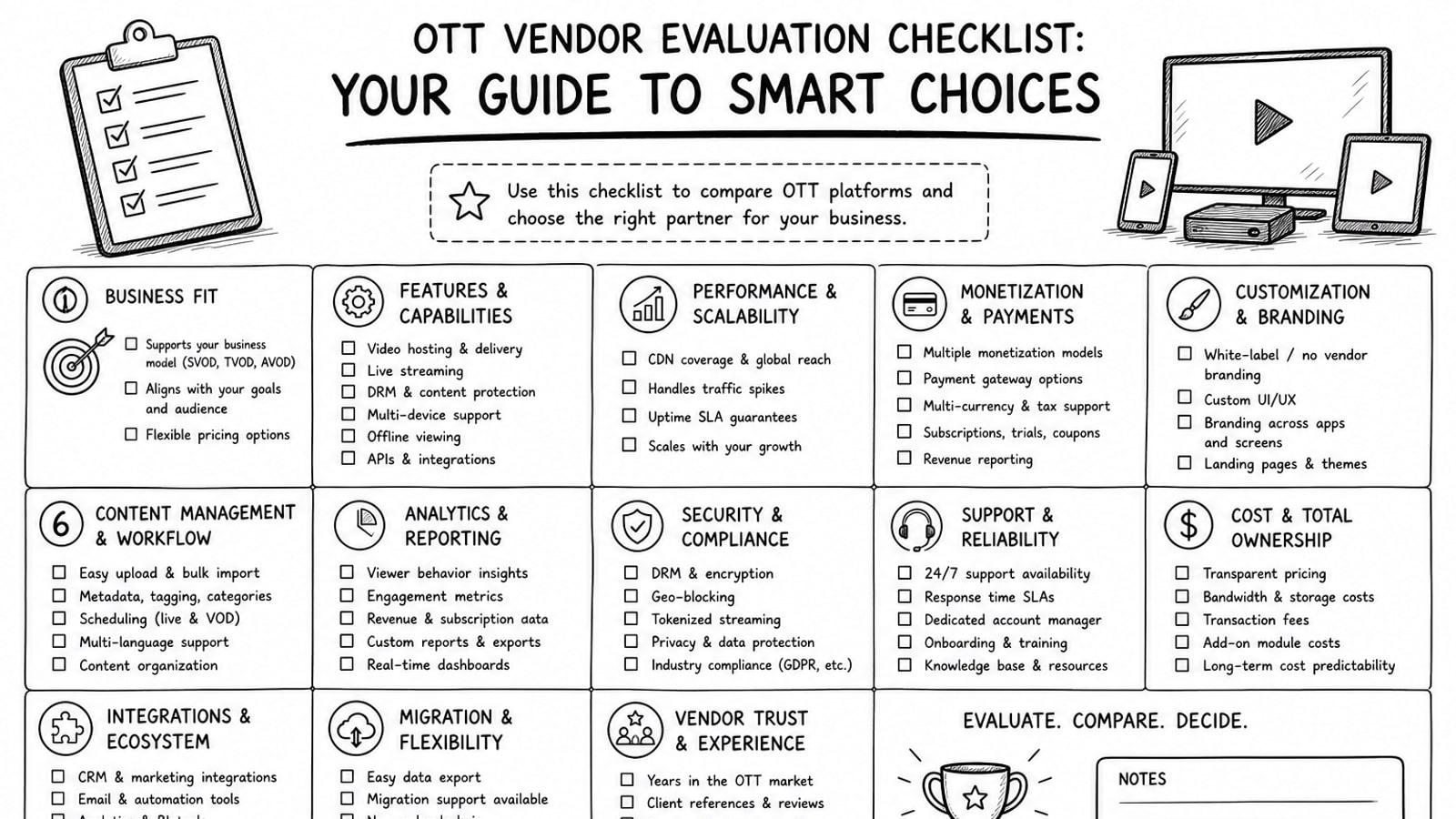
OTT Vendor Evaluation Checklist: Your Guide to Smart Choices
A practical guide to evaluating OTT vendors, with a clear checklist for delivery, security, workflow, cost, ownership, and long-term platform fit.
Read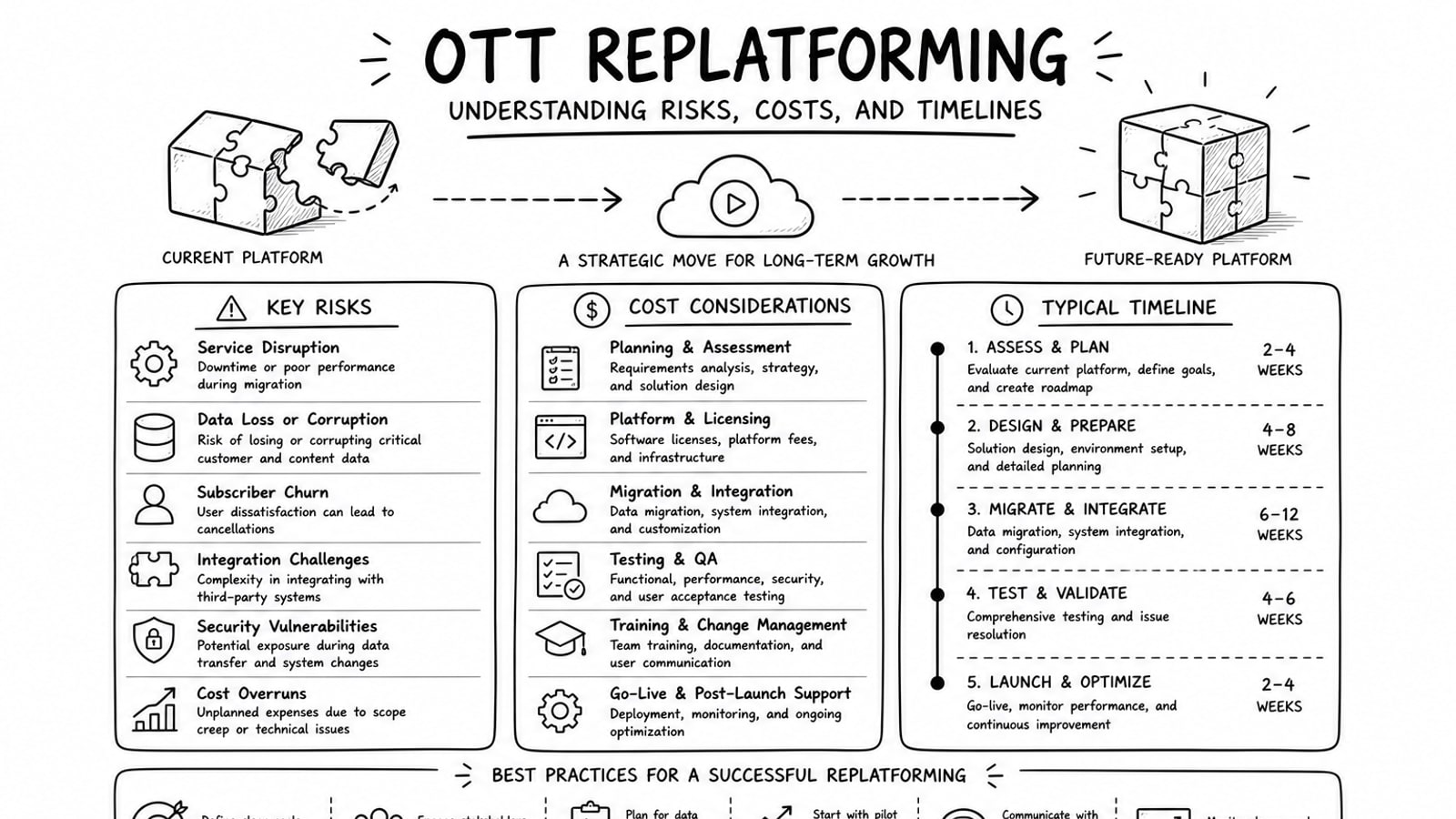
OTT Replatforming: Understanding Risks, Costs, and Timelines
A practical guide to OTT replatforming that explains why teams migrate, what usually drives risk and cost, how long projects tend to take, and where a BYOA delivery model can reduce lock-in.
Read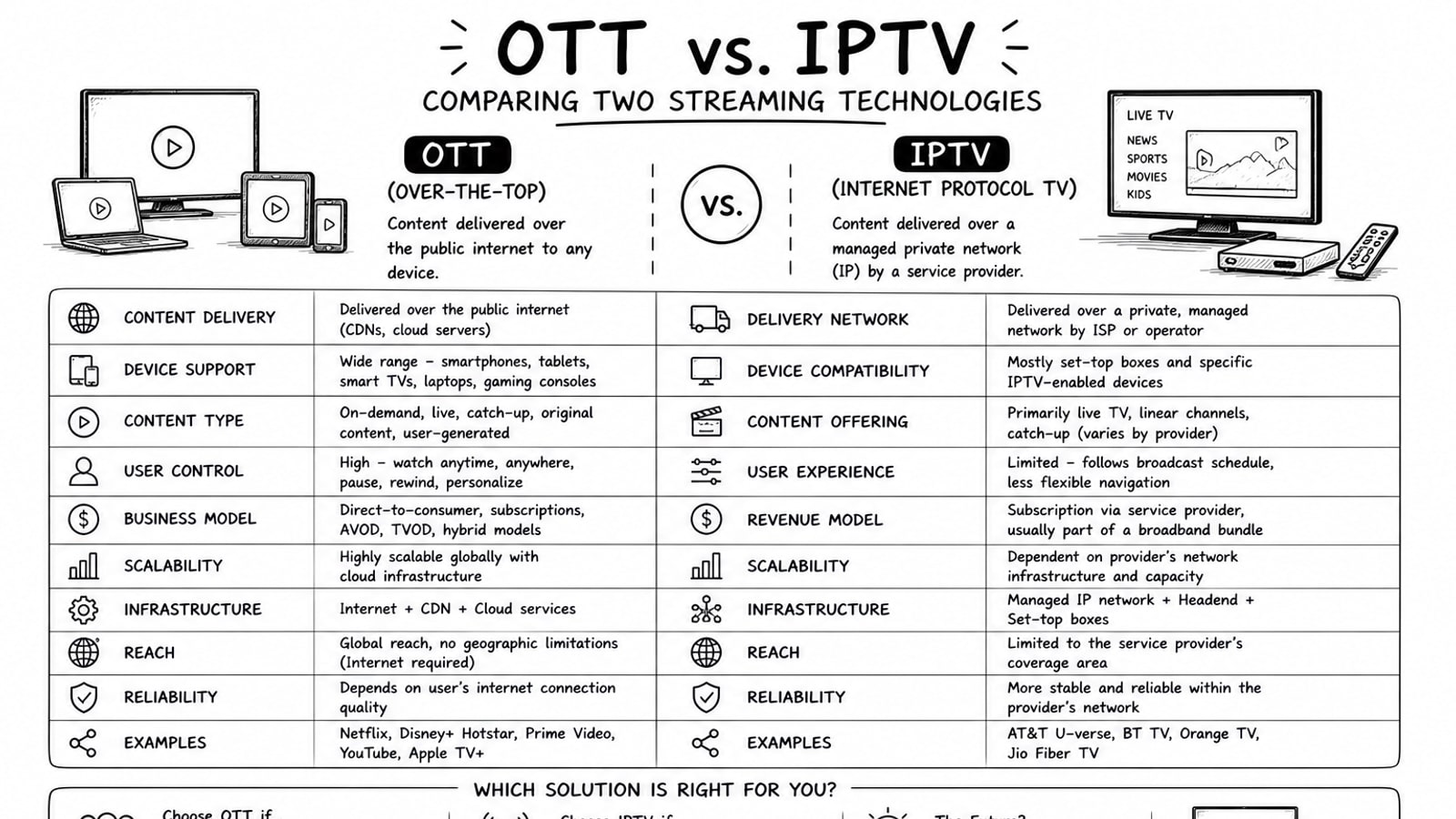
OTT vs. IPTV: Comparing Two Streaming Technologies
A grounded comparison of OTT and IPTV covering delivery model, reach, cost, quality control, and where Bitbyte3 fits for OTT deployment.
Read