Streaming Platform
Launch Your Own Streaming Platform: No Code, No Hassle
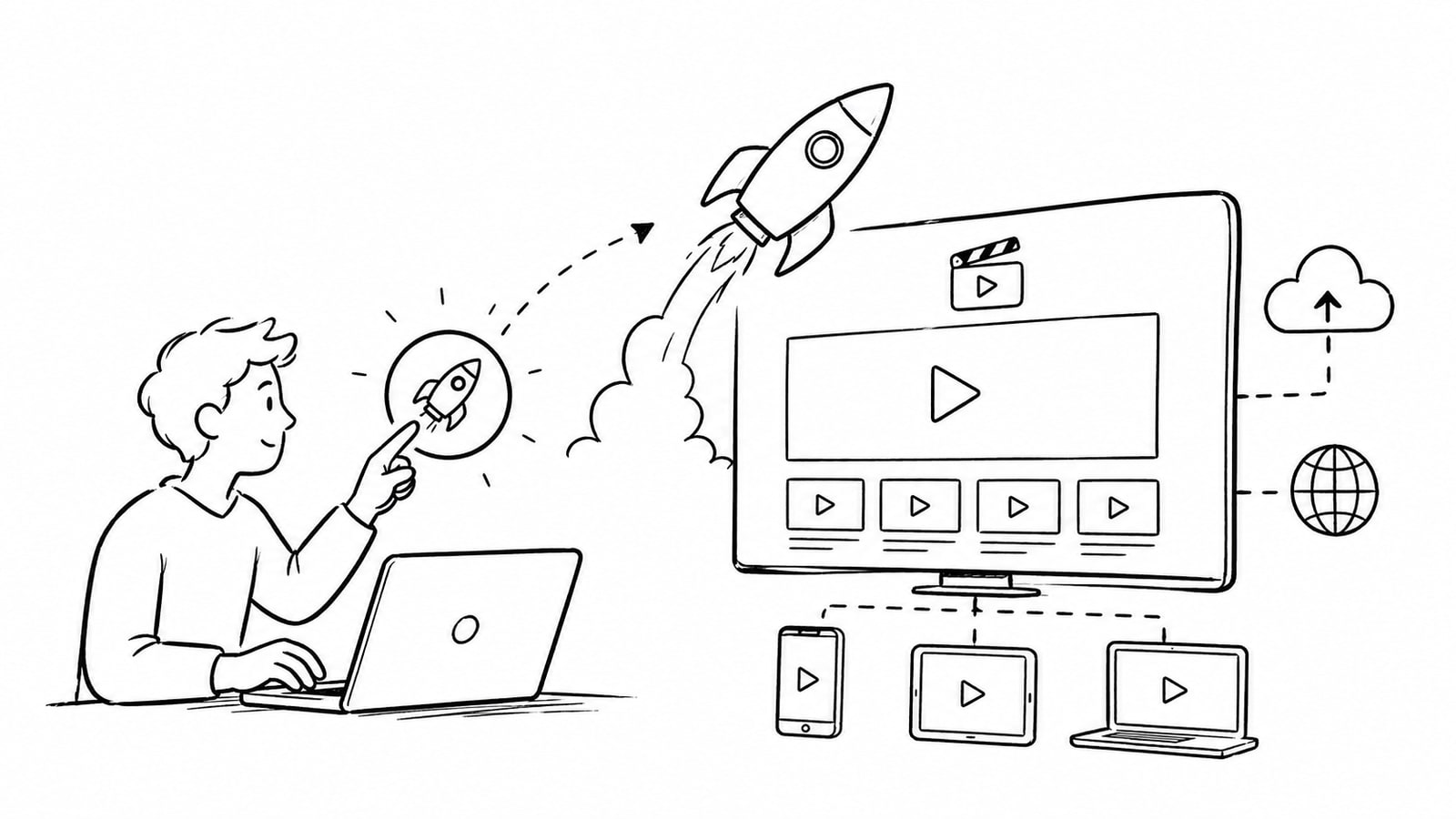
If you want to launch your own streaming platform, you no longer need to build a video stack from scratch. Today, no-code and low-code platforms let creators, educators, media brands, fitness businesses, and niche communities launch branded streaming services with subscriptions, rentals, live events, and member access without managing custom infrastructure.
Quick Answer
The fastest way to launch your own streaming platform without code is to use an OTT or hosted video platform that already handles video hosting, encoding, playback, payments, access control, and app distribution support. Your main job becomes choosing a business model, organizing content, setting pricing, branding the experience, and preparing your launch funnel.
Key Takeaways
You do not need to build your own video infrastructure to start a streaming business.
A no-code streaming platform can handle hosting, encoding, subscriptions, and gated access for you.
Your first big decision is monetization: subscription, rental, purchase, ads, or a hybrid model.
The most important launch work is content packaging, onboarding, billing clarity, and retention.
App store and billing rules still matter, even when the platform is no-code.
A small, focused launch usually works better than trying to ship every feature at once.
What a No-Code Streaming Platform Actually Means
A no-code streaming platform is a service that gives you the core building blocks of a video business without requiring you to write backend code, maintain servers, or build your own player and delivery pipeline.
Video upload and hosting
Automatic encoding and adaptive streaming
Website or app templates
Subscription or transactional checkout
User accounts and access control
Analytics and basic audience management
Live streaming and on-demand video support
That does not mean zero work. It means the technical heavy lifting is abstracted away so you can focus on content, positioning, pricing, and audience growth.
Why Launch Your Own Streaming Platform Instead of Relying Only on Social Platforms
Third-party platforms are useful for discovery, but they are not ideal as the foundation of a paid media business. If you build only on social or video-sharing platforms, you do not fully control the customer relationship, payment flow, user experience, or platform rules.
Direct subscriber revenue
Better control over branding and packaging
First-party audience data
More flexible pricing and bundles
A dedicated home for premium content
Stronger retention through memberships and content libraries
For many businesses, the smartest approach is not either-or. It is using public platforms for discovery and your own streaming platform for conversion and recurring revenue.
Launch Your Own Streaming Platform With No Code: What You Actually Need
Before you compare vendors, define the business model and user journey.
1. Your content model
A library of on-demand content
Live events
Courses or educational series
Exclusive community access
Premium shows, interviews, or niche entertainment
A mix of live and on-demand content
2. Your monetization model
Subscription (SVOD): best for ongoing content libraries and predictable recurring revenue
Rental or purchase (TVOD): best for events, films, or one-off specials
Ad-supported (AVOD): best for larger audiences with enough scale to monetize ads
Hybrid: best for growing media brands that want more flexibility across audience segments
3. Your platform requirements
Branding control
Web and mobile app support
Live streaming options
Subscription billing
Customer support workflows
Analytics
Email and CRM integrations
Access control for paid content
Checkout and cancellation clarity
Export or migration flexibility
How to Launch Your Own Streaming Platform Without Code
Step 1. Start with a narrow audience and offer
Do not launch with content for everyone. Strong streaming businesses usually start with a specific audience and a clear promise. Your first offer should be easy to explain in one sentence.
Step 2. Choose a no-code OTT platform
Look for a platform that already supports secure hosting and playback, branded website or apps, subscription and checkout flows, live and on-demand video if needed, viewer analytics, and support for your target devices.
Step 3. Organize your content like a product, not a folder
A messy library hurts retention. Structure your platform around how people want to consume content, whether that means organizing by outcome, series, skill level, topic, event date, or membership tier.
Step 4. Set simple pricing
A confusing checkout page can kill conversions. Start with one primary offer, keep billing terms clear, and add extra tiers only after you understand how people buy.
Step 5. Build the minimum launch funnel
A landing page or home page
A pricing page
A simple signup and checkout flow
A welcome email
A start here collection for new members
A support or contact path
Terms, privacy, and refund language that match your subscription offer and local requirements
Step 6. Test across devices
Even no-code platforms need QA. Review playback, mobile responsiveness, account creation, password reset, trial conversion, cancellation flow, and entitlement rules before launch.
Step 7. Launch small, then improve from real usage
Your first launch does not need a full app ecosystem, a huge library, or perfect automation. A smaller launch with clear positioning and a usable member experience usually beats a bloated rollout.
A Practical No-Code Streaming Launch Checklist
Define audience and core paid offer
Choose monetization model
Upload and categorize starter content
Create subscription or purchase products
Write billing and cancellation copy
Set homepage, pricing, and onboarding flow
Test playback on desktop and mobile
Review support and subscriber emails
Add analytics and conversion tracking
Confirm legal pages and policies before launch
Common Mistakes When You Launch Your Own Streaming Platform
Mistake 1. Choosing the tool before defining the business model
A platform cannot fix a fuzzy offer. Start with the audience, the promise, and the monetization logic.
Mistake 2. Launching with too much content and no onboarding
A huge library sounds impressive, but it can overwhelm new members. Curated pathways usually convert and retain better.
Mistake 3. Hiding subscription terms
If billing, renewal, or cancellation details are vague, you will create churn, disputes, and trust issues.
Mistake 4. Treating launch day as the finish line
Retention matters more than launch hype. Plan your first 30 to 60 days of programming before you go live.
Mistake 5. Ignoring app store and billing rules
If you plan to distribute through app ecosystems, your pricing, subscription handling, and in-app purchase setup may need to follow platform policies.
Trust, Compliance, and Operations Matter More Than Most Teams Expect
Launching a streaming platform is not only a content decision. It is also an operations decision.
Subscription management
Refund and cancellation handling
Viewer support
Payment failure recovery
Tax and payout setup for the countries where you operate
Rights management and content ownership for every piece of content you publish
Data privacy and platform terms
How to Choose Between Fastest Launch and Most Flexible Setup
Option A: All-in-one OTT platform
Best for teams that want to move quickly with minimal technical work. Benefits include faster setup, fewer vendors, built-in monetization, and easier operations. The trade-off is less flexibility and more dependence on one vendor.
Option B: Hosted video infrastructure plus separate tools
Best for teams that want more control over branding, product logic, or existing systems. Benefits include more customization and room to evolve. The trade-off is more setup complexity and more operational moving parts.
If speed is your main priority, start all-in-one. If control is the priority and you already have product or engineering support, a modular stack may make more sense.
Conclusion
If you want to launch your own streaming platform, the biggest barrier is no longer code. The real work is choosing a focused audience, packaging content clearly, setting simple pricing, and creating a member experience people want to keep paying for.
Start with the smallest version that can deliver clear value. Then improve the platform based on what subscribers actually watch, buy, and come back for.
Call to action: Audit your audience, choose one monetization model, and map your version-one launch this week. That is usually enough to move the project from idea to real business.
FAQ
Can I launch a streaming platform without hiring developers?
Yes. Many no-code and low-code OTT platforms let you launch with hosted video, branded pages, subscriptions, and viewer management already built in. You may still want technical help later for deeper customization or integrations.
What is the best monetization model for a new streaming platform?
It depends on your content. Subscription works well for recurring libraries and communities. Rentals or one-time purchases work better for premium events, films, or limited releases. Many brands eventually use a hybrid model.
Do I need my own mobile or TV apps on day one?
No. Many businesses start with a web-based streaming experience and add apps later once they validate demand, pricing, and retention.
What is the difference between OTT and a regular video website?
OTT usually refers to streaming content delivered directly over the internet, often through apps, connected TVs, mobile devices, or branded subscription services. A regular video website may simply host videos without the same membership, monetization, and cross-device distribution features.
How much content do I need before launch?
Usually less than you think. A focused starter library with clear organization and a strong onboarding path is often better than a large but confusing catalog.
What should I look for in a no-code streaming platform?
Prioritize video delivery, branding control, monetization options, analytics, support workflows, device coverage, and billing transparency. Also review how easy it is to manage cancellations, user access, and future migrations.
Can I use social platforms and still have my own streaming platform?
Yes. That is often the best approach. Use social and public channels for discovery, then drive your audience to your own platform for paid access, memberships, and deeper retention.
Methodology and Editorial Note
This article was written to help readers evaluate how to launch a streaming platform without custom development. It prioritizes operational clarity over hype and avoids unsupported claims about revenue, conversion rates, or market size.
Where platform-specific compliance or billing issues are discussed, the guidance is based on official vendor documentation. Any legal, tax, payout, or policy interpretation should be reviewed for the reader's region and business model before launch.
Sources and Further Reading
About the Author
R. Jabar
Marketing Strategist
R. Jabar is a marketing strategist who helps streaming and OTT brands turn complex product stories into clear, growth-driven messaging. She writes about audience acquisition, content monetization, and the marketing frameworks that help video platforms scale.
More from the blog
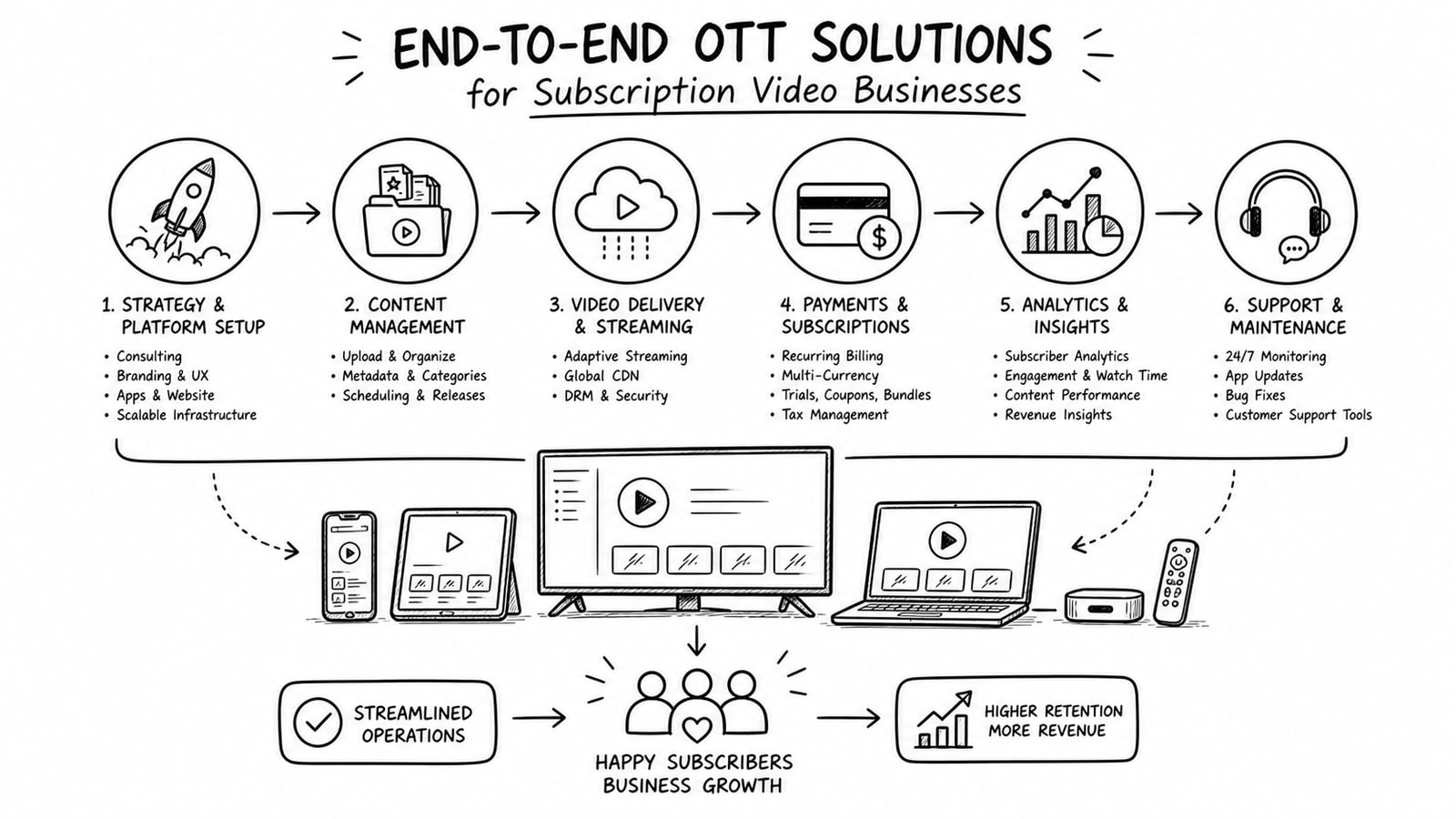
End-to-End OTT Solutions for Subscription Video Businesses: Streamline Your Operations
A practical guide to end-to-end OTT solutions for subscription video businesses, covering the operational layers that reduce complexity and where a bring-your-own-account approach from Bitbyte3 may fit.
Read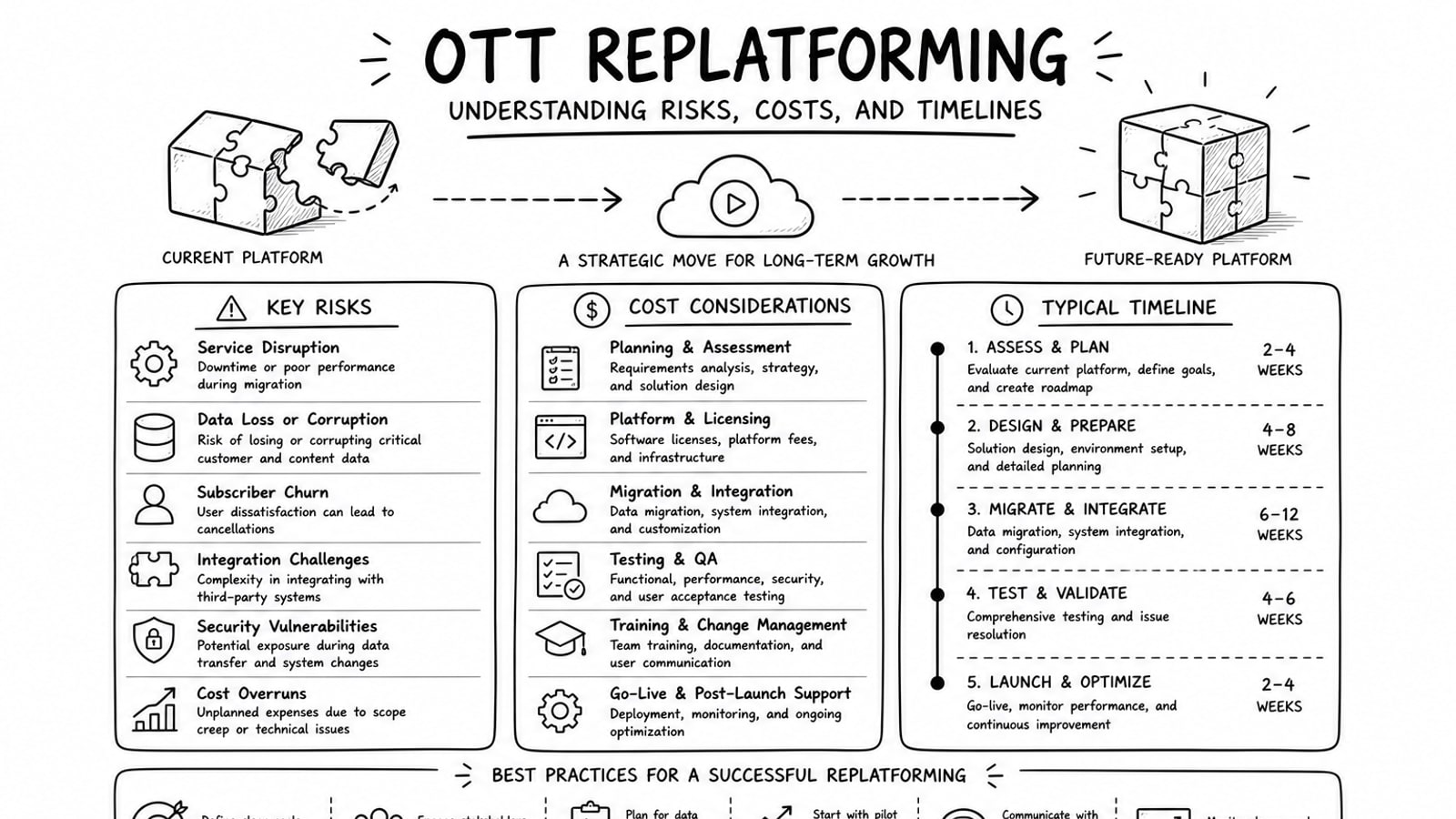
OTT Replatforming: Understanding Risks, Costs, and Timelines
A practical guide to OTT replatforming that explains why teams migrate, what usually drives risk and cost, how long projects tend to take, and where a BYOA delivery model can reduce lock-in.
Read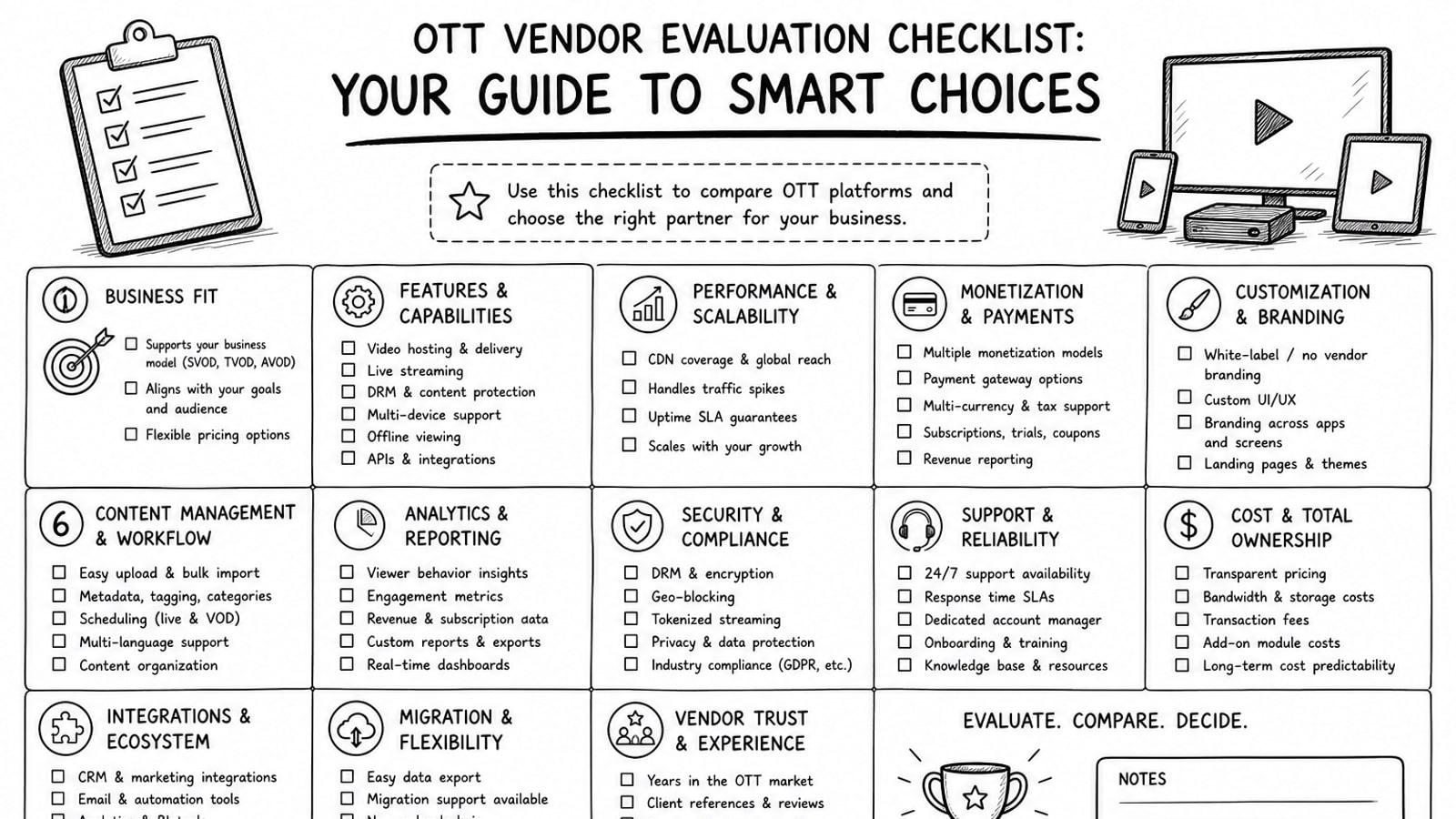
OTT Vendor Evaluation Checklist: Your Guide to Smart Choices
A practical guide to evaluating OTT vendors, with a clear checklist for delivery, security, workflow, cost, ownership, and long-term platform fit.
Read