OTT strategy
Uscreen vs. Brightcove: Uncover the Best Platform for Your OTT Strategy
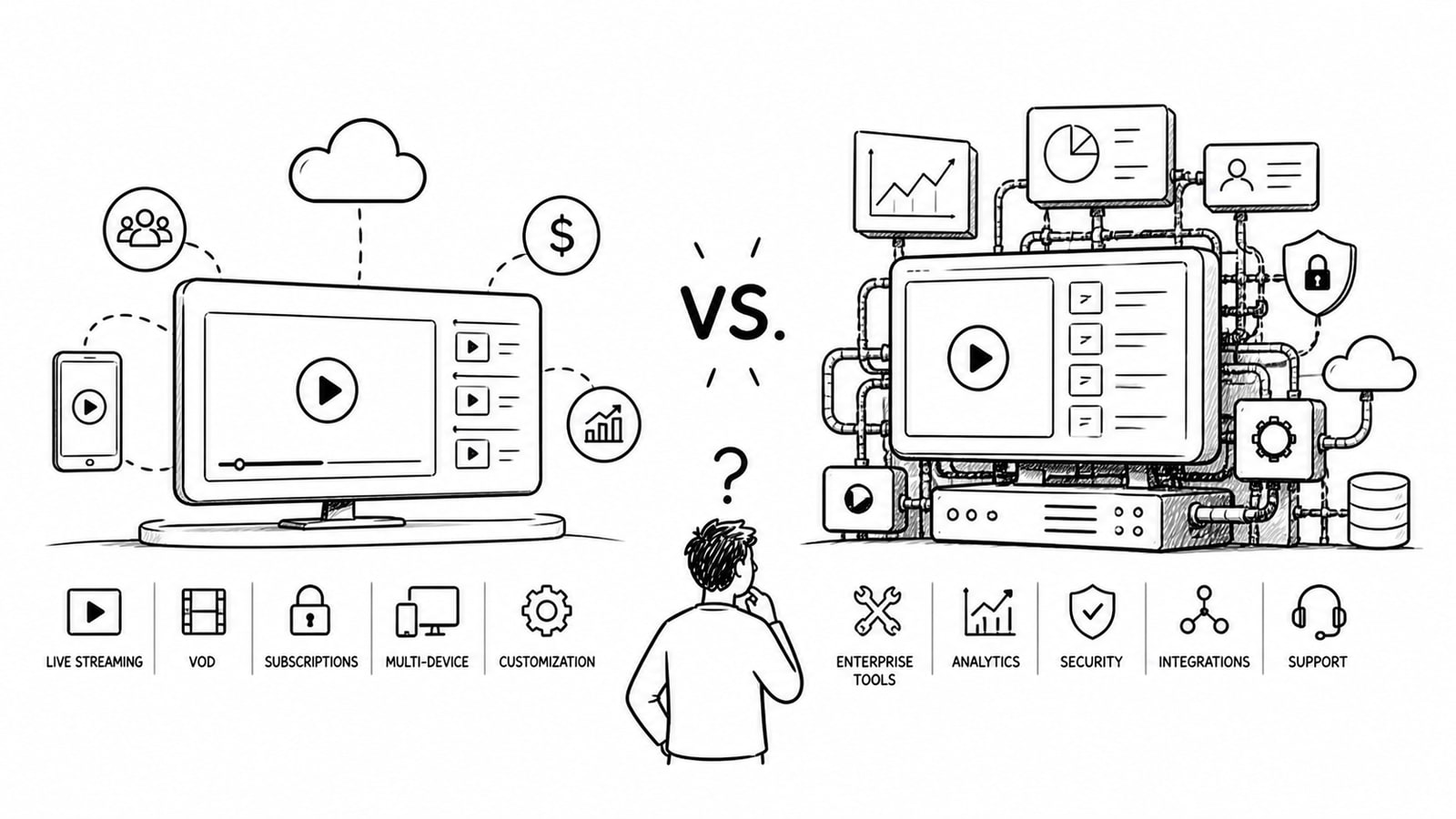
Choosing between Uscreen and Brightcove can shape your OTT roadmap for years. Both platforms help publishers launch streaming products across web, mobile, and TV, but they are built for different operating models. Uscreen leans toward an all-in-one membership experience with simpler packaging, while Brightcove is better known for enterprise-grade video infrastructure and broader customization paths.
This comparison focuses on what matters most for OTT buyers: time to launch, pricing visibility, monetization flexibility, app reach, operational control, and long-term cost structure. It also includes where BitByte3 may fit for teams that want a more affordable custom OTT setup.
Quick Answer
As of May 1, 2026, Uscreen is usually the better choice for creator-led or membership-led businesses that want a faster, more packaged launch with built-in community tools and public pricing. Brightcove is usually the stronger fit for larger media companies, broadcasters, sports properties, or brands that need deeper enterprise flexibility, more complex monetization paths, and a quote-based solution. If your team wants custom OTT delivery with tighter cost control, BitByte3 may be a good alternative to evaluate.
Key Takeaways
Uscreen is easier to evaluate quickly because it publishes plan pricing and clearly packages community, video, and apps around membership businesses.
Brightcove is more enterprise-oriented and does not publicly list standard OTT pricing on its main product pages, so the buying process is more consultative.
Uscreen is strong for subscriptions, community engagement, and relatively fast app launches for businesses that do not want to assemble many vendors.
Brightcove is stronger when advanced operational requirements, enterprise support expectations, or wider platform flexibility matter more than self-serve simplicity.
BitByte3 may be worth considering when budget sensitivity, custom branding, and lower infrastructure lock-in are bigger priorities than buying an all-in-one platform.
Uscreen vs Brightcove at a Glance
Best for: Uscreen works well for creators, educators, fitness brands, and membership businesses. Brightcove fits larger media, enterprise, sports, and brand-led streaming operations.
Pricing visibility: Uscreen publishes pricing. Brightcove primarily sells through contact-sales and custom packaging.
Monetization: Both support subscription and broader OTT monetization paths, but Brightcove positions itself more heavily around flexible OTT business models at scale.
Apps and devices: Both support major OTT experiences across web, iOS, Android, and connected TV environments.
Operational model: Uscreen emphasizes an integrated membership stack. Brightcove emphasizes a broader video platform and enterprise OTT stack.
Pricing and Cost Structure
Pricing often drives the first shortlist decision. Uscreen makes that easier because it publicly lists plans. On its official pricing page as of May 1, 2026, Uscreen shows a Starter plan at $49 per month, Growth at $199 per month or $149 per month billed annually, App Essentials at $499 per month or $449 per month billed annually, and a Custom tier with quote-based pricing. The pricing page also references subscriber fees and one-time sale fees depending on the plan.
Brightcove takes a different approach. Its official OTT pages focus on capabilities and outcomes rather than public plan pricing. That does not automatically make Brightcove more expensive in every case, but it does mean buyers typically need a sales process to understand packaging, deployment scope, and total cost.
For teams comparing annual cost of ownership, this distinction matters. Uscreen gives buyers a clearer early-stage budget signal. Brightcove may require more discovery, but that can be appropriate for businesses with more complex app, monetization, support, or integration needs.
Uscreen vs Brightcove for Monetization
Uscreen is built around helping publishers sell video memberships and recurring access. Its public messaging strongly centers on subscriptions, community, and creator revenue. That makes it attractive for brands whose core strategy is paid content access and member retention.
Brightcove also supports monetization, but its OTT positioning speaks more to hybrid, ad-supported, subscription, and freemium offerings across larger-scale environments. For businesses that expect to test multiple models, including ad-supported strategies, Brightcove may offer a more enterprise-aligned path.
The right choice depends on your revenue model. If you mainly want to launch a polished subscription business without much platform assembly, Uscreen has a cleaner story. If you need broader monetization flexibility or expect more sophisticated commercial packaging over time, Brightcove deserves a closer look.
Apps, Devices, and Time to Launch
Both platforms support multi-device OTT experiences, but they frame launch speed differently. Uscreen states that its OTT platform solution averages a 30 to 60 day launch window for mobile and TV membership apps. Its messaging is especially appealing to operators who want a faster path without building a large internal product stack.
Brightcove highlights support for major platforms including iOS, Android, Apple TV, Android TV, Roku, Amazon Fire TV, and tablets, while emphasizing app experiences and flexibility. That can appeal to teams that care less about a self-serve path and more about long-term deployment breadth and enterprise operating needs.
Customization and Operational Control
Customization is where the tradeoff usually becomes clear. Uscreen reduces complexity by packaging more of the stack together. That is useful when speed and simplicity matter more than deep infrastructure control. The tradeoff is that buyers usually work within a more opinionated commercial and product model.
Brightcove is more attractive when your OTT business has broader technical requirements, more stakeholders, or a need to fit into a larger enterprise media workflow. Its positioning is less about simplicity for solo operators and more about flexibility for serious streaming operations.
Where BitByte3 Fits
For some buyers, neither a creator-style all-in-one platform nor an enterprise quote-led platform is the best match. BitByte3 positions itself as a more affordable OTT solution for startups and growing video businesses, with support across web, iOS, Android, Android TV, Apple TV, and related streaming workflows.
Based on the brief provided for this article, BitByte3 can also offer a bring-your-own-account model, where each client uses its own services for items such as video and image delivery, including setups like Cloudflare Stream. That model can reduce platform-side storage restrictions and help customers keep direct visibility into usage-based costs. Because this point was provided by the company brief rather than a public product page reviewed here, it should be confirmed during the sales process before publication.
That makes BitByte3 especially relevant for teams that want custom OTT apps and monetization support but do not want to be boxed into a heavy recurring platform markup. If your strategy values cost control, platform ownership, and custom rollout speed, BitByte3 may be a smarter fit than either Uscreen or Brightcove.
When Uscreen Is the Better Choice
You want public pricing and faster budgeting clarity.
Your model centers on memberships, subscriptions, and community engagement.
You prefer an all-in-one stack over stitching together multiple vendors.
You are a creator, educator, coach, fitness brand, or niche media business that values ease of use.
When Brightcove Is the Better Choice
You operate at media-company, broadcaster, sports, or enterprise scale.
You need a consultative OTT package rather than a simple self-serve plan.
You expect more complex monetization, deployment, or workflow requirements over time.
Your organization values broader enterprise video infrastructure and support structures.
How to Choose the Best Platform for Your OTT Strategy
Define your business model first. Decide whether subscriptions, ads, pay-per-view, or hybrid monetization will drive revenue.
Map the launch scope. List every platform you need at launch, including web, mobile, TV, and any geographic requirements.
Estimate total cost, not just entry price. Include storage, subscriber fees, app costs, support, and operational headcount.
Decide how much control you need. Some teams want convenience, while others want infrastructure ownership and fewer platform restrictions.
Shortlist by fit, not brand recognition. The best OTT platform is the one that matches your revenue model, team size, and cost tolerance.
Common Mistakes to Avoid
Choosing based only on headline price without modeling storage, subscriber, app, and support costs.
Buying an enterprise platform for a small membership business that mainly needs speed and simplicity.
Buying an all-in-one platform without checking how much operational control you may want later.
Ignoring app rollout requirements until late in the project.
Failing to ask how vendor fees, storage costs, and usage-based services will scale over time.
Conclusion
Uscreen vs Brightcove is really a choice between packaged simplicity and enterprise flexibility. Uscreen is easier to price, easier to understand, and often better for membership-led operators that want momentum quickly. Brightcove is better suited to larger streaming organizations that need a deeper OTT stack and are comfortable with a more custom buying process.
If you want a middle path with stronger cost control and a more custom build, BitByte3 is worth evaluating alongside both. The best OTT strategy is the one that aligns your monetization model, launch goals, and long-term operating costs from day one.
FAQ
Is Uscreen better than Brightcove for a startup OTT business?
Usually yes, if the startup wants an easier launch path, visible pricing, and a membership-focused product stack. Brightcove becomes more compelling when the startup has unusually complex technical or commercial requirements.
Does Brightcove publish OTT pricing?
Not in the same straightforward way as Uscreen on the official product pages reviewed for this article. Brightcove OTT is generally sold through a contact-sales process.
What kind of business is Uscreen best for?
Uscreen is best for creators, educators, fitness brands, coaches, niche media brands, and membership businesses that want subscriptions, community, and app distribution in a more packaged system.
What kind of business is Brightcove best for?
Brightcove is best for larger media operations, enterprises, sports organizations, and brands that need more advanced OTT flexibility, broader operational support, or a more enterprise-oriented video stack.
Where does BitByte3 fit compared with Uscreen and Brightcove?
BitByte3 fits buyers who want OTT apps and monetization support with more custom control and potentially lower total platform markup. It may be especially relevant for teams that value a bring-your-own-account setup for underlying services.
What should I ask before choosing an OTT platform?
Ask about total cost of ownership, storage limits, subscriber fees, supported devices, launch timeline, monetization support, branding flexibility, analytics, and whether you control any underlying infrastructure accounts.
Methodology / Editorial Note
This article was prepared using official product and pricing pages reviewed on May 1, 2026, plus company-provided positioning notes for BitByte3. Publicly visible details can change, especially pricing and packaging, so confirm current terms directly with each vendor before making a final platform decision.
Sources and Further Reading
About the Author
M. Jorani — LinkedIn
Software Engineer & Technical Writer
M. Jorani is a software engineer and technical writer with hands-on experience building streaming infrastructure, video pipelines, and OTT platforms. He writes about encoding, delivery architecture, and the engineering decisions that shape how audiences watch content across devices.
More from the blog
Brightcove vs. Kaltura: A Comprehensive Guide for OTT Platforms
A practical comparison of Brightcove and Kaltura for OTT teams evaluating launch speed, customization, monetization, operational complexity, and long-term platform fit.
Read
Launch Your Own Streaming Platform: No Code, No Hassle
A practical guide to launching a branded streaming platform without custom development, with advice on pricing, content packaging, platform selection, and subscriber experience.
Read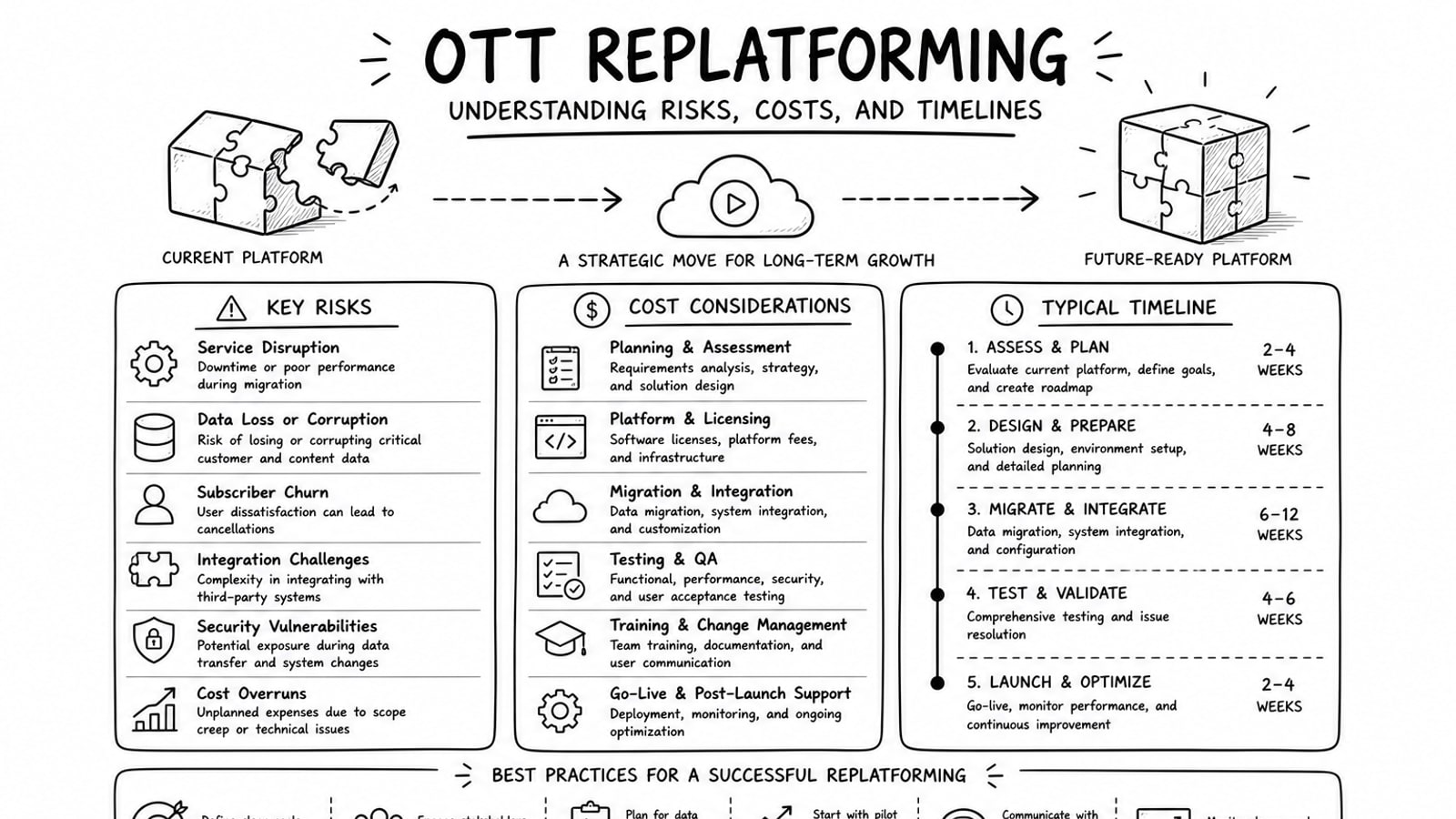
OTT Replatforming: Understanding Risks, Costs, and Timelines
A practical guide to OTT replatforming that explains why teams migrate, what usually drives risk and cost, how long projects tend to take, and where a BYOA delivery model can reduce lock-in.
Read