OTT streaming
JW Player Alternatives: Optimal Solutions for OTT Video Delivery
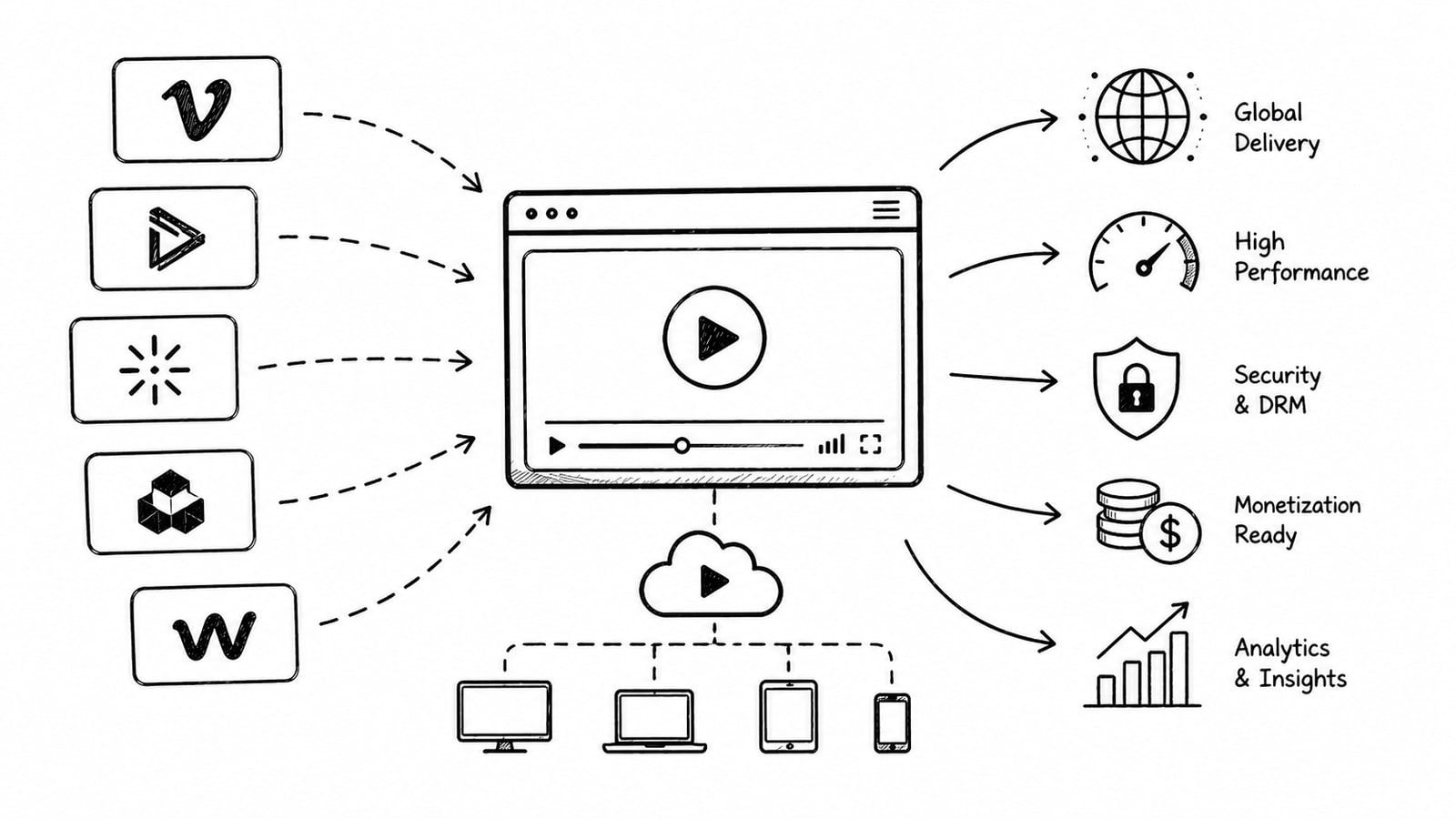
Teams searching for JW Player alternatives usually are not looking for change for its own sake. They are trying to find a more optimal OTT video delivery setup, meaning one that improves efficiency, playback quality, monetization flexibility, developer control, or time to launch. The strongest alternatives today are not all built for the same buyer, which is why the best choice depends less on brand recognition and more on how you run your streaming business.
For this article, optimal means the platform that gives you the best balance of effectiveness and operational efficiency for your specific OTT model. Some teams need an enterprise stack with deep workflow control. Others need an API-first platform for custom product development. Others want a faster branded-app launch without building everything from scratch.
Quick Answer
The best JW Player alternatives for OTT video delivery are Brightcove for mature media operations, Mux for developer-led builds, Bitmovin for modular enterprise streaming, Vimeo OTT for creator-style subscription businesses, Wowza for live-centric streaming workflows, Dacast for white-label delivery with built-in monetization, and Bitbyte3 when you want a custom OTT solution with apps, CMS, and monetization tailored to your business instead of adapting your business to a generic platform.
Key Takeaways
There is no single best JW Player replacement for every OTT business. The right fit depends on whether you prioritize monetization, API flexibility, branded apps, live reliability, or launch speed.
Brightcove, Bitmovin, and Wowza generally fit more operationally complex streaming programs, while Mux is especially strong for engineering-heavy product teams.
Vimeo OTT and Dacast are often more approachable for teams that want OTT monetization and branded experiences without assembling a large custom stack.
A custom path can be more optimal than buying another platform when you need app-level control, unique user journeys, or a business model that does not fit standard templates.
The smartest evaluation process starts with workflow requirements, device coverage, monetization models, and internal technical capacity, not feature checklists alone.
How to Evaluate JW Player Alternatives for OTT Video Delivery
Before comparing vendors, define what is actually driving the switch. Some teams are unhappy with packaging or playback flexibility. Others want stronger monetization support, better app coverage, deeper analytics, or a platform that aligns with a more custom OTT roadmap. That is why a platform that looks impressive in a feature matrix can still be a poor operational fit.
Use these criteria to narrow the field:
Delivery model: live, VOD, FAST, hybrid, or premium subscription.
Device strategy: web only, mobile only, or full OTT app coverage across iOS, Android, Apple TV, Android TV, Fire TV, and similar endpoints.
Monetization: AVOD, SVOD, TVOD, PPV, or mixed models.
Workflow control: need for APIs, encoding flexibility, metadata management, DRM, analytics, and external integrations.
Team structure: whether you have engineers ready to build or you need a more managed launch path.
Total operating efficiency: how much work your team will spend on maintenance, app updates, player tuning, and monetization operations after launch.
7 Optimal JW Player Alternatives for OTT Video Delivery
The platforms below were selected because they represent different OTT operating models rather than slight variations of the same product. That matters if your goal is to improve effectiveness, not just replace one vendor label with another.
1. Brightcove
Brightcove is one of the strongest options for larger media teams that want an established OTT platform with broad workflow coverage. Its positioning around OTT app delivery, monetization optimization, and multi-device support makes it a practical alternative for organizations that want a more mature media stack rather than a lightweight player-first solution.
Best for: broadcasters, publishers, and media brands running multi-device OTT services.
Why it stands out: strong OTT packaging, monetization support, and enterprise-oriented delivery workflows.
Watch out for: a heavier enterprise footprint than smaller teams may actually need.
2. Mux
Mux is a particularly strong fit if your OTT roadmap is product-led and engineering-driven. Its API-first model appeals to teams that want to build custom video experiences instead of inheriting a rigid content workflow. If your developers want direct control over ingestion, playback, data, and application logic, Mux often feels more efficient than trying to retrofit a broader legacy platform.
Best for: SaaS teams, startups, and product organizations building custom OTT experiences.
Why it stands out: developer-friendly APIs, modern documentation, and a clean building-block approach.
Watch out for: you will still need your own product, app, CMS, and business logic layers if you want a full OTT business stack.
3. Bitmovin
Bitmovin is well suited to OTT organizations that want modular control over encoding, playback, analytics, and monetization layers. It is often attractive to teams that need performance and flexibility without buying a single all-in-one operating model. That modularity can be a real advantage when viewer experience and workflow tuning matter more than a simple out-of-the-box launch.
Best for: enterprise OTT teams with technical resources and high quality requirements.
Why it stands out: cloud-native streaming components designed for modern OTT workflows.
Watch out for: modular power is valuable, but it can add implementation complexity if your team wants a simpler operating model.
4. Vimeo OTT
Vimeo OTT remains relevant for businesses that want to launch and monetize subscription or pay-per-view video products without stitching together multiple vendors. It is not the most deeply customizable path, but it can be an optimal choice when launch speed, ease of management, and branded OTT distribution matter more than engineering control.
Best for: coaches, creators, education businesses, and niche subscription video brands.
Why it stands out: built-in OTT business tooling with branded apps, checkout flows, and audience analytics.
Watch out for: teams with advanced workflow requirements may eventually outgrow the more packaged operating model.
5. Wowza Video
Wowza is a credible option for teams that care most about live streaming reliability, adaptive workflows, and operational depth. Its platform messaging emphasizes both live and VOD, but it is especially compelling when live delivery is central to the OTT experience. For event-heavy, broadcast-like, or low-latency-oriented programs, that can make it more optimal than a player-led platform.
Best for: live-first OTT services, events, and organizations with demanding streaming operations.
Why it stands out: long-standing live streaming focus, integrated platform capabilities, and adaptive delivery support.
Watch out for: teams looking for a polished business-in-a-box OTT storefront may need more configuration or partner support.
6. Dacast
Dacast is worth considering if you want white-label OTT delivery with built-in monetization and a relatively direct path to launching live or on-demand video. Its positioning around security, paywalls, APIs, and OTT apps makes it attractive to teams that want practical business features without taking on a large enterprise implementation.
Best for: small to mid-sized media businesses that want white-label streaming with monetization options.
Why it stands out: practical OTT CMS, monetization support, API access, and branded delivery.
Watch out for: very large-scale or highly customized businesses may still want a more modular or bespoke architecture.
7. Bitbyte3
Bitbyte3 belongs in the conversation when the real alternative to JW Player is not another generic platform, but a more tailored OTT delivery setup. Based on its public product pages, Bitbyte3 focuses on no-code OTT streaming platforms, cross-platform apps, CMS tooling, monetization support, and video hosting workflows for startups and growing media businesses. That makes it a useful path when you want a custom branded service and do not want to assemble the entire stack alone.
Best for: startups and niche OTT brands that want custom apps, a branded viewer experience, and a faster go-to-market path.
Why it stands out: combines OTT platform delivery with implementation support, which can reduce the operational gap between buying software and launching a real service.
Watch out for: teams that only need a narrow player or API component may prefer a more specialized platform instead of a broader solution partner.
Which JW Player Alternative Is Most Optimal for Your Use Case
If you want a quick decision framework, use this:
Choose Brightcove if you need enterprise-scale OTT operations with strong monetization and broad media workflow support.
Choose Mux if your engineers want maximum product control and a modern API-driven workflow.
Choose Bitmovin if you want a modular, high-performance stack and have the technical maturity to use it well.
Choose Vimeo OTT if you want to monetize content quickly with a more packaged OTT business model.
Choose Wowza if live delivery, reliability, and streaming operations are the center of your product.
Choose Dacast if you want white-label OTT delivery with practical monetization and manageable complexity.
Choose Bitbyte3 if you want a more custom OTT service, branded apps, and implementation help without building everything internally.
Common Mistakes When Replacing JW Player
Choosing by brand familiarity instead of mapping platform strengths to your actual OTT workflow.
Assuming a powerful API platform will also solve app delivery, subscription management, and content operations by itself.
Overvaluing feature lists and undervaluing long-term operating effort.
Ignoring monetization workflows until late in the buying process.
Treating migration as a player swap when the real issue is business-model fit, app coverage, or workflow design.
Methodology
This comparison is based on publicly available product and documentation pages reviewed on April 29, 2026, with an emphasis on OTT support, monetization options, workflow flexibility, and fit by business model. The goal was not to rank every platform identically, but to identify which alternatives are most effective for distinct OTT operating scenarios.
FAQ
What is the best JW Player alternative for OTT startups?
For startups, the best choice usually depends on whether speed or flexibility matters more. Vimeo OTT and Dacast can be attractive for faster packaged launches, while Mux or Bitbyte3 can be better fits when the product needs stronger customization or a more differentiated viewer experience.
Is Mux a direct replacement for JW Player?
Not always. Mux is often a better fit for teams that want to build their own OTT product logic with APIs. If you need a more packaged business stack with apps, subscriptions, and content operations included, you may need additional tools or a more managed platform.
Which JW Player alternative is strongest for live streaming?
Wowza is a strong candidate when live delivery is your central requirement. Brightcove and Bitmovin can also be strong options depending on how much control and operational sophistication your team needs.
Can I replace JW Player with a custom OTT platform instead of another vendor?
Yes. In many cases that is the more optimal move, especially if your revenue model, app requirements, or content workflow do not fit standard platform templates. A solution partner such as Bitbyte3 can make that route more realistic for teams that do not want to build every layer internally.
How should I compare OTT platforms beyond features?
Look at workflow efficiency, app coverage, monetization fit, implementation burden, and long-term control. A platform that looks cheaper or more complete at first can be less effective if it creates more internal complexity after launch.
Conclusion
The best JW Player alternatives are the ones that make your OTT operation more effective while reducing unnecessary friction. For some teams, that means an enterprise platform such as Brightcove. For others, it means an API-first stack such as Mux or a modular video architecture such as Bitmovin. And for businesses that want a branded OTT service rather than another generic toolset, a custom-oriented option such as Bitbyte3 may be the more optimal path.
If your next move is not just replacing JW Player but building a stronger OTT business, compare alternatives based on launch model, monetization design, app strategy, and workflow control. That is where the real difference shows up.
Sources and Further Reading
About the Author
M. Jorani — LinkedIn
Software Engineer & Technical Writer
M. Jorani is a software engineer and technical writer with hands-on experience building streaming infrastructure, video pipelines, and OTT platforms. He writes about encoding, delivery architecture, and the engineering decisions that shape how audiences watch content across devices.
More from the blog

OTT Replatforming: Understanding Risks, Costs, and Timelines
A practical guide to OTT replatforming that explains why teams migrate, what usually drives risk and cost, how long projects tend to take, and where a BYOA delivery model can reduce lock-in.
Read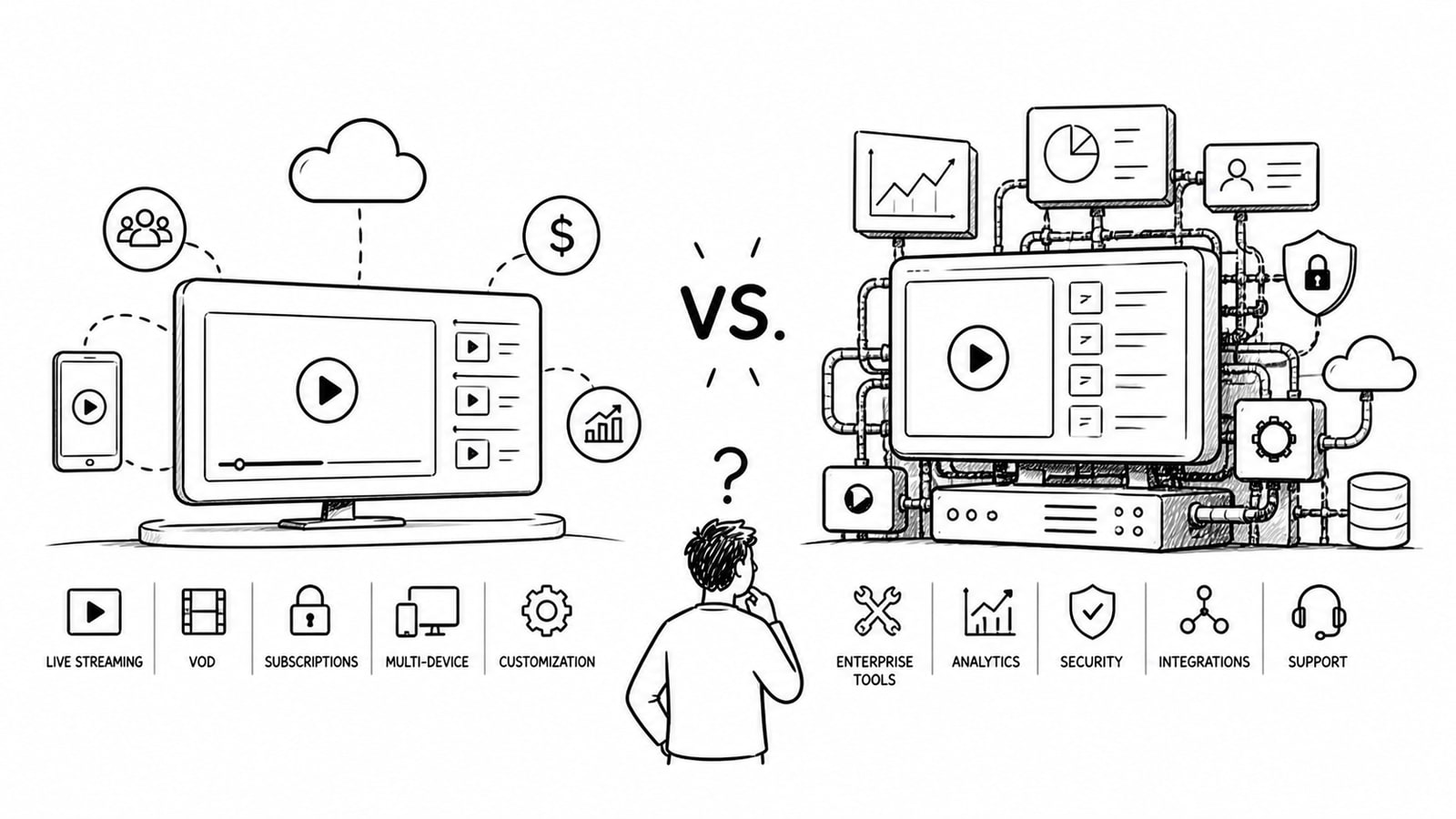
Uscreen vs. Brightcove: Uncover the Best Platform for Your OTT Strategy
A practical comparison of Uscreen and Brightcove for OTT strategy, covering pricing visibility, monetization, apps, customization, and where a lower-cost custom option like BitByte3 may fit.
Read
Launch Your Own Streaming Platform: No Code, No Hassle
A practical guide to launching a branded streaming platform without custom development, with advice on pricing, content packaging, platform selection, and subscriber experience.
Read