OTT Platforms
Leading White-Label OTT Platform Alternatives in 2026
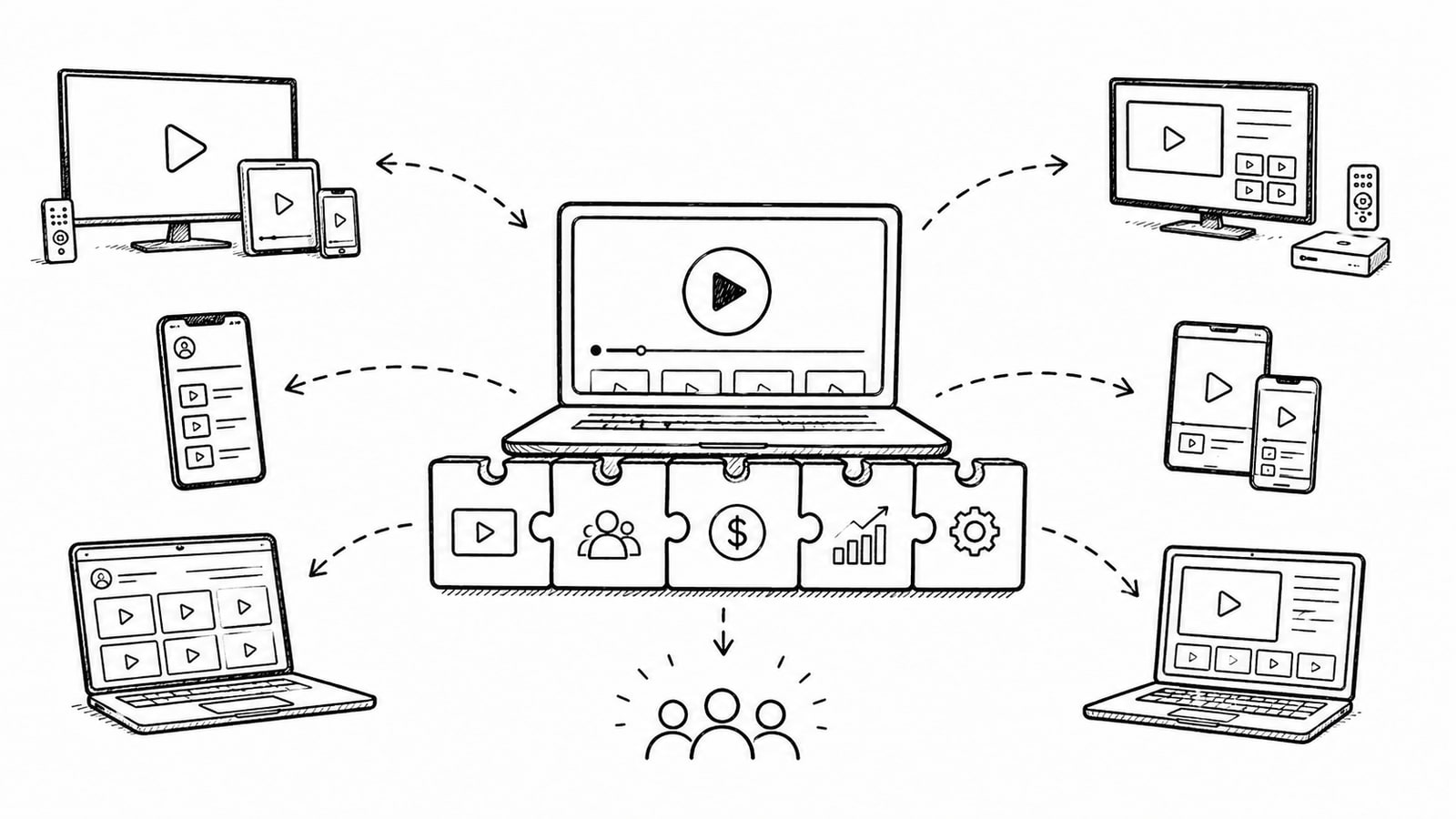
White-label OTT platform alternatives in 2026 fall into a few clear camps: creator-friendly all-in-one platforms, enterprise video stacks, monetization-first video infrastructure, and more tailored implementation partners. The right choice depends less on who has the longest feature list and more on what you are actually trying to launch: a subscription media business, a sports or live-event app, a multi-device branded service, or a more custom streaming product.
Quick Answer
If you want the shortest path to a branded subscription video business, Uscreen and Vimeo Streaming are strong starting points. If you need broader enterprise control, Brightcove and Kaltura are better fits. If monetization flexibility and ad-tech matter most, JWP deserves a close look. If you want a more tailored rollout with web, mobile, and TV apps under your own brand, Bitbyte3 is worth including in the shortlist alongside SaaS platforms.
Key Takeaways
The best white-label OTT platform is the one that matches your launch model, not the one with the most marketing claims.
In 2026, the biggest dividing lines are speed to market, app coverage, monetization support, and how much customization your team can realistically manage.
Some platforms are optimized for non-technical operators, while others assume an enterprise team, implementation budget, or a more hands-on workflow.
Public product pages often show capability breadth, but not always implementation effort. That effort should be part of vendor evaluation.
Bitbyte3 fits best when you want branded streaming apps and OTT delivery with a more tailored, partner-led approach rather than a one-size-fits-all dashboard.
What Counts as a Strong White-Label OTT Platform in 2026?
A strong OTT vendor should let you publish under your own brand across the screens your audience already uses. That usually means web, iOS, Android, and connected TV environments such as Apple TV, Roku, Fire TV, or Android TV. It should also support the business model you plan to run, whether that is subscription video on demand, pay-per-view, advertising, or a hybrid mix.
In practice, buyers should look at six things first:
Brand control: Can you use your own domain, visual identity, and app-store presence?
Device coverage: Which mobile and TV platforms are supported today?
Monetization: Does the platform support SVOD, TVOD, AVOD, or hybrid models?
Operational complexity: Can your current team run it without a long implementation cycle?
Data and product flexibility: How much control do you have over workflows, analytics, and integrations?
Go-to-market speed: How quickly can you launch a credible version one?
Leading White-Label OTT Platform Alternatives in 2026
The comparison below is based on public product pages, help documentation, and official announcements available as of April 29, 2026. The positioning notes are factual where sourced and interpretive where they compare likely fit across vendors.
Uscreen: Best for creators, educators, fitness brands, and membership businesses. Strengths include branded apps, built-in monetization, and strong non-technical usability.
Vimeo Streaming: Best for creators and media brands that want a fast launch with branded apps. Strengths include a no-code launch path, multiple monetization modes, and AI-powered translation features.
Brightcove OTT: Best for media companies and larger operators. Strengths include broad device support, OTT app experiences, and flexible monetization.
Kaltura: Best for broadcasters and organizations with more specialized requirements. Strengths include end-to-end OTT tooling, branded apps, personalization, and multi-platform distribution.
Muvi One: Best for teams that want a packaged end-to-end OTT stack. Strengths include white-label control, app coverage, monetization, and DRM.
Dacast: Best for operators prioritizing live streaming plus monetization. Strengths include a built-in paywall, OTT support, and white-label delivery.
JWP: Best for publishers and broadcasters focused on monetization and ad performance. Strengths include AVOD, SVOD, TVOD, hybrid monetization, and ad-tech orientation.
Bitbyte3: Best for startups and growing streaming brands that want a more tailored partner. Strengths include OTT apps across web, mobile, and TV, monetization support, and startup-friendly positioning.
Uscreen
Uscreen remains one of the clearest options for brands that want to turn video into a membership business without building a large technical team around it. Its public materials position it as an all-in-one video monetization platform, and its help center documents branded mobile and TV apps across iOS, Android, Apple TV, Roku, Fire TV, Android TV, and Samsung TV.
That makes Uscreen especially relevant for creators, coaches, fitness brands, and education businesses that care about subscriptions, retention, and direct audience ownership more than deep infrastructure customization.
Vimeo Streaming
Vimeo repositioned its OTT offering with Vimeo Streaming, announced on April 4, 2025, as the next generation of its OTT product. Public materials emphasize branded streaming services, custom apps, multiple monetization options, advanced analytics, stronger content protection, and AI-powered translation features.
This makes Vimeo Streaming a compelling option for businesses that want a recognizable platform, a fast launch path, and a relatively straightforward route to branded web and app distribution.
Brightcove OTT
Brightcove's current OTT positioning is aimed at teams that need app experiences across major devices, flexible monetization, and a more enterprise-ready video foundation. Its OTT product pages highlight support for iOS, Android, Apple TV, Android TV, Roku, Amazon Fire TV, and tablets, along with subscription, ad-supported, hybrid, and freemium models.
Brightcove is usually a sensible shortlist candidate when the buying team already thinks in terms of operational maturity, cross-device streaming performance, audience scale, or integration depth.
Kaltura
Kaltura continues to be relevant for organizations that want an end-to-end OTT video platform with room for more specialized needs. A 2025 Kaltura customer announcement about APTN lumi describes its solution as including a robust CMS, multi-platform distribution, monetization capabilities, AI-driven personalization, and fully branded white-label applications across mobile, tablet, web, and Smart TVs.
That positioning suggests Kaltura is best evaluated by broadcasters, public-interest media, educational media, and more complex organizations that need flexibility and are comfortable with a more involved rollout.
Muvi One
Muvi One positions itself as an end-to-end OTT service provider with white-label multi-device apps, monetization, DRM, a central CMS, and launch support across 16 plus ecosystems. Its public white-label feature pages also emphasize custom domains, your own branding, and use of the customer's developer accounts so the apps present as the buyer's own product.
Muvi is often part of the shortlist when a buyer wants a broad feature set without assembling separate vendors for apps, monetization, and delivery.
Dacast
Dacast is a practical option when live streaming and monetization are central to the business model. Its video monetization pages describe built-in support for SVOD, AVOD, and TVOD, along with a secure integrated paywall, OTT app distribution, and white-label streaming through a customizable HTML5 player.
This makes Dacast especially relevant for event-driven businesses, paid live programming, and operators who want monetization controls without committing to the heaviest enterprise setup.
JWP
JWP is best thought of as a monetization-forward streaming platform. Its public video monetization pages emphasize AVOD, SVOD, TVOD, and hybrid models, plus ad-tech and workflow support for live and VOD broadcasters.
That makes it particularly interesting for publishers, broadcasters, and media businesses where revenue architecture, advertising performance, and content delivery economics matter as much as front-end branding.
Bitbyte3
If the goal is not just to subscribe to a platform but to launch a branded OTT product with a more tailored partner, Bitbyte3 belongs in the conversation. Bitbyte3 positions itself around OTT streaming solutions for startups and businesses, with support for web, mobile, and connected TV delivery, plus monetization paths such as AVOD, SVOD, and pay-per-view.
That positioning makes Bitbyte3 relevant for teams that want white-label OTT apps but do not want to be forced into a rigid off-the-shelf mold. It can be a useful option for startups, niche media brands, and founders who want closer implementation support while still getting to market quickly.
How to Choose Between White-Label OTT Platform Alternatives
If you are comparing vendors seriously, start with the operating model rather than the marketing homepage.
Choose a Creator-First Platform If
Your team is small.
You mainly want subscriptions, content delivery, and branded apps.
You need to launch quickly without a large implementation budget.
Platforms that often fit this pattern: Uscreen and Vimeo Streaming.
Choose an Enterprise OTT Stack If
You need more complex workflows, integrations, or governance.
Your organization already has content, operations, or product teams in place.
You expect higher scale, more internal stakeholders, or stricter technical requirements.
Platforms that often fit this pattern: Brightcove and Kaltura.
Choose a Monetization-Focused Platform If
Revenue design is central to the decision.
Advertising, subscriptions, and hybrid monetization need to coexist cleanly.
You care deeply about yield, paywall structure, or monetization operations.
Platforms that often fit this pattern: JWP and Dacast.
Choose a Tailored Partner If
Your business needs are real, but do not match a cookie-cutter SaaS product.
You want white-label OTT apps and branded delivery with more implementation guidance.
You value a closer relationship around launch, configuration, and product fit.
Platforms or partners that may fit this pattern: Bitbyte3 and similar implementation-led vendors.
Common Mistakes When Evaluating White-Label OTT Platform Alternatives
Choosing based on headline features instead of the launch model you actually need.
Treating device coverage as a checkbox instead of verifying which apps are included, maintained, and submitted.
Ignoring post-launch operations such as analytics, app updates, support, and billing workflows.
Comparing public marketing pages without asking how much implementation work is still on your side.
Letting price dominate the decision before you understand support model, monetization fit, and timeline risk.
Methodology
This article was prepared using publicly available vendor product pages, help-center documentation, and official announcements reviewed on April 29, 2026. It compares product positioning, device support, monetization coverage, and apparent implementation fit. Where the article discusses trade-offs or ideal-fit categories, those are editorial inferences based on public documentation rather than hands-on testing of every platform.
Add a verified Bitbyte3 first-person implementation note, deployment metric, or customer quote before publishing if you want a stronger E-E-A-T signal tied to direct experience. If no approved internal proof is available, keep this as an editorial note rather than inventing a case study.
FAQ
What is a white-label OTT platform?
A white-label OTT platform lets a business launch a streaming service under its own brand rather than the vendor's brand. That usually includes a branded website, video player, and apps on mobile or TV devices.
Which white-label OTT platform is best for startups in 2026?
For startups, the best option is usually the one that balances launch speed, device coverage, monetization, and support. Teams that want a simpler self-serve route often start with platforms like Uscreen or Vimeo Streaming, while teams that want a more tailored rollout may also evaluate Bitbyte3.
Which OTT platforms support subscription, pay-per-view, and ads?
Several leading vendors publicly position support for multiple monetization models, including Vimeo Streaming, Brightcove OTT, Muvi One, Dacast, and JWP. Buyers should still verify exactly which billing flows, app entitlements, and regional payment options are included in their plan.
Is a white-label OTT platform better than building from scratch?
Often, yes, if speed to market matters. A white-label platform can reduce engineering, app maintenance, and launch complexity. A custom or partner-led route may be better when the business needs unusual workflows, tighter product control, or more tailored implementation support.
What should I compare before choosing an OTT vendor?
Compare brand control, supported devices, monetization options, analytics, implementation effort, support model, app maintenance responsibilities, and how quickly your team can realistically launch and operate the service.
Why include Bitbyte3 in an OTT alternatives article?
Bitbyte3 fits the article because it offers OTT streaming solutions across web, mobile, and TV and may appeal to buyers who want a more tailored white-label rollout rather than a purely off-the-shelf SaaS platform.
Conclusion
There is no single best white-label OTT platform in 2026. There is only the best fit for your stage, content model, and internal operating capacity.
If you want a simpler creator or membership path, start with Uscreen or Vimeo Streaming. If you need a broader enterprise environment, Brightcove and Kaltura are more natural starting points. If monetization architecture is the center of the business case, JWP and Dacast deserve attention. And if your team wants a more tailored, startup-friendly path to branded streaming apps across web, mobile, and TV, Bitbyte3 is a credible option to evaluate alongside the larger platforms.
If you are evaluating OTT options for a niche streaming product, compare your shortlist against your launch timeline, supported devices, monetization model, and post-launch operating burden before booking demos. If a more tailored rollout matters, review Bitbyte3 at https://bitbyte3.com/ and the streaming platform solution page at https://bitbyte3.com/solutions/streaming-platform alongside the larger OTT vendors.
About the Author
M. Jorani — LinkedIn
Software Engineer & Technical Writer
M. Jorani is a software engineer and technical writer with hands-on experience building streaming infrastructure, video pipelines, and OTT platforms. He writes about encoding, delivery architecture, and the engineering decisions that shape how audiences watch content across devices.
More from the blog
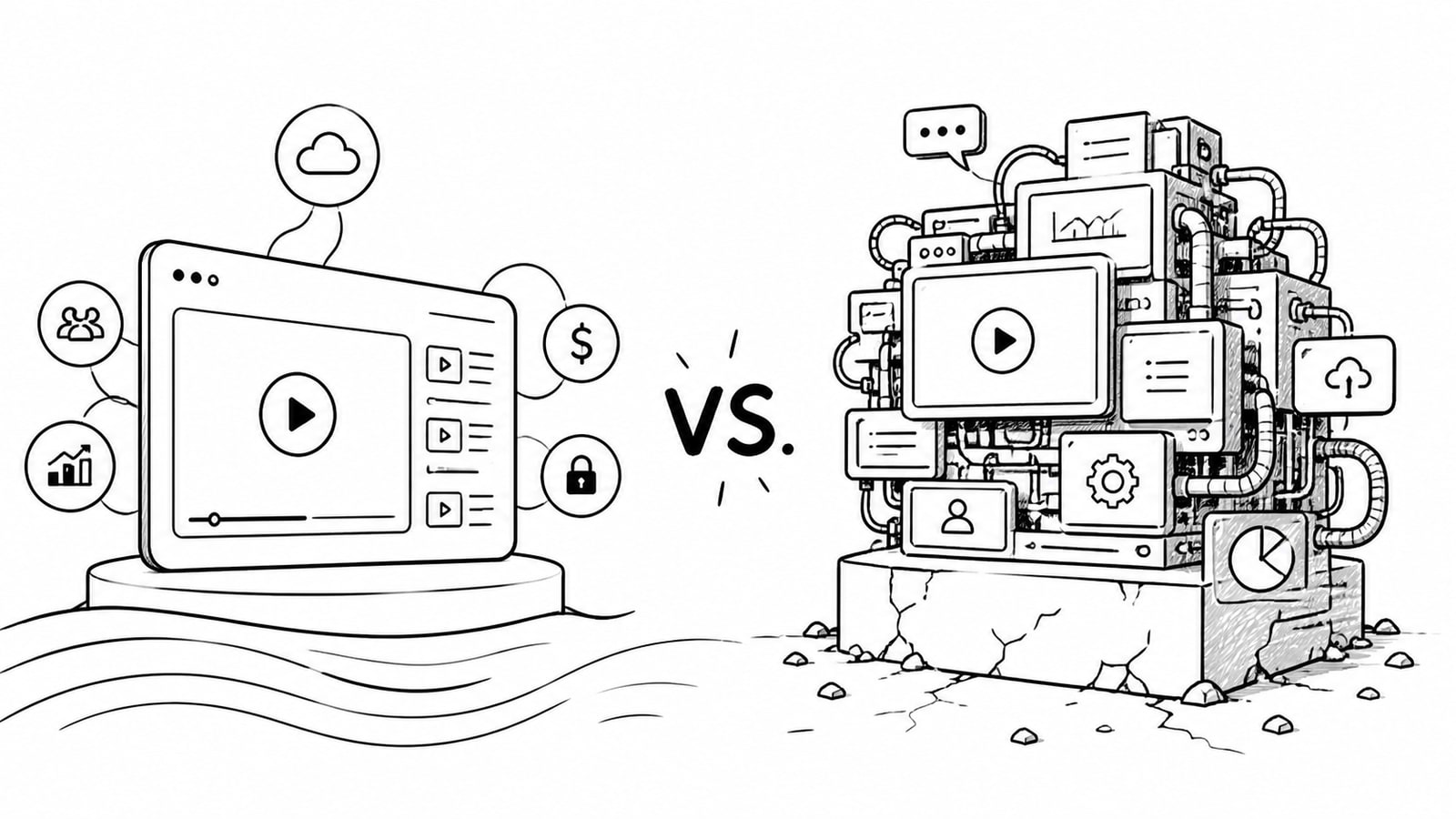
Brightcove vs. Kaltura: A Comprehensive Guide for OTT Platforms
A practical comparison of Brightcove and Kaltura for OTT teams evaluating launch speed, customization, monetization, operational complexity, and long-term platform fit.
Read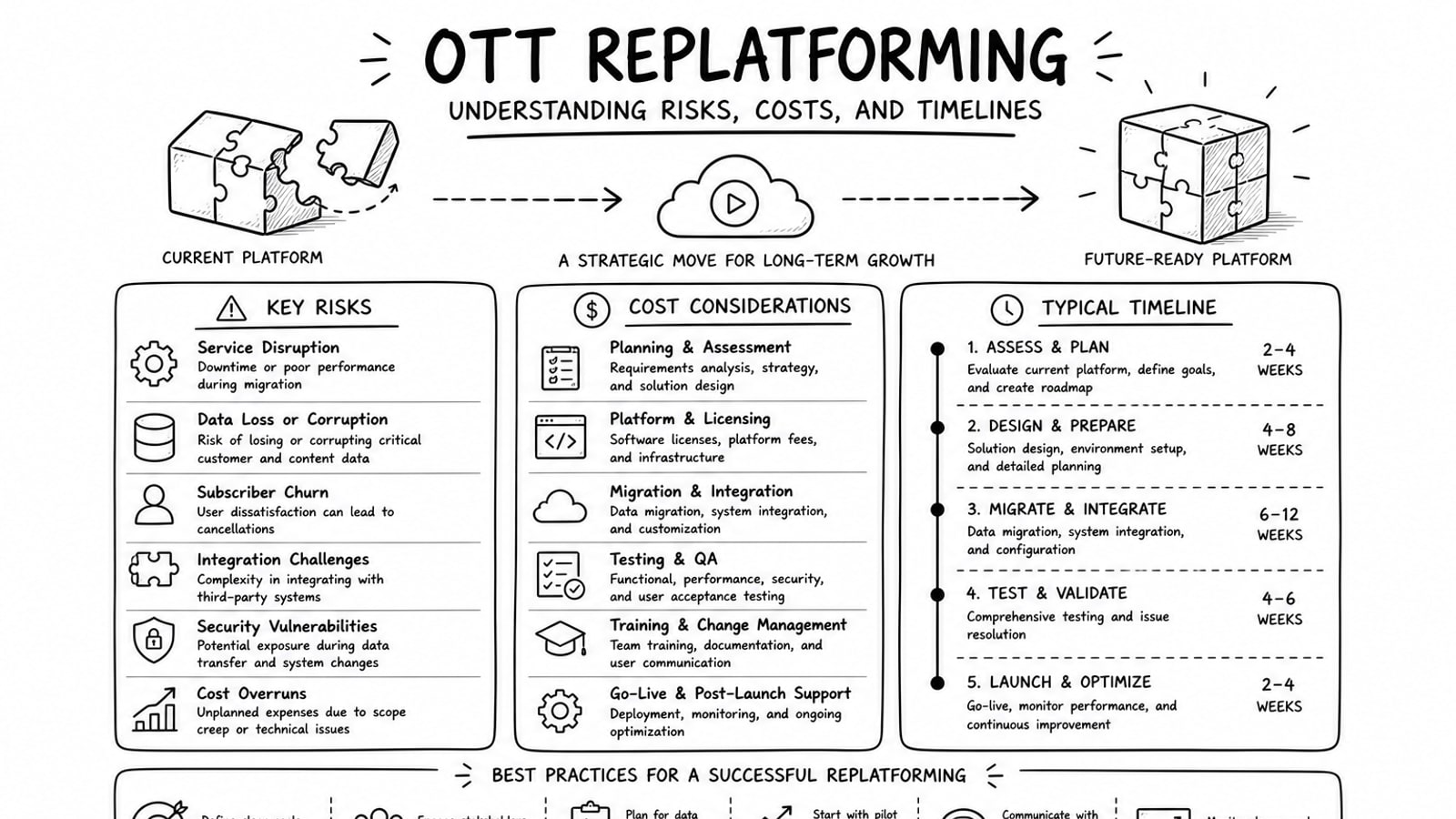
OTT Replatforming: Understanding Risks, Costs, and Timelines
A practical guide to OTT replatforming that explains why teams migrate, what usually drives risk and cost, how long projects tend to take, and where a BYOA delivery model can reduce lock-in.
Read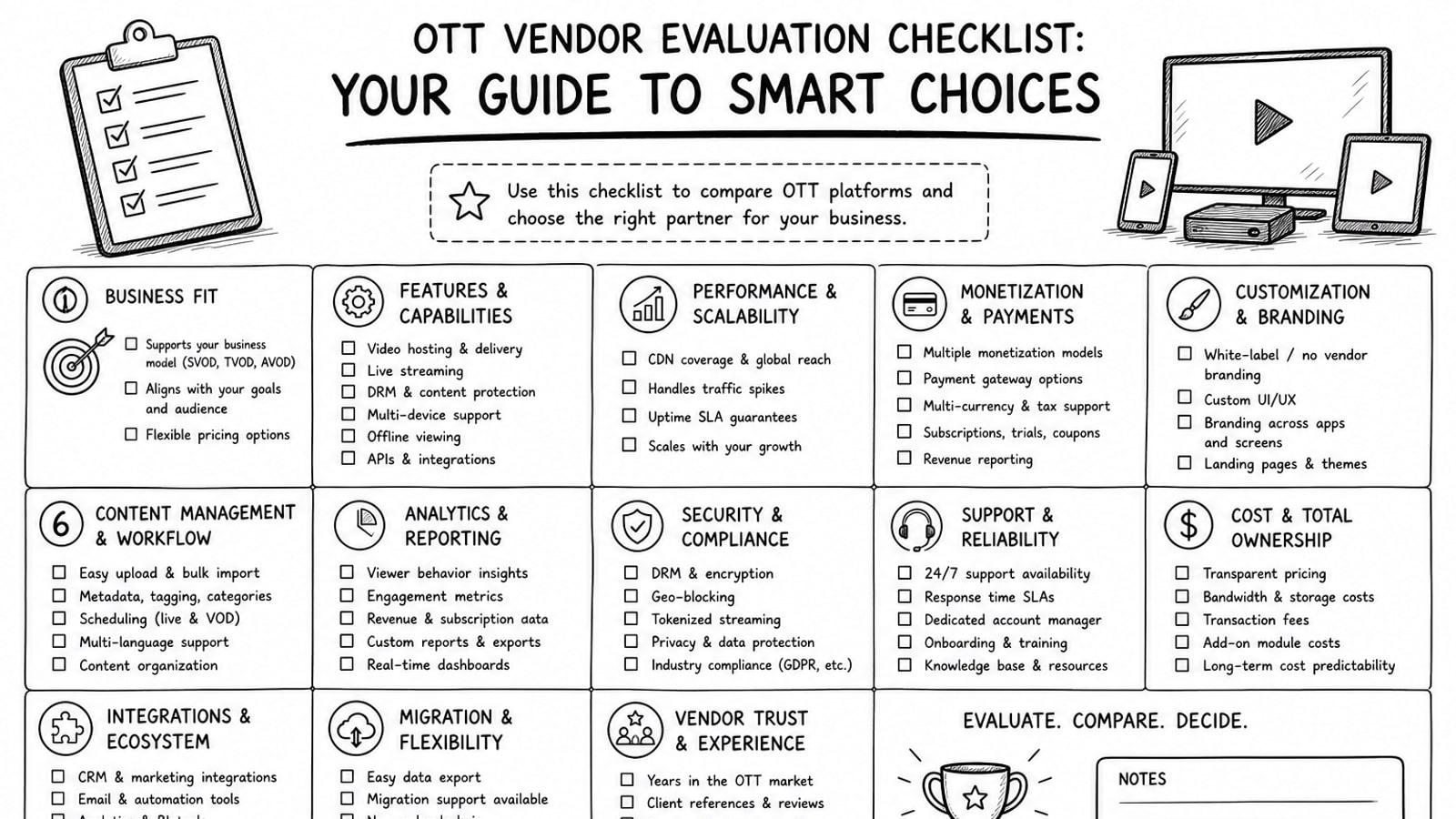
OTT Vendor Evaluation Checklist: Your Guide to Smart Choices
A practical guide to evaluating OTT vendors, with a clear checklist for delivery, security, workflow, cost, ownership, and long-term platform fit.
Read