OTT Platforms
Top Netflix Clone Alternatives for OTT Businesses
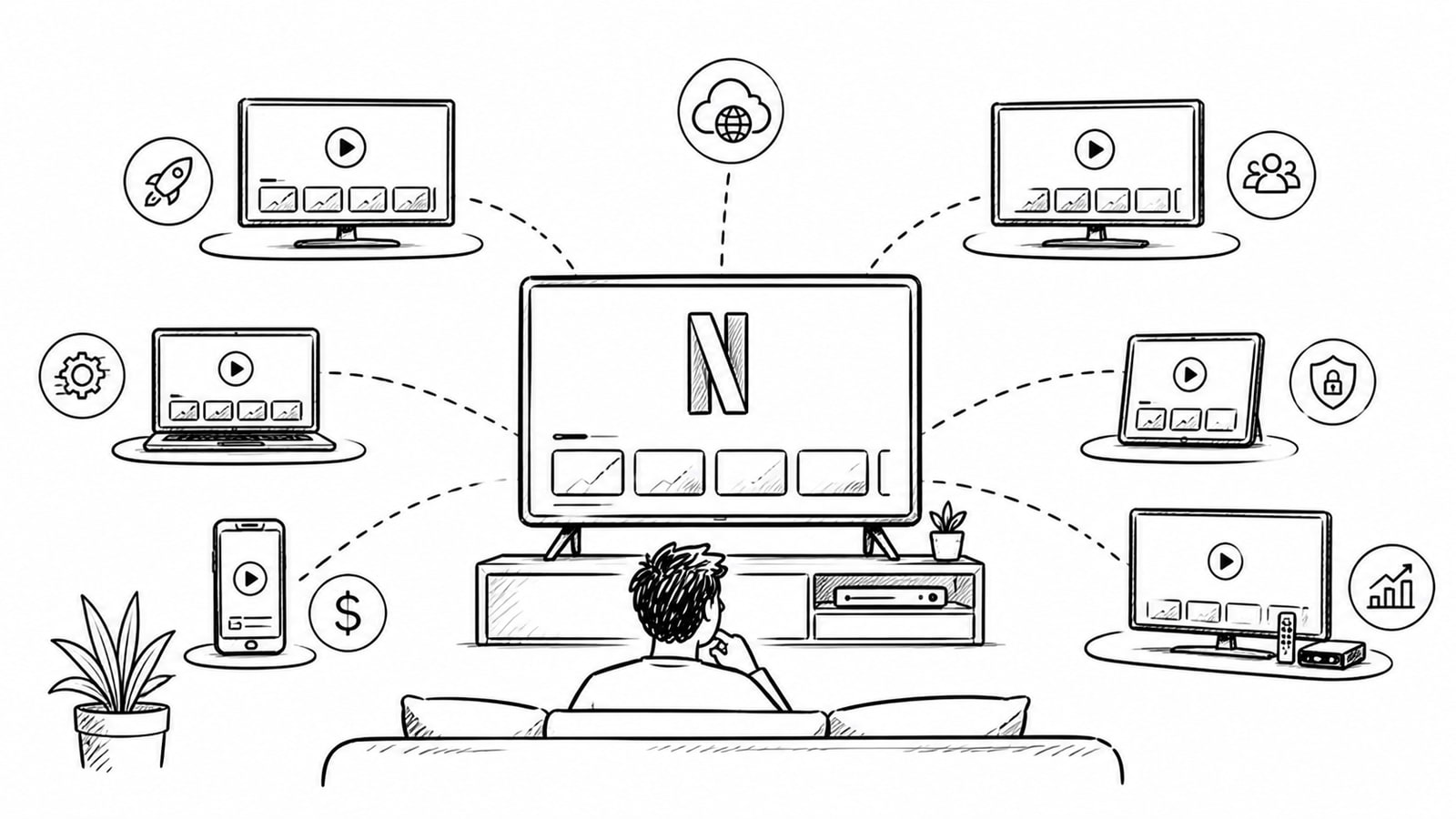
For OTT founders, broadcasters, and content businesses, the right platform is not just a Netflix-style interface. It is the full operating model behind launch speed, monetization, app distribution, content control, and long-term cost. If you are comparing Netflix clone alternatives for OTT businesses, the strongest options are usually the ones that help you launch across web, mobile, and TV while still fitting your budget and technical model.
Quick Answer
The top Netflix clone alternatives for OTT businesses include Uscreen, Vimeo OTT, Muvi One, Brightcove OTT, JW Player OTT Apps, VPlayed, and BitByte3. The best choice depends on whether you need a no-code launch, stronger monetization controls, enterprise media workflows, or a lower-lock-in model such as BYOA.
Key Takeaways
The best OTT platform is the one that matches your business model, not the one with the longest feature list.
Netflix-style design matters, but app distribution, billing, analytics, and content operations matter more over time.
Some platforms are better for creators and membership businesses, while others are built for media companies or broadcasters.
A BYOA model can give OTT businesses more direct control over infrastructure costs and reduce vendor lock-in.
Before publishing this article, pricing and feature details should be rechecked on each vendor's official site because OTT plans change frequently.
How To Evaluate Netflix Clone Alternatives For OTT Businesses
Most OTT buyers start by looking for a Netflix-like frontend, but that is only one part of the decision. A better evaluation framework is to compare platforms across five areas: launch model, monetization, customization, infrastructure control, and operational complexity.
Launch model: Can you go live quickly across web, iOS, Android, and connected TV devices?
Monetization: Does the platform support SVOD, TVOD, AVOD, or hybrid models that match your revenue plan?
Customization: Can you shape the user experience, branding, and content structure around your business?
Infrastructure control: Are hosting, streaming, and storage bundled into the vendor, or can you use your own accounts and services?
Operations: Will your team be able to manage content, users, payments, and analytics without heavy engineering support?
Top Netflix Clone Alternatives For OTT Businesses
Below are the strongest alternatives to consider when you want a Netflix-style OTT platform without building everything from scratch.
1. Uscreen
Uscreen is a strong fit for creators, membership brands, and video businesses that want a relatively fast launch with branded apps and built-in community features. Its official OTT platform pages emphasize no-code deployment, support for mobile and TV apps, and tools such as community and calendar features.
Best for: creator-led brands, coaching businesses, and membership video products.
Watch-outs: businesses with deeper enterprise workflow needs may want more flexibility in backend architecture or media operations.
2. Vimeo OTT
Vimeo OTT is one of the most recognizable options for launching a subscription or transaction-based streaming service. Vimeo's help documentation positions it as a dedicated OTT platform with branded apps, subscriber management, analytics, and monetization support. It is often a practical option for content owners who want an established vendor and a relatively straightforward business setup.
Best for: subscription-first video businesses that want a familiar platform with built-in OTT operations.
Watch-outs: businesses should review the current revenue-share model and any add-on costs before committing.
3. Muvi One
Muvi One positions itself as an end-to-end OTT platform with broad feature coverage, native apps, monetization options, CMS tools, and no-code workflows. Based on Muvi's official materials, it is designed for businesses that want a wide operating surface from a single vendor.
Best for: businesses that want an all-in-one OTT stack with broad built-in functionality.
Watch-outs: a broad platform can be powerful, but teams should confirm whether they need that full stack or would prefer a leaner setup.
4. Brightcove OTT
Brightcove OTT is aimed more at media companies, broadcasters, and larger streaming operations that need multi-device delivery and flexible monetization. Brightcove's current product pages highlight support for app launches across major platforms, hybrid monetization models, and improved operational efficiency.
Best for: established media brands, larger content libraries, and teams that need enterprise-grade video operations.
Watch-outs: smaller OTT businesses may find enterprise platforms more than they need in budget or complexity.
5. JW Player OTT Apps
JW Player is well known for video delivery and monetization, and its OTT app offering is designed for businesses that want to extend across web, mobile, and connected TV from a single platform. Official product pages highlight live and VOD support, OTT apps, audience analytics, and DRM options.
Best for: broadcasters and video-driven publishers that already like JW Player's ecosystem or need strong playback and monetization tooling.
Watch-outs: buyers should confirm how much of the app and business stack they want from one vendor versus partner integrations.
6. VPlayed
VPlayed is often positioned around customization, white-label control, and deployment flexibility. Its official OTT materials emphasize customizable architecture, cloud or on-premise options, and ownership-oriented positioning, which can appeal to businesses that want deeper control than a rigid SaaS template offers.
Best for: teams that want a customizable white-label OTT platform and more deployment flexibility.
Watch-outs: higher flexibility can also mean a more involved buying and implementation process.
7. BitByte3
BitByte3 is worth considering for startups and lean OTT businesses that want a Netflix-inspired multi-platform solution without taking on the overhead of a large enterprise vendor. Public BitByte3 pages describe no-code OTT delivery across web, mobile, and TV, support for monetization models such as AVOD, SVOD, and PPV, and startup-focused positioning.
A notable angle is BitByte3's BYOA model, which stands for Bring Your Own Account. In practical terms, that means clients can use their own infrastructure accounts, such as Cloudflare Stream for video and image delivery where appropriate, instead of being locked into bundled usage fees and storage markups inside one vendor account. For OTT businesses that want clearer cost visibility and more direct control over infrastructure, this model can be a meaningful advantage.
Best for: startups, niche OTT brands, and operators that want cross-platform delivery with more pricing flexibility and lower lock-in.
Watch-outs: if your organization needs a very large enterprise procurement process or highly specialized broadcaster workflows, compare scope carefully against larger vendors.
Which Alternative Is Best For Different OTT Business Types
Creator or membership brand: Uscreen
Subscription-led video business: Vimeo OTT
All-in-one no-code OTT operation: Muvi One
Enterprise media company or broadcaster: Brightcove OTT or JW Player OTT Apps
Customization-first deployment: VPlayed
Startup or cost-conscious OTT business wanting more infrastructure control: BitByte3
Why BYOA Can Matter More Than A Netflix-Style UI
A polished Netflix-style interface is easy to understand in a demo, but long-term OTT success often comes down to operational economics. BYOA can matter because it changes who controls the infrastructure relationship. Instead of paying all video, storage, and delivery costs through one platform vendor, you may be able to connect your own services and pay those providers directly.
For some OTT businesses, that creates three benefits: clearer cost tracking, less platform lock-in, and more freedom to scale media infrastructure in the way that fits the business. This is one reason BitByte3 can be a practical alternative when you want a platform layer plus more direct infrastructure ownership.
Common Mistakes When Choosing A Netflix Clone Alternative
Choosing based only on interface design without reviewing billing, app maintenance, and backend operations.
Comparing headline pricing without checking revenue share, transaction fees, storage, bandwidth, and app-related costs.
Ignoring whether the platform supports your actual monetization path, such as subscriptions, one-time purchases, ads, or hybrid models.
Overbuying an enterprise stack when a leaner OTT setup would launch faster and cost less.
Underestimating lock-in risk if the vendor controls your apps, billing, media pipeline, and delivery accounts.
Case Study Or Experience Section
[Case study, migration story, or first-person OTT launch outcome needed from BitByte3 or a client before publication. Add concrete launch context, timeline, business model, and measurable outcomes if available.]
Methodology And Editorial Note
This article compares publicly visible OTT platform positioning, product pages, and vendor documentation available at the time of drafting. It focuses on suitability for OTT businesses rather than declaring one universal winner. Pricing, packaging, revenue-share rules, device support, and deployment options can change, so each vendor should be rechecked before publishing or procurement.
BitByte3 references in this draft combine the user's provided positioning with publicly available pages on bitbyte3.com. Any claim that requires internal proof, customer outcomes, or platform benchmarks should be added only after verification.
Sources And Further Reading
FAQ
What is a Netflix clone alternative for OTT businesses?
It is a platform or solution that helps a business launch a streaming service with Netflix-style UX patterns, content browsing, monetization, and multi-device delivery without building the full stack from zero.
Which OTT platform is best for startups?
For many startups, the best option is the one that balances launch speed, monetization support, and manageable cost. BitByte3, Uscreen, and Vimeo OTT may all be worth reviewing depending on whether you prioritize BYOA flexibility, creator tools, or established OTT workflows.
Is a no-code OTT platform enough for a serious streaming business?
Often, yes. Many OTT businesses do not need a custom-built platform on day one. A no-code or low-code OTT platform can be enough if it supports your content operations, app distribution, billing model, and growth plan.
What does BYOA mean in OTT?
BYOA means Bring Your Own Account. Instead of relying only on a platform vendor's bundled infrastructure, the business uses its own accounts with selected services, which can improve cost visibility and reduce lock-in.
Should I choose a platform with bundled hosting or my own infrastructure accounts?
That depends on your team and growth model. Bundled hosting is simpler for many launches. Using your own infrastructure accounts can be better when you want more control over vendor relationships, billing, and scale economics.
How should OTT businesses compare pricing?
Do not compare only the base subscription. Review revenue share, transaction fees, storage, streaming usage, app deployment costs, support levels, and any added charges tied to growth.
Conclusion
The top Netflix clone alternatives for OTT businesses are not all solving the same problem. Some are optimized for creators, some for enterprise broadcasters, and some for startups that want more control over infrastructure and pricing. If your goal is a fast, cross-platform OTT launch with room to manage costs more directly, BitByte3 is a relevant option to compare alongside larger OTT vendors.
For teams evaluating the next step, a practical CTA is to shortlist two or three options, map them against your monetization model and device roadmap, and confirm whether a bundled SaaS approach or a BYOA model fits your business better.
About the Author
M. Jorani — LinkedIn
Software Engineer & Technical Writer
M. Jorani is a software engineer and technical writer with hands-on experience building streaming infrastructure, video pipelines, and OTT platforms. He writes about encoding, delivery architecture, and the engineering decisions that shape how audiences watch content across devices.
More from the blog
Top OTT Platforms for Online Educators: Enhance Learning Experiences
A practical guide to the best OTT platforms for online educators, including what to look for in video delivery, engagement, monetization, and platform control.
Read
Brightcove vs. Kaltura: A Comprehensive Guide for OTT Platforms
A practical comparison of Brightcove and Kaltura for OTT teams evaluating launch speed, customization, monetization, operational complexity, and long-term platform fit.
Read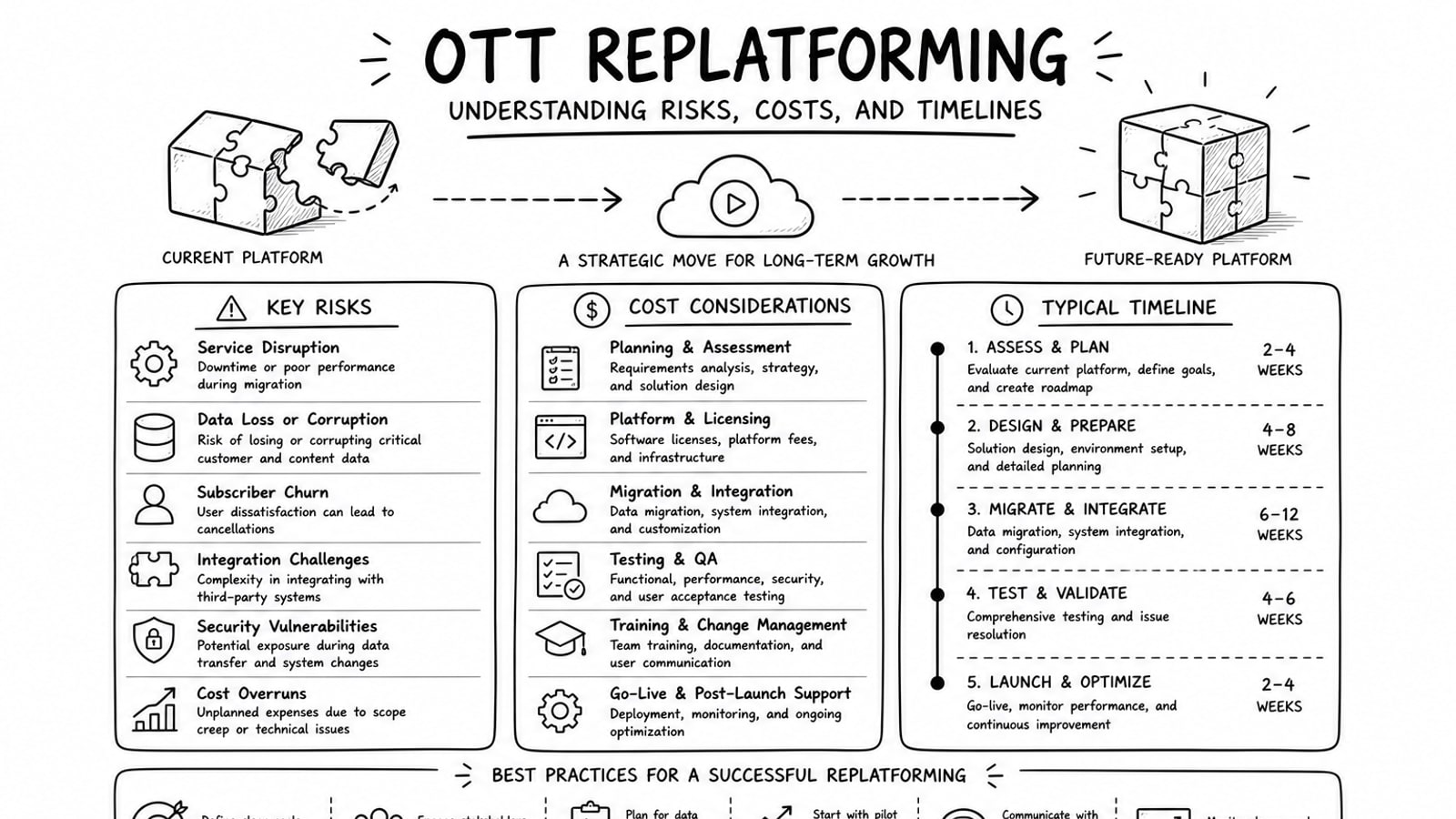
OTT Replatforming: Understanding Risks, Costs, and Timelines
A practical guide to OTT replatforming that explains why teams migrate, what usually drives risk and cost, how long projects tend to take, and where a BYOA delivery model can reduce lock-in.
Read