OTT migration
Switching OTT Platforms Without Breaking Your Apps: A Practical Guide
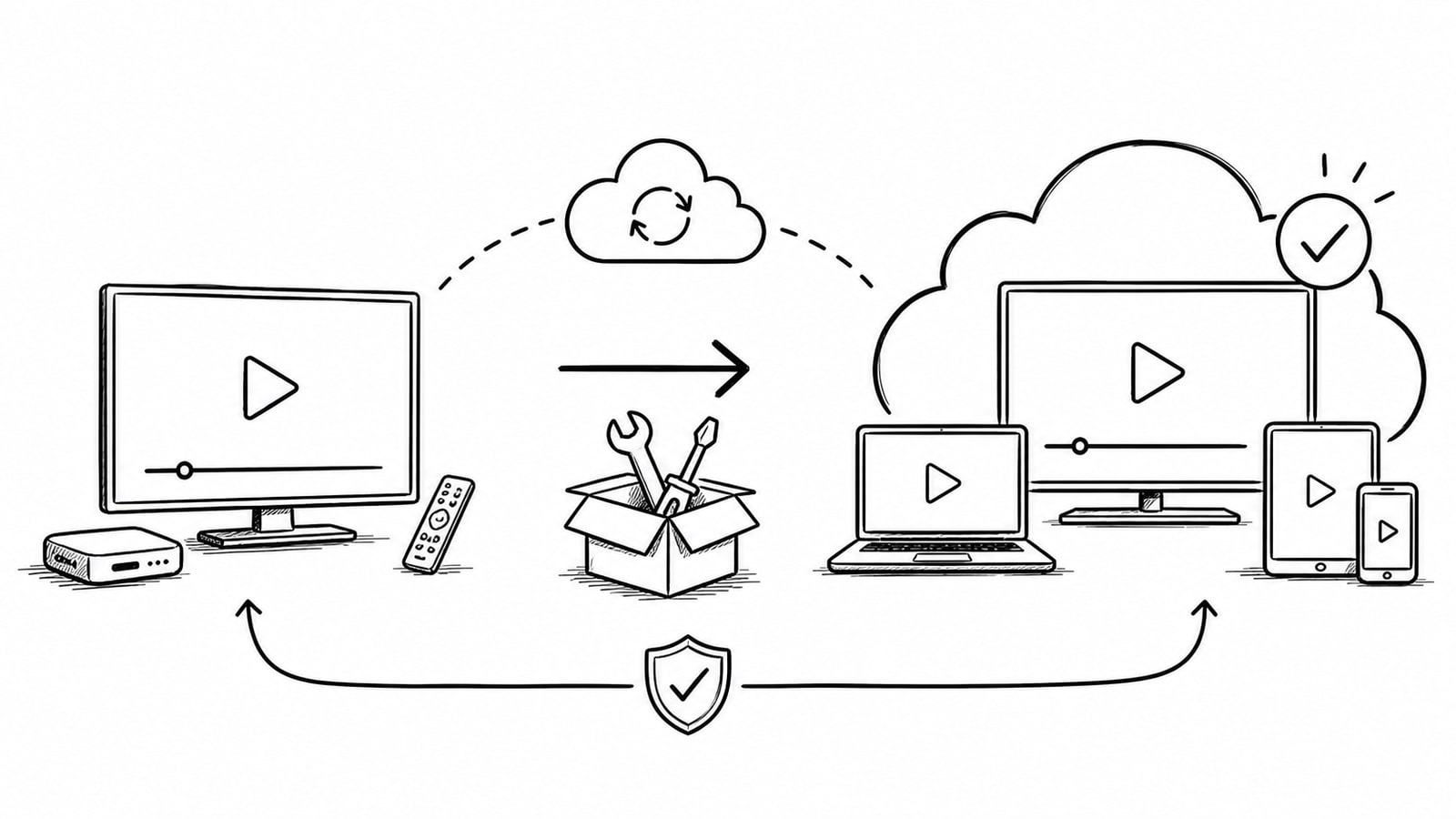
Switching OTT platforms sounds risky because it touches the parts viewers notice first: playback, subscriptions, watch history, device access, and app stability. The good news is that most migrations do not fail because a new vendor is technically impossible. They fail because teams change too many things at once, skip a dependency map, or move media and app logic without a rollback path.
If you approach the move as a controlled product migration instead of a big-bang rebuild, you can change providers without breaking your apps. That means separating what users see from what you replace behind the scenes, migrating in layers, and validating every playback, billing, and entitlement path before the cutover.
Quick answer
The safest way to switch OTT platforms is to keep your app experience stable while you replace backend services in phases. Start by auditing dependencies, preserve APIs where possible, migrate users and entitlements before media cutover, run both systems in parallel for a limited period, and keep a tested rollback plan until the new stack proves itself in production.
Key takeaways
Treat the migration as a product and operations project, not only a video-hosting change.
Map every dependency before switching providers: playback, CDN, CMS, subscriptions, analytics, auth, notifications, and app-store flows.
Preserve stable APIs for mobile and TV apps whenever possible to avoid unnecessary app releases.
Run a staged cutover with monitoring, synthetic playback tests, and a clear rollback trigger.
If cost control matters, a Bring Your Own Accounts model can help you keep media, storage, and delivery accounts under your own ownership during the transition.
Why switching OTT platforms gets messy
Most OTT stacks are more connected than they look. A video platform is rarely just a player and a media bucket. It usually affects content publishing, entitlement rules, profile logic, mobile playback, subtitle delivery, casting, analytics events, ad logic, app reviews, and customer support workflows. When one piece changes, hidden assumptions inside the apps often surface.
That is why a migration plan should begin with the user journey, not the vendor comparison sheet. Start at discovery, move through sign-in and subscription checks, continue to playback, and end with billing, watch progress, and support events. If each step still works after the move, your users are far less likely to notice the infrastructure change.
Switching OTT platforms: what to audit before you migrate
Before moving anything, document the current state. Your goal is to understand which parts of the service are tightly coupled and which can be swapped with minimal app impact.
Media layer: video hosting, image storage, transcoding, signed URLs, DRM status, subtitle files, trailers, clips, and thumbnails.
Application layer: API contracts, playback endpoints, entitlement checks, app settings, version dependencies, and feature flags.
Commercial layer: subscriptions, one-time purchases, app-store products, promo codes, taxes, invoices, and refund flows.
User data: accounts, profiles, watch history, continue-watching state, favorites, likes, comments, and device activity.
Operations: monitoring, alerts, support tickets, moderation, publishing workflow, analytics, and incident response.
A practical migration plan for switching OTT platforms
1. Freeze moving targets
Avoid launching major feature changes during the migration window. New subscription logic, app redesigns, or player replacements create too many variables. A short change freeze helps your team isolate migration issues faster.
2. Keep the client contract stable
If your mobile and TV apps expect certain endpoints, payload shapes, or playback tokens, preserve that contract even if the backend changes underneath. A compatibility layer is often cheaper and safer than forcing every client app to change at once.
3. Migrate identity and entitlements before media
Users will forgive a short catalog mismatch more easily than broken access. Make sure account records, profiles, subscription states, and entitlement rules are correct before you switch playback traffic. If your access model is wrong, even perfect video delivery will feel broken.
4. Move a small slice first
Start with a controlled set of titles, users, or regions. This lets you measure ingest speed, playback success, startup latency, subtitle handling, and support volume before the full cutover. A pilot also reveals metadata issues that do not appear in vendor demos.
5. Run parallel systems briefly
A short overlap period reduces risk. During that window, compare playback success rate, buffering, entitlement responses, image delivery, and analytics events between the old and new setups. Parallel running costs more for a short time, but it is usually cheaper than recovering from a broken launch.
6. Define rollback before launch day
Rollback should be a real operating procedure, not a comforting sentence in a project plan. Define who can trigger it, which metrics matter, how DNS or routing changes reverse, and how support teams will communicate with users if you need to step back.
The migration checklist your team should test
Web playback works for logged-out, logged-in, and subscribed users.
iOS, Android, and TV apps still receive valid playback URLs or tokens.
Images, posters, and hero art render correctly across app surfaces.
Continue watching, watch history, and profile-specific states stay intact.
Subscription renewals, app-store validation, and one-time purchases still pass.
Analytics events fire consistently before and after the cutover.
Support teams can identify whether an issue is catalog, entitlement, or playback related.
Where teams usually break their apps
They replace the player, API, CDN, and billing flow in one release.
They assume old app versions will understand new payloads.
They migrate media without validating subtitle tracks, poster images, or entitlement edge cases.
They forget that app-store subscriptions, web billing, and backend access rules must stay in sync.
They cut over on faith instead of on monitored thresholds.
How Bitbyte3 can fit into an OTT migration
For teams that want a managed OTT product layer without handing over ownership of every infrastructure account, Bitbyte3 is worth a look. Bitbyte3 publicly describes a BYOA model, short for Bring Your Own Accounts, where clients keep their own provider accounts for services such as Cloudflare Images, Cloudflare Stream, or Bunny Stream while Bitbyte3 handles the platform, integration setup, support, and operational service layer.
That structure can make a migration cleaner because your media, storage, and delivery billing stay tied to accounts you control instead of being hidden inside a bundled platform fee. It can also reduce the pain of future vendor changes, since the product experience and the infrastructure accounts do not have to be locked together.
Bitbyte3 also presents its OTT platform as one operating model across CMS, web, mobile, TV, monetization, and service control. For migration projects, that matters because fragmented tools are often the reason teams struggle to switch platforms in the first place.
Cost visibility matters more than sticker price
One reason teams switch OTT platforms is cost surprise. The issue is not always that a provider is objectively expensive. It is often that the billing model is hard to predict once storage, delivery, encoding, app support, and operations are blended together.
For example, Cloudflare Stream documents separate billing for minutes stored and minutes delivered, with encoding and ingress included. That kind of visible usage model can be easier to plan around than opaque bundled charges, especially during a migration when traffic patterns may shift. If your team prefers tighter ownership of cost and storage decisions, a BYOA structure can help keep those choices in your hands.
Methodology and editorial note
This article is written as a practical operational guide for streaming teams planning an OTT migration. Product references to Bitbyte3 are based on public pages describing its streaming platform and BYOA service model. Pricing references to Cloudflare Stream are based on the current official documentation available at the time of writing.
FAQ
How long does it take to switch OTT platforms?
The timeline depends on how tightly your apps, media, billing, and CMS are coupled. A phased migration is usually faster overall than a full rebuild because it reduces rework and production risk.
Do users need to update their apps during an OTT migration?
Not always. If you preserve the existing API contract and playback token format, many migrations can happen with little or no visible app change. App updates may still be needed for deeper player or feature changes.
What is the biggest risk when switching OTT platforms?
Broken entitlements are usually the most damaging problem because affected users can sign in successfully but still cannot watch. That is why identity, subscription, and access rules should be validated before playback traffic is fully moved.
What does BYOA mean in an OTT solution?
BYOA means Bring Your Own Accounts. In this model, you keep your own accounts for services like video delivery, image storage, payments, or messaging, while a platform partner manages the product system, integrations, and operations around them.
Can switching OTT platforms lower costs?
It can, but only if you compare the full operating model. Storage, delivery, support effort, app maintenance, and operational complexity matter as much as the headline platform fee.
What should teams monitor on cutover day?
Monitor playback success, buffering, login errors, subscription validation, token issuance, image delivery, and support volume. Those signals will tell you quickly whether the migration is holding up under real traffic.
Conclusion
Switching OTT platforms without breaking your apps is mostly about sequencing, not luck. Audit dependencies, keep app contracts stable, move identity and entitlements first, test in slices, and keep rollback ready until the new setup proves itself. If your team wants a more controlled migration path with clearer ownership of provider accounts, Bitbyte3's BYOA OTT model is one practical direction to evaluate.
Sources and further reading
About the Author
M. Jorani — LinkedIn
Software Engineer & Technical Writer
M. Jorani is a software engineer and technical writer with hands-on experience building streaming infrastructure, video pipelines, and OTT platforms. He writes about encoding, delivery architecture, and the engineering decisions that shape how audiences watch content across devices.
More from the blog
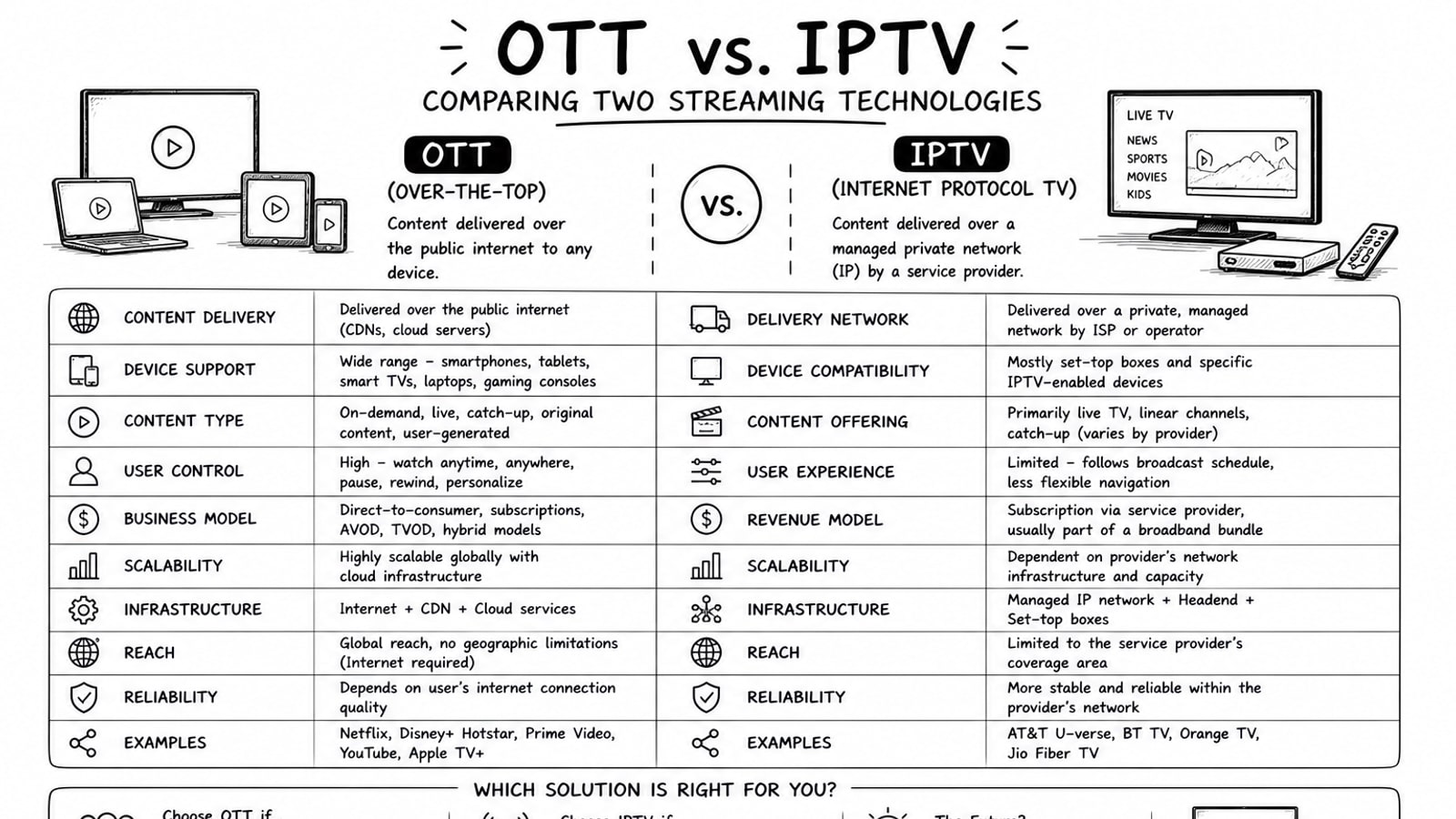
OTT vs. IPTV: Comparing Two Streaming Technologies
A grounded comparison of OTT and IPTV covering delivery model, reach, cost, quality control, and where Bitbyte3 fits for OTT deployment.
Read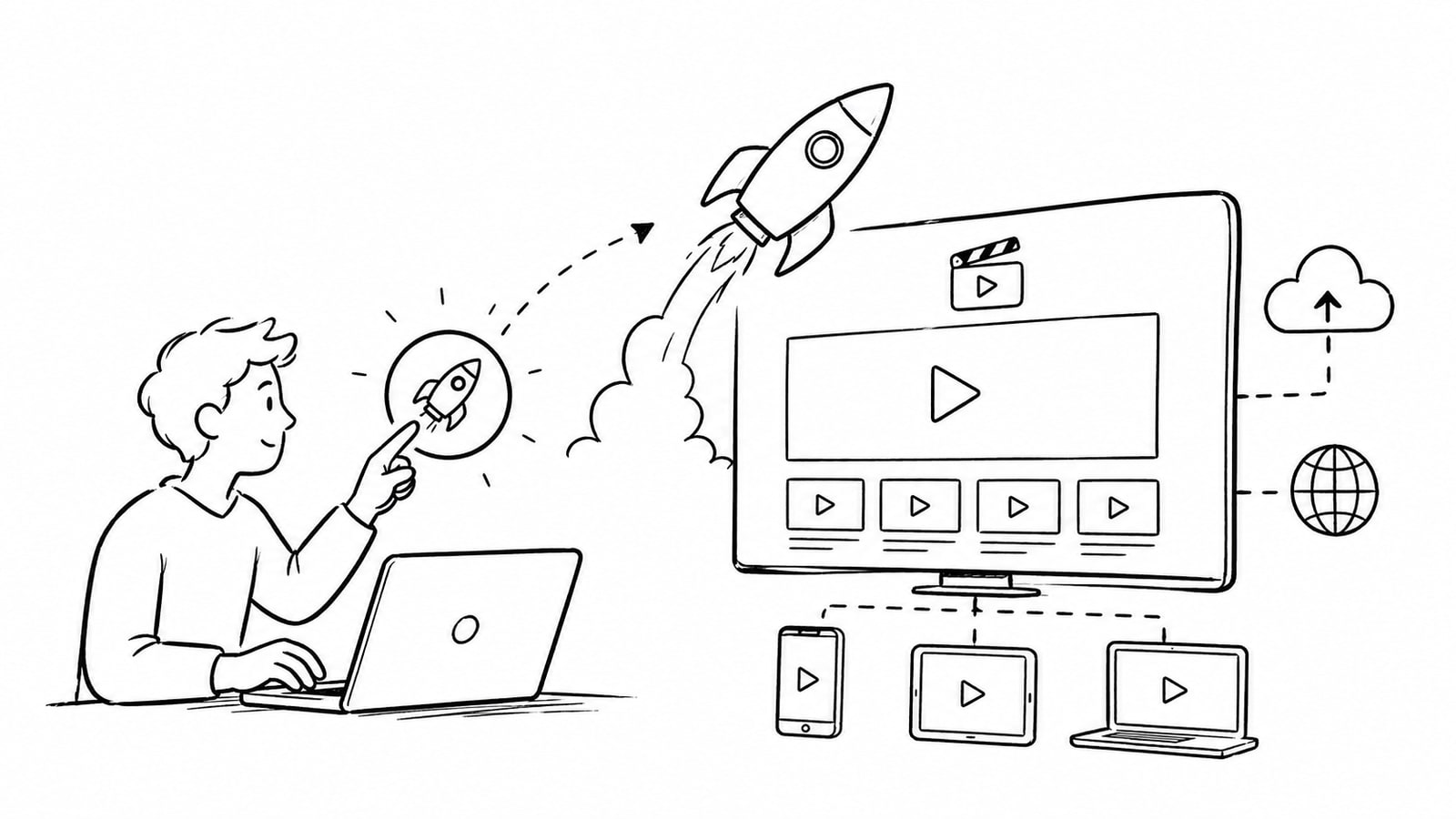
Launch Your Own Streaming Platform: No Code, No Hassle
A practical guide to launching a branded streaming platform without custom development, with advice on pricing, content packaging, platform selection, and subscriber experience.
Read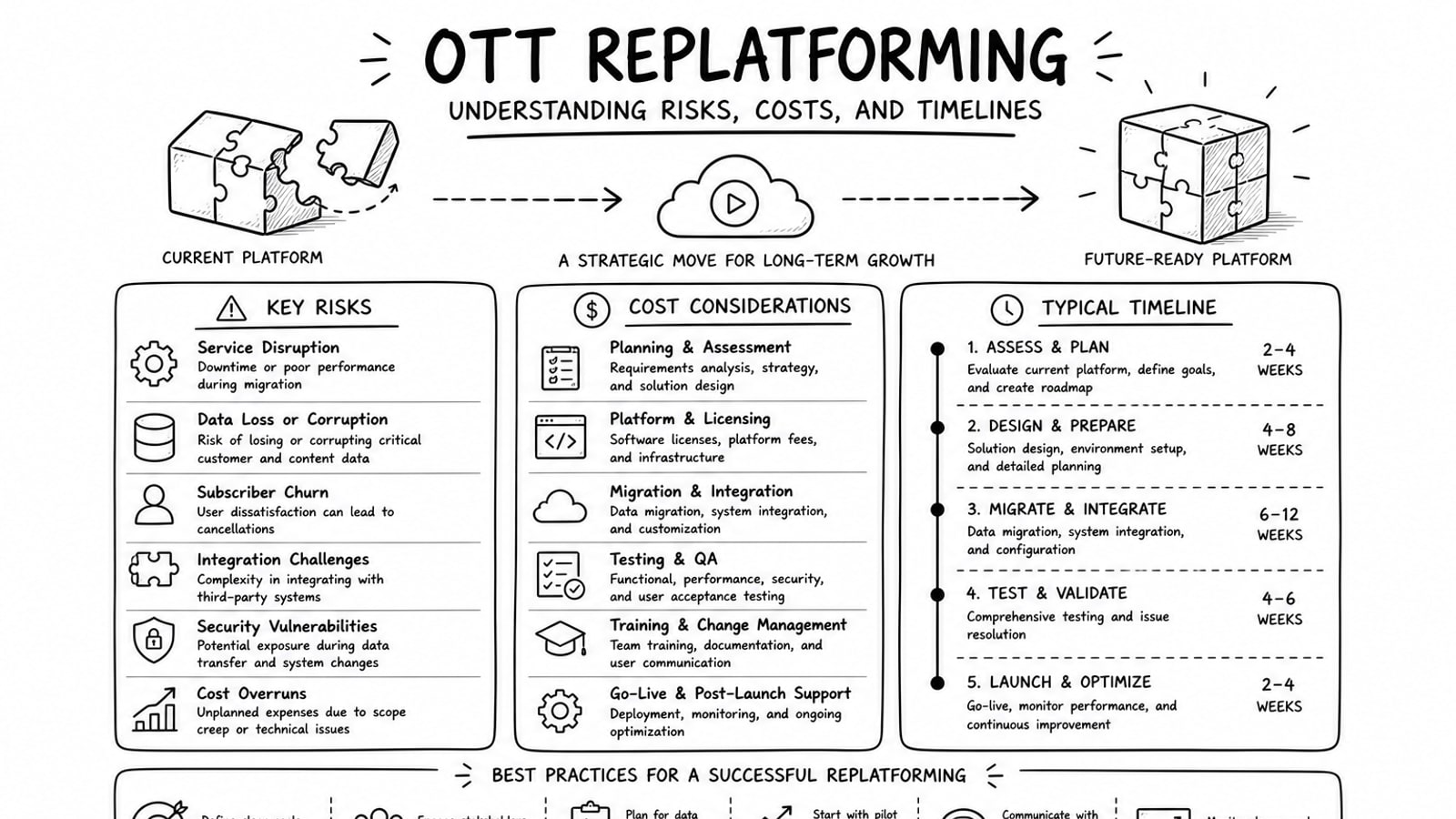
OTT Replatforming: Understanding Risks, Costs, and Timelines
A practical guide to OTT replatforming that explains why teams migrate, what usually drives risk and cost, how long projects tend to take, and where a BYOA delivery model can reduce lock-in.
Read