OTT
Subscriber Billing Migration for OTT Platforms: Best Practices
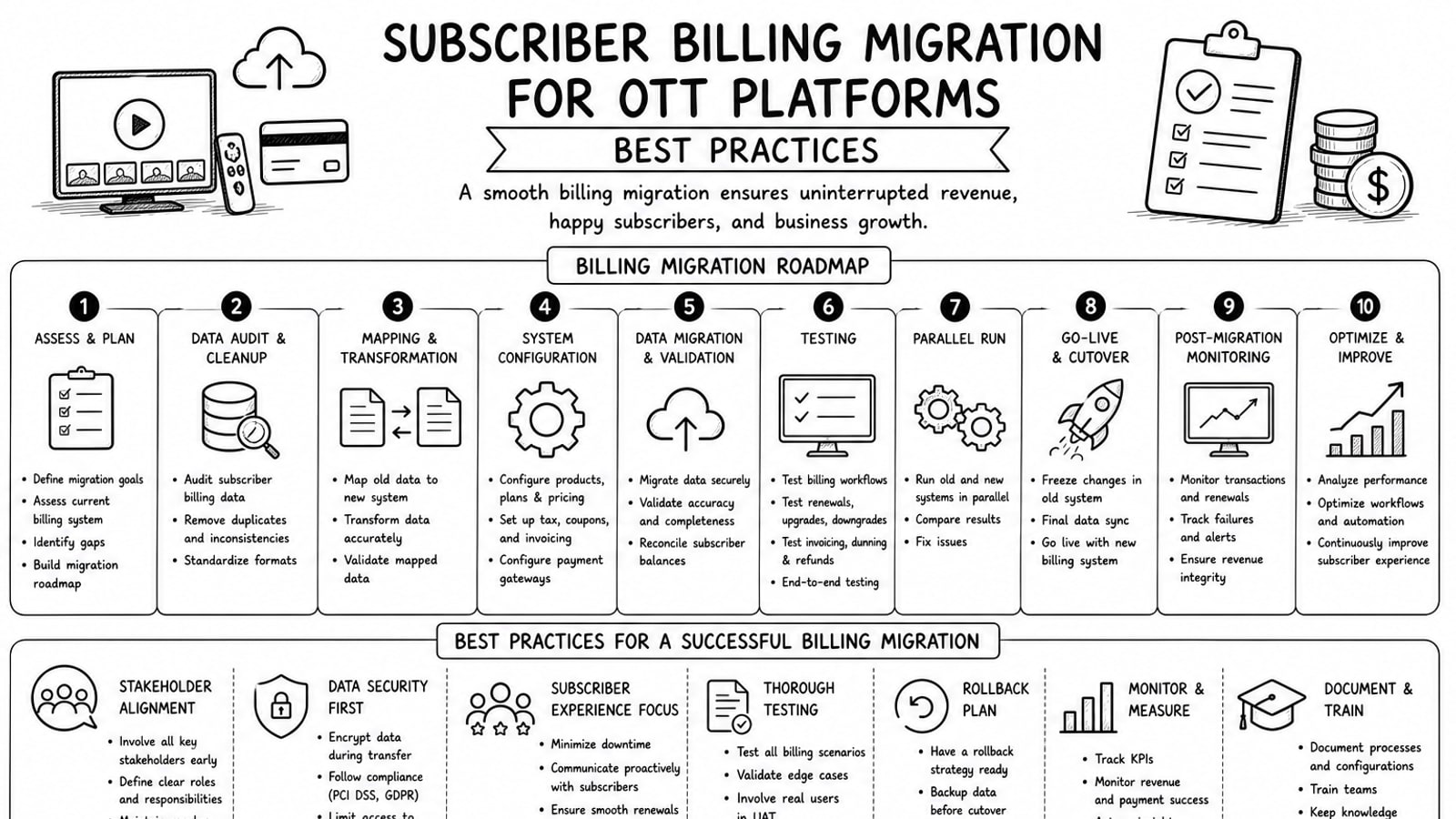
Subscriber billing migration for OTT platforms is one of the highest-risk changes a streaming business can make because it touches revenue, renewals, customer trust, and content access at the same time. A careful migration plan should preserve billing dates, active entitlements, payment continuity, and subscriber communication so viewers do not feel the change.
Quick Answer
The safest way to migrate OTT subscriber billing is to audit all plans and billing rules first, map every subscriber record to the new system, test in a staging environment, move users in controlled cohorts, monitor failed payments and entitlement mismatches closely, and only deactivate the old billing flow after confirming that renewals are running correctly in the new platform.
Key Takeaways
Treat billing migration as a revenue continuity project, not only a data import.
Preserve billing anchors, plan logic, trial states, coupons, taxes, and entitlement rules before moving any subscriber.
Run test imports and phased migrations to reduce double billing, failed renewals, and support spikes.
Keep subscriber access and billing ownership clearly aligned, especially across web, mobile, and app store channels.
Use transparent customer communication before, during, and after the cutover.
Why Subscriber Billing Migration for OTT Platforms Is So Sensitive
Unlike a simple CRM migration, OTT billing changes affect whether paying viewers can keep watching. A broken mapping between subscription status and content entitlement can lock out valid users or leave canceled users active. A billing platform change can also create duplicate invoices, missed renewals, tax mismatches, and churn if the customer experience is unclear.
OTT businesses also face channel complexity. Some subscribers may pay through the web, some through mobile app stores, and some through partner bundles. Each path has different rules for renewal handling, price changes, cancellation flows, and account ownership.
Best Practices for Subscriber Billing Migration for OTT Platforms
1. Audit the current billing model before touching data
Start by documenting every active plan, legacy offer, trial configuration, coupon, grace period, renewal rule, tax rule, and cancellation path. Include subscriber states such as active, past due, paused, canceled at period end, and in trial. If these states are not defined cleanly, the migration will reproduce hidden billing mistakes at scale.
2. Separate payment migration from entitlement migration
Payment continuity and viewing access are related, but they should be validated independently. Build a clear mapping from billing status to product entitlement, then test that mapping with real account samples. Many migration failures happen because the payment record is imported correctly while access logic is not.
3. Preserve billing anchors and renewal dates
For subscribers, billing date changes often feel like billing errors. Preserve the existing renewal cadence wherever the target platform allows it. The migration plan should define how to handle monthly, annual, promotional, and prepaid subscribers so no one is charged early, twice, or after cancellation.
4. Rebuild plan mapping before importing subscribers
Do not import subscribers into a half-configured billing catalog. Create the new products, prices, currencies, taxes, coupons, and collection methods first. Then map each legacy plan to exactly one target plan or a clearly defined replacement rule. Any ambiguity here will become a revenue leak or a support problem later.
5. Test in staging, then migrate in cohorts
Run a dry migration in a test environment first. Validate imported records, next renewal dates, tax behavior, customer emails, webhooks, invoices, and access checks. After that, move subscribers in small cohorts such as staff accounts, internal testers, low-risk plans, or one region at a time. This creates a safer feedback loop before full cutover.
6. Protect against duplicate charges
The old billing system should remain active only until the new system is proven. However, the switch-off must be timed carefully. If legacy renewals stay active after imported subscriptions begin billing, customers can be charged twice. Define one source of truth for each subscriber at each step, and keep a reversible cutover checklist.
7. Prepare for failed payments and grace-period logic
Billing migrations often expose stale cards, expired tokens, or missing payment details. Build dunning rules, grace periods, retry schedules, and support messaging into the new flow before launch. OTT users are less tolerant of billing confusion when it interrupts immediate viewing.
8. Keep app store subscriptions in their proper lane
If your OTT business sells through Apple App Store or Google Play, do not assume those subscriptions behave like web direct subscriptions. App store billing has its own configuration, upgrade and downgrade logic, transparency rules, and recovery behavior. Your migration plan should keep store-managed subscriptions distinct unless the platform rules explicitly support the change you want to make.
A Practical Migration Workflow
Inventory all subscriber types, plans, offers, taxes, and current billing dates.
Design the target product catalog and entitlement model in the new system.
Create a field-by-field migration map for customer IDs, plans, renewals, coupons, taxes, and subscription states.
Run a staging import and validate invoices, renewals, emails, webhooks, and content access.
Launch a small cohort migration and monitor failed payments, entitlement mismatches, and support tickets.
Scale the migration gradually and keep rollback criteria documented.
Deactivate the old renewal path only after confirming stable billing in the new platform.
Migration Checklist
All legacy plan IDs are mapped to target plans.
Renewal dates and collection methods are preserved or intentionally adjusted.
Tax, currency, and regional pricing logic are verified.
Subscriber status maps correctly to content entitlements.
Customer communications and support macros are ready.
Dashboard alerts are set for payment failure spikes and access issues.
Where Bitbyte3 Can Fit
For OTT teams that want more operational control, Bitbyte3 offers an OTT solution that can fit into a migration strategy where infrastructure ownership matters. A notable model is BOYA, or bring your account, where clients can use their own vendor accounts for services such as video and image infrastructure instead of being locked into bundled storage and platform fees.
That approach can be useful when a platform wants cleaner cost visibility, direct control over service accounts, and fewer restrictions around how media infrastructure is managed during or after a billing migration. As with any migration, the important step is to confirm how account ownership, billing logic, and entitlement data will work together before cutover.
Common Mistakes
Migrating data before the target billing catalog is fully configured.
Treating app store subscriptions the same as direct web subscriptions.
Forgetting to validate content access after import.
Turning off the old system too late or too early.
Skipping customer communication because the change is considered back-office only.
Conclusion
Subscriber billing migration for OTT platforms succeeds when teams focus on continuity first. If viewers keep access, renewal dates stay predictable, and support volume stays manageable, the migration is doing its job. The best outcomes usually come from careful plan mapping, staged testing, tight monitoring, and a platform architecture that gives the business clear control over billing and infrastructure decisions.
If you are reviewing your next OTT billing move, Bitbyte3 is one option to evaluate for architecture flexibility and account ownership alongside your migration requirements.
FAQ
What is subscriber billing migration for OTT platforms?
It is the process of moving subscriber billing records, renewal logic, plans, and payment workflows from one system to another without breaking content access or recurring revenue.
What is the biggest risk during an OTT billing migration?
The biggest risk is a mismatch between billing records and subscriber entitlements, which can lead to duplicate charges, missed renewals, or paying users losing access.
Should OTT platforms migrate all subscribers at once?
Usually no. A phased rollout is safer because it lets teams test real behavior, fix edge cases, and reduce revenue risk before a full cutover.
Do app store subscriptions need a separate migration plan?
Yes. Apple App Store and Google Play subscriptions have platform-specific rules for pricing, management, upgrades, recovery, and user communication, so they should be handled as a separate billing lane.
How do you avoid double billing during migration?
Map every subscriber to one billing source of truth, preserve renewal dates, test the cutover logic, and deactivate legacy renewals only after the new system is verified.
When does a bring-your-own-account model make sense?
It can make sense when an OTT platform wants direct ownership of vendor accounts, cleaner infrastructure cost visibility, and more control over how media services are managed during long-term growth.
Methodology and Editorial Note
This article was written as a practical operations guide for streaming businesses evaluating a subscriber billing migration. It draws on official platform documentation from subscription billing and app store providers, plus implementation patterns commonly required to preserve renewals, customer access, and billing transparency during platform transitions.
Sources and Further Reading
Stripe Documentation: Import subscriptions toolkit - https://docs.stripe.com/billing/subscriptions/import-subscriptions-toolkit
Chargebee Docs: Migrating Data - https://www.chargebee.com/docs/billing/2.0/data-operations/migrating-data
Apple Developer: Auto-renewable subscriptions - https://developer.apple.com/app-store/subscriptions/
Google Play Console Help: Create and manage subscriptions - https://support.google.com/googleplay/android-developer/answer/140504
About the Author
R. Jabar
Marketing Strategist
R. Jabar is a marketing strategist who helps streaming and OTT brands turn complex product stories into clear, growth-driven messaging. She writes about audience acquisition, content monetization, and the marketing frameworks that help video platforms scale.
More from the blog
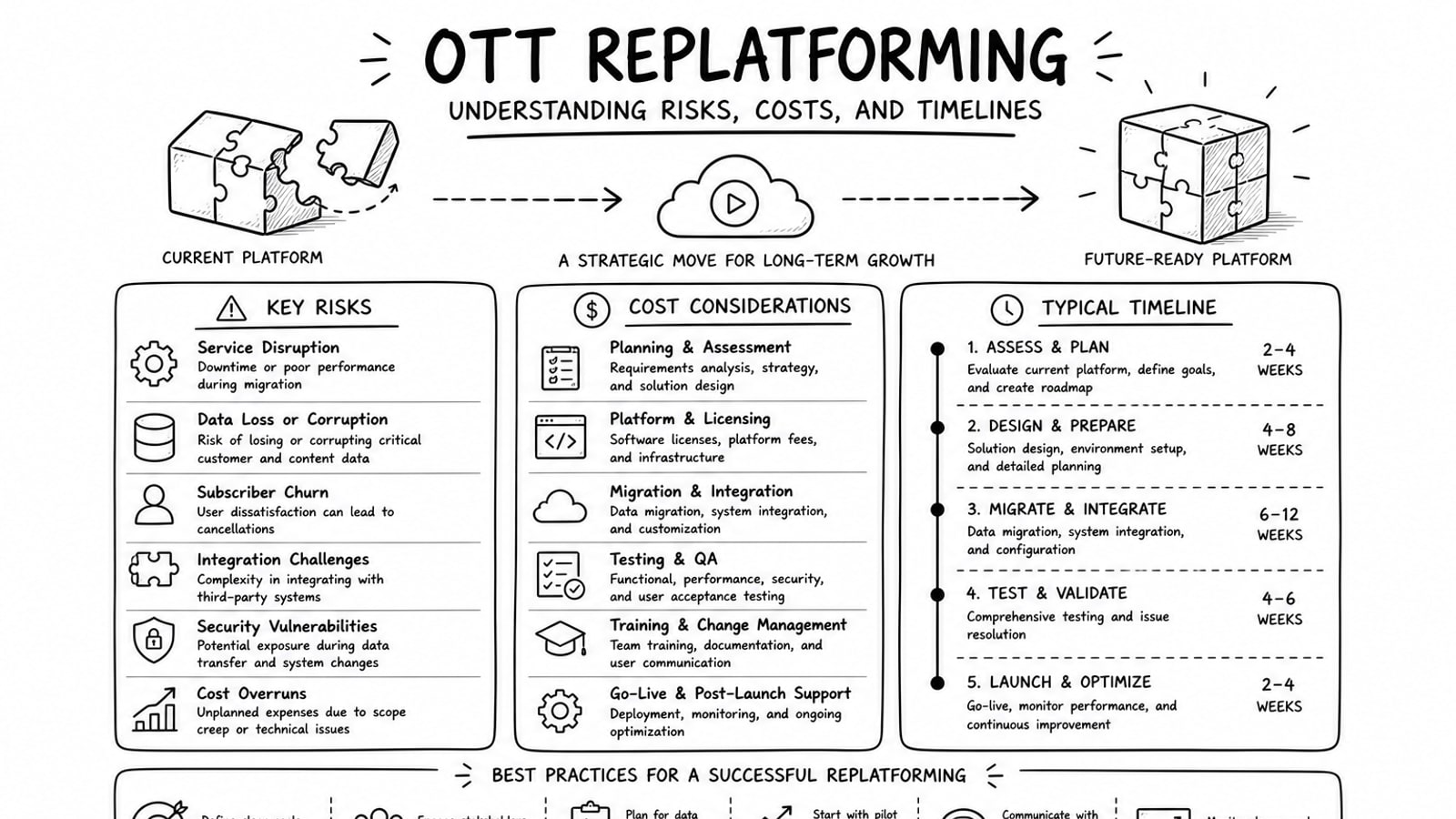
OTT Replatforming: Understanding Risks, Costs, and Timelines
A practical guide to OTT replatforming that explains why teams migrate, what usually drives risk and cost, how long projects tend to take, and where a BYOA delivery model can reduce lock-in.
Read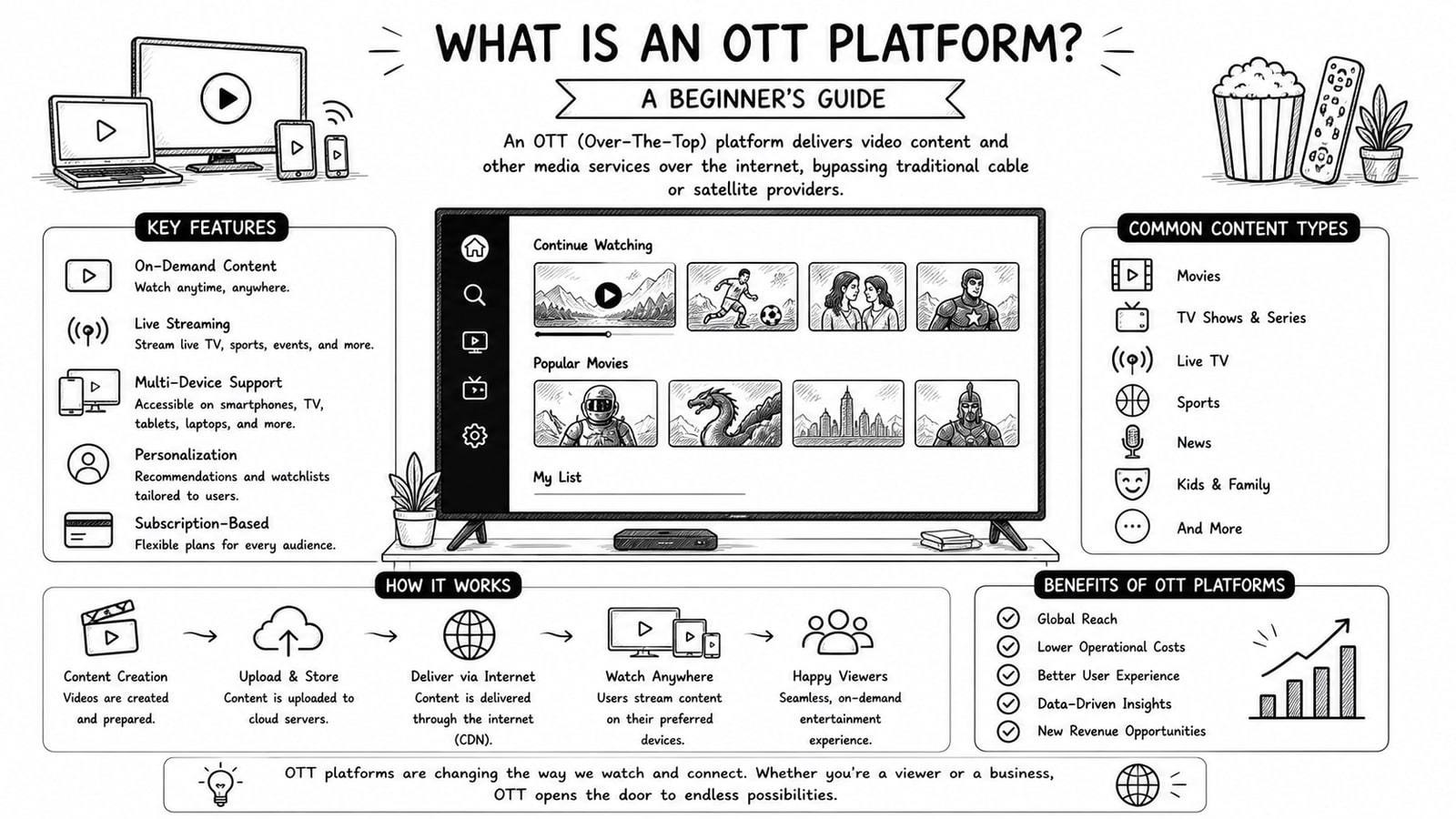
What Is an OTT Platform? A Beginner's Guide
A beginner-friendly guide to OTT platforms, how they work, key components, business models, and what to evaluate before choosing a solution.
Read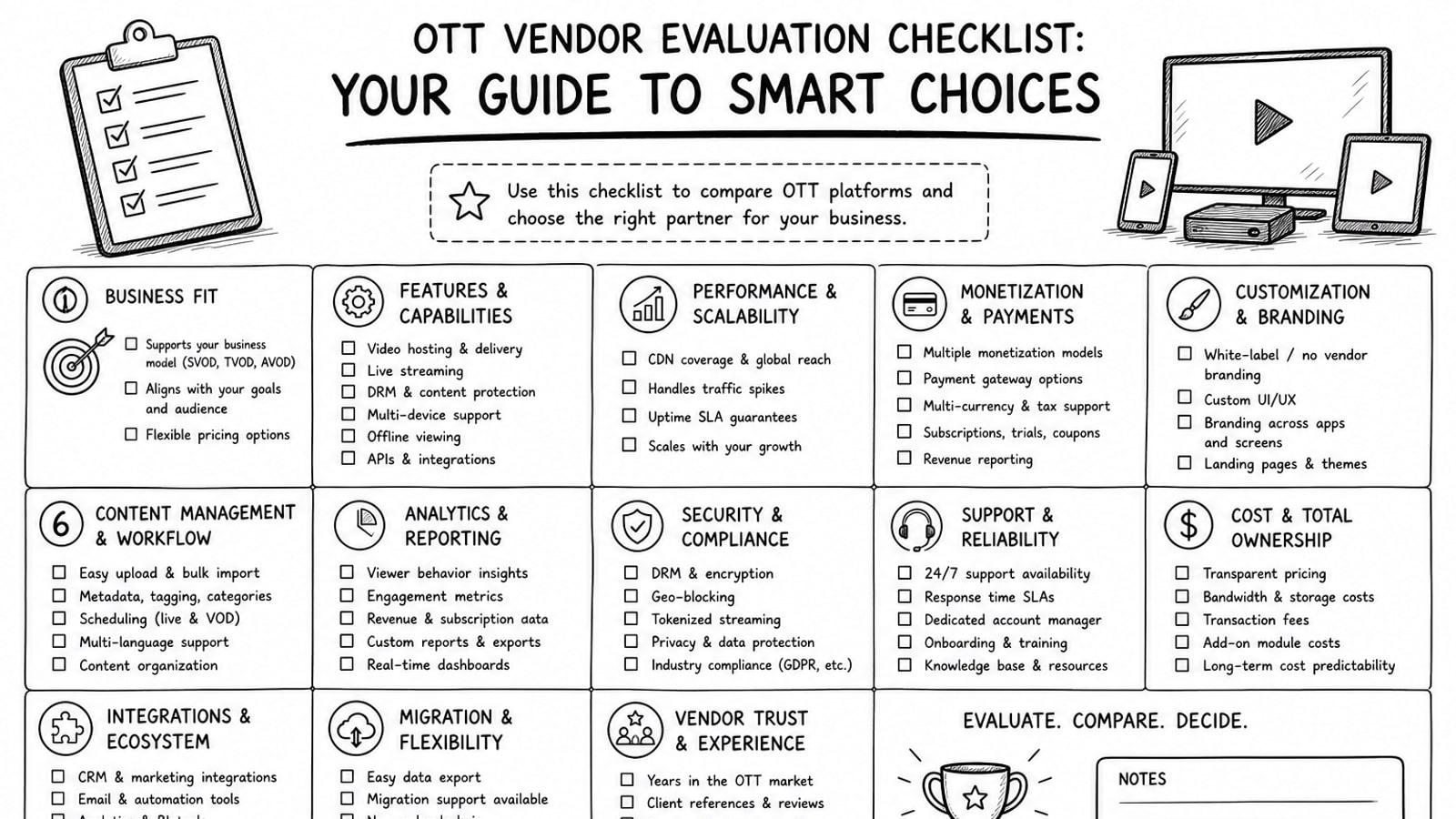
OTT Vendor Evaluation Checklist: Your Guide to Smart Choices
A practical guide to evaluating OTT vendors, with a clear checklist for delivery, security, workflow, cost, ownership, and long-term platform fit.
Read