OTT app development
Choosing an OTT App Development Company: Key Qualities to Consider
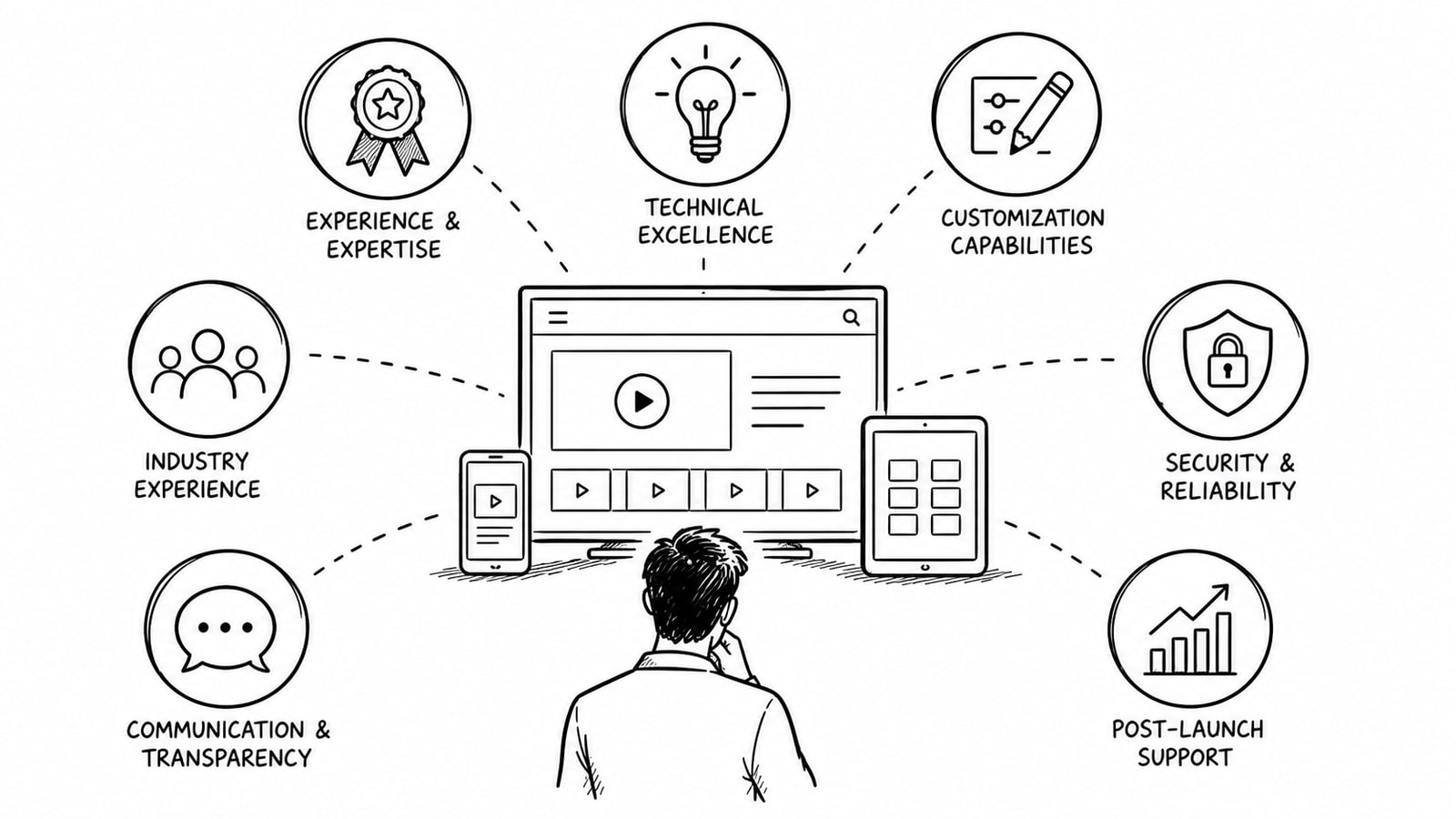
Choosing the right OTT app development company can save months of rework, unexpected infrastructure costs, and user-experience issues after launch. The best partner should understand video delivery, cross-platform product development, content security, and the business realities of subscription, advertising, or pay-per-view models.
Quick Answer
When comparing OTT app development companies, look for proven expertise in streaming architecture, multi-platform app delivery, security, monetization, analytics, and transparent infrastructure ownership. A good vendor should help you launch faster without locking you into unclear fees, rigid tooling, or an architecture you cannot control later.
Key Takeaways
Pick a partner that understands both app development and the underlying video pipeline.
Ask how the company handles hosting, storage, delivery, and account ownership before you sign.
Make sure the vendor can ship for web, mobile, and TV platforms with a consistent playback experience.
Prioritize transparent pricing, support expectations, and post-launch maintenance.
Why the Right OTT App Development Company Matters
OTT products are more complex than standard content apps. A streaming platform needs reliable ingest, encoding, playback, adaptive delivery, content management, user authentication, billing logic, analytics, and moderation or access control. If a development company is strong in frontend design but weak in video infrastructure, the result can look polished while failing under real user traffic.
That is why vendor selection should focus on operational fit as much as visual design or hourly rate. The wrong architecture can create expensive storage, bandwidth, or migration problems later.
Key Qualities to Look for in an OTT App Development Company
1. Real streaming architecture experience
A capable OTT app development company should be comfortable discussing encoding workflows, adaptive bitrate streaming, playback compatibility, live versus on-demand requirements, and delivery tradeoffs. This matters because OTT performance depends on more than app screens. It depends on the full path from upload to playback.
For example, Cloudflare Stream documents support for upload, storage, encoding, and delivery in websites and native apps, while also supporting adaptive bitrate playback and standard delivery formats such as HLS and DASH. A serious vendor should be able to explain how it will use services like these, or comparable infrastructure, in your stack.
2. Multi-platform product delivery
Many OTT businesses need more than one app at launch. Web, iOS, Android, Android TV, Apple TV, and smart TV environments all bring their own expectations. Your development partner should show how it handles playback behavior, navigation, authentication, and release processes across platforms instead of treating them as simple reskins.
Platform requirements are not optional details. Apple maintains App Store Review Guidelines, and Google publishes Android TV app quality requirements, both of which affect approval and user experience. A vendor that ignores these details can slow your launch even if the core app is technically complete.
3. Clear security and access-control planning
Content protection is a business issue, not just a technical one. Depending on your model, you may need signed URLs, authenticated access, geo-restrictions, subscriber-only playback, or DRM planning. Ask the vendor how it protects paid or private content and what security controls are available in the chosen infrastructure.
If the company gives vague answers about content protection, tokenized playback, or account-level controls, that is a warning sign. OTT apps often handle premium assets, so weak access control can turn into lost revenue or a rushed platform rewrite.
4. Practical monetization and analytics support
A good OTT app development company should understand how product and revenue connect. That includes subscriptions, ad-supported content, pay-per-view events, coupon logic, trial periods, user segmentation, and reporting. Even if monetization is not phase one, the architecture should leave room for it.
Ask what analytics will be available to your team after launch. You should know whether the solution can track viewership, retention, content performance, user actions, and operational signals such as playback errors or upload failures.
5. Transparent infrastructure ownership and pricing
This is one of the most overlooked parts of vendor selection. Some agencies build on accounts they control, then roll hosting, storage, and delivery into a bundled monthly price that becomes hard to audit. That can create long-term dependence and make migrations painful.
A stronger model is direct account ownership by the client. If your vendor supports a Bring Your Own Account approach, your business keeps control of services such as video delivery, storage, and related billing. Bitbyte3 positions its OTT solution around this idea, describing a Bring Your Own Account model that can let clients use their own infrastructure accounts, such as Cloudflare Stream for video and image workflows, rather than being restricted to vendor-managed fees or storage limits. Before choosing any provider, ask exactly which accounts you will own and which recurring costs you will pay directly.
That conversation also helps with budget realism. Cloudflare Stream, for instance, publicly documents usage-based pricing around stored and delivered video minutes, which makes cost modeling easier than opaque bundled billing.
6. Reliable post-launch support
Launch is only the start. OTT teams usually need bug fixing, app store submissions, feature updates, playback tuning, infrastructure monitoring, and content workflow adjustments. Ask how the company handles maintenance windows, issue escalation, response times, and roadmap work after the first release.
Questions to Ask Before You Hire an OTT App Development Company
Which platforms will you build for in phase one, and which can be added later without a rewrite?
Who owns the cloud, video, CDN, analytics, and app store accounts?
How will video uploads, encoding, playback, and content protection be handled?
What metrics will our internal team be able to access after launch?
What does support include during the first 30, 60, and 90 days after release?
Common Mistakes When Evaluating OTT Vendors
Choosing based on design mockups alone without reviewing the streaming stack.
Ignoring account ownership and discovering later that key services sit under the vendor's control.
Underestimating app store, smart TV, and playback quality requirements.
Failing to define post-launch support and performance monitoring before the contract starts.
How to Shortlist the Right Partner
Start with a simple shortlist scorecard. Evaluate each company on platform coverage, streaming expertise, security planning, infrastructure transparency, monetization support, analytics, launch process, and post-launch maintenance. Ask for architecture explanations in plain language. If a company cannot clearly explain how your OTT product will run, scale, and be billed, that is useful information.
If cost control and account ownership matter to your team, include those as weighted selection criteria. In many cases, a slightly higher development fee can still be the better choice if it reduces long-term vendor lock-in and gives your business direct control over storage, streaming, and infrastructure billing.
Conclusion
The best OTT app development company is not just the one that can build an app. It is the one that can help you launch a stable streaming product, protect your content, support multiple platforms, and keep your operating model understandable as you grow. If you are comparing vendors, ask direct questions about architecture, ownership, and long-term costs before you commit.
Teams exploring a more flexible operating model can review Bitbyte3 at https://bitbyte3.com/ and ask whether its OTT solution and client-owned account approach fit their delivery, budget, and control requirements.
Sources and Further Reading
About the Author
R. Jabar
Marketing Strategist
R. Jabar is a marketing strategist who helps streaming and OTT brands turn complex product stories into clear, growth-driven messaging. She writes about audience acquisition, content monetization, and the marketing frameworks that help video platforms scale.
More from the blog
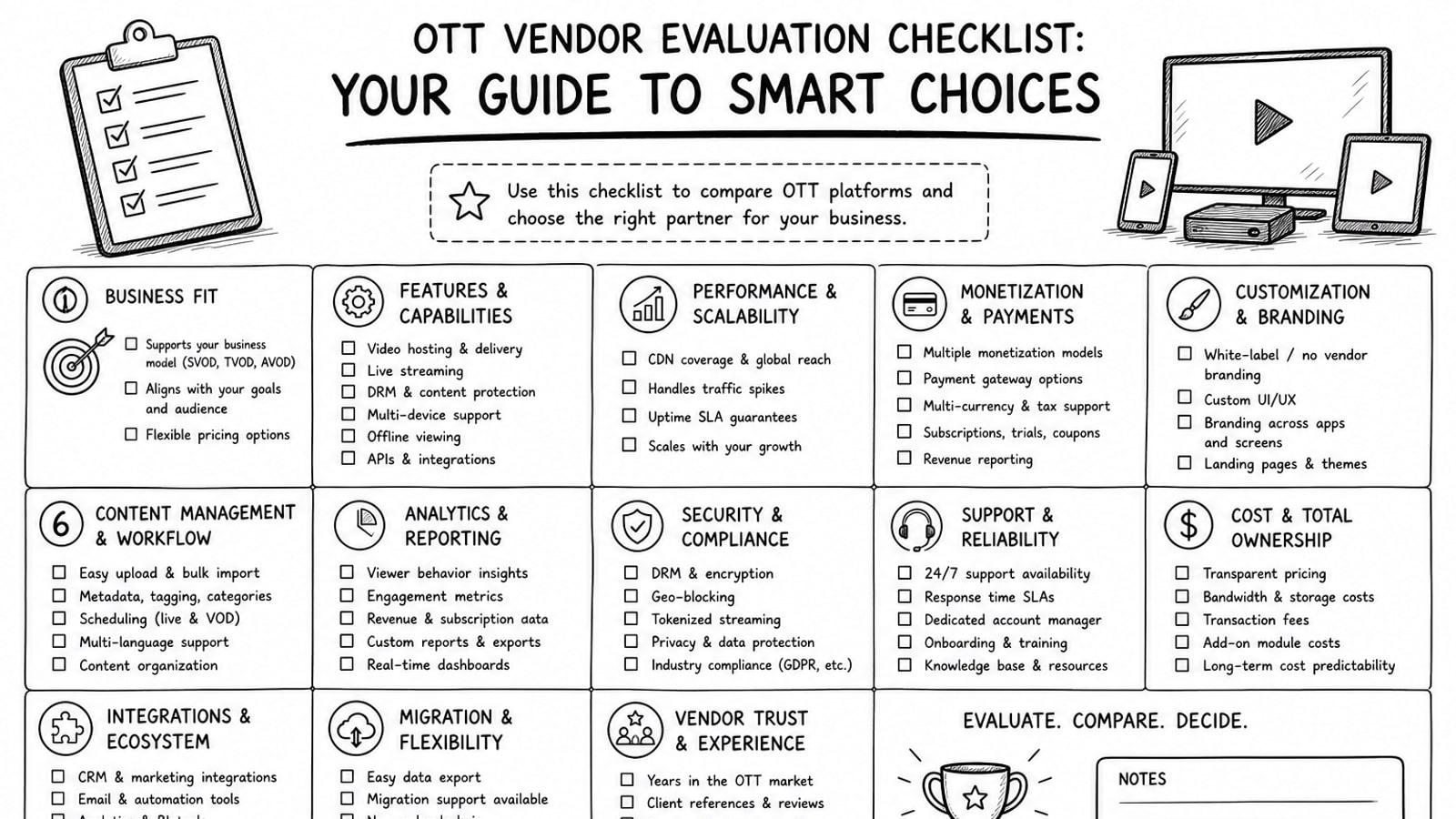
OTT Vendor Evaluation Checklist: Your Guide to Smart Choices
A practical guide to evaluating OTT vendors, with a clear checklist for delivery, security, workflow, cost, ownership, and long-term platform fit.
Read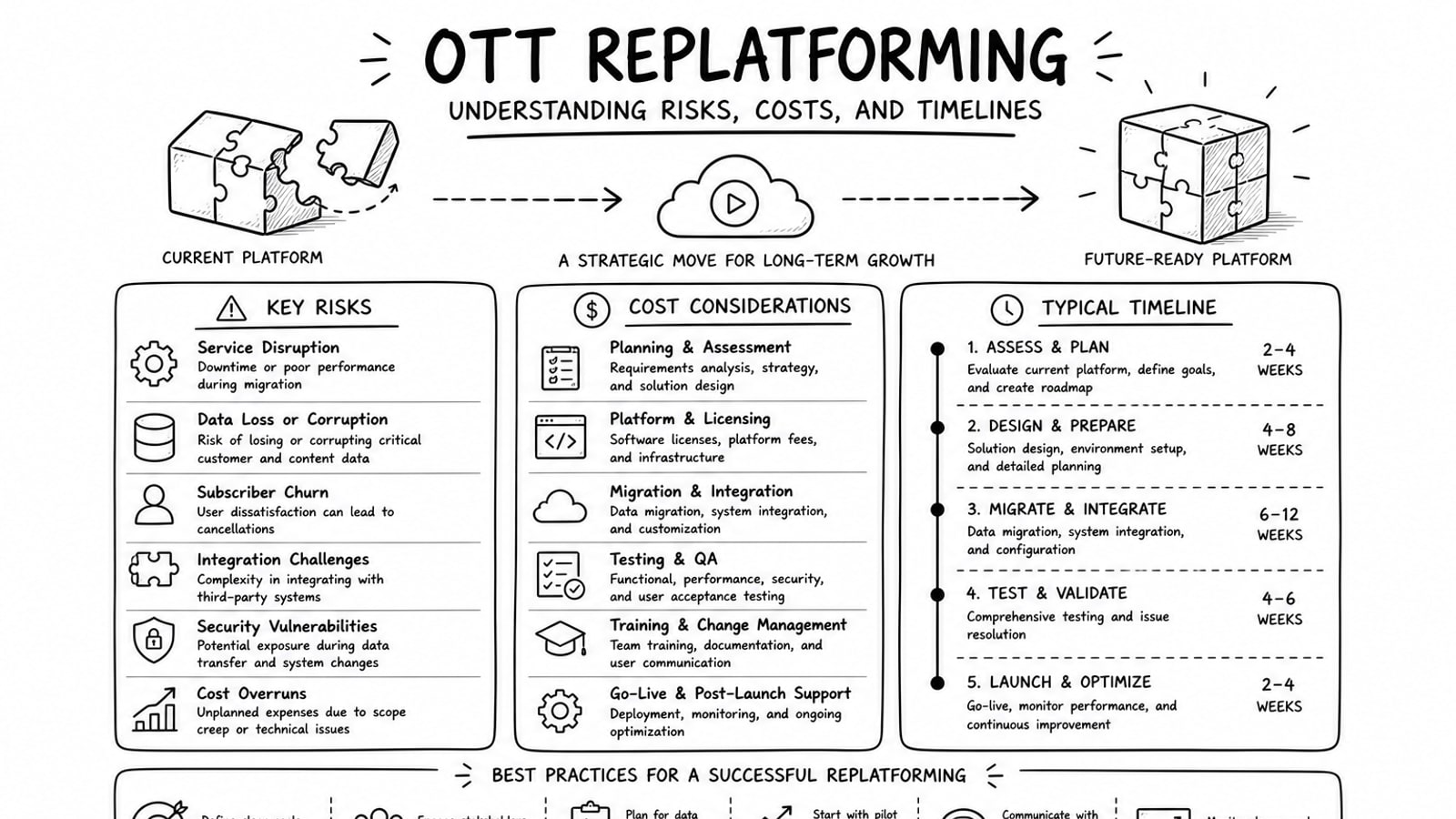
OTT Replatforming: Understanding Risks, Costs, and Timelines
A practical guide to OTT replatforming that explains why teams migrate, what usually drives risk and cost, how long projects tend to take, and where a BYOA delivery model can reduce lock-in.
Read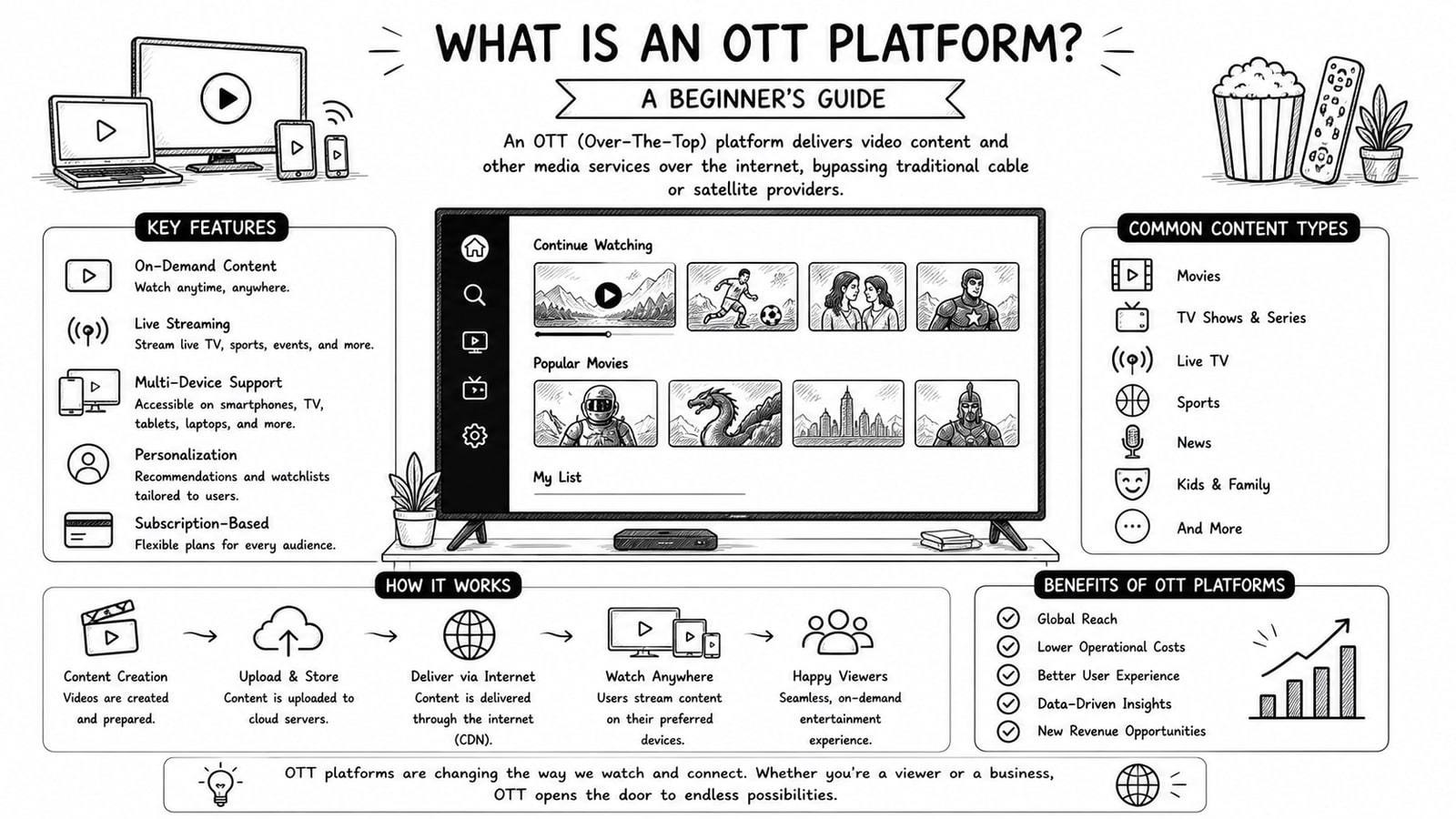
What Is an OTT Platform? A Beginner's Guide
A beginner-friendly guide to OTT platforms, how they work, key components, business models, and what to evaluate before choosing a solution.
Read