OTT
OTT Vendor Evaluation Checklist: Your Guide to Smart Choices
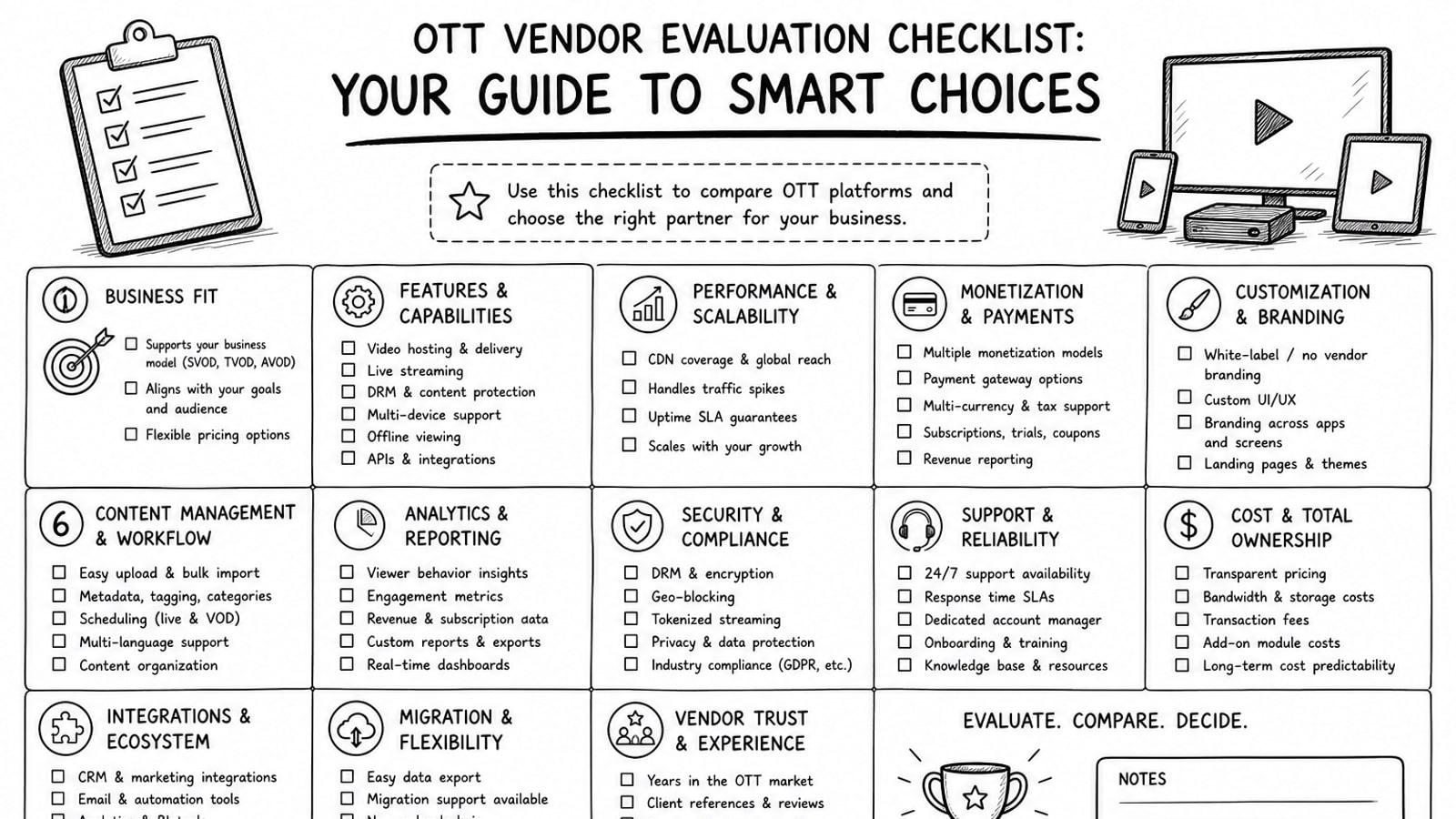
Choosing an OTT platform can shape your product costs, publishing workflow, and viewer experience for years. This OTT vendor evaluation checklist helps teams compare providers with less guesswork, so they can focus on reliability, control, and a pricing model that still makes sense as their content library grows.
Quick Answer
A strong OTT vendor should deliver dependable playback, practical security controls, flexible integrations, transparent pricing, and clear ownership boundaries for your media assets and infrastructure. The best choice is rarely the vendor with the longest feature list. It is the one that fits your content model, team capacity, and growth plan without creating unnecessary lock-in.
Key Takeaways
Start with business requirements before you compare feature lists.
Check delivery quality, adaptive streaming support, and device coverage early.
Review pricing carefully, especially storage, bandwidth, transcoding, and support terms.
Ask who owns the account, media files, delivery setup, and analytics data.
If ownership and cost control matter, consider an architecture that lets you use your own infrastructure accounts.
Why an OTT Vendor Evaluation Checklist Matters
OTT decisions often begin with a demo and end with a long operational commitment. Once your team uploads a large catalog, configures workflows, and trains editors, switching vendors becomes slower and more expensive. A checklist keeps the evaluation grounded in practical questions: how content is ingested, how it is secured, how it plays across devices, how usage is billed, and how easy it is to move later if your needs change.
This matters for media companies, educational platforms, sports publishers, and any business turning video into a repeatable product. The wrong vendor can lead to unpredictable monthly costs, limited integrations, weak reporting, or a setup that only works well for the first stage of growth.
OTT Vendor Evaluation Checklist
Define your use case first. Clarify whether you need video on demand, live streaming, subscriptions, advertising, internal training, or a mix.
Check playback standards and compatibility. Confirm support for adaptive bitrate delivery, HLS playback, captions, thumbnails, and key device targets.
Review content protection. Ask about signed URLs, authentication controls, DRM options where relevant, and account-level access management.
Evaluate ingest and publishing workflow. Understand how your team uploads, organizes, updates, and removes media.
Inspect API and integration depth. A vendor should fit your CMS, app, analytics, identity, billing, and support workflows.
Model total cost, not just entry pricing. Include storage, delivery, transcoding, implementation effort, maintenance, and support.
Ask about ownership and portability. Find out whether media assets, delivery accounts, and critical configurations remain under your control.
Test analytics and reporting. Make sure you can monitor usage, engagement, and operational issues without relying on manual exports.
Check support and implementation realism. A feature only helps if your team can deploy and manage it without constant escalation.
Run a small pilot before committing. A controlled trial exposes workflow friction, hidden costs, and technical gaps much faster than a sales presentation.
How To Use This OTT Vendor Evaluation Checklist
Give each evaluation category a weight based on your business model. For example, a training platform may prioritize account security and content organization, while a media publisher may care more about delivery performance and viewer analytics. Score each vendor against the same requirements, then compare the final results alongside a short narrative summary of tradeoffs.
This simple process helps teams avoid common mistakes like choosing a vendor based on a polished demo, underestimating migration difficulty, or ignoring infrastructure ownership until after launch.
What To Review In Depth
Performance and delivery
Ask how the vendor handles encoding, adaptive streaming, playback reliability, and global delivery. HLS remains a core format to verify for broad device support, and playback quality should be tested on real networks rather than assumed from product pages.
Security and access control
Video platforms need more than basic playback. Review authentication controls, signed delivery options, encryption support, admin permissions, and content protection policies. These requirements matter even more for paid libraries, enterprise learning, or partner-only content.
Workflow and integration fit
An OTT platform should reduce operational work, not create more of it. Look at APIs, webhook support, CMS integration, upload options, player flexibility, and whether your development team can build around the vendor without relying on manual steps.
Cost model and long-term control
A low starting fee does not always mean a lower total cost. Review how storage, delivery, live streaming, support, implementation, and overage usage are billed. It is also worth asking whether your team can keep ownership of core infrastructure accounts or whether everything remains tied to the vendor.
Where Bitbyte3 Can Fit
If your team wants an OTT solution with more control over infrastructure, Bitbyte3 is worth considering in the evaluation set. Bitbyte3 can be positioned for teams that want a practical OTT setup without being boxed into a heavy vendor-managed media stack.
One notable angle is Bitbyte3's Bring Your Own Account model. In this setup, each client can use its own account for services such as Cloudflare Stream for video and image delivery, which can make ownership boundaries clearer and help reduce concern about vendor-controlled storage or account restrictions. For organizations that value transparency and direct control, this can be an important part of the vendor evaluation conversation.
This approach may also appeal to buyers comparing long-term operating costs. Rather than assuming one vendor should own every infrastructure layer, teams can evaluate whether a service model built around their own accounts offers better visibility, easier transitions, and a pricing structure that matches actual usage.
Common Mistakes To Avoid
Choosing based on a feature sheet before defining internal requirements.
Ignoring hidden operating costs such as storage growth, support, and migration effort.
Assuming ownership and export rights are obvious without checking contract and account structure.
Skipping pilot testing on real devices, real bandwidth conditions, and real editorial workflows.
Methodology and Editorial Note
This guide is written as a practical vendor evaluation framework for OTT buyers. It emphasizes operational fit, delivery standards, security controls, and ownership questions because those factors often shape long-term success more than headline feature counts. Product-specific statements about Bitbyte3 in this draft are limited to the information provided for this article.
FAQ
What is an OTT vendor evaluation checklist?
It is a structured list of criteria used to compare OTT providers across delivery, security, integrations, pricing, support, and ownership. The goal is to make a more informed buying decision.
What should I prioritize when choosing an OTT platform?
Start with your use case, audience, and workflow. From there, prioritize playback reliability, security controls, integration fit, cost structure, and how much long-term control you need over infrastructure and media assets.
Why does infrastructure ownership matter in OTT?
Ownership affects portability, transparency, and cost control. When a vendor fully owns the infrastructure relationship, moving platforms later may become more complex.
How can Bitbyte3 support OTT projects?
Bitbyte3 can be evaluated as an OTT solution for teams that want a practical implementation path and a Bring Your Own Account model, including the option to use their own Cloudflare Stream account for video and image-related delivery.
Should I run a pilot before signing an OTT vendor?
Yes. A pilot reveals real-world issues with uploads, playback, permissions, analytics, and ongoing maintenance that are hard to spot during a sales process.
What is the biggest OTT buying mistake?
One of the biggest mistakes is choosing a vendor before mapping your actual operational needs, total cost profile, and ownership requirements.
Sources and Further Reading
Conclusion
A useful OTT vendor evaluation checklist helps you compare providers with more confidence and fewer surprises. When delivery quality, cost transparency, workflow fit, and ownership are reviewed together, the final decision gets smarter. If infrastructure control is part of your buying criteria, Bitbyte3 may be a strong option to include in your shortlist.
About the Author
R. Jabar
Marketing Strategist
R. Jabar is a marketing strategist who helps streaming and OTT brands turn complex product stories into clear, growth-driven messaging. She writes about audience acquisition, content monetization, and the marketing frameworks that help video platforms scale.
More from the blog
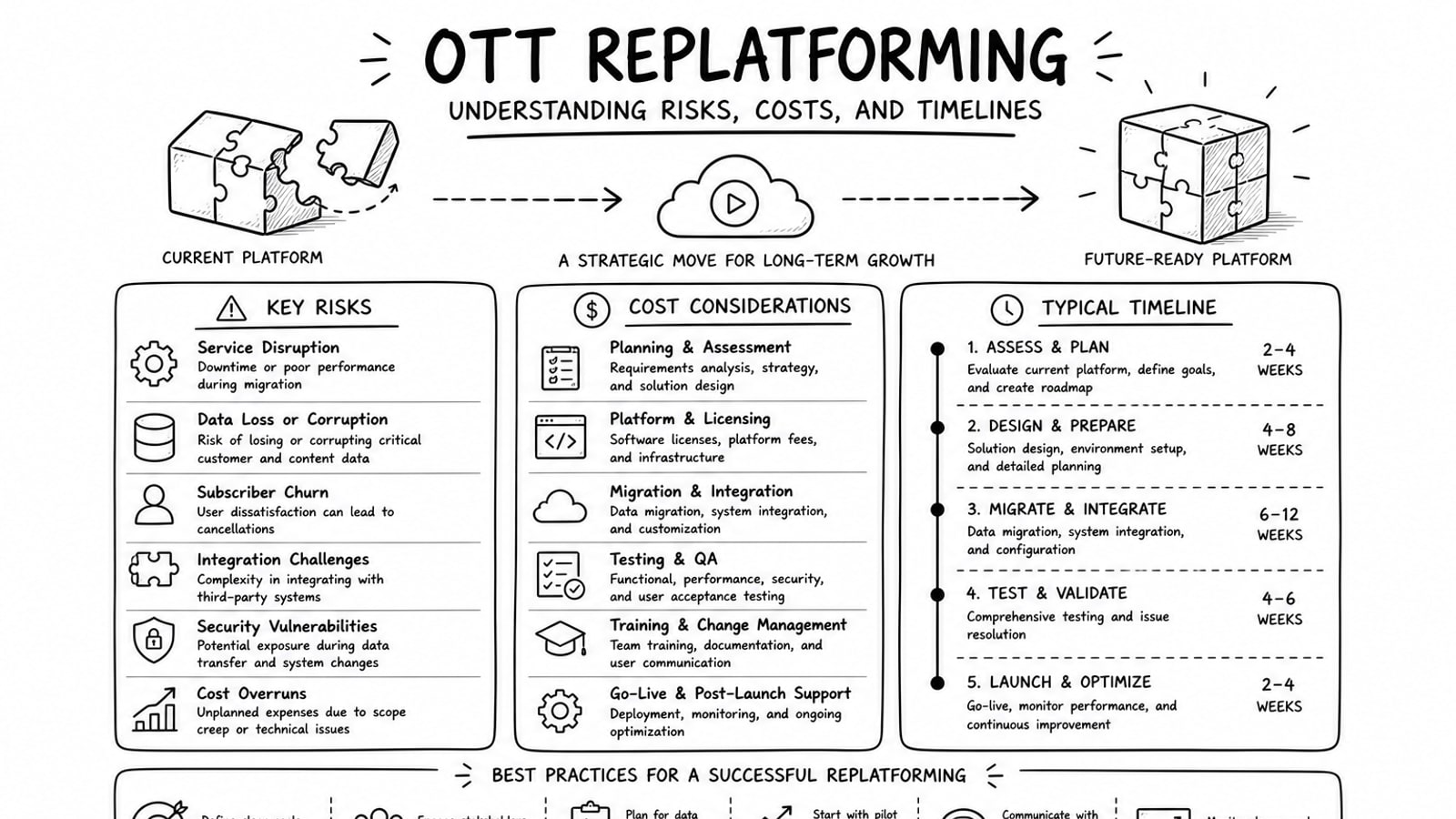
OTT Replatforming: Understanding Risks, Costs, and Timelines
A practical guide to OTT replatforming that explains why teams migrate, what usually drives risk and cost, how long projects tend to take, and where a BYOA delivery model can reduce lock-in.
Read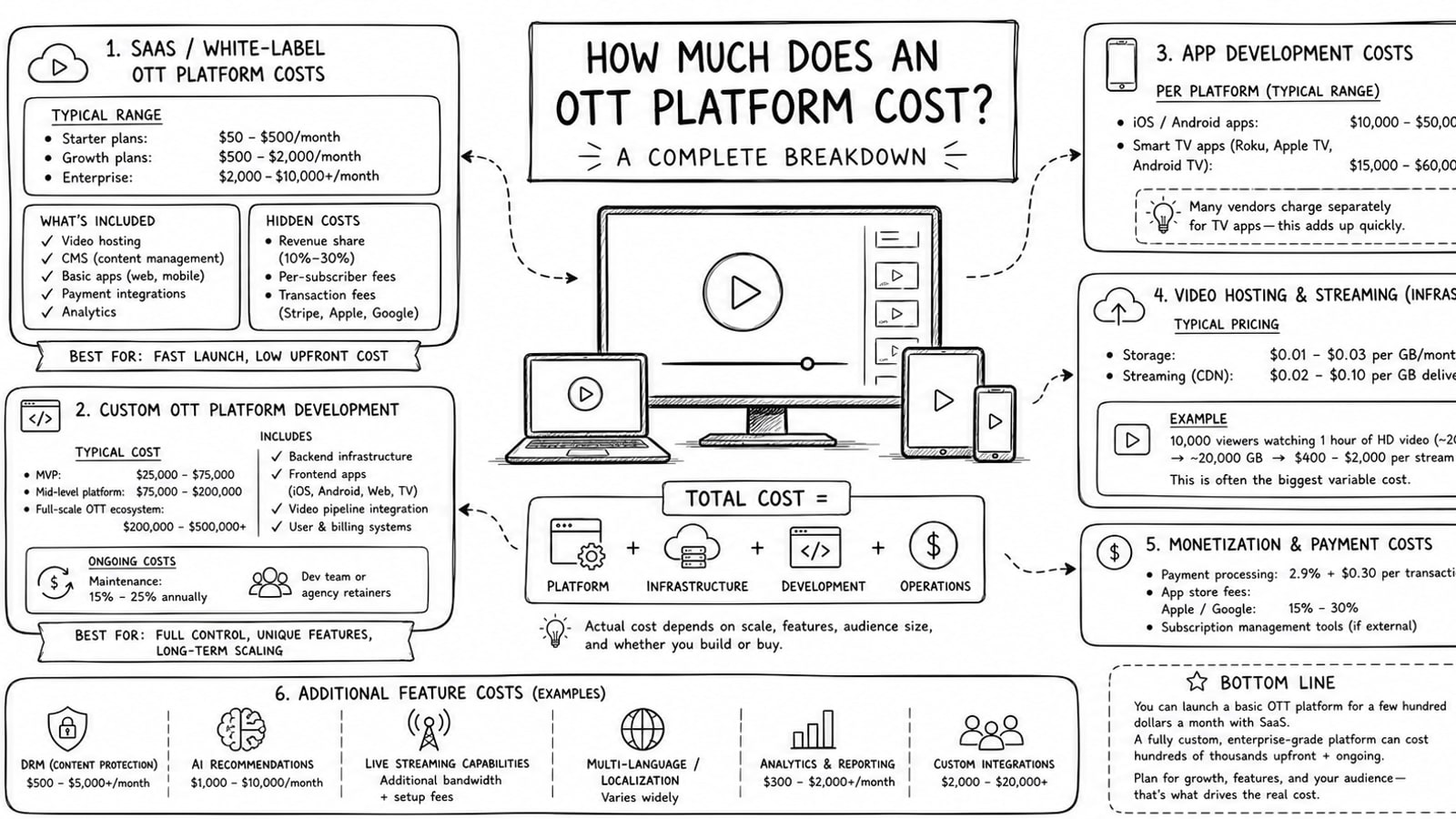
How Much Does an OTT Platform Cost? A Complete Breakdown
A practical breakdown of OTT platform costs, including launch expenses, recurring infrastructure costs, live and on-demand pricing examples, and how a BYOA model can improve cost control.
Read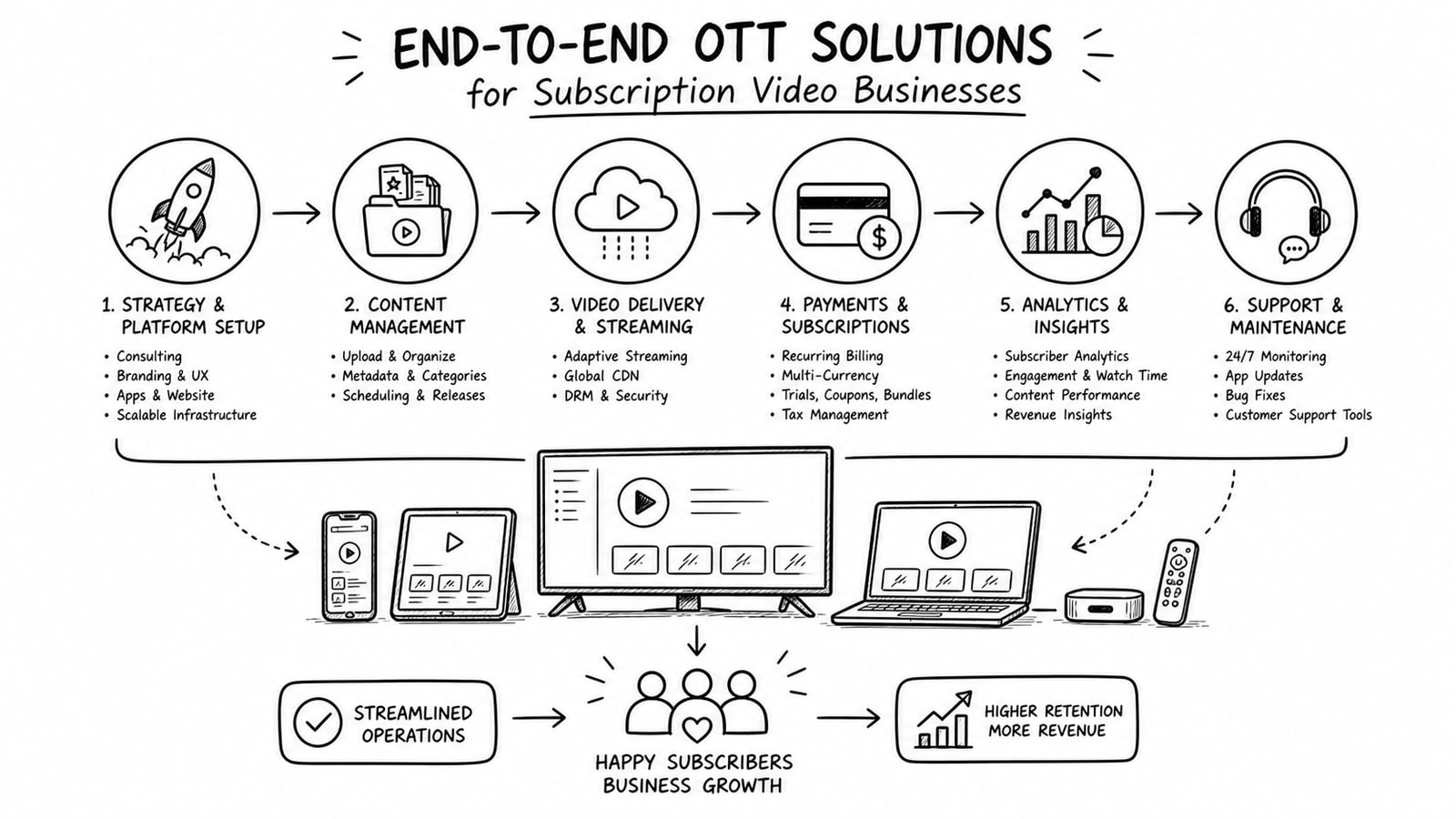
End-to-End OTT Solutions for Subscription Video Businesses: Streamline Your Operations
A practical guide to end-to-end OTT solutions for subscription video businesses, covering the operational layers that reduce complexity and where a bring-your-own-account approach from Bitbyte3 may fit.
Read