OTT
OTT Platform Pricing Explained: What You Need to Know
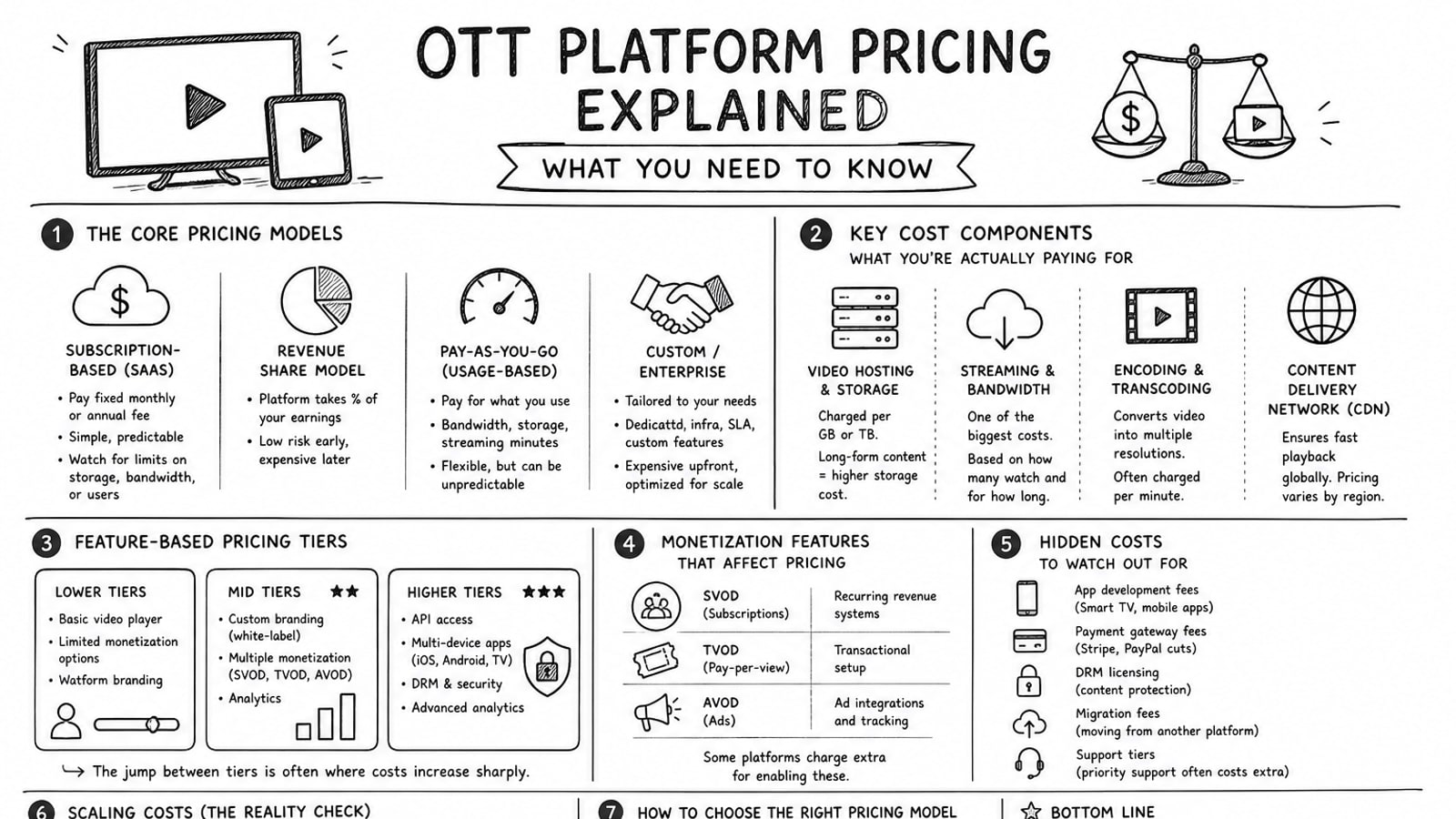
OTT platform ="/pricing">pricing can look simple at first, but the real cost usually depends on how your video is hosted, delivered, stored, and managed over time. If you are evaluating an OTT solution, the key is not only the monthly fee. You also need to understand usage-based charges, infrastructure markups, storage rules, and whether the platform gives you direct control over the services behind your streaming stack.
Quick Answer
OTT platform pricing usually includes a mix of software fees and usage-based infrastructure costs. The biggest cost drivers are video storage, streaming delivery, transcoding, user scale, support level, and any markup a vendor adds on top of third-party services. A more transparent model gives you visibility into those layers so your costs are easier to predict.
Key Takeaways
The lowest advertised plan is rarely the full cost of running an OTT platform.
Storage, delivery, and transcoding can change your bill more than the software subscription itself.
Usage-based pricing is not bad by itself, but it needs clear measurement and billing visibility.
A Bring Your Own Account model can reduce vendor lock-in and help you avoid hidden markups on infrastructure.
Before choosing a platform, ask how costs scale when your library, traffic, or number of subscribers grows.
What OTT Platform Pricing Usually Includes
Most OTT pricing models combine platform access with variable operating costs. In practice, that means your quote may cover the admin dashboard, apps, or core product features, while the actual media costs continue to rise based on use.
Platform fee: the recurring charge for the OTT software, CMS, monetization tools, analytics, or white-label apps.
Video storage: the amount of uploaded or recorded content you keep online.
Video delivery: the amount of playback consumed by viewers.
Transcoding and processing: the work required to convert uploaded files into stream-ready formats.
Support and custom work: onboarding, migration, integrations, SLA coverage, or branded app development.
What Drives OTT Platform Pricing Up or Down
The main reason OTT pricing varies so much is that different businesses stress different parts of the stack. A training platform with a modest audience may store a large archive but deliver fewer playback minutes. A live sports service may have intense traffic spikes and higher delivery costs even with a smaller content library.
1. Storage Volume
Some providers bill storage by video minutes stored, while others bill related cloud services separately. For example, Cloudflare Stream says storage is billed by minutes stored, and AWS notes that media workflows may also incur separate storage and transfer charges through related services such as Amazon S3.
2. Playback and Delivery
Viewer consumption is one of the biggest pricing variables. Cloudflare Stream publishes delivery pricing by minutes delivered, while other vendors package a certain amount of viewing into a plan before overage fees apply. This is why a fast-growing audience can turn an apparently affordable OTT plan into a much larger operating expense.
3. Transcoding Complexity
Encoding costs depend on what formats, resolutions, and workflows you need. AWS Elemental MediaConvert explains that pricing changes according to the output features used, with normalized minutes increasing as complexity rises. That matters if your service needs multiple renditions, higher quality outputs, or professional broadcast features.
4. Product Scope
Pricing also changes based on whether you need only video delivery or a full OTT business stack. White-label apps, subscriptions, ad monetization, analytics, DRM, user management, and multilingual experiences all affect the final price.
A Simple Framework for Evaluating OTT Pricing
A useful way to compare providers is to break each offer into four layers. This makes hidden costs easier to spot.
Software layer: what the OTT platform itself costs each month or year.
Infrastructure layer: what video storage, delivery, and processing actually cost.
Markup layer: whether the vendor adds margin on top of third-party infrastructure.
Growth layer: how costs change when your content library, audience, or number of clients expands.
Why OTT Buyers Should Ask About Account Ownership
One of the most overlooked pricing questions is who owns the underlying infrastructure account. If the OTT vendor controls everything under its own account, the customer may have less visibility into actual storage, video, or media delivery charges. That can make it harder to audit bills, forecast future costs, or switch providers later.
This is where a Bring Your Own Account model can be attractive. In that setup, the client uses its own infrastructure account for services such as video and image delivery, while the OTT solution manages the platform experience on top. The commercial advantage is usually better transparency and more direct control over usage-based costs.
Where Bitbyte3 Fits
Bitbyte3 offers an OTT solution designed around pricing clarity. A key part of that approach is a BYOA, or Bring Your Own Account, model. In practical terms, each client can use its own account for services such as Cloudflare Stream for videos and related image delivery, instead of being forced into a shared vendor-controlled billing structure.
That model may help reduce restrictions around fees and storage because the infrastructure usage remains tied to the client's own account. It can also make long-term OTT cost management easier for teams that want better billing visibility, more control, and less dependency on opaque markups. Learn more at https://bitbyte3.com/.
Common Mistakes When Comparing OTT Platform Pricing
Focusing only on the platform subscription and ignoring media delivery costs.
Assuming storage cost is the same as file size cost. Many services bill by minutes or by separate cloud components.
Not asking how costs change during traffic spikes, live events, or library growth.
Overlooking whether the vendor is reselling third-party infrastructure with a markup.
Skipping questions about account ownership, exportability, and long-term switching costs.
How to Choose the Right OTT Pricing Model
The best OTT pricing model is the one that matches how your business actually grows. If your usage is predictable, a bundled model may be easier to budget. If your traffic varies and you want closer control over underlying services, a transparent usage-based or BYOA model may be a better fit.
Before signing, ask for a sample cost scenario based on your expected content library, monthly watch time, and support requirements. That simple exercise often reveals whether the quote is genuinely competitive or only looks affordable at the entry level.
Conclusion
OTT platform pricing is really about visibility, not just price. The more clearly you understand how software fees, infrastructure charges, and vendor markups work together, the easier it is to choose a platform that stays affordable as you grow. If pricing transparency and account control matter to your team, Bitbyte3's OTT approach is worth evaluating.
FAQ
What does OTT platform pricing usually include?
It usually includes a software fee plus some mix of storage, streaming delivery, video processing, app support, and optional custom development.
Why can OTT pricing vary so much between providers?
Providers package costs differently. Some bundle more features into one plan, while others separate software, hosting, delivery, or infrastructure charges.
What is a Bring Your Own Account model in OTT?
Bring Your Own Account means the client uses its own account for underlying infrastructure or media services. That can improve billing transparency and reduce dependency on vendor-managed markups.
Is usage-based OTT pricing always more expensive?
Not always. It can be more efficient when your usage is moderate or variable, but it needs careful forecasting so unexpected growth does not create surprise bills.
How can I compare OTT vendors more fairly?
Compare the software fee, infrastructure fee, markup policy, and scaling behavior separately. That gives you a more realistic picture than comparing headline plan prices alone.
Methodology / Editorial Note
This article uses public pricing and billing documentation from OTT and cloud video providers to explain common pricing structures. It is intended for general educational use and should be paired with a provider-specific quote and usage forecast before making a purchase decision.
Sources and Further Reading
About the Author
M. Jorani — LinkedIn
Software Engineer & Technical Writer
M. Jorani is a software engineer and technical writer with hands-on experience building streaming infrastructure, video pipelines, and OTT platforms. He writes about encoding, delivery architecture, and the engineering decisions that shape how audiences watch content across devices.
More from the blog
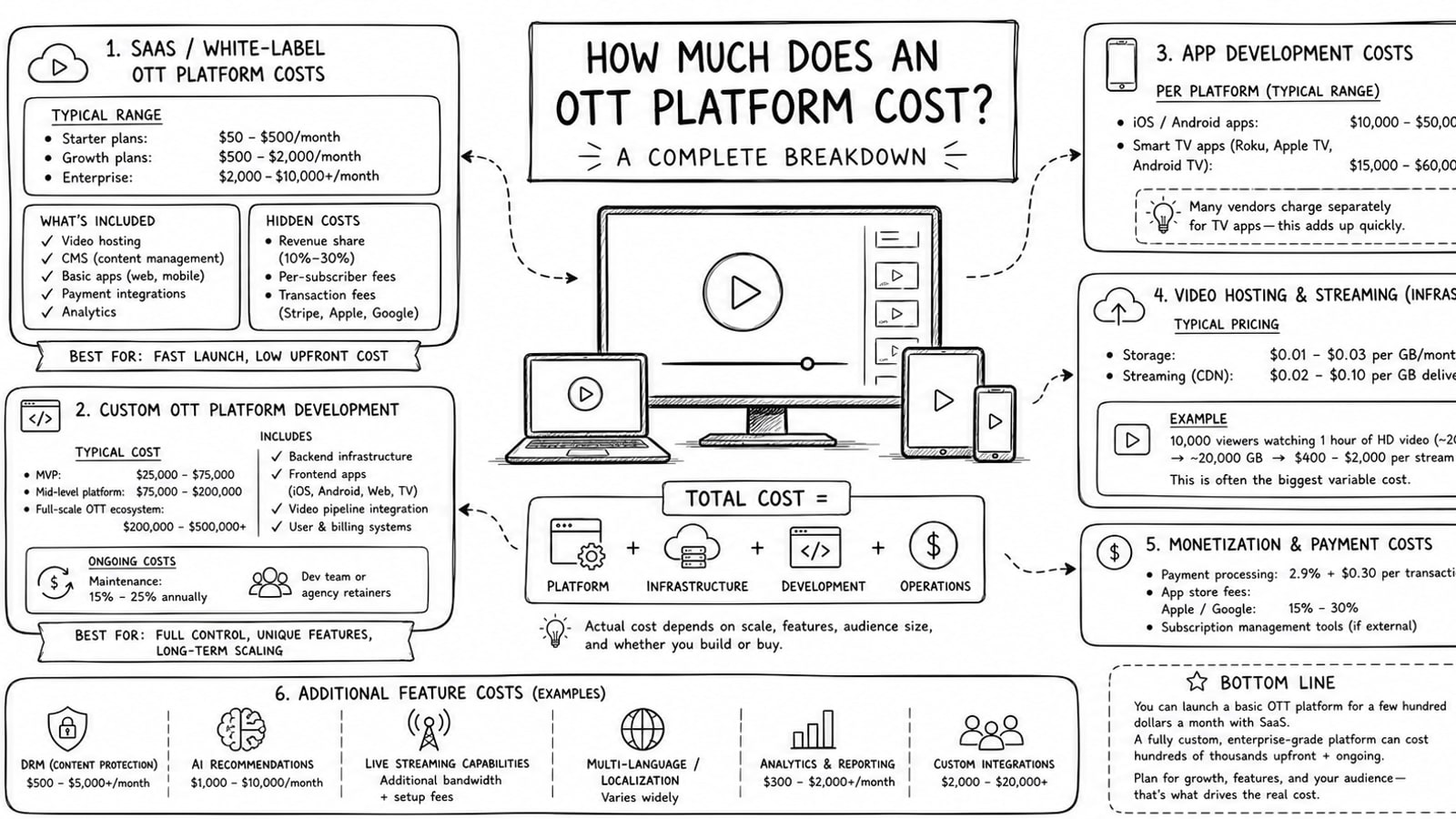
How Much Does an OTT Platform Cost? A Complete Breakdown
A practical breakdown of OTT platform costs, including launch expenses, recurring infrastructure costs, live and on-demand pricing examples, and how a BYOA model can improve cost control.
Read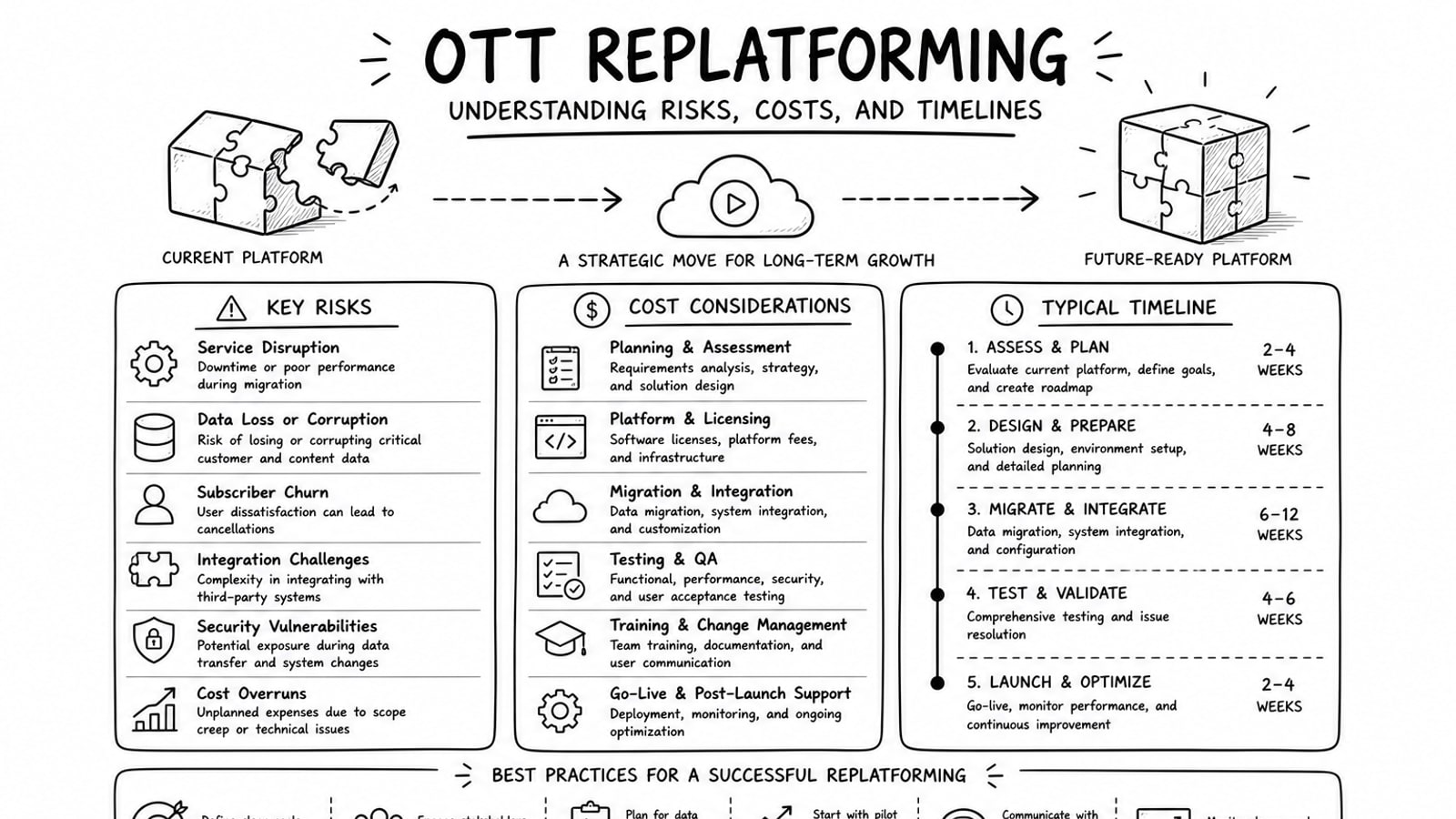
OTT Replatforming: Understanding Risks, Costs, and Timelines
A practical guide to OTT replatforming that explains why teams migrate, what usually drives risk and cost, how long projects tend to take, and where a BYOA delivery model can reduce lock-in.
Read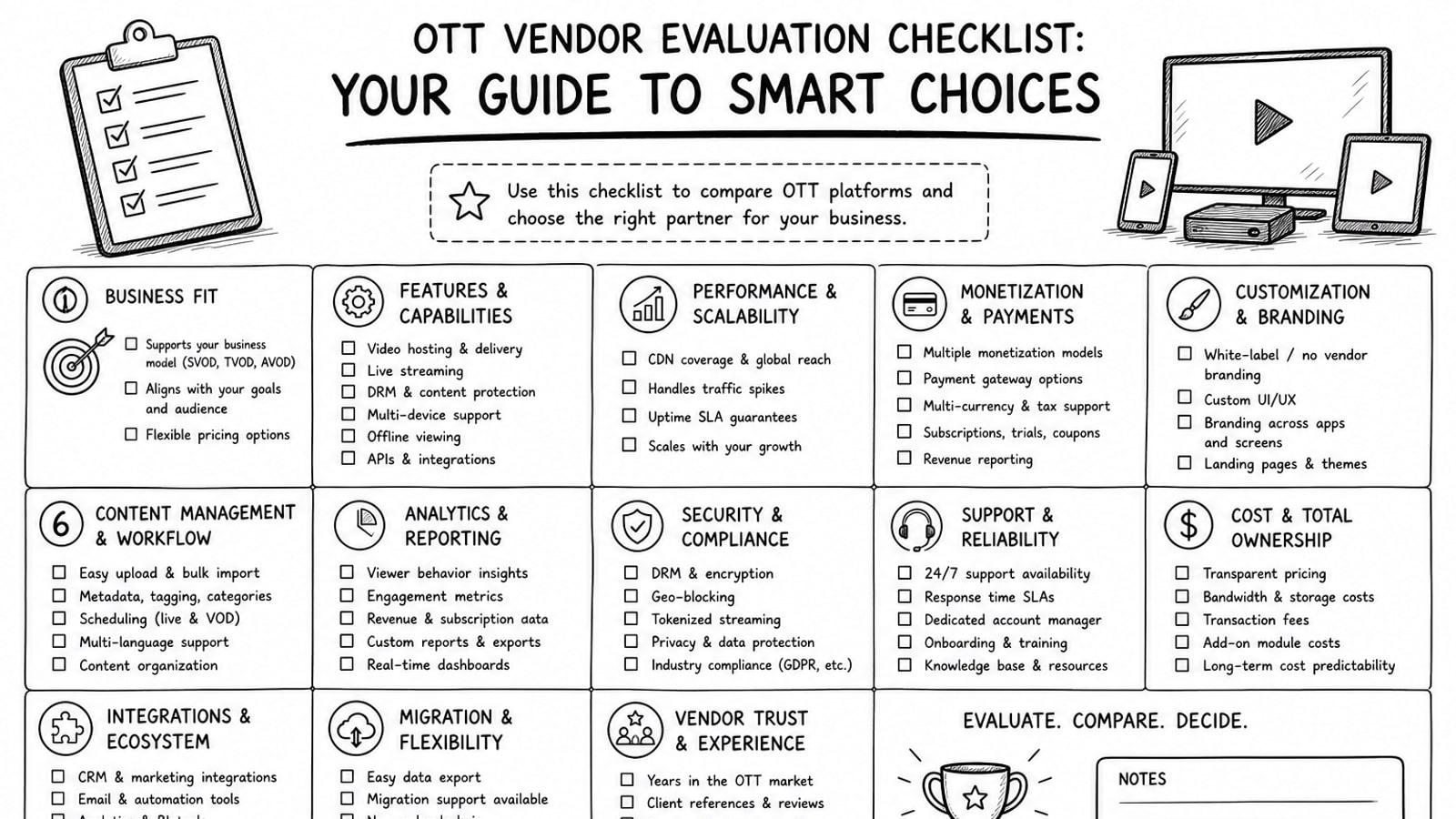
OTT Vendor Evaluation Checklist: Your Guide to Smart Choices
A practical guide to evaluating OTT vendors, with a clear checklist for delivery, security, workflow, cost, ownership, and long-term platform fit.
Read