OTT
How OTT Streaming Platforms Work: The Basics Explained
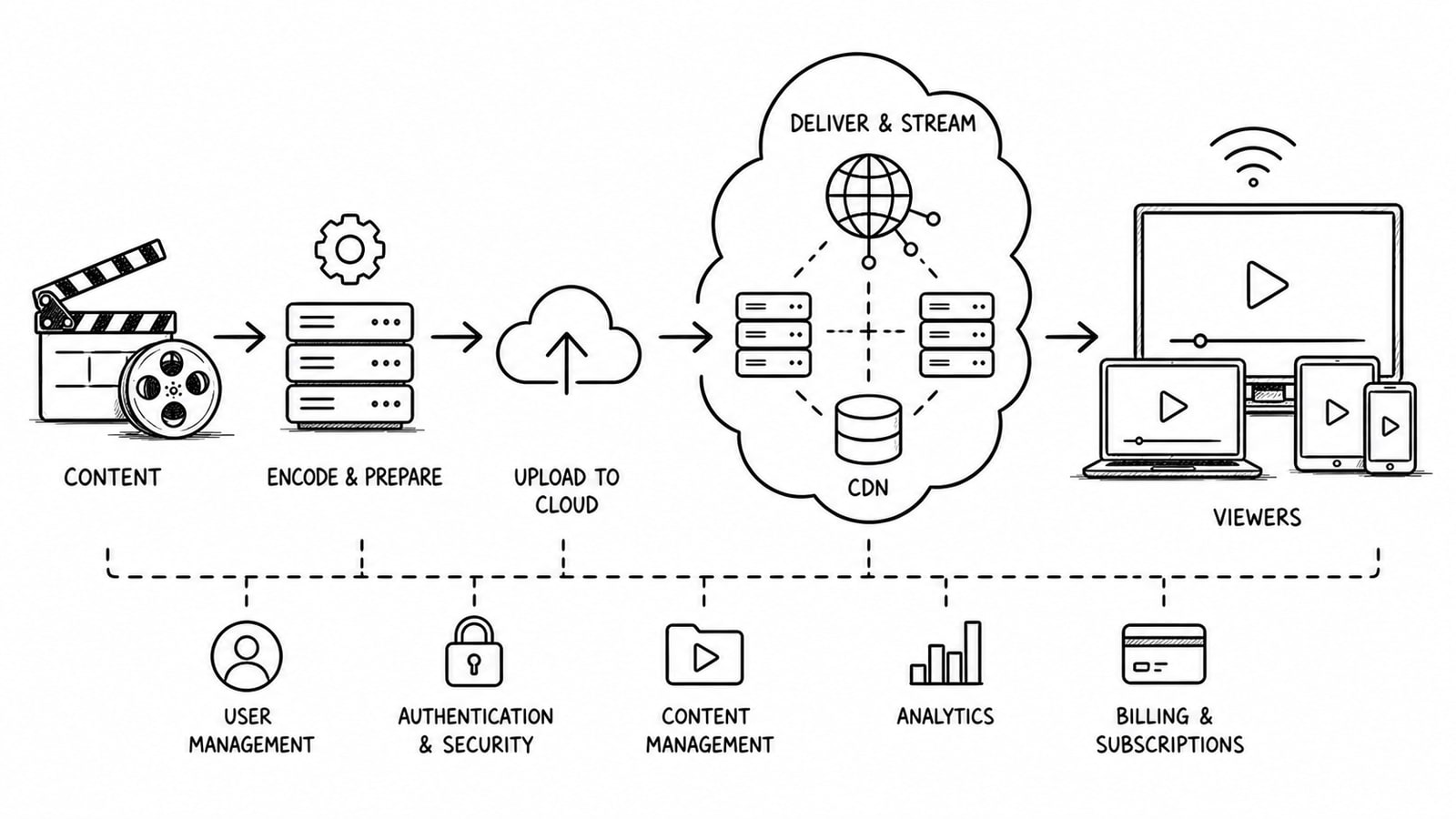
If you have ever wondered how OTT streaming platforms work, the short version is this: they take a video source, encode it into streamable formats, store or package it for delivery, send it through a content delivery network, and play it inside an app or web player on the viewer's device. That sounds technical, but the core idea is simple. OTT platforms move video over the internet instead of relying on traditional cable or satellite distribution.
Quick Answer
An OTT streaming platform delivers video directly to viewers over the internet. In practice, it handles video ingestion, encoding, storage or origin management, secure delivery, app or web playback, and viewer-facing features such as subscriptions, analytics, and access control.
Key Takeaways
OTT means viewers watch video over the internet rather than through a traditional broadcast system.
A typical platform workflow is ingest, encode, package, deliver, and play.
Adaptive streaming helps viewers get the best possible quality for their internet speed.
The viewer experience depends on more than video delivery alone; apps, subscriptions, analytics, and security matter too.
A BYOA model can give each client more direct control over usage, billing, and storage choices.
What Is an OTT Streaming Platform?
OTT stands for over-the-top. It describes video services that deliver content over the public internet instead of through a managed cable, satellite, or telecom television network. Netflix, Disney+, and many niche streaming services are familiar examples of the OTT model.
An OTT platform is the full system behind that experience. It usually includes content management, transcoding, video hosting or origin setup, secure playback, user management, billing, analytics, and apps for web, mobile, or smart TVs.
How OTT Streaming Platforms Work
The easiest way to understand how OTT streaming platforms work is to follow the video from source to screen.
1. Video Ingestion
Every OTT workflow starts with ingest. For on-demand content, this means uploading a finished video file. For live content, it means sending a live feed from an encoder or broadcasting tool to the platform.
2. Encoding and Transcoding
Once the source arrives, the platform converts it into multiple versions. This process is often called encoding or transcoding. The goal is to create renditions at different resolutions and bitrates so viewers on fast and slow connections can both watch smoothly.
3. Packaging for Streaming
After encoding, the video is packaged for streaming protocols such as HLS or MPEG-DASH. Instead of sending one large file, the system breaks playback into smaller segments plus a manifest file that tells the player what versions are available and where to find them.
4. Storage or Origin Management
The platform then needs a place to keep the source files, generated renditions, thumbnails, subtitles, and related media assets. Some vendors bundle this storage into the platform. Others let the client connect their own account or cloud services.
5. CDN Delivery
To reduce buffering and improve scale, video is usually delivered through a content delivery network, or CDN. The CDN places content closer to viewers geographically, which lowers latency and reduces strain on the origin.
6. Playback in the App or Web Player
When a viewer presses play, the player reads the manifest, requests the next video segments, and adapts quality based on device capability and connection speed. This is why streaming feels continuous even though the player is constantly requesting small chunks behind the scenes.
7. Access Control, Analytics, and Monetization
A real OTT platform also manages who can watch, what they can watch, and how that viewing is measured. That can include logins, subscriptions, one-time purchases, ad insertion, signed URLs, DRM support, playback analytics, and engagement reporting.
Core Components Behind the Viewer Experience
CMS or admin panel: manages titles, descriptions, categories, artwork, subtitles, and publishing rules.
Video pipeline: handles ingestion, transcoding, packaging, and media processing.
Player applications: deliver playback on web browsers, mobile apps, smart TVs, and set-top devices.
Security layer: covers tokenized playback, DRM where needed, account permissions, and session controls.
Business layer: supports subscriptions, payments, offers, reporting, and customer support workflows.
Live Streaming vs. Video on Demand
OTT platforms can support both live streaming and video on demand, but the workflow changes slightly.
Video on demand: the platform processes uploaded files before viewers start watching.
Live streaming: the platform ingests, transcodes, packages, and delivers the stream in near real time.
Live OTT systems usually need tighter latency control, stream health monitoring, and redundancy planning than on-demand libraries.
Why Adaptive Streaming Matters
One of the most important ideas in OTT delivery is adaptive bitrate streaming. Instead of forcing every viewer to download the same heavy file, the player can switch between multiple quality levels. Someone on fiber may see a higher-resolution stream, while someone on a weak mobile network may receive a lower bitrate version that buffers less.
That quality switching happens automatically and is one reason modern OTT playback feels more resilient than older web video setups.
Where Bitbyte3 Fits
If a company wants to launch an OTT service without building every component from scratch, a managed solution can shorten the path. According to the information provided for this article, Bitbyte3 offers an OTT solution and can support a BYOA model, short for Bring Your Own Account.
In that setup, each client uses its own service accounts for parts of the media stack, such as Cloudflare Stream for video and image delivery when appropriate. The practical advantage is straightforward: the client keeps direct control over usage, storage, and platform billing inside its own account rather than being locked into pooled vendor resources. Pricing and implementation details should be verified directly with Bitbyte3 before publication.
Common Mistakes When Planning an OTT Platform
Focusing only on the player and ignoring the encoding, storage, and delivery workflow behind it.
Underestimating costs tied to video processing, storage, and delivery volume.
Skipping security planning for private or paid content.
Treating live and on-demand workflows as identical when they have different operational needs.
Choosing a setup that hides usage details, which can make scaling and budgeting harder over time.
Methodology and Editorial Note
This article is written as an introductory explainer. Technical descriptions are based on official documentation for HTTP Live Streaming, Encrypted Media Extensions, and Cloudflare Stream. Commercial statements about Bitbyte3 and its BYOA model are based on the information supplied in the brief and should be reviewed by the company before publishing.
FAQ
What does OTT mean in streaming?
OTT means over-the-top. It refers to video delivered over the internet instead of through a traditional television distribution network.
What is the difference between OTT and IPTV?
OTT runs over the public internet, while IPTV is usually delivered over a managed private network run by a telecom or service provider.
Why do OTT platforms create multiple video qualities?
They create multiple renditions so the player can adapt quality to the viewer's bandwidth and device, which helps reduce buffering and playback failures.
Do OTT platforms need a CDN?
In most cases, yes. A CDN improves scale and performance by delivering video from locations closer to viewers.
What does BYOA mean in an OTT solution?
BYOA means Bring Your Own Account. In an OTT context, it typically means the client uses its own cloud or media service accounts for parts of the infrastructure instead of consuming those services through the platform vendor's shared account.
Can a small business launch an OTT platform without building everything itself?
Yes. Many businesses use managed OTT platforms or implementation partners so they can focus on content, audience growth, and monetization rather than building the full media stack in-house.
Conclusion
At its core, an OTT streaming platform is a system for moving video from a source to the right viewer, in the right format, at the right quality, with the right permissions. Once you break it into steps, the model becomes much easier to understand: ingest, encode, package, deliver, play, and measure.
If you are evaluating OTT options, the next practical question is not just how streaming works, but which parts you want bundled and which parts you want to control yourself. That is where architecture choices such as managed infrastructure or a BYOA approach start to matter.
Sources and Further Reading
Apple Developer Documentation: HTTP Live Streaming overview.
W3C: Encrypted Media Extensions recommendation and background materials.
Cloudflare Stream documentation: overview, live workflow, upload options, and pricing.
About the Author
M. Jorani — LinkedIn
Software Engineer & Technical Writer
M. Jorani is a software engineer and technical writer with hands-on experience building streaming infrastructure, video pipelines, and OTT platforms. He writes about encoding, delivery architecture, and the engineering decisions that shape how audiences watch content across devices.
More from the blog
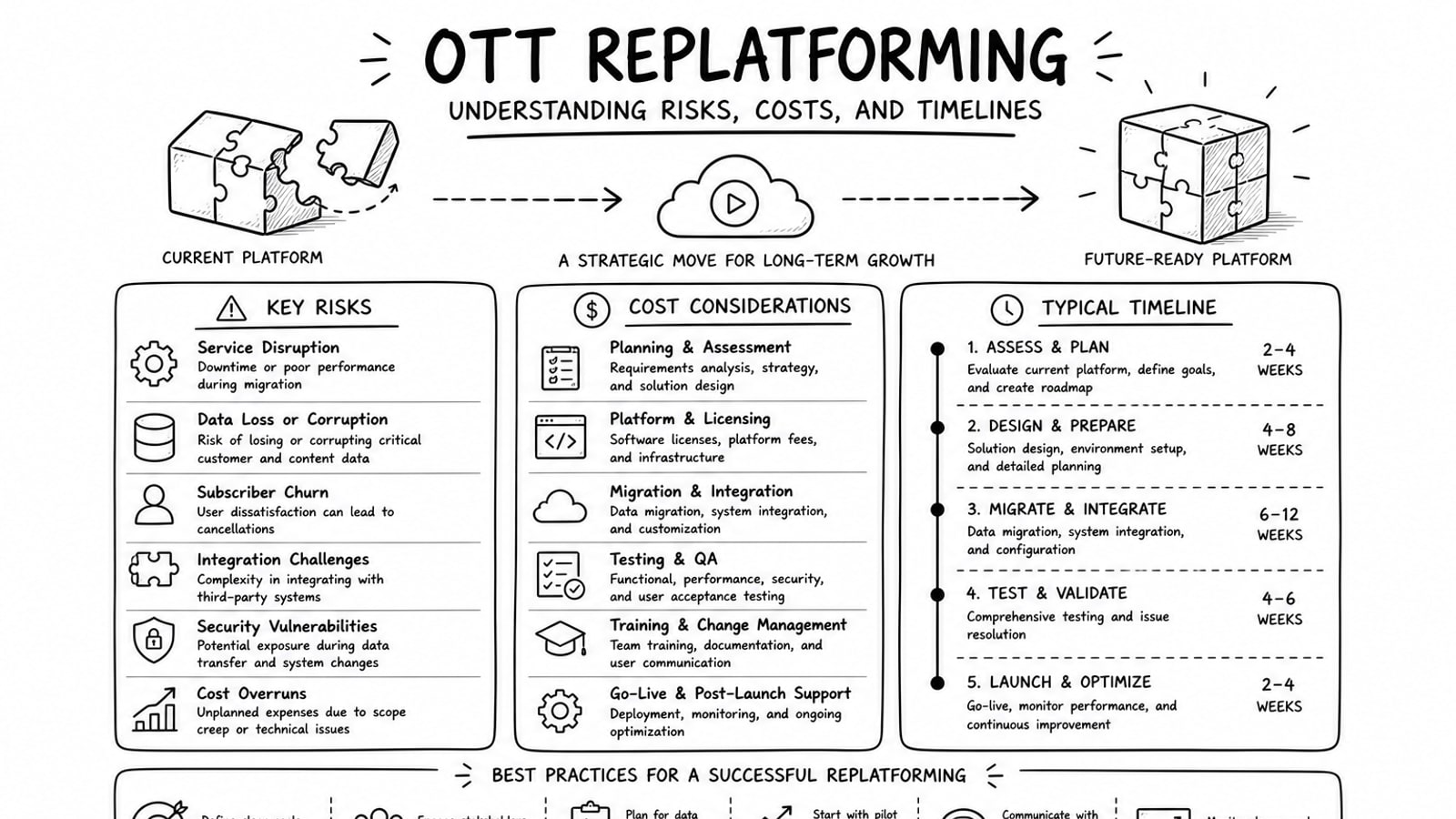
OTT Replatforming: Understanding Risks, Costs, and Timelines
A practical guide to OTT replatforming that explains why teams migrate, what usually drives risk and cost, how long projects tend to take, and where a BYOA delivery model can reduce lock-in.
Read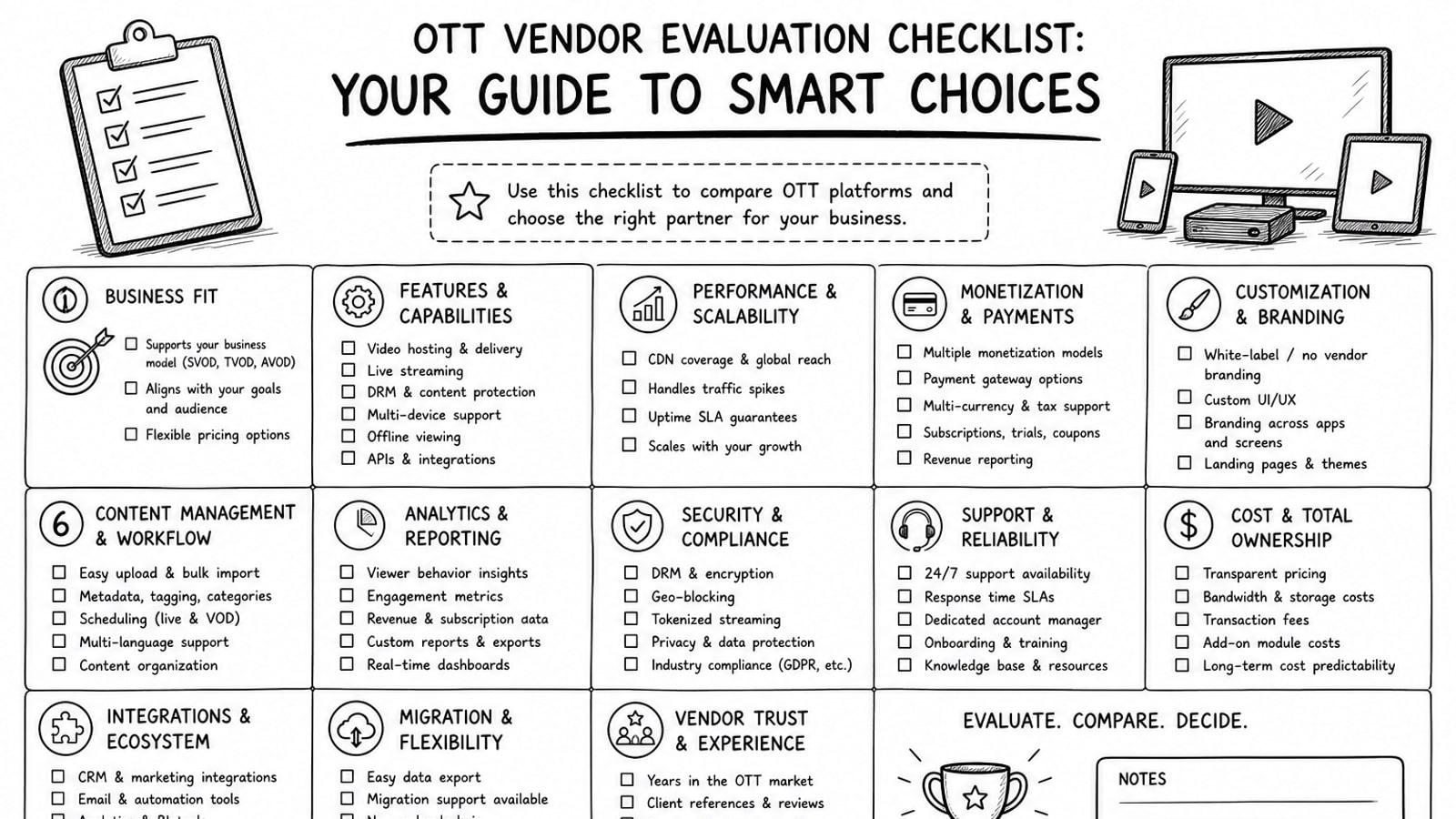
OTT Vendor Evaluation Checklist: Your Guide to Smart Choices
A practical guide to evaluating OTT vendors, with a clear checklist for delivery, security, workflow, cost, ownership, and long-term platform fit.
Read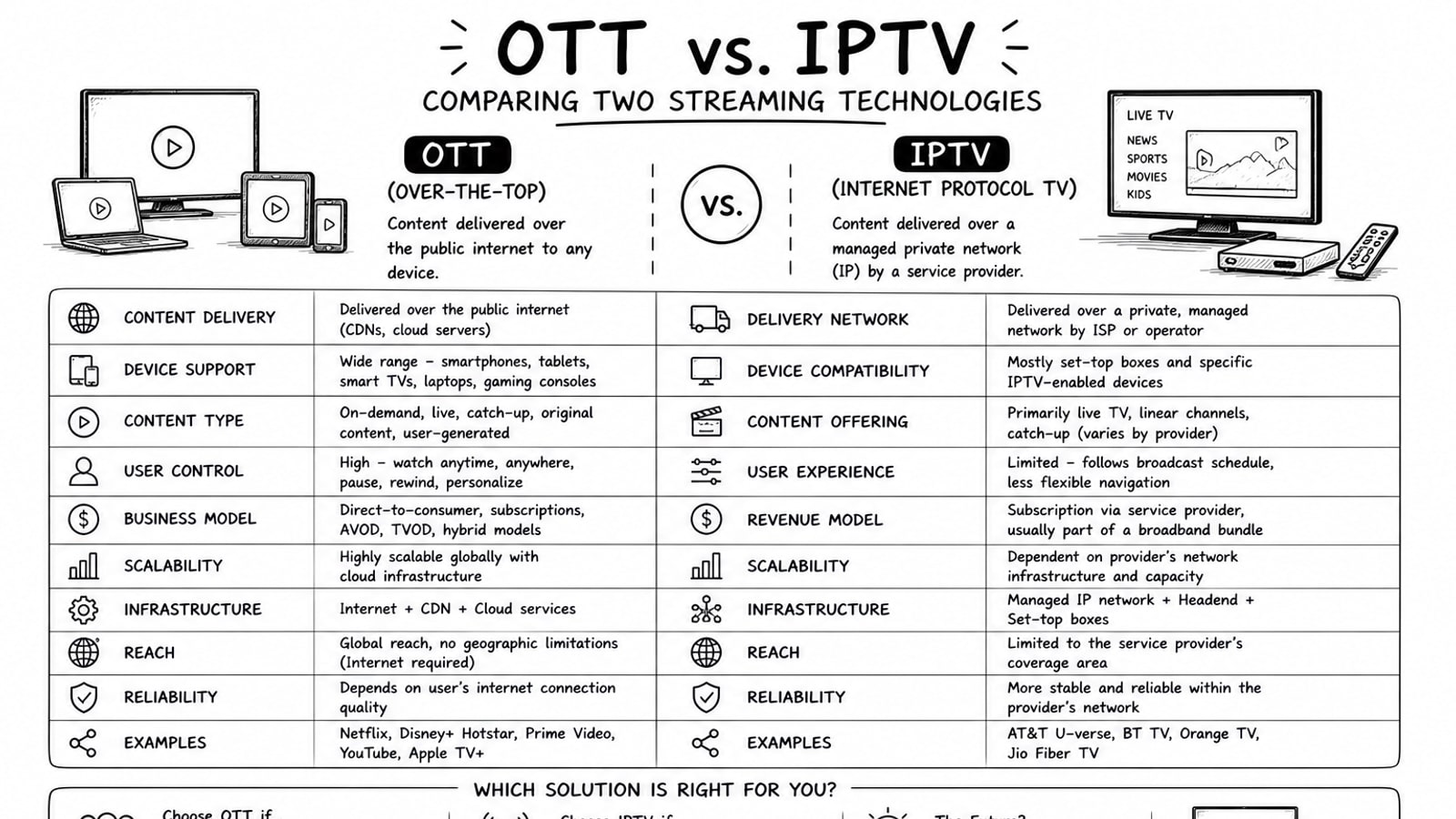
OTT vs. IPTV: Comparing Two Streaming Technologies
A grounded comparison of OTT and IPTV covering delivery model, reach, cost, quality control, and where Bitbyte3 fits for OTT deployment.
Read