OTT Platform
Muvi vs. Brightcove: Which OTT Platform Suits Your Needs?
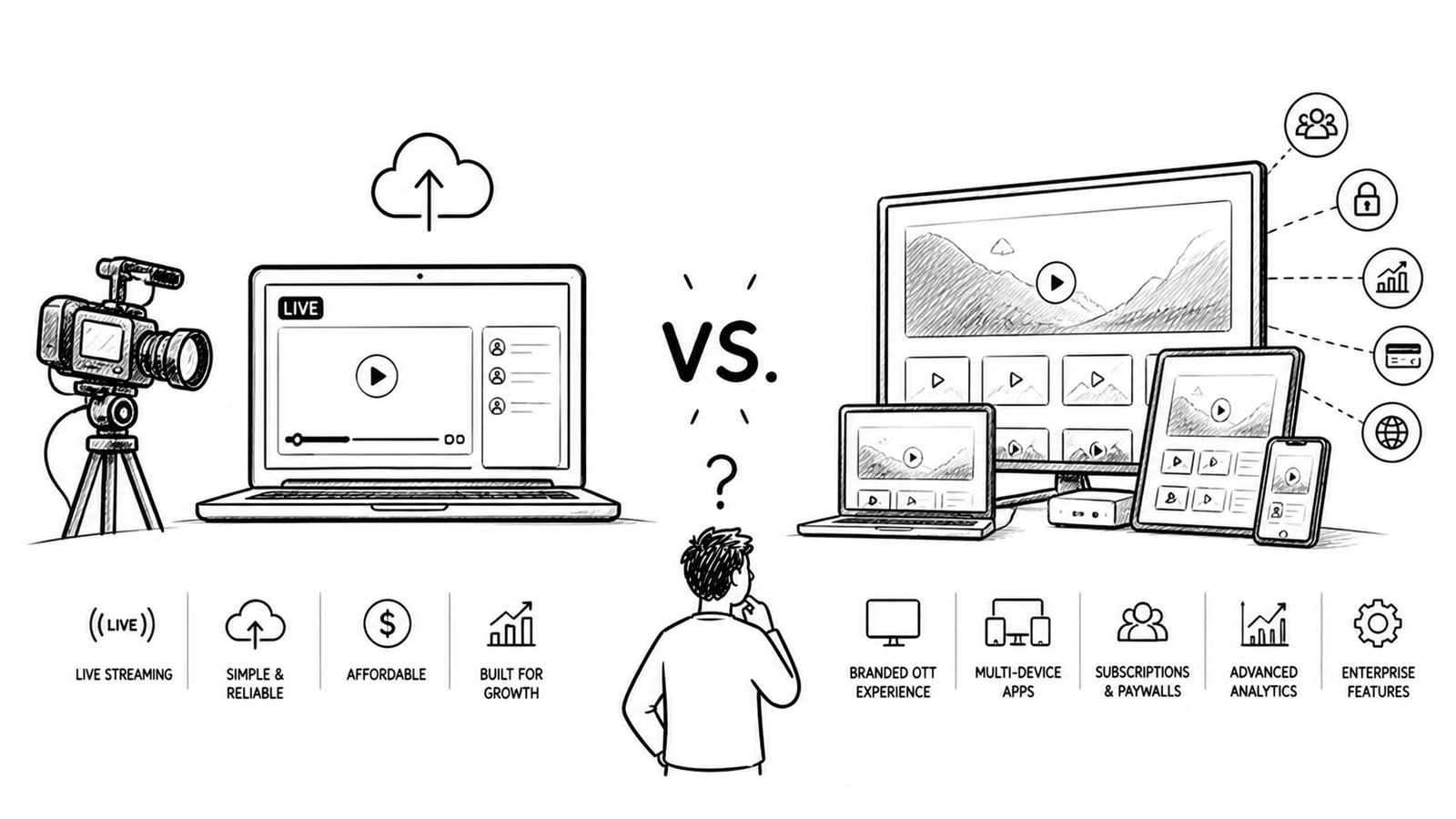
Choosing between Muvi and Brightcove comes down to what kind of OTT business you are building. Both platforms support multi-device streaming, monetization, and branded experiences, but they suit different teams, budgets, and operating models. If you want a more all-in-one, pricing-visible platform for launching quickly, Muvi is often the easier fit. If you need enterprise-grade video infrastructure, broad video workflow maturity, and a platform that can support larger media or brand ecosystems, Brightcove may be the stronger choice.
Quick Answer
Muvi is usually better for teams that want a white-label OTT platform with public entry pricing, a broad built-in feature set, and faster setup without stitching together many vendors. Brightcove is usually better for organizations that prioritize enterprise video operations, advanced scale, and a more established video platform ecosystem, even if pricing requires a sales conversation. For buyers who want more ownership over infrastructure costs, BitByte3 is another option worth evaluating, especially if a Bring Your Own Account model fits your operating style.
Key Takeaways
Choose Muvi if you want an all-in-one OTT product with public pricing and a faster path to launch.
Choose Brightcove if you need enterprise video infrastructure, mature OTT capabilities, and are comfortable with custom pricing.
Muvi is easier to estimate upfront because its Muvi One pricing is publicly listed; Brightcove routes buyers through sales.
Brightcove is a stronger fit when video is part of a larger enterprise content stack and long-term operational flexibility matters more than off-the-shelf simplicity.
BitByte3 may suit startups and lean teams that want lower-cost OTT delivery and more control over third-party infrastructure such as video and storage accounts.
Muvi vs Brightcove at a Glance
At a high level, Muvi positions itself as an end-to-end OTT platform with a broad built-in feature set for video and audio businesses. Brightcove positions its OTT offer around scalable streaming experiences, monetization flexibility, and enterprise-grade video delivery across devices.
Muvi strength: packaged OTT launch experience with public pricing, white-label delivery, and a large out-of-the-box feature catalog.
Brightcove strength: enterprise video foundation, broad device reach, flexible monetization models, and a strong reputation in large-scale video operations.
When Muvi Is the Better Fit
Muvi is often the better fit for teams that want a more packaged OTT experience. Its public pricing makes early budgeting easier, and its product pages emphasize built-in CMS, monetization, app distribution, white-label branding, security features, and support for web, mobile, and TV apps.
As of May 1, 2026, Muvi One publicly lists plans starting at $339 per month for Standard, $1,274 per month for Professional, and $3,315 per month for Enterprise, with an Ultimate tier listed as price on request. That does not mean Muvi will be cheaper in every case, but it does mean buyers can model early-stage costs more easily than with vendors that hide pricing.
Best for startups and mid-market teams that want fewer moving parts.
Best for operators who value public pricing and a clearer starting point for budgeting.
Best for teams that want built-in OTT features instead of assembling several vendors.
When Brightcove Is the Better Fit
Brightcove is usually the better fit for larger media companies, brands, sports organizations, or enterprises that already think in terms of long-term video operations. Its OTT messaging focuses on smooth cross-platform app experiences, hybrid monetization, and faster time to market through integrations around subscription management, registration, and entitlement services.
Brightcove does not publicly list OTT pricing on its main product pages. Instead, it routes buyers to sales. For some teams that is a drawback because it slows vendor comparison. For others, especially larger organizations with unusual distribution, rights, workflow, or security requirements, custom pricing is normal and sometimes preferable.
Best for enterprise buyers that expect a consultative sales process.
Best for teams that want OTT as part of a wider professional video stack.
Best for organizations that prioritize scale, operational maturity, and enterprise support over quick self-qualification on price.
Muvi vs Brightcove by Buying Priority
1. Launch Speed
Muvi has the edge if you want an all-in-one launch path. Brightcove can also support rapid deployment, but its model is more likely to involve a tailored sales and implementation path.
2. Pricing Transparency
Muvi wins on transparency because buyers can see plan levels publicly. Brightcove wins only if your organization prefers negotiated enterprise pricing and is less concerned with quick public comparisons.
3. Enterprise Video Operations
Brightcove has the stronger enterprise video heritage. If your OTT service sits inside a larger media, corporate, or brand video operation, Brightcove may align better with that environment.
4. Feature Breadth Out of the Box
Muvi presents a very broad feature catalog directly on its product pages, including CMS, monetization, DRM-related security messaging, app support, analytics, user management, and content controls. That makes it attractive for teams that want a lot included from day one.
5. Cost Control and Vendor Lock-In
This is where buyers need to look beyond headline pricing. A packaged platform can simplify operations, but it can also make cost structure less flexible over time. If your team wants tighter control over video infrastructure, storage, and usage billing, a more modular model may be more attractive.
Where BitByte3 Fits in the Decision
If Muvi feels too packaged and Brightcove feels too enterprise-heavy, BitByte3 can fit the middle ground for some buyers. BitByte3 positions itself as a startup-friendly OTT solution provider focused on web, mobile, and TV streaming experiences, monetization support, and faster rollout for lean teams.
According to company-provided positioning, BitByte3 can also support a Bring Your Own Account, or BYOA, model. In practice, that means clients can use their own third-party services, such as Cloudflare Stream for video and image delivery, instead of being locked into a vendor-managed usage model. That may help reduce platform restrictions around fees or storage and can give buyers more direct control over infrastructure costs. Because this is an operating-model choice rather than a universal benefit, teams should confirm the exact implementation scope, support boundaries, and total cost before choosing it.
BitByte3 may suit startups that want custom OTT delivery without paying for an oversized enterprise stack.
It may also suit teams that want to own more of their infrastructure accounts directly.
A relevant starting point is https://bitbyte3.com/solutions/streaming-platform.
How to Choose the Right OTT Platform
Define whether you want an all-in-one platform or a more modular operating model.
Estimate not just subscription cost, but storage, bandwidth, encoding, app maintenance, and support overhead.
List the devices you must support at launch and in the next 12 months.
Match monetization requirements to platform flexibility, including SVOD, AVOD, TVOD, or hybrid models.
Ask each vendor what will still be true after you grow, not just what is easy in month one.
Common Mistakes Buyers Make
Choosing based only on headline price without modeling delivery and growth costs.
Assuming enterprise depth is always better, even when a smaller team needs simplicity more than complexity.
Ignoring vendor lock-in, app ownership, and infrastructure ownership until after launch.
Not validating whether the platform fits your team’s real technical capacity.
Conclusion
There is no universal winner in Muvi vs Brightcove. Muvi is the stronger choice for buyers who want a more packaged OTT platform with visible starting prices and broad built-in features. Brightcove is the stronger choice for organizations that need enterprise-grade video operations and are comfortable with a sales-led buying process. If your priority is a more flexible cost structure and stronger ownership over infrastructure accounts, BitByte3 is worth shortlisting alongside both. The right platform is the one that matches your team, cost model, and growth plan, not the one with the longest feature page.
FAQ
Is Muvi cheaper than Brightcove?
Not necessarily, but Muvi is easier to estimate upfront because it publishes entry pricing. Brightcove uses a sales-led pricing model, so actual cost depends on your scope and requirements.
Which platform is better for startups?
Muvi is often the easier fit for startups that want a faster all-in-one launch. BitByte3 may also be a strong option for startups that want lower-cost custom delivery and more infrastructure ownership.
Which platform is better for enterprise OTT?
Brightcove is generally the stronger enterprise choice when you need broader video operations maturity, large-scale delivery, and a consultative deployment path.
What does BYOA mean in OTT?
BYOA means Bring Your Own Account. In this model, a client uses its own third-party infrastructure accounts, such as video or storage providers, instead of consuming everything through a vendor-managed account.
Why would a team want a Bring Your Own Account model?
A BYOA setup can improve cost visibility, reduce dependence on a single vendor, and give the customer direct ownership of usage billing and infrastructure services. It also adds responsibility, so it is best for teams comfortable with that tradeoff.
Methodology and Editorial Note
This article was written as a company-affiliated comparison intended to help OTT buyers evaluate fit by business need. Public product pages and pricing pages were reviewed on May 1, 2026. Brightcove pricing was treated as custom because no public OTT price list was found on its main product pages at that time. The BitByte3 BYOA point is included based on company-provided positioning and should be confirmed directly during a sales conversation before purchase.
Sources and Further Reading
About the Author
R. Jabar
Marketing Strategist
R. Jabar is a marketing strategist who helps streaming and OTT brands turn complex product stories into clear, growth-driven messaging. She writes about audience acquisition, content monetization, and the marketing frameworks that help video platforms scale.
More from the blog

Brightcove vs. Kaltura: A Comprehensive Guide for OTT Platforms
A practical comparison of Brightcove and Kaltura for OTT teams evaluating launch speed, customization, monetization, operational complexity, and long-term platform fit.
Read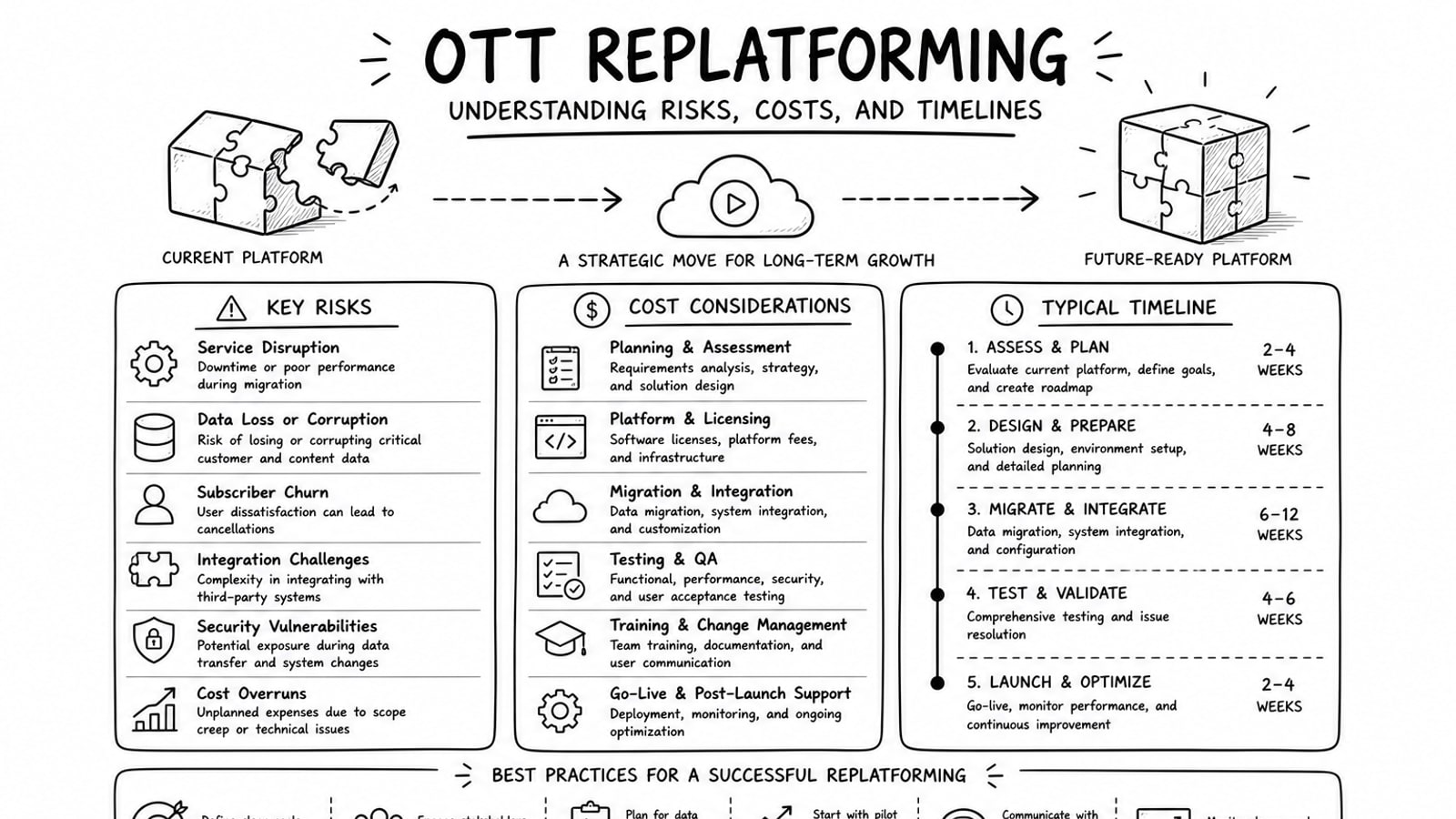
OTT Replatforming: Understanding Risks, Costs, and Timelines
A practical guide to OTT replatforming that explains why teams migrate, what usually drives risk and cost, how long projects tend to take, and where a BYOA delivery model can reduce lock-in.
Read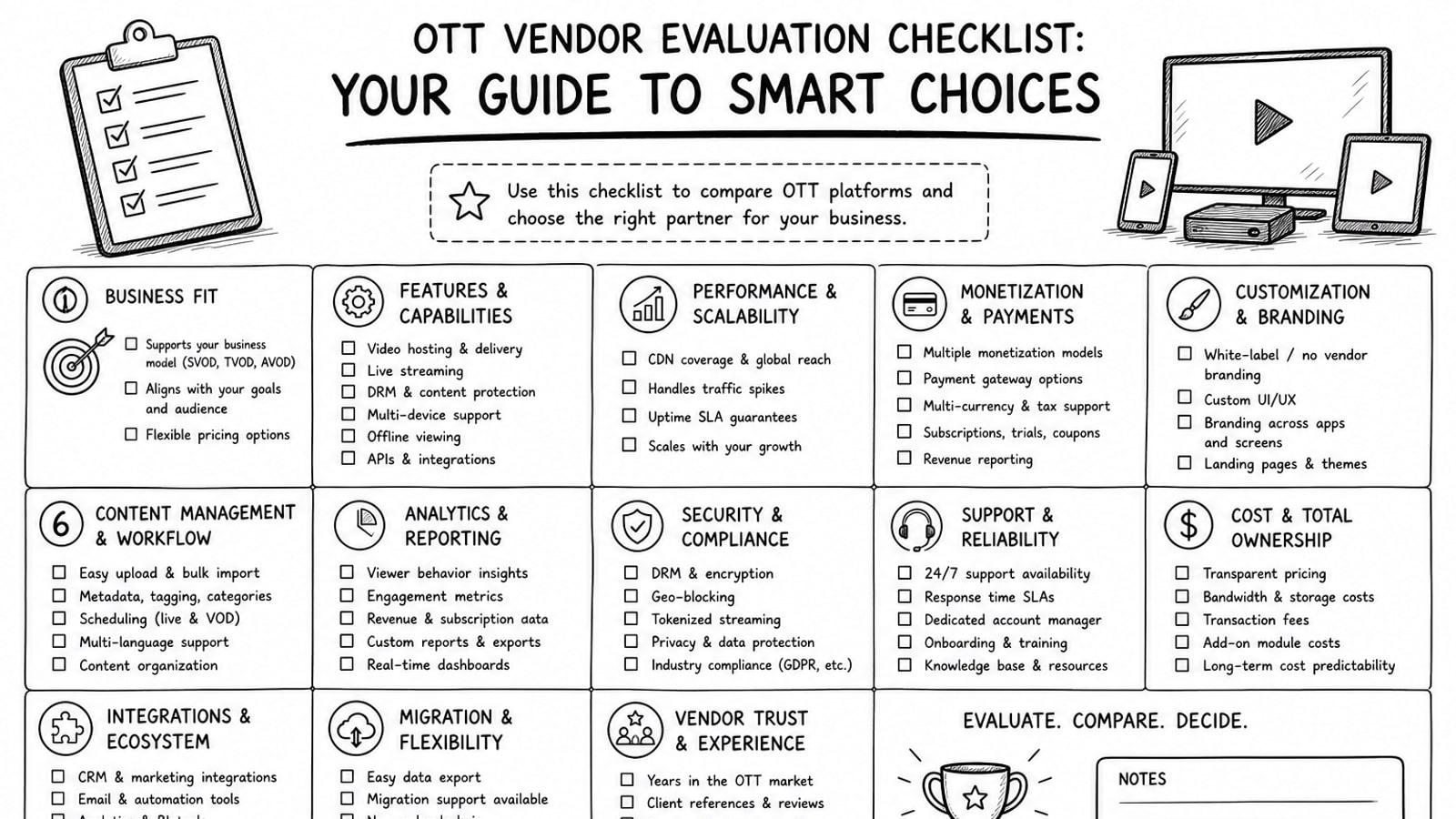
OTT Vendor Evaluation Checklist: Your Guide to Smart Choices
A practical guide to evaluating OTT vendors, with a clear checklist for delivery, security, workflow, cost, ownership, and long-term platform fit.
Read