OTT platform
Is Your OTT Platform Limiting Growth? Signs to Watch For
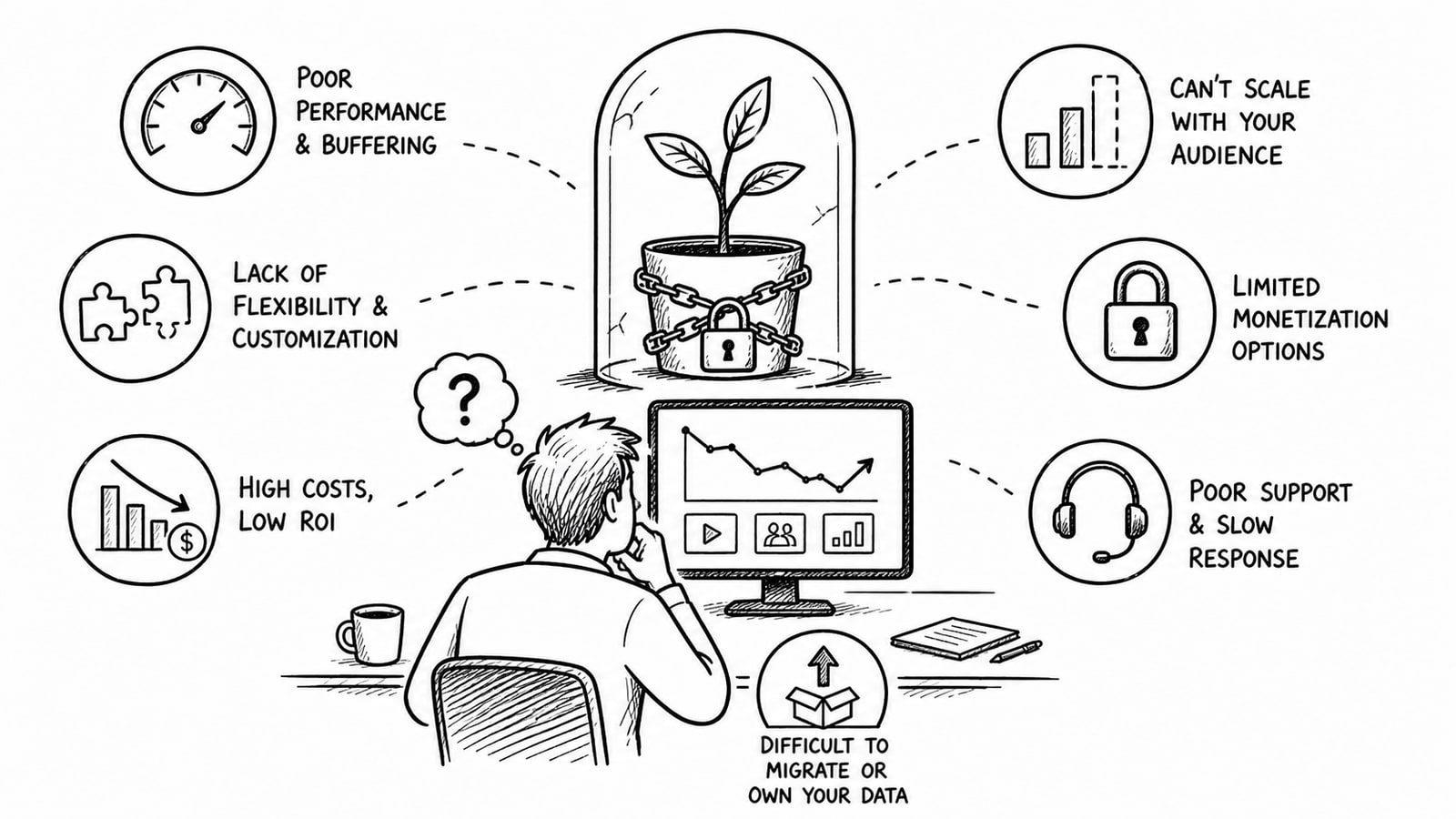
Growth problems do not always start with content or marketing. Sometimes the real issue is the OTT platform itself. If your OTT platform growth has stalled, the cause may be hidden in your pricing model, workflow limitations, app distribution setup, or the way your video infrastructure is managed behind the scenes.
Quick Answer
Your OTT platform may be limiting growth if it makes expansion expensive, slows content operations, restricts monetization choices, or forces you to depend too heavily on one vendor. A growth-ready platform should help you launch across devices, manage content efficiently, control infrastructure costs, and keep ownership of critical accounts and assets where possible.
Key Takeaways
A platform that becomes more expensive every time your audience grows can create a ceiling on growth.
Operational friction in video uploads, app updates, or content organization can slow momentum even when demand is strong.
Vendor lock-in is a risk when you do not control important infrastructure accounts, app-store assets, or delivery services.
The right OTT setup should support revenue models, multiple devices, and cost visibility without adding unnecessary restrictions.
Why OTT Platform Growth Can Stall
Many teams assume growth stalls because they need more content, more ads, or a bigger audience acquisition budget. Those things matter, but they are not the only factors. An OTT business can also slow down because the platform underneath it was built for a smaller operation, a different business model, or a vendor-first structure instead of an owner-first one.
When the platform is the bottleneck, every new step feels harder than it should. Launching on more devices takes too long. Storage and streaming costs become unpredictable. Your team starts adapting to system limitations instead of building for the audience.
7 Signs Your OTT Platform Is Limiting Growth
1. Your Costs Rise Faster Than Your Revenue
One of the clearest warning signs is when your platform gets more painful financially as you grow. If fees climb because of storage caps, bandwidth limits, or account restrictions, your success can start to feel like a penalty. This is especially challenging for video businesses where usage patterns are not always predictable.
A healthier model gives you better visibility into what you control and what you pay for. In some cases, a Bring Your Own Account approach can help because the client keeps direct ownership of services such as video delivery or media storage instead of being fully boxed into a provider-managed setup.
2. You Have Limited Control Over Infrastructure
If your vendor owns every critical account and you have little direct access, switching later becomes harder, finance tracking becomes less transparent, and internal teams lose flexibility. That can affect your negotiating power as the business grows.
Based on the brief provided for this article, BitByte3 can position its OTT solution around a BYOA, or Bring Your Own Account, model. In practical terms, that means clients can use their own accounts for services such as Cloudflare Stream for video and image delivery when it fits the project. That structure can reduce long-term dependency and give owners more direct control over fees and storage usage.
3. Expanding to More Devices Feels Slow or Costly
Growth often means meeting viewers where they already are: web, mobile, connected TV, and streaming devices. If your current setup makes every new platform feel like a separate rebuild, your growth path will stay slower than it needs to be.
BitByte3 publicly presents its solution as a multi-platform OTT offering for web, iOS, Android, Android TV, Apple TV, and related viewing environments. That kind of cross-device coverage matters because growth tends to come from convenience, not just catalog size.
4. Your Monetization Options Do Not Match Your Strategy
An OTT platform should support the revenue model your business needs now and the one you may need next. If you are locked into a narrow setup, you may struggle to test subscriptions, advertising, pay-per-view, bundles, or hybrid approaches.
BitByte3 highlights support for AVOD, SVOD, and PPV on its site. Even if you begin with one model, that flexibility matters because audience behavior and revenue strategy often change as the platform matures.
5. Content Operations Are More Manual Than They Should Be
When editors and operators spend too much time uploading, organizing, reformatting, or correcting content issues, growth gets delayed. A platform can look good in a demo and still become a daily operational drag.
Look for signs such as slow publishing cycles, repeated app-update dependencies for small content changes, or weak CMS flexibility. These are easy to normalize internally, but they usually become more costly as the library and audience grow.
6. You Cannot Adapt the Experience to Different Audiences
Growth is not only about getting more viewers. It is also about serving different viewer types well. If your platform makes it hard to manage profiles, language options, subtitles, geographic rules, or content segmentation, you may lose retention even when acquisition is working.
BitByte3's public solution pages mention capabilities such as multiple profiles, multi-audio support, subtitles, and geo-blocking. Features like these are not just nice extras. They can directly support audience expansion and a better user experience across regions and households.
7. Reporting Is Too Shallow for Decision-Making
If you cannot clearly see which content drives watch time, which devices underperform, or which monetization paths are producing results, growth decisions become guesswork. A platform that hides useful operational and revenue insights can slow improvement across product, content, and marketing.
This does not always require a massive analytics stack. It does require access to the right signals and enough control to act on them quickly.
A Simple Framework to Evaluate Your Current Setup
Use this quick framework when reviewing whether your current platform is still helping your business grow.
Cost control: Do you understand what drives your fees, and can you predict them as usage grows?
Ownership: Do you control the important service accounts, media assets, and distribution dependencies?
Reach: Can you expand across web, mobile, and TV without a long delay?
Monetization: Can the platform support the business model you want next, not only the one you use today?
Operations: Can your team publish, update, and manage content without constant technical friction?
Common Mistakes Teams Make
Choosing the cheapest short-term platform without reviewing long-term usage costs.
Accepting vendor lock-in because the first launch appears faster.
Treating app coverage, monetization flexibility, and infrastructure ownership as technical details instead of growth decisions.
Waiting too long to change platforms after the warning signs are already affecting user experience and margins.
Where BitByte3 May Fit
If your current OTT platform is creating pricing pressure or limiting control, BitByte3 may be worth evaluating. On its public site, BitByte3 presents itself as a startup-focused OTT solution provider with multi-platform delivery, monetization support, and content management capabilities. Based on the brief for this article, it can also be positioned around a BYOA model so clients can use their own connected accounts when that setup makes more sense.
That combination can be appealing for teams that want a more flexible structure, clearer ownership, and a cost model that does not create unnecessary restrictions around storage or service fees. Exact pricing and implementation details should be confirmed directly with BitByte3 for the specific project.
Methodology and Editorial Note
This article is an educational decision-making guide. Product references to BitByte3 are based on the user brief and publicly accessible BitByte3 website pages reviewed during drafting, including the home page, about page, and streaming platform solution pages. No unsupported performance claims, customer outcomes, or pricing figures were added.
Conclusion
A growing OTT business should not feel trapped by its own platform. If costs are hard to predict, distribution is limited, or ownership is too tightly held by the vendor, those are not minor technical issues. They are growth issues. Reviewing your stack now can help you avoid bigger migration pain later and put you in a stronger position to scale with confidence.
For teams exploring alternatives, the next step is simple: audit your current bottlenecks, map the ownership gaps, and compare them against a more flexible OTT solution model before the limitations start shaping your business strategy.
FAQ
What is the biggest sign an OTT platform is limiting growth?
The biggest sign is usually compounding friction. Costs become harder to manage, launching on new devices takes too long, and your team spends more time working around the system than growing the business.
Why does vendor lock-in matter for OTT platforms?
Vendor lock-in matters because it can reduce cost transparency, make migration harder, and leave you with less control over the accounts and services your streaming business depends on.
What does Bring Your Own Account mean in OTT?
Bring Your Own Account means the client uses its own account for selected connected services, such as video delivery or storage, instead of relying entirely on accounts owned by the solution provider.
Can a more flexible OTT setup help reduce cost restrictions?
It can, especially when the setup gives you clearer ownership and more direct control over service usage, storage, and infrastructure-related fees.
Is BitByte3 a fit for startups?
BitByte3 positions itself publicly as a startup-focused OTT solution provider. Teams should still confirm feature scope, pricing, account ownership model, and rollout details directly for their use case.
About the Author
R. Jabar
Marketing Strategist
R. Jabar is a marketing strategist who helps streaming and OTT brands turn complex product stories into clear, growth-driven messaging. She writes about audience acquisition, content monetization, and the marketing frameworks that help video platforms scale.
More from the blog
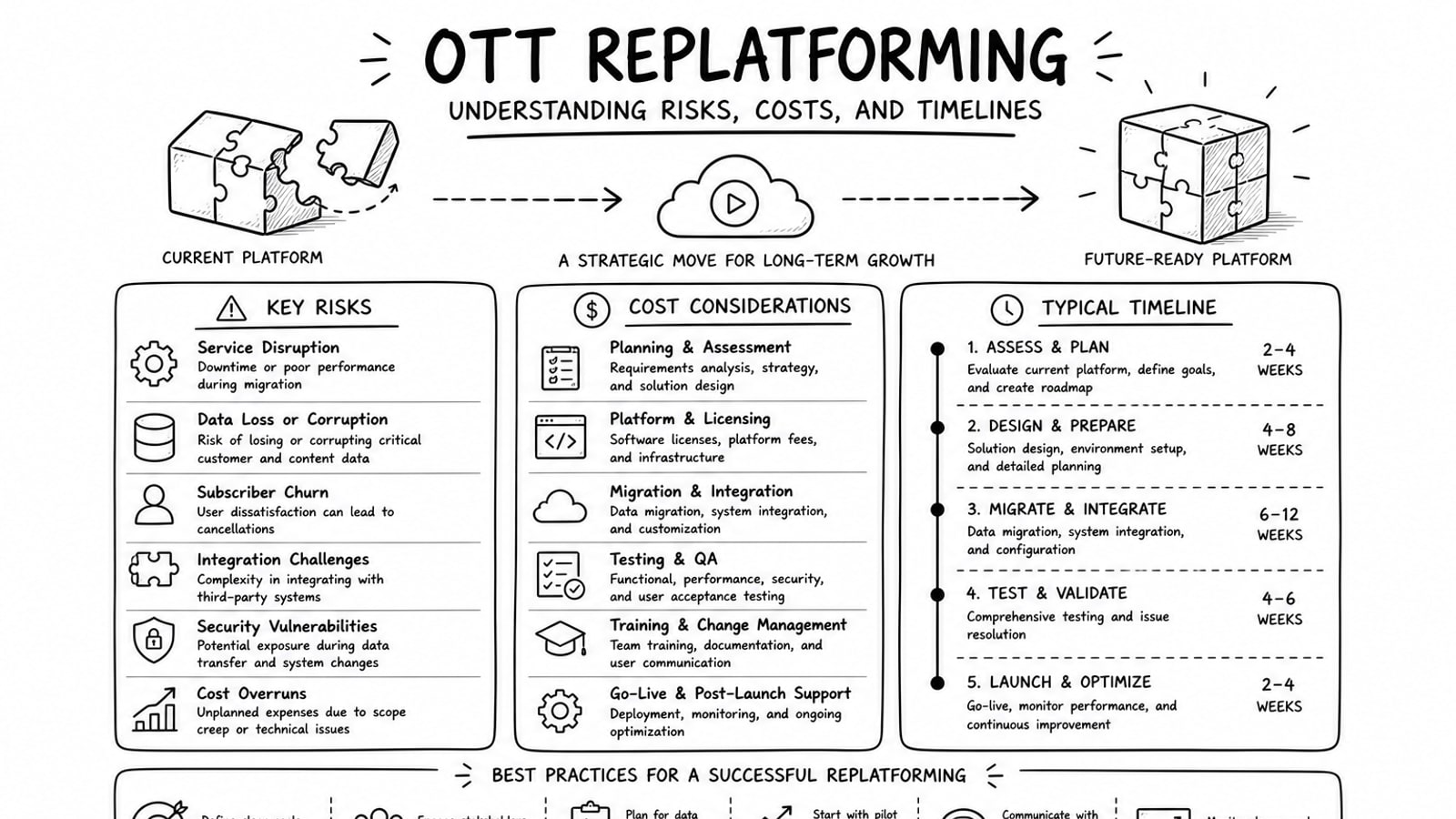
OTT Replatforming: Understanding Risks, Costs, and Timelines
A practical guide to OTT replatforming that explains why teams migrate, what usually drives risk and cost, how long projects tend to take, and where a BYOA delivery model can reduce lock-in.
Read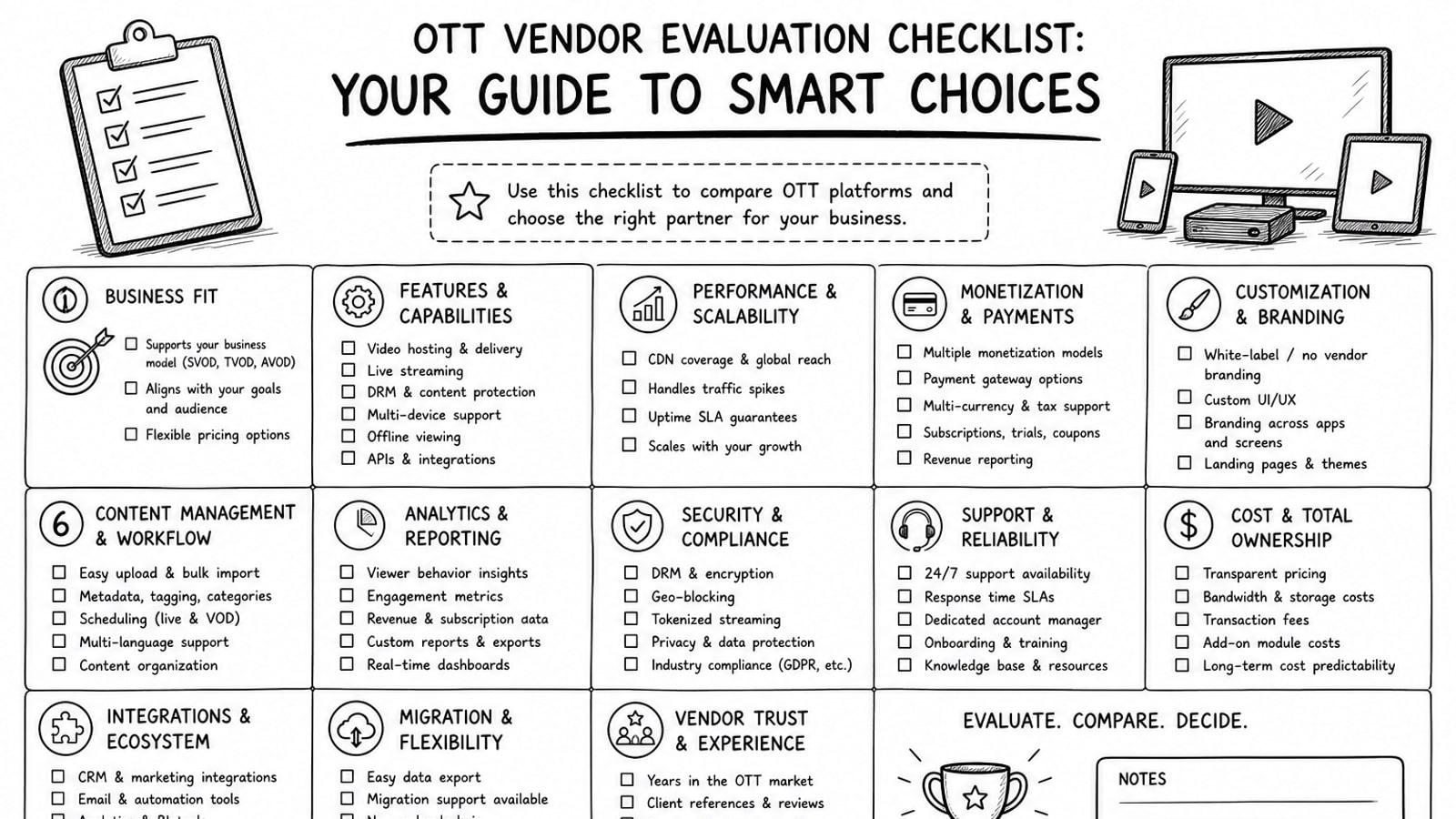
OTT Vendor Evaluation Checklist: Your Guide to Smart Choices
A practical guide to evaluating OTT vendors, with a clear checklist for delivery, security, workflow, cost, ownership, and long-term platform fit.
Read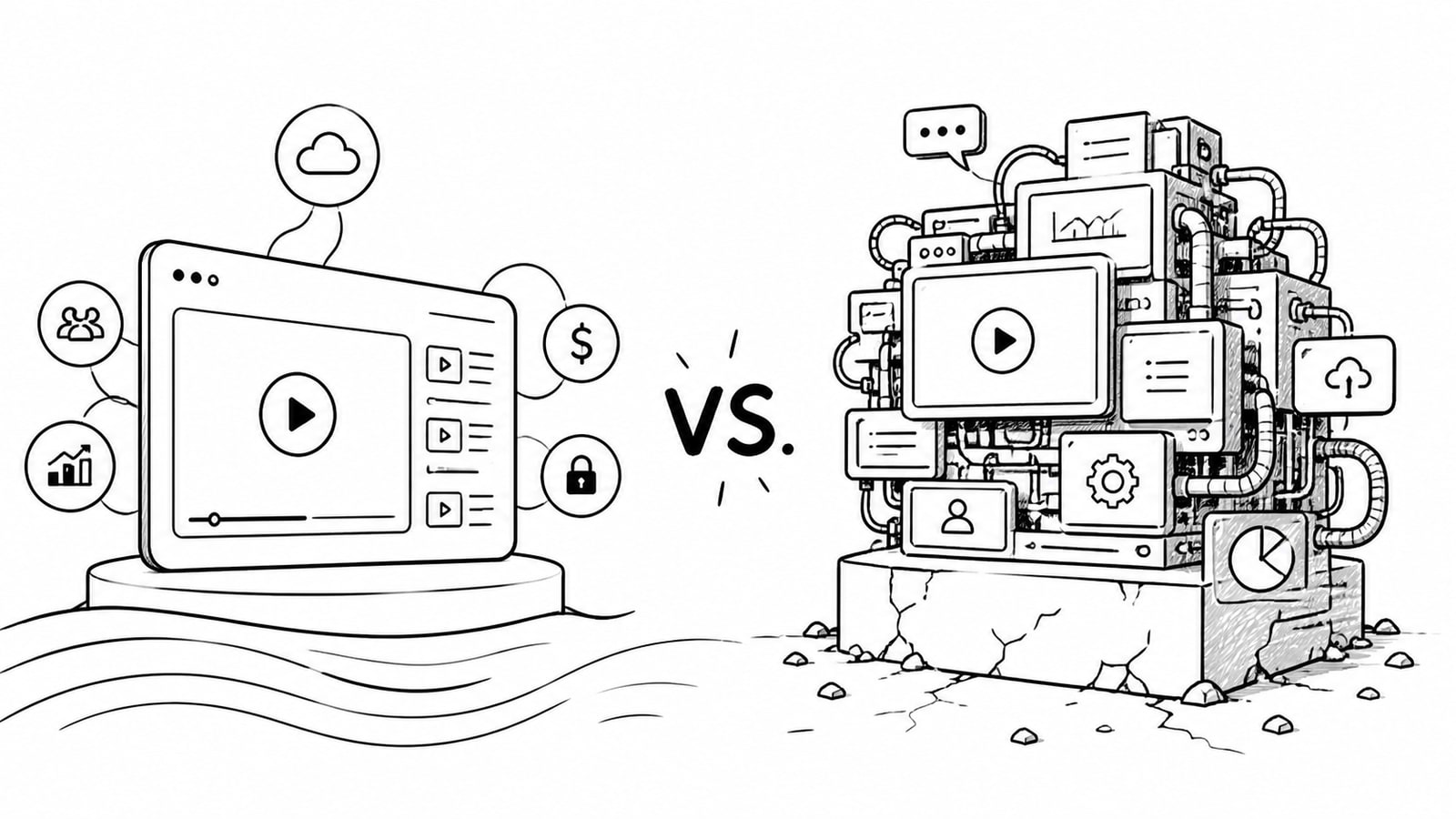
Brightcove vs. Kaltura: A Comprehensive Guide for OTT Platforms
A practical comparison of Brightcove and Kaltura for OTT teams evaluating launch speed, customization, monetization, operational complexity, and long-term platform fit.
Read