OTT
Avoid These Common OTT Platform Buying Mistakes
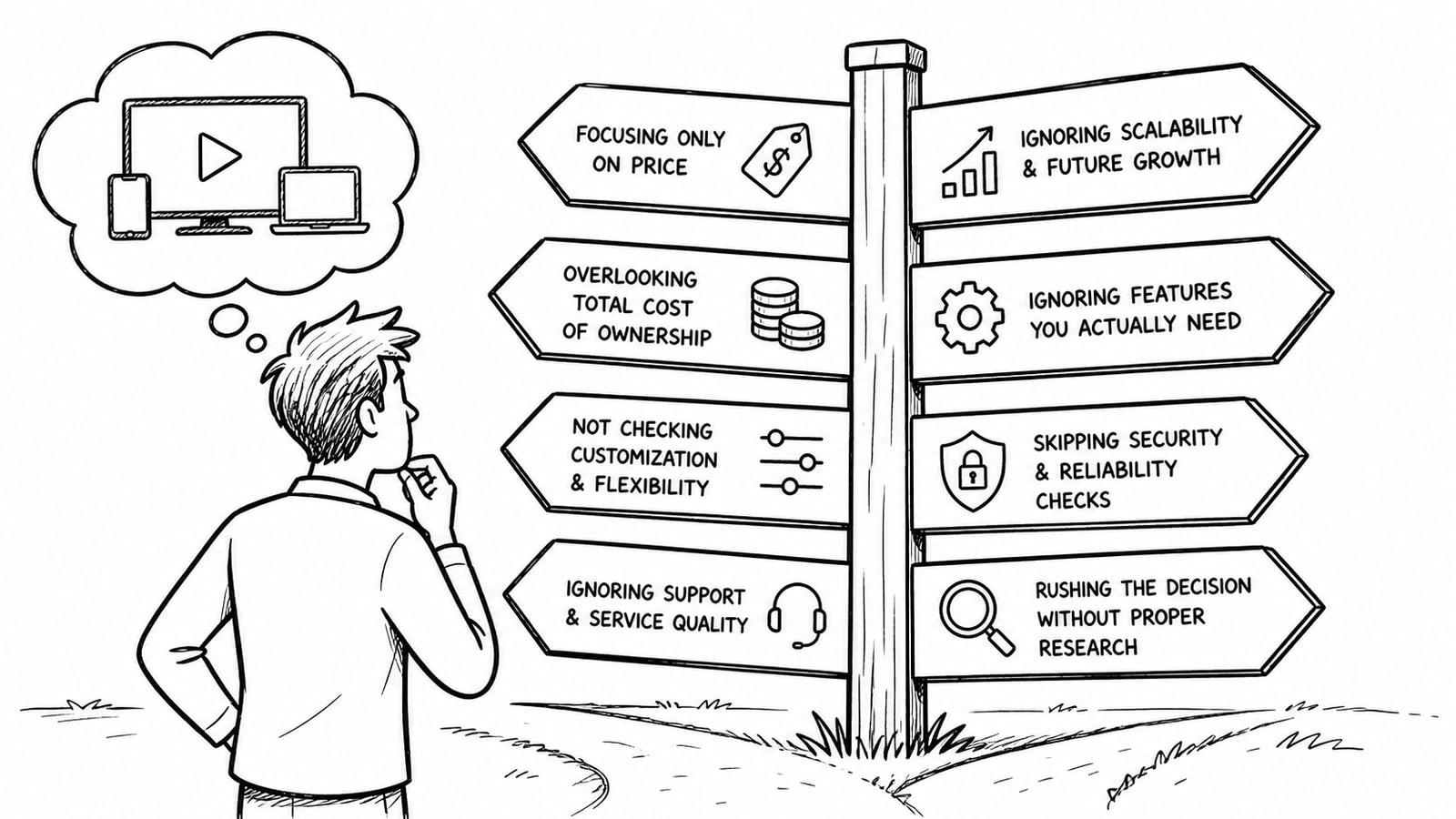
Buying an OTT platform can look straightforward at first. A provider shows you a polished demo, a short feature list, and a monthly fee that seems manageable. The real problems usually appear later, when storage costs rise, video delivery fees add up, integrations take longer than expected, or your team discovers that basic workflows depend on expensive add-ons. That is why understanding OTT platform buying mistakes before signing a contract can save time, budget, and a painful migration later.
Quick Answer
The most common OTT platform buying mistakes are focusing only on headline pricing, skipping ownership questions, underestimating integration work, ignoring viewer growth costs, and choosing a platform that locks you into its infrastructure. A better buying process compares total cost, control, flexibility, and the operational realities your team will face after launch.
Key Takeaways
Low entry pricing can hide higher long-term delivery, storage, and support costs.
You should confirm who owns the video infrastructure, accounts, assets, and data before signing.
The right OTT platform should fit your workflow, not just your launch checklist.
A clear buying checklist helps teams compare vendors on total cost, flexibility, and operational risk.
Why OTT Platform Buying Mistakes Happen
Most buyers are comparing platforms under time pressure. They want a service that can host video, manage subscribers, support apps, and launch quickly. In that situation, sales presentations often receive more attention than contract details, infrastructure ownership, or scaling assumptions.
OTT platforms also bundle many moving parts into one offer: encoding, hosting, playback, analytics, monetization, content management, app support, and customer support. When buyers review everything at a surface level, important tradeoffs are easy to miss.
Common OTT Platform Buying Mistakes to Avoid
1. Choosing based only on the starting price
A low monthly price can be appealing, but it rarely tells the full story. OTT costs may also include streaming usage, storage, transcoding, app maintenance, support tiers, implementation work, and charges tied to audience growth. The result is a platform that looks affordable early on but becomes much more expensive once your library or viewership expands.
Before choosing a vendor, ask for a pricing model based on your expected content volume, viewer activity, and app requirements over at least 12 months.
2. Ignoring who owns the infrastructure and accounts
This is one of the biggest OTT platform buying mistakes because it affects both cost control and portability. If the vendor owns the delivery accounts, storage accounts, or media infrastructure, moving away later can become complicated. You may also have limited visibility into the real usage costs behind your invoice.
Some buyers prefer models that give them direct control over the underlying services. Based on the product details provided for this draft, Bitbyte3 offers an OTT solution with a Bring Your Own Account model, meaning the client can use its own service accounts for items such as video and image infrastructure. That kind of setup may help reduce platform-side restrictions and give the client clearer control over storage and usage, but the exact operational and pricing details should be reviewed directly with Bitbyte3 before publication.
3. Overlooking integration and workflow fit
A platform can have strong features on paper and still create daily friction for your team. Content upload, metadata management, entitlement setup, analytics review, and app publishing all need to work smoothly in practice. If the workflow is clumsy, your operations team ends up carrying the cost.
Ask vendors to show the exact workflows your team will use, not just a high-level dashboard tour. If you rely on specific tools for CRM, payments, analytics, or CDN services, make those integration checks part of the buying process.
4. Treating scale as a future problem
Many teams buy for launch day and only later think about what happens when they add more content, regions, users, or monetization models. A platform that works for a small catalog may become harder to manage as the business grows.
During evaluation, ask how pricing, delivery performance, admin permissions, reporting, and app support change as usage rises. It is much easier to price growth before signing than to renegotiate after expansion.
5. Failing to define must-have features versus nice-to-have features
OTT buyers often get distracted by long feature lists. The real question is whether the platform supports your current business model and near-term roadmap. A shorter list of well-executed essentials can be more valuable than a crowded feature set that adds complexity without helping your audience.
Define your non-negotiables first. These may include subscription management, ad support, mobile and TV apps, analytics, multi-language support, DRM, or custom branding. Then compare vendors against that list instead of comparing marketing pages.
6. Skipping exit and migration questions
Even if you expect a long partnership, you still need to understand what happens if priorities change. Can you export your metadata? What happens to app code, user data, video assets, and analytics history? Are there fees or restrictions tied to migration?
These questions may feel uncomfortable during a sales cycle, but strong vendors should be able to answer them clearly.
A Simple OTT Platform Evaluation Checklist
Map your real requirements: content volume, regions, monetization model, supported devices, and team workflow.
Request pricing for current usage and projected growth, not just the starter plan.
Confirm who owns the infrastructure accounts, media assets, data access, and migration path.
Test the content management and reporting workflow with the team that will actually use it.
Review service limits, support scope, implementation timelines, and app maintenance responsibilities.
Document the exit plan before the contract is signed.
Common Mistakes During OTT Vendor Comparison
Comparing feature counts instead of comparing business fit.
Accepting vague answers on pricing variables and support coverage.
Assuming migration will be easy without reviewing data portability.
Letting the demo replace a real operational walkthrough.
Methodology and Editorial Note
This article is written as an educational buying guide. Product-specific references to Bitbyte3 are based on information supplied for this draft and should be reviewed by the Bitbyte3 team before publication for wording accuracy, pricing language, and technical precision.
External source links for broader OTT market, streaming infrastructure, or cost benchmarking can be added during final editorial review if the publishing workflow requires citation support beyond this draft.
FAQ
What is the biggest mistake when buying an OTT platform?
The biggest mistake is focusing only on the advertised monthly price instead of evaluating total long-term cost, infrastructure ownership, workflow fit, and migration flexibility.
How should I compare OTT vendors?
Compare vendors using the same checklist: pricing at scale, account ownership, integrations, app support, workflow quality, reporting, support terms, and migration options.
Why does infrastructure ownership matter in OTT?
Infrastructure ownership affects cost transparency, portability, and control. If a client owns the underlying service accounts, it may be easier to monitor usage and reduce dependency on one platform vendor.
Is a cheaper OTT platform always the better choice?
Not necessarily. A lower starting price can still lead to higher operating costs if usage fees, support limitations, or infrastructure restrictions appear later.
Where might Bitbyte3 fit in this evaluation?
For buyers who want pricing flexibility and more direct control over service accounts, Bitbyte3 may be worth reviewing. Based on the information provided for this article, its OTT offer includes a Bring Your Own Account approach that should be validated against your technical and commercial needs.
Conclusion
The best OTT buying decisions come from asking harder questions earlier. Look beyond the demo, pressure-test the pricing model, confirm account ownership, and make sure the platform supports the way your team actually works. If your evaluation process includes those checks, you will be far less likely to end up with a platform that is expensive to run or difficult to outgrow.
If your team is exploring OTT options, Bitbyte3 can be one of the providers you compare, especially if direct account control and pricing flexibility are priorities. Review the current product details at https://bitbyte3.com/ before publishing or making a buying decision.
About the Author
M. Jorani — LinkedIn
Software Engineer & Technical Writer
M. Jorani is a software engineer and technical writer with hands-on experience building streaming infrastructure, video pipelines, and OTT platforms. He writes about encoding, delivery architecture, and the engineering decisions that shape how audiences watch content across devices.
More from the blog
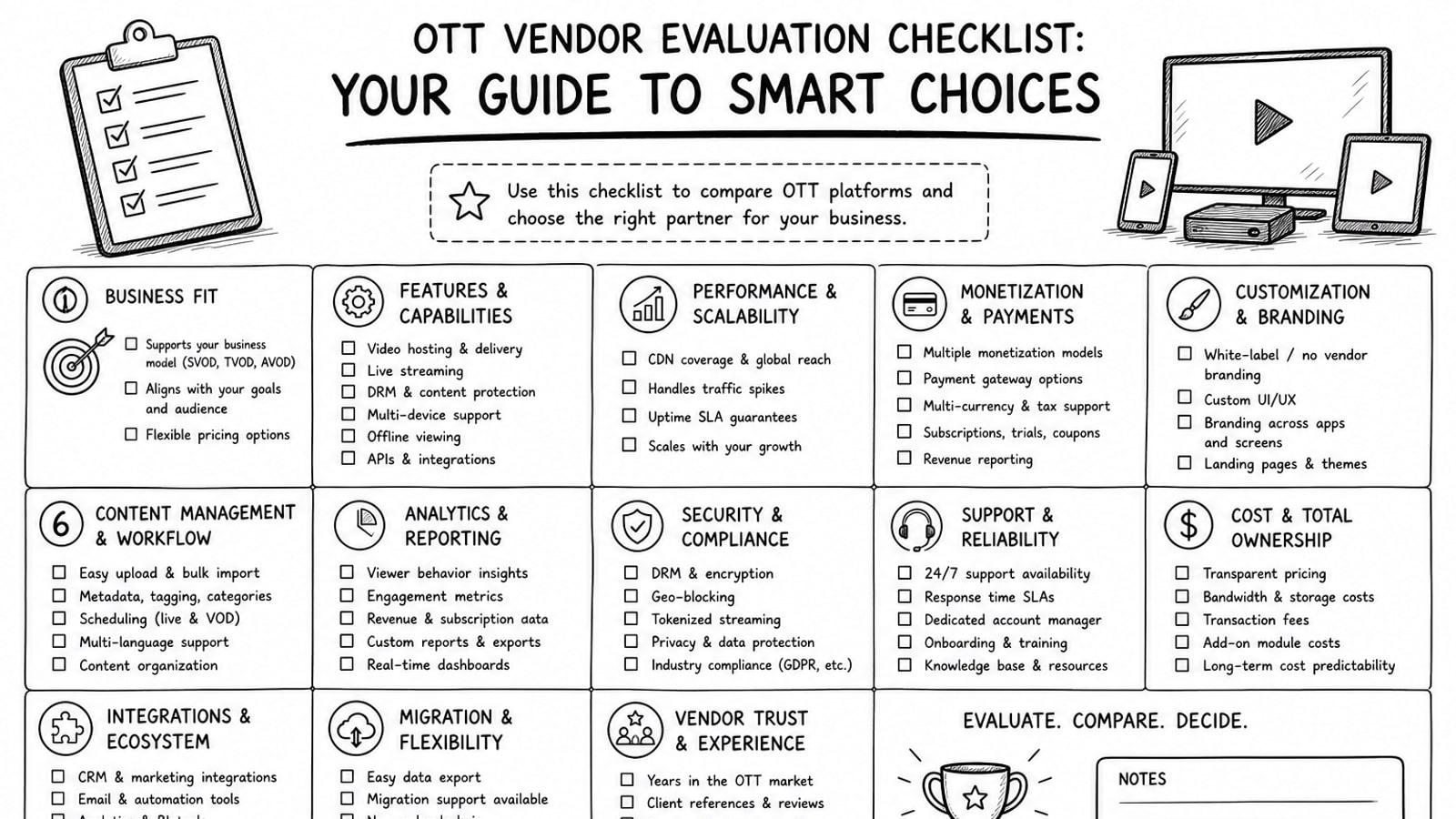
OTT Vendor Evaluation Checklist: Your Guide to Smart Choices
A practical guide to evaluating OTT vendors, with a clear checklist for delivery, security, workflow, cost, ownership, and long-term platform fit.
Read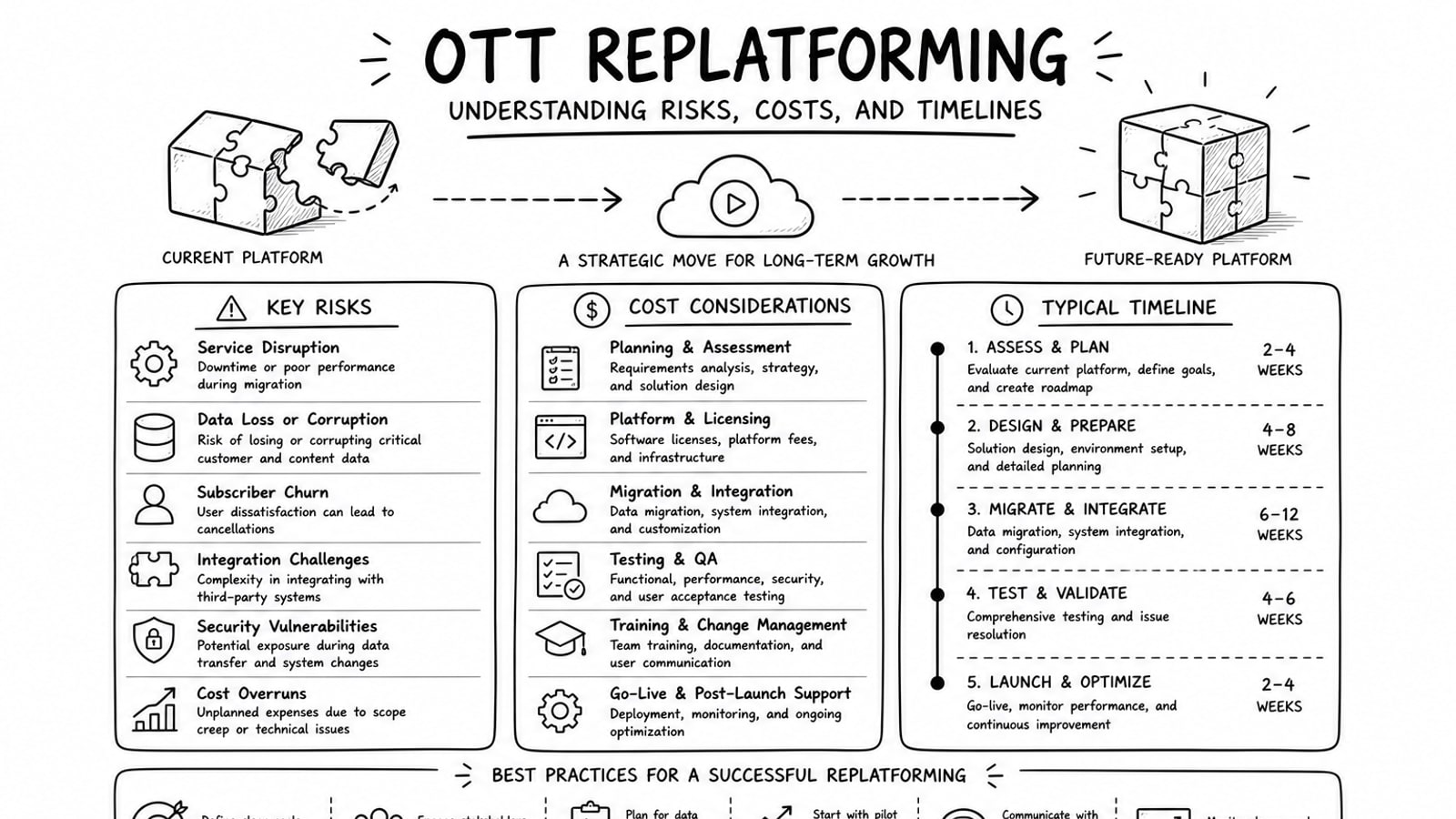
OTT Replatforming: Understanding Risks, Costs, and Timelines
A practical guide to OTT replatforming that explains why teams migrate, what usually drives risk and cost, how long projects tend to take, and where a BYOA delivery model can reduce lock-in.
Read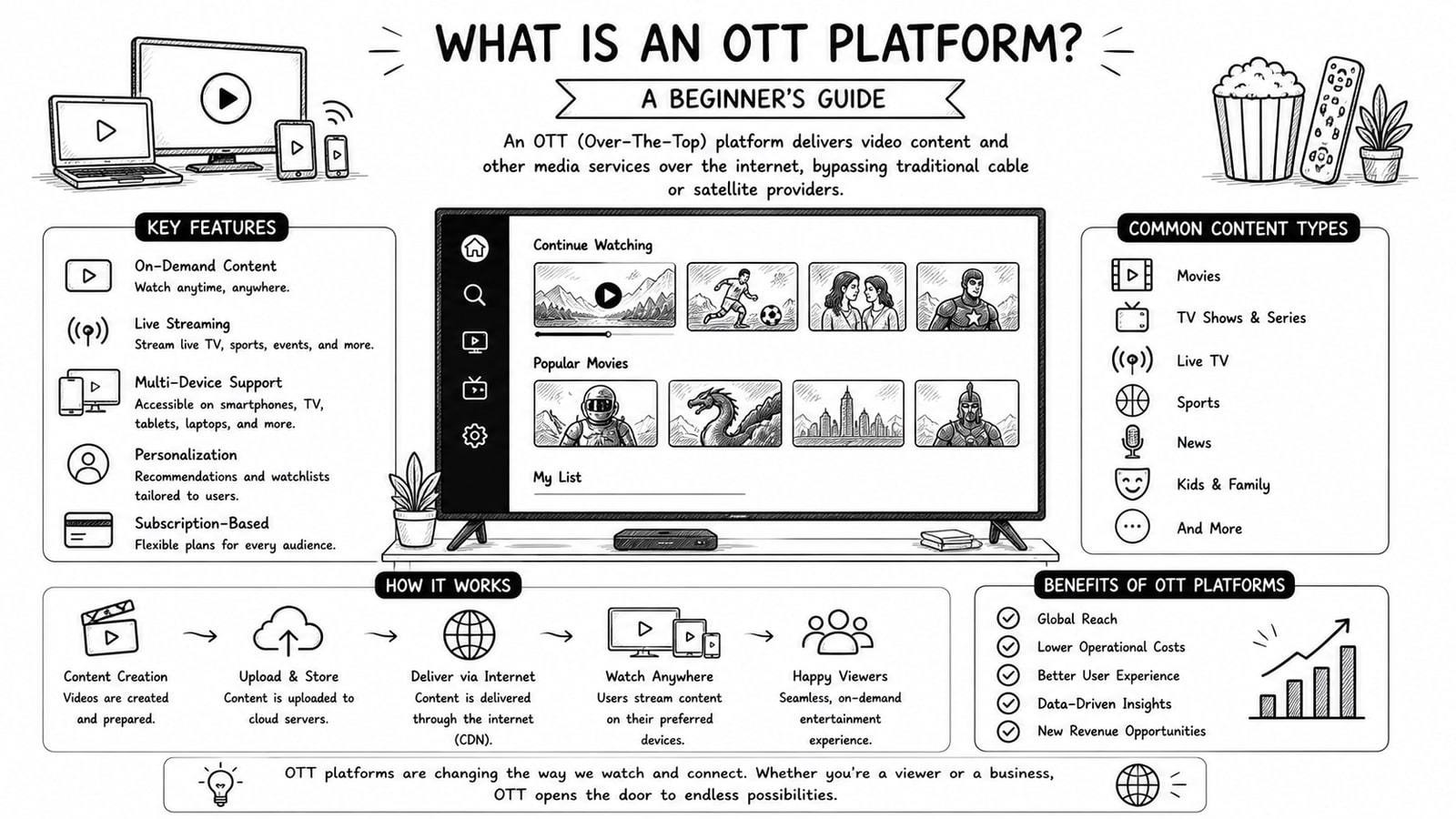
What Is an OTT Platform? A Beginner's Guide
A beginner-friendly guide to OTT platforms, how they work, key components, business models, and what to evaluate before choosing a solution.
Read