OTT
Android TV App Development for OTT Brands: Connect with Viewers Everywhere
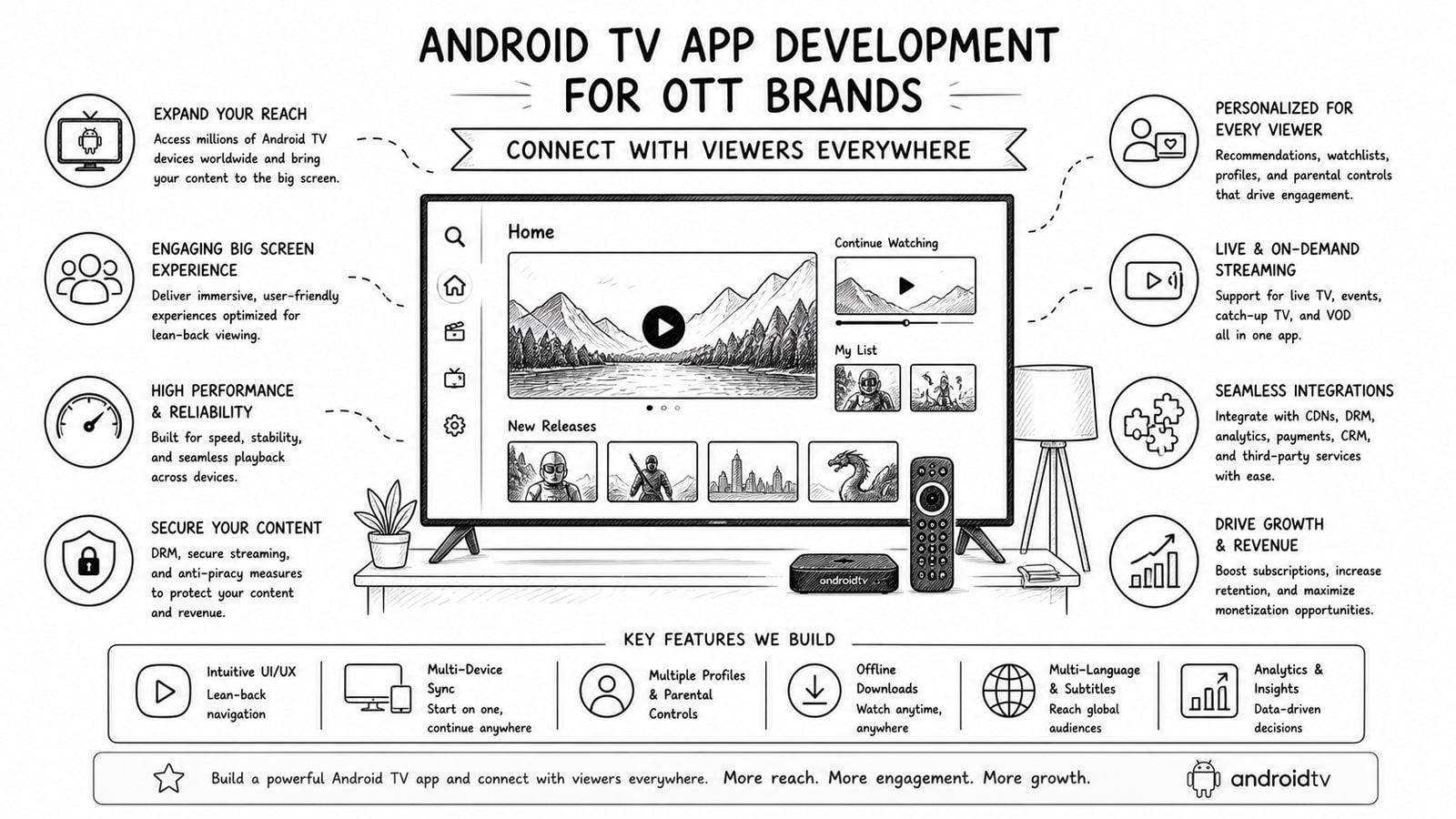
Android TV app development for OTT brands is no longer a nice-to-have. For streaming businesses that want to be present in the living room, it is one of the clearest ways to extend reach, strengthen brand visibility, and keep viewers engaged across screens. A well-built Android TV experience helps viewers move from mobile and web browsing to lean-back watching without friction.
For OTT brands, the real opportunity is not just launching another app. It is creating a connected viewing journey where discovery, playback, profiles, watch progress, and monetization work together on every screen your audience uses.
Quick Answer
Android TV apps help OTT brands meet viewers where they already watch long-form content, especially on connected televisions. The best apps combine fast navigation, stable playback, synchronized user accounts, and clear content discovery so viewers can start on one device and continue on another with minimal effort.
Key Takeaways
Android TV expands OTT reach into the living room, where viewers are more likely to watch longer sessions.
Cross-device continuity matters as much as playback quality, because viewers expect progress, profiles, and preferences to follow them.
Remote-friendly navigation, clear content rows, and TV-specific design choices are essential for retention.
A practical OTT stack should support branding, monetization, engagement features, and operational control without forcing every customer into the same storage model.
Why Android TV App Development Matters for OTT Brands
OTT audiences do not think in channels. They think in moments. A user might discover a title on mobile, save it on the web, and finally watch it on a TV at home. If your service is missing from the biggest screen in that journey, the experience feels incomplete.
Android TV is especially valuable because it gives OTT brands access to a large ecosystem of TV devices while still building on familiar Android development patterns. Google's Android TV guidance also makes clear that TV apps need dedicated launch behavior, leanback support, and interfaces designed for remote control rather than touch.
What Viewers Expect from an Android TV OTT Experience
Fast home screen loading with clear content rows and recommendations.
Reliable playback with support for adaptive streaming, subtitles, and multiple audio tracks where available.
Account synchronization for watch progress, favorites, purchases, and profile settings.
Remote-first navigation that does not force mobile-style interactions onto a television screen.
A friction-light sign-in and payment experience that feels consistent with the rest of the brand.
Android TV App Development for OTT Brands Requires TV-First Design
A common mistake is treating TV as a resized mobile app. That usually leads to awkward menus, inconsistent focus states, and frustrating remote navigation. Android TV apps need bigger targets, clearer hierarchy, and a layout that works from across the room.
From a product perspective, the TV experience should prioritize browse, resume, detail, playback, and account switching. The shortest path to content often wins. If viewers need too many clicks to continue watching, engagement drops quickly.
Core Features That Improve Viewer Engagement
Continue watching: lets users return to the exact point they left off on another device.
Profiles: supports family usage and personal recommendations on shared televisions.
My list or favorites: creates a simple return path for viewers who browse before they watch.
Announcements and notifications: keeps viewers aware of new releases, live events, or expiring access.
Playback controls and subtitles: gives viewers more control and reduces abandonment.
A Simple Framework for Planning an OTT Android TV App
Define the viewing model: subscription, ad-supported, pay-per-view, or a mixed approach.
Map the cross-device journey from discovery to playback to retention.
Choose a delivery stack that supports secure video, scalable playback, and operational visibility.
Design for remote control and television distance from day one.
Add engagement loops such as continue watching, watchlists, notifications, and personalized rows.
Where Bitbyte3 Fits
Bitbyte3 positions its OTT solution around branded delivery across web, mobile, and TV, with supporting modules for content management, monetization, playback apps, viewer engagement, and operational controls. That can be useful for OTT teams that want one coordinated operating model instead of separate systems for apps, catalog, payments, and support.
A notable fit for some brands is Bitbyte3's bring-your-own-account model, described internally as BYOA. In practice, that means a client can use its own service accounts for parts of the media stack, such as video or image infrastructure, instead of being locked into bundled storage fees. That can make costs more predictable and, in some cases, more price-efficient for teams that want direct control over their own media services. For brands that want tighter ownership of media assets, billing relationships, and long-term platform flexibility, that model can be appealing.
For example, a team may prefer to use its own Cloudflare Stream account for video delivery while keeping the application layer and OTT product experience coordinated through Bitbyte3. That approach can give the brand more direct control over infrastructure choices while still moving faster on product delivery.
Technology Considerations Behind Better Connectivity
Connectivity is not just about internet access. In OTT product terms, it means the system can keep content, identity, playback, and app state aligned across surfaces. That depends on a few practical technical decisions.
Adaptive streaming support so playback can adjust to changing network conditions.
Reliable authentication and entitlement checks for subscribers or paid content.
A shared backend that keeps progress, recommendations, and account data consistent across web, mobile, and TV.
Monitoring and operational tooling that helps teams troubleshoot viewer-facing issues before they become churn drivers.
Cloudflare Stream's documentation, for example, highlights support for live and on-demand video workflows, adaptive bitrate delivery, and playback in native apps. Those capabilities matter when an OTT brand wants video infrastructure that can support a connected app ecosystem rather than a single website player.
Common Mistakes OTT Brands Make
Launching on TV without a real cross-device product strategy.
Reusing phone layouts instead of designing a remote-first interface.
Separating playback, CMS, billing, and support workflows so much that operations become slow and fragmented.
Treating storage and delivery costs as an afterthought instead of part of the platform decision.
Methodology and Editorial Note
This article is written as an editorial overview for OTT operators evaluating Android TV as part of a broader connected-TV strategy. Product positioning for Bitbyte3 is based on information publicly available on bitbyte3.com and the solution details provided in the brief. Technical references for Android TV and video delivery are based on official Android Developers and Cloudflare Stream documentation.
FAQ
Why is Android TV important for OTT brands?
It puts your service on a primary viewing screen, supports longer watch sessions, and helps create a continuous experience across mobile, web, and television.
What makes a good Android TV OTT app?
Good TV apps combine stable playback, remote-friendly navigation, clear discovery paths, account synchronization, and a fast way to resume content.
Does every OTT brand need its own Android TV app?
Not always, but brands that want stronger customer ownership, better retention features, and a more consistent product experience often benefit from having one.
What is a bring-your-own-account model in OTT?
It means the client can use its own third-party infrastructure accounts for services like video or image delivery, instead of relying only on bundled vendor-owned storage and billing.
How can Bitbyte3 help OTT brands?
Bitbyte3 offers OTT solution components spanning apps, content management, monetization, engagement, and operational controls, with an approach that can fit brands looking for coordinated delivery across web, mobile, and TV.
Conclusion
Android TV app development gives OTT brands a practical way to connect with viewers wherever they watch, especially when the product is designed as part of a broader multi-screen system. The brands that stand out are usually the ones that treat TV as a core experience, not a secondary extension.
For teams comparing build paths, the right solution is the one that balances viewer experience, operational clarity, and infrastructure flexibility. Bitbyte3 is one option for brands that want branded OTT delivery across screens and may prefer more direct ownership of parts of the underlying media stack.
Explore Bitbyte3 at https://bitbyte3.com/ if your next step is planning a more connected OTT product across web, mobile, and TV.
Sources and Further Reading
About the Author
M. Jorani — LinkedIn
Software Engineer & Technical Writer
M. Jorani is a software engineer and technical writer with hands-on experience building streaming infrastructure, video pipelines, and OTT platforms. He writes about encoding, delivery architecture, and the engineering decisions that shape how audiences watch content across devices.
More from the blog
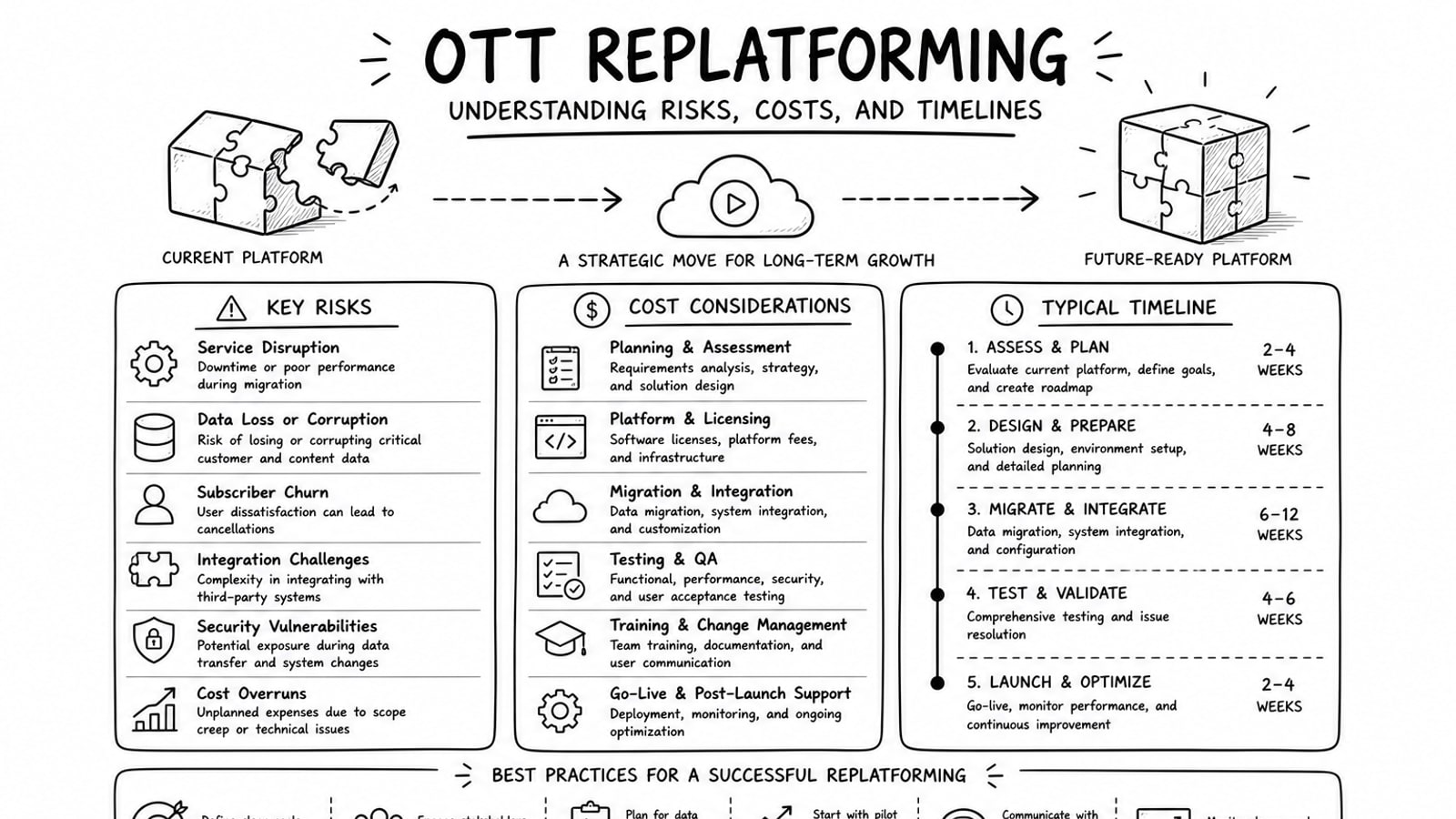
OTT Replatforming: Understanding Risks, Costs, and Timelines
A practical guide to OTT replatforming that explains why teams migrate, what usually drives risk and cost, how long projects tend to take, and where a BYOA delivery model can reduce lock-in.
Read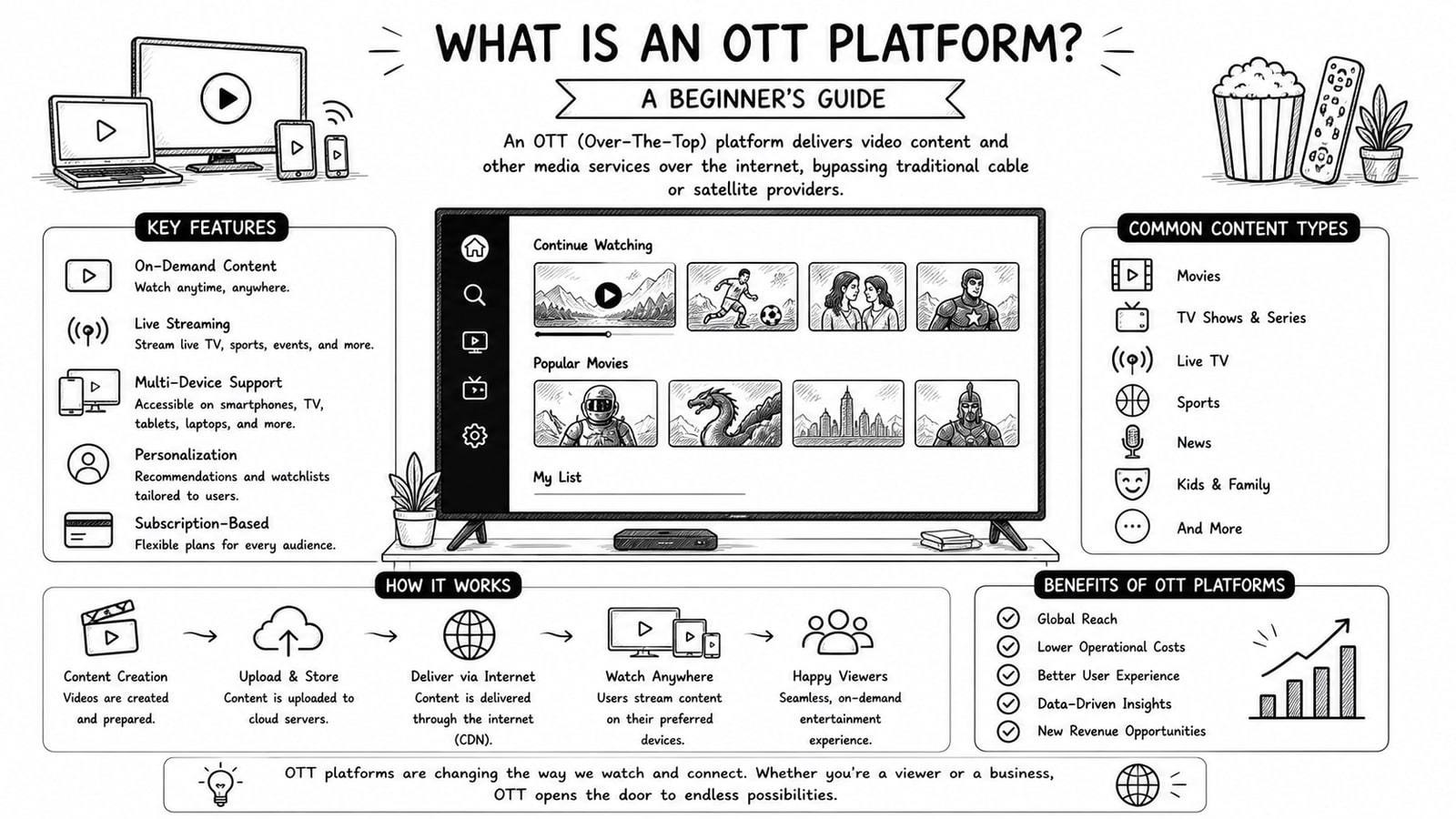
What Is an OTT Platform? A Beginner's Guide
A beginner-friendly guide to OTT platforms, how they work, key components, business models, and what to evaluate before choosing a solution.
Read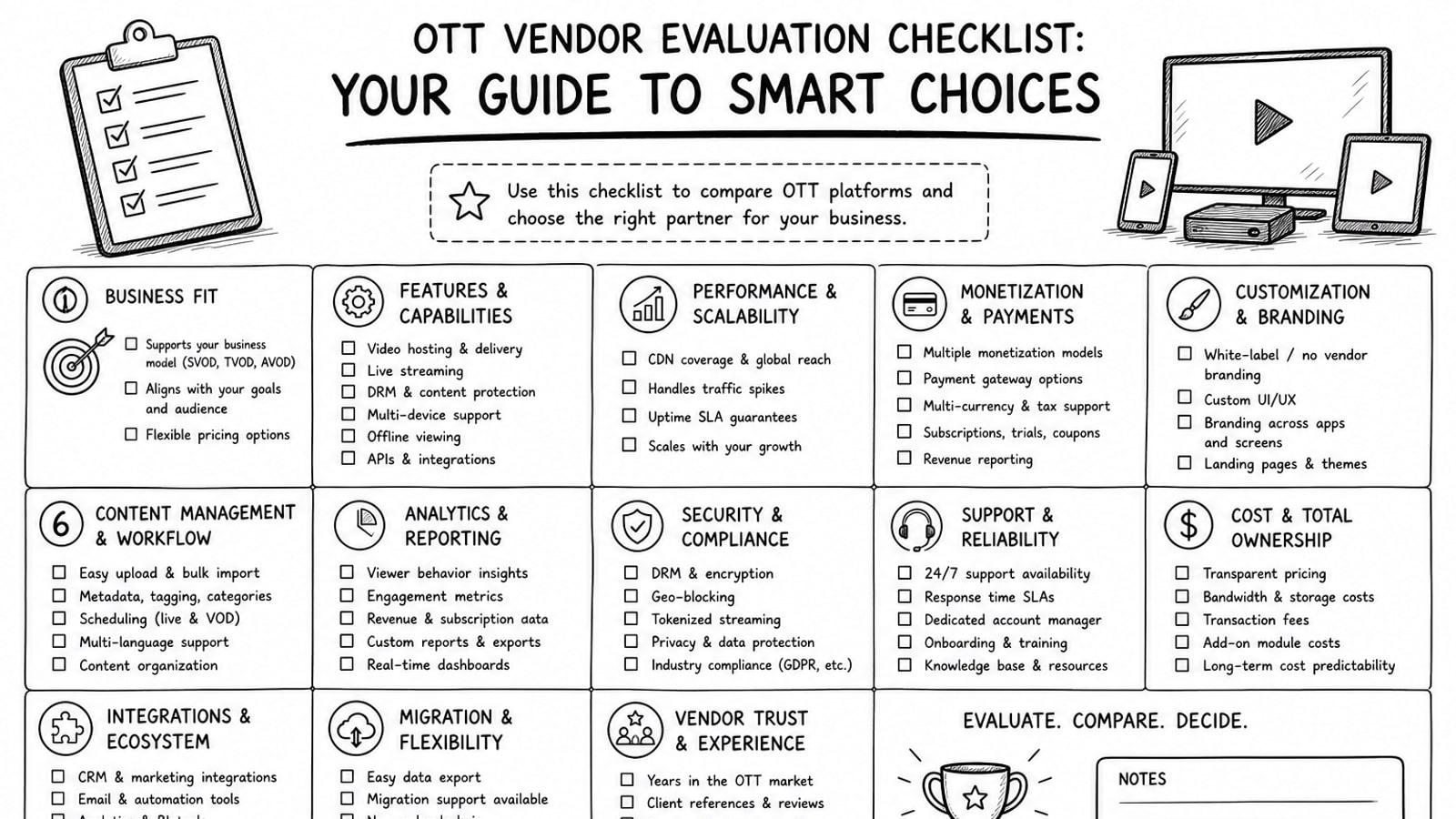
OTT Vendor Evaluation Checklist: Your Guide to Smart Choices
A practical guide to evaluating OTT vendors, with a clear checklist for delivery, security, workflow, cost, ownership, and long-term platform fit.
Read