Streaming
White-Label Streaming Platform vs. Custom Development: Which Fuels Growth Better?
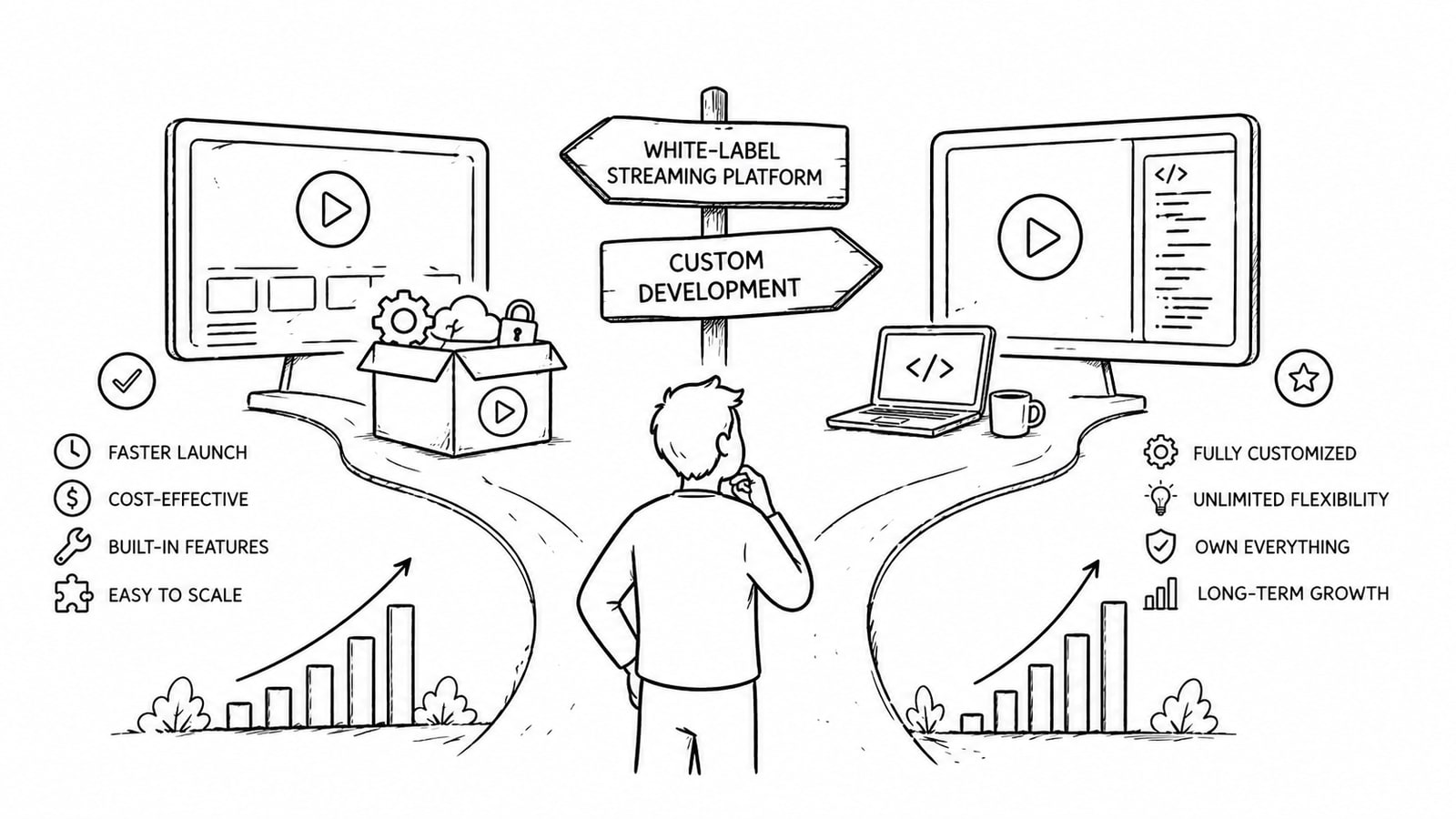
Choosing between a white-label streaming platform and custom development is really a growth decision disguised as a technology decision. For most streaming businesses, a white-label platform fuels growth faster in the early stage because it reduces launch time, lowers operational burden, and gets revenue experiments live sooner. Custom development usually becomes the stronger growth engine later, when differentiation, workflow control, data ownership, and margin optimization matter more than speed alone.
Quick Answer
If your main goal is to launch quickly, validate demand, and start monetizing with less technical overhead, a white-label streaming platform is usually the better growth lever.
If your business already has product-market fit, complex workflows, unusual monetization needs, or a strong reason to own the full stack, custom development can fuel bigger long-term growth, but it usually takes more time, budget, and operational maturity to pay off.
Key Takeaways
White-label platforms usually win on speed to market and lower upfront risk.
Custom builds usually win on product control, extensibility, and long-term strategic flexibility.
Growth is not just about features; it is about how fast you can test pricing, content models, acquisition channels, and retention loops.
For most emerging OTT brands, white-label is the better first growth move.
For established media businesses with unique needs, custom development can become the better second move.
What a White-Label Streaming Platform Usually Means
A white-label streaming platform is a ready-made OTT product that a company can brand as its own. The provider typically handles much of the infrastructure and product foundation, while the customer customizes branding, content organization, apps, payments, and selected workflows.
The advantage is obvious: you skip much of the heavy lifting involved in building video delivery, app distribution, subscription systems, and admin tooling from scratch.
That matters because OTT stacks are not simple. A UK government review of TV distribution notes that new OTT platforms can launch more easily and at lower cost partly because end-to-end white-label platforms and mature off-the-shelf components are now widely available.
What Custom Development Usually Means
Custom development means building a streaming product around your own architecture, workflows, and product roadmap. That does not always mean building every layer from zero. In practice, many custom streaming businesses still use cloud media services, CDNs, billing systems, DRM vendors, analytics tools, and app frameworks while owning the application layer and core logic themselves.
Even highly customized streaming products still rely on many moving parts, including ingest, encoding, packaging, delivery, authentication, DRM, analytics, ad insertion, CMS integrations, and device support.
White-Label Streaming Platform vs. Custom Development at a Glance
Time to launch: white-label is usually faster.
Upfront cost: white-label is usually lower.
Flexibility and ownership: custom usually gives you more.
Operational burden: custom usually requires more internal engineering and maintenance.
Which Option Fuels Growth Faster in the Early Stage?
White-label streaming platforms usually fuel earlier growth because they help teams launch before momentum cools, test monetization quickly, reach viewers on multiple devices, and avoid technical delays that block marketing and content execution.
This is especially true if your edge is niche content, community, rights access, education, faith media, sports access, or regional programming rather than a deeply differentiated software product.
When Custom Development Fuels Growth Better
Custom development starts to outperform when growth depends on capabilities that a white-label platform cannot support well enough. That may include unique recommendation engines, complex B2B2C workflows, hybrid monetization, advanced rights management, ad-tech integrations, proprietary community features, or the strategic need to own the full roadmap and data layer.
White-Label Streaming Platform Benefits for Growth
Faster time to revenue.
Lower execution risk.
More focus on content, partnerships, and marketing.
Quicker monetization testing.
Easier multi-device rollout.
White-Label Streaming Platform Limitations
Vendor dependency can slow strategic changes.
Customization ceilings can become a real problem.
Fees and platform constraints can pressure margins over time.
Differentiation can be harder to sustain if the product layer stays too similar to competitors.
Custom Development Benefits for Growth
Full control over the roadmap.
Better long-term differentiation.
Deeper integrations with business systems.
Greater ownership of data and workflows.
Potentially stronger economics at scale.
Custom Development Risks
Slower launch can delay learning and revenue.
Higher staffing burden across engineering, QA, operations, and product.
More operational complexity around reliability, monitoring, DRM, authentication, and failover.
Higher opportunity cost if the team spends too long rebuilding commodity infrastructure.
White-Label Streaming Platform vs. Custom Development by Business Stage
White-label is usually the stronger choice for a new OTT or niche streaming brand, a lean team, or a business prioritizing speed and validation. Custom development is usually the stronger choice for an established streaming business with scale, unusual workflows, and a real product moat to build.
A Practical Framework: Which Fuels Growth Better for You?
What is actually driving growth right now?
Do you already have product-market fit?
What happens if launch slips by six months?
Is your team built to run streaming infrastructure and product delivery?
Are platform constraints already slowing growth?
A Common Middle Path That Often Works Best
Launch on a white-label platform.
Validate audience demand and monetization.
Learn which workflows truly matter.
Rebuild selectively once constraints become real and costly.
Common Mistakes to Avoid
Choosing custom for prestige instead of real business need.
Choosing white-label without checking exit risk and vendor constraints.
Underestimating app store economics.
Confusing branding with true product differentiation.
Ignoring internal operating complexity.
Conclusion
For most early-stage streaming businesses, a white-label streaming platform fuels growth better because it compresses time to market, reduces technical drag, and lets the team focus on acquiring and retaining viewers.
For mature streaming businesses with validated demand and product-specific needs, custom development can fuel stronger long-term growth because it unlocks deeper differentiation, tighter workflow control, and better strategic ownership.
The strongest answer for many companies is staged: launch fast with white-label, learn what matters, then invest in custom where it actually creates leverage.
About the Author
M. Jorani — LinkedIn
Software Engineer & Technical Writer
M. Jorani is a software engineer and technical writer with hands-on experience building streaming infrastructure, video pipelines, and OTT platforms. He writes about encoding, delivery architecture, and the engineering decisions that shape how audiences watch content across devices.
More from the blog
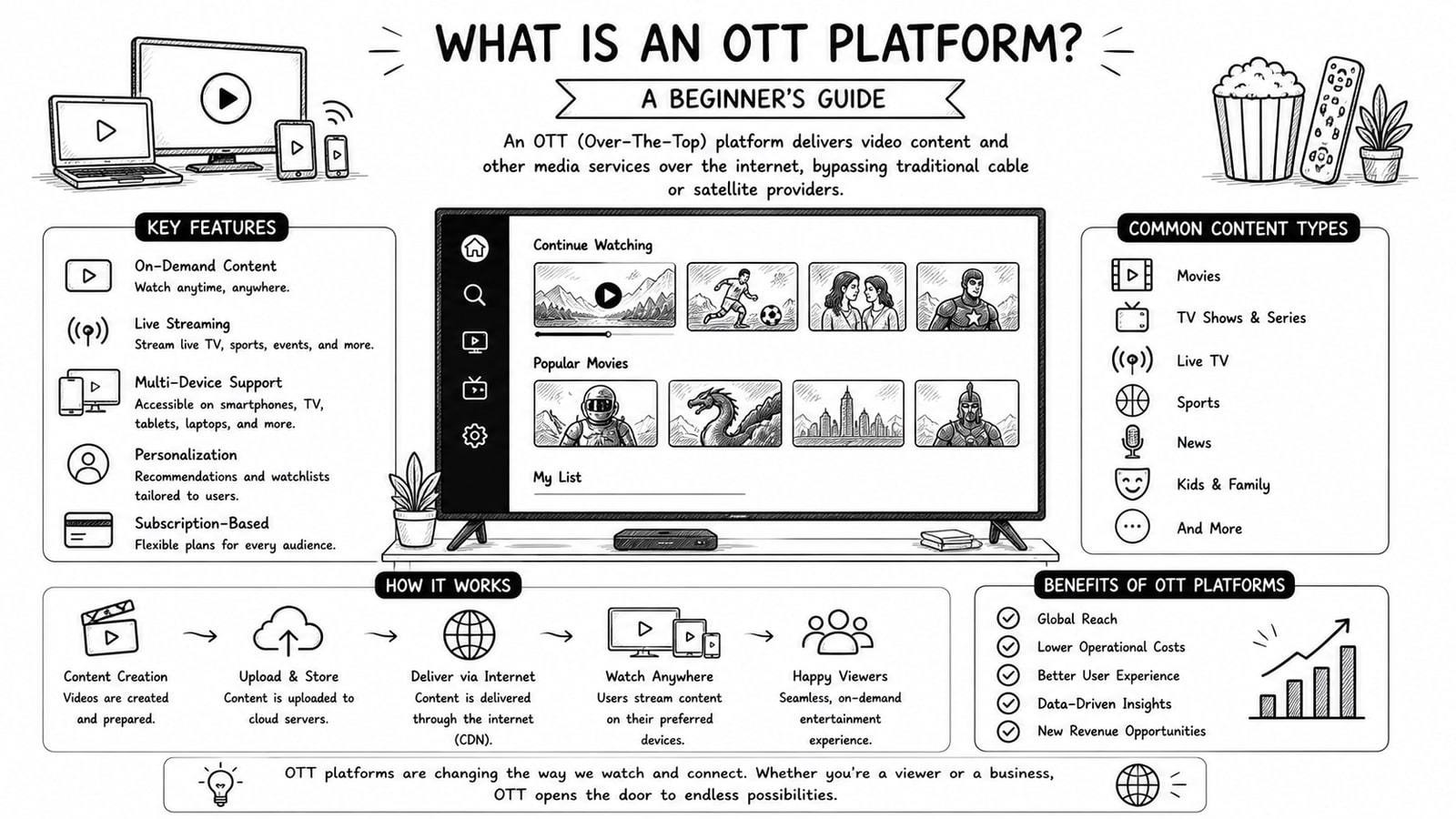
What Is an OTT Platform? A Beginner's Guide
A beginner-friendly guide to OTT platforms, how they work, key components, business models, and what to evaluate before choosing a solution.
Read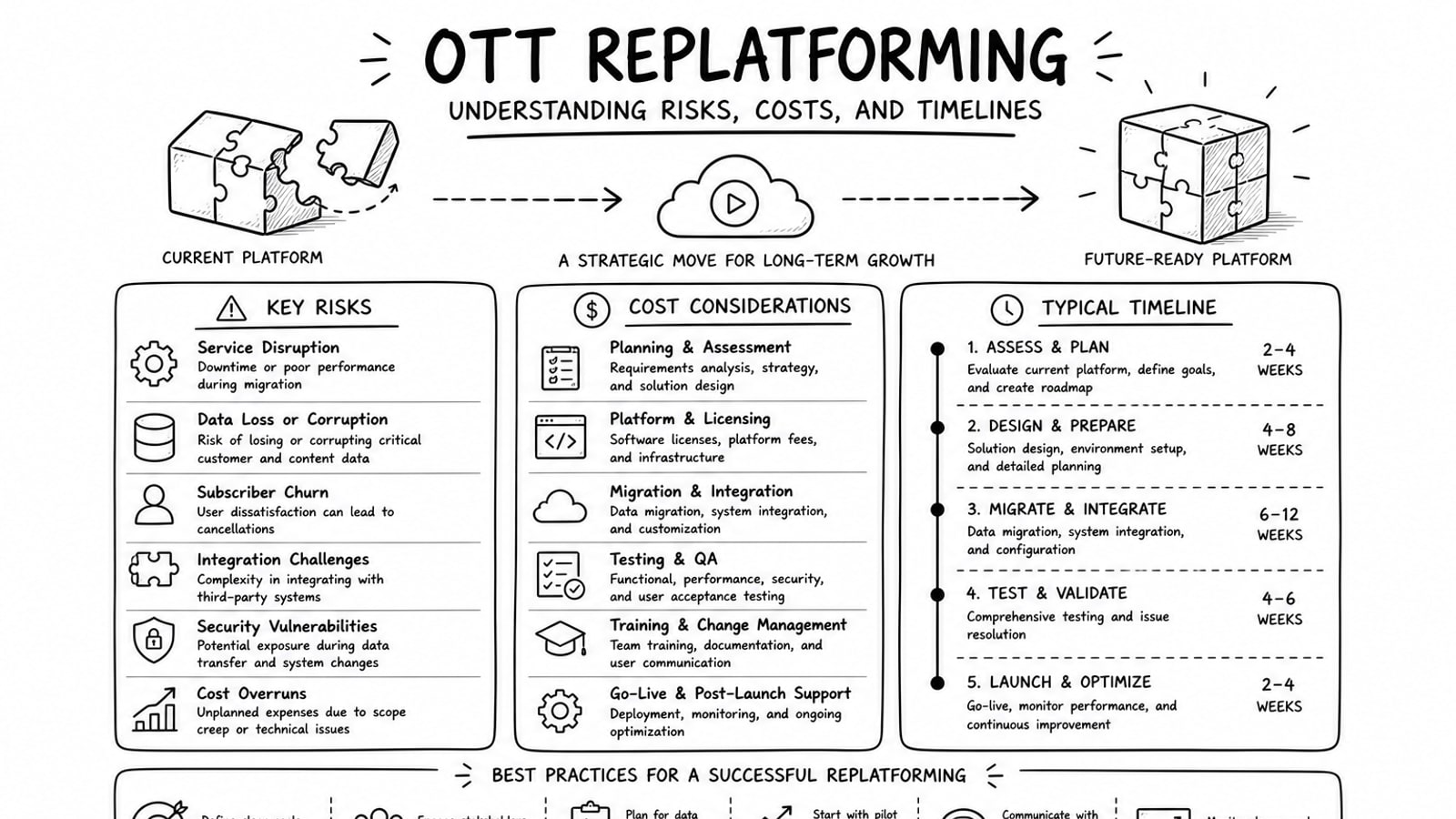
OTT Replatforming: Understanding Risks, Costs, and Timelines
A practical guide to OTT replatforming that explains why teams migrate, what usually drives risk and cost, how long projects tend to take, and where a BYOA delivery model can reduce lock-in.
Read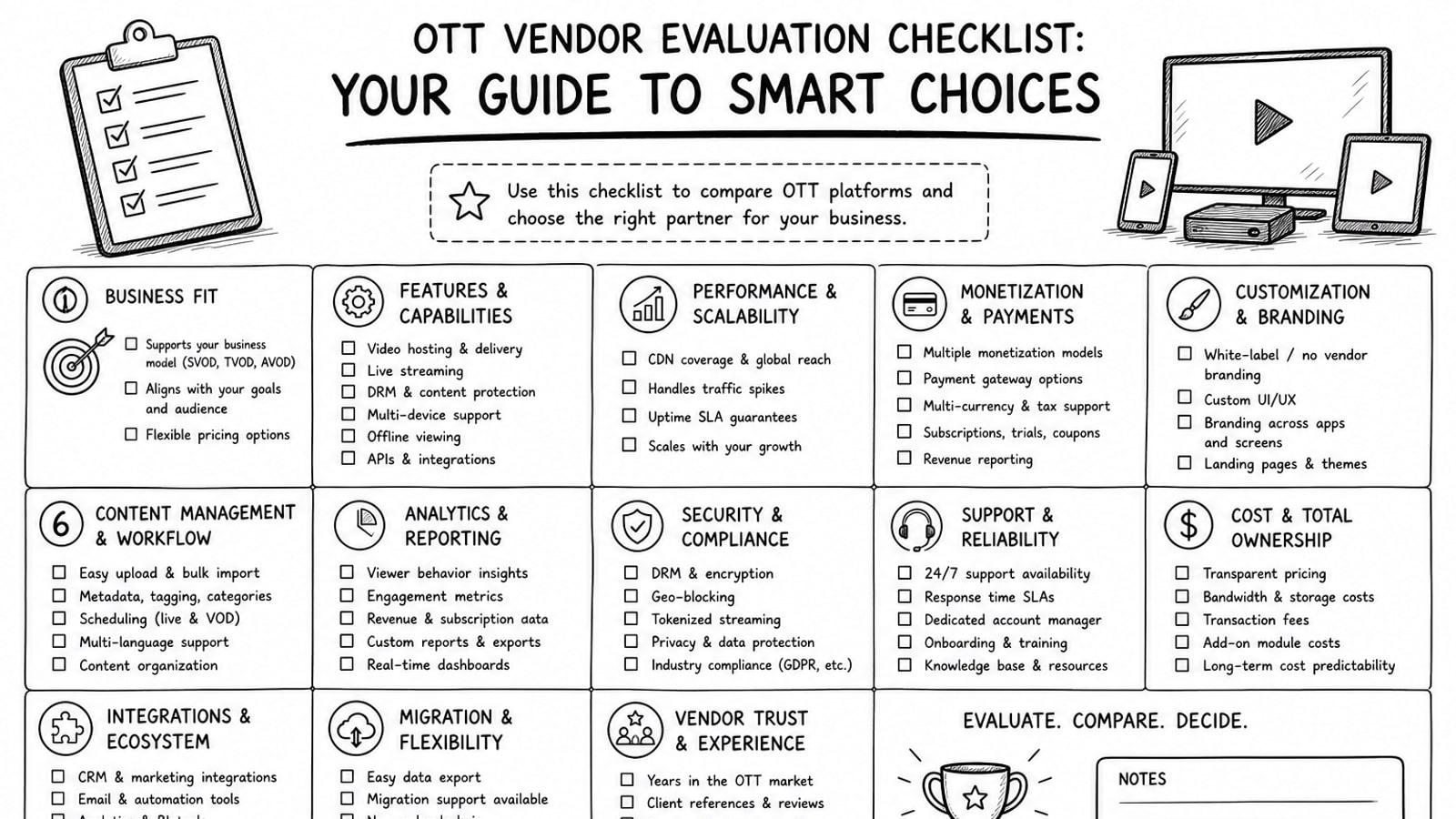
OTT Vendor Evaluation Checklist: Your Guide to Smart Choices
A practical guide to evaluating OTT vendors, with a clear checklist for delivery, security, workflow, cost, ownership, and long-term platform fit.
Read