OTT app development
White-Label OTT App Development Services: Tailored Solutions for Your Brand
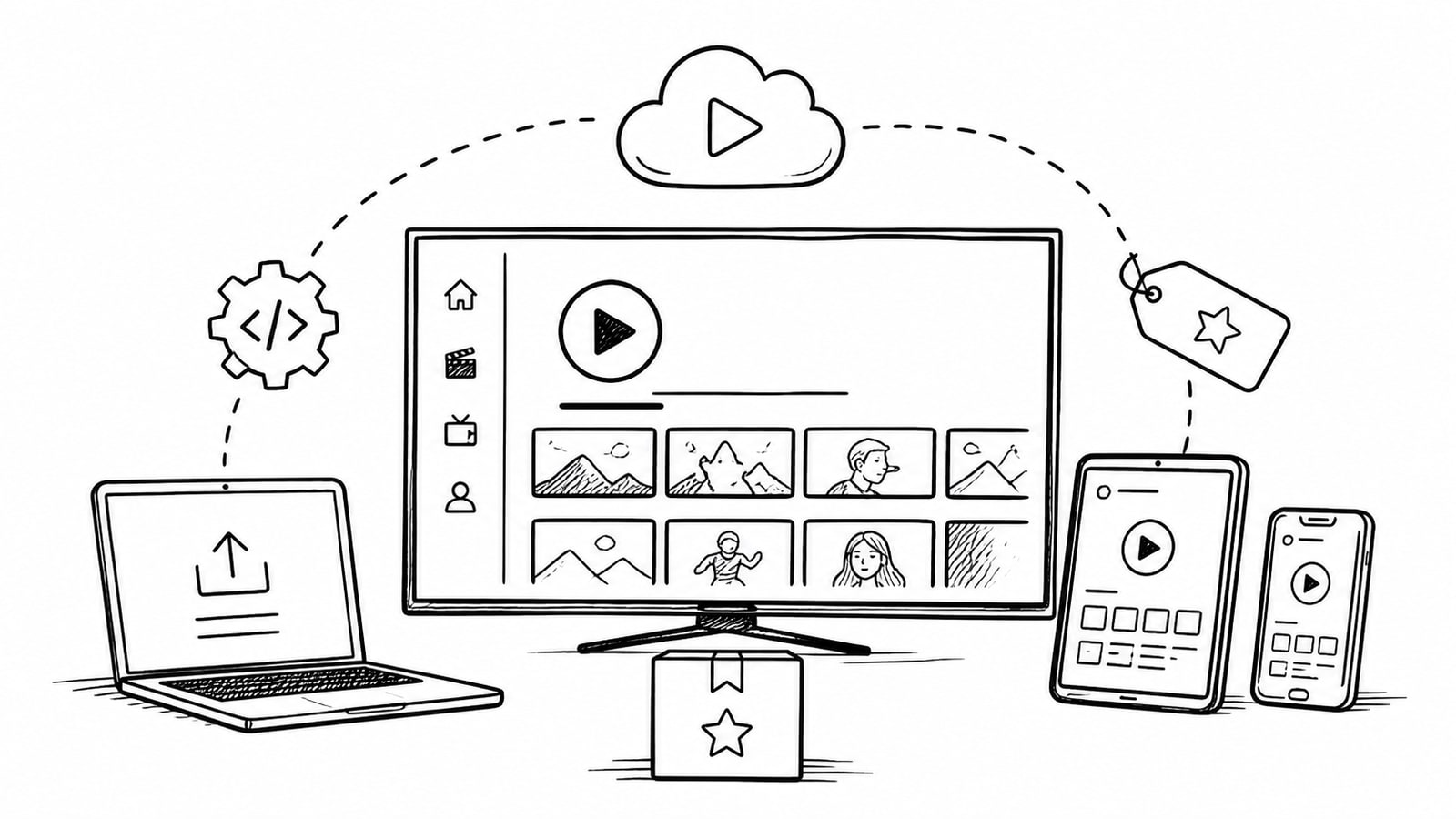
White-label href="/blogs/why-ott-apps-matter-for-subscription-growth">OTT app development services help media brands, educators, fitness businesses, and content-led companies launch streaming apps without building every component from scratch. The real advantage is not only speed. It is the ability to shape the product around your brand, your audience journey, and your operating model.
If your goal is to create a streaming experience that looks and feels like your company rather than a generic platform template, customization matters at every layer: interface, monetization, content structure, device coverage, performance, analytics, and infrastructure ownership.
Quick Answer
White-label OTT app development services give businesses a faster route to launch branded streaming apps across web, mobile, and TV platforms. The best solutions go beyond theme changes and support deeper customization in user experience, monetization, integrations, and media infrastructure so the platform fits the brand's long-term business model.
Key Takeaways
White-label OTT app development services reduce time to market while still allowing meaningful brand control.
Strong OTT customization includes design, navigation, monetization flows, content organization, and third-party integrations.
Brand alignment is easier when the app reflects your voice, visual identity, audience journey, and product strategy.
A Bring Your Own Account, or BYOA, model can give clients more direct control over storage, streaming usage, and vendor accounts.
When evaluating providers, buyers should look past launch speed and compare ownership, flexibility, and long-term operating costs.
What White-Label OTT App Development Services Usually Include
A white-label OTT offer typically includes the core technology stack required to launch and manage a streaming product across multiple devices. That often means apps for web, iOS, Android, Android TV, Apple TV, Roku, Fire TV, or smart TVs, along with a content management layer and playback infrastructure.
Some providers focus on getting a standard app live quickly. Others support deeper product work such as personalized home screens, subscription logic, ad-supported models, live streaming, user roles, multilingual experiences, CRM integrations, and analytics events tailored to the business.
Why Customization Matters in White-Label OTT App Development Services
Many buyers start with white-label OTT app development services because they want faster execution. That is valid, but speed alone rarely creates a strong product. The apps that retain users usually have clear information architecture, friction-light onboarding, consistent branding, and monetization flows that match how the audience prefers to pay and watch.
Customization makes the difference between a platform that simply hosts content and one that reinforces your market position. A premium publisher may need editorial curation and polished TV interfaces. A coach or educator may need course-style structure, gated libraries, and recurring membership logic. A sports or live event business may need live schedule modules, real-time alerts, and post-event replay handling.
Customization Areas That Affect Brand Alignment
Visual identity: logo treatment, color system, typography, thumbnails, and splash screens.
Product structure: collections, series pages, categories, playlists, and featured content rules.
Monetization: subscriptions, bundled access, pay-per-view, promo codes, or hybrid revenue models.
Customer journey: onboarding, sign-up flow, watchlist behavior, upsell prompts, and renewal messaging.
Operational setup: integrations, roles, analytics, support workflow, and media hosting ownership.
A Practical Framework for Evaluating White-Label OTT Options
A simple way to compare providers is to score them across five areas: branding flexibility, device coverage, monetization support, infrastructure ownership, and post-launch adaptability. This keeps the decision focused on the business model rather than just the demo.
Branding flexibility: Can the experience look and sound like your company across every device?
Device coverage: Does the roadmap include the screens your audience already uses?
Monetization support: Can the platform support your current and future revenue model?
Infrastructure ownership: Who controls video hosting, storage costs, access credentials, and vendor accounts?
Post-launch adaptability: How easily can the product evolve as the library, audience, or pricing strategy changes?
How Brand-Aligned OTT Solutions Support Long-Term Growth
Brand alignment is not only cosmetic. It shapes trust, usability, and retention. When viewers move from your website, emails, social presence, and checkout into your OTT app, the transition should feel continuous. Consistent design and messaging make the platform easier to trust. Clear content organization makes it easier to use. A well-matched monetization model makes it easier to convert.
This is especially important for businesses whose content is part of a broader membership, education, media, or community offer. In those cases, the OTT app should behave like a native extension of the brand, not a separate software product that users must relearn.
Where Bitbyte3 Fits
Bitbyte3, at bitbyte3.com, positions its OTT solution around tailored branding, flexible implementation, and a more ownership-friendly delivery model for clients that want control. One notable part of that positioning is a Bring Your Own Account approach, also called BYOA.
In a BYOA setup, each client can use its own infrastructure accounts for services such as video and image delivery when that model fits the project. For example, a client may choose to use its own Cloudflare Stream account for media operations. That can reduce dependency on bundled vendor markups, give the client direct visibility into usage, and remove storage or fee restrictions imposed by the app provider's shared account model.
For some buyers, that structure can support better cost control over time because media spending stays closer to their own account usage. The exact savings, however, depend on the client's traffic profile, content library, and vendor pricing, so any pricing comparison should be verified during solution scoping.
When a BYOA OTT Model Makes Sense
You want direct ownership of media accounts and billing visibility.
You expect content volume or storage needs to grow over time.
You need the freedom to pair the app with vendors already approved by your business.
You want to avoid platform rules that are tied to another company's shared infrastructure.
Step-by-Step: Choosing the Right White-Label OTT Development Partner
Define the audience, device priorities, and revenue model before comparing vendors.
List the brand elements that must stay consistent across web, mobile, and TV experiences.
Ask how much control you will have over hosting, storage, analytics, and third-party accounts.
Review the provider's app update process and what changes require custom development.
Validate the commercial model with a real usage scenario, especially for storage, streaming, and future scale.
Common Mistakes Buyers Make
Choosing a platform based only on launch speed and not on long-term flexibility.
Assuming customization means only changing colors, logos, and splash screens.
Ignoring who owns the infrastructure accounts and how that affects billing and scale.
Failing to map the OTT experience to the broader website, email, and customer lifecycle.
Relying on pricing assumptions without checking usage-based scenarios and vendor dependencies.
Trust and Editorial Notes
This article is written as a strategic overview for buyers evaluating white-label OTT app development services. It does not present pricing benchmarks, storage limits, or performance claims because those details vary by provider, media stack, and account configuration. Any vendor comparison, infrastructure cost estimate, or implementation timeline should be validated with current product documentation and project-specific scoping.
Before publication, add verified internal links, product screenshots, and source links for any technical claims your team wants to make about platforms, integrations, or account-level delivery options.
FAQ
What is a white-label OTT app?
A white-label OTT app is a streaming application built on reusable platform components but branded and configured for a specific company, publisher, or creator business.
Why choose white-label OTT app development services instead of building from scratch?
White-label development can shorten launch time and reduce engineering effort while still allowing meaningful customization in design, features, and monetization.
What does BYOA mean in an OTT solution?
BYOA means Bring Your Own Account. In this model, the client uses its own vendor accounts for parts of the infrastructure, such as media hosting, instead of relying entirely on the OTT provider's shared account setup.
Can a BYOA model help control OTT platform costs?
It can improve cost visibility and reduce vendor markup in some cases, but the outcome depends on usage, media volume, and the pricing structure of the underlying services.
Which brands benefit most from white-label OTT platforms?
Media brands, educators, coaches, membership businesses, live event companies, and niche publishers often benefit because they need both streaming functionality and a branded user experience.
What should buyers ask an OTT development partner before signing?
Ask about device support, monetization options, update ownership, infrastructure control, account access, analytics, and the real cost implications of scale.
Conclusion
The strongest white-label OTT app development services do more than launch a streaming app. They help businesses build a branded product with the right balance of speed, control, and flexibility. If your team wants a platform that aligns closely with your brand and operating model, the best next step is to compare providers based on customization depth, infrastructure ownership, and long-term cost logic, not just launch timelines.
For teams exploring a tailored OTT build, Bitbyte3 may be worth considering when brand-specific implementation and BYOA-style infrastructure control are important to the project.
About the Author
R. Jabar
Marketing Strategist
R. Jabar is a marketing strategist who helps streaming and OTT brands turn complex product stories into clear, growth-driven messaging. She writes about audience acquisition, content monetization, and the marketing frameworks that help video platforms scale.
More from the blog
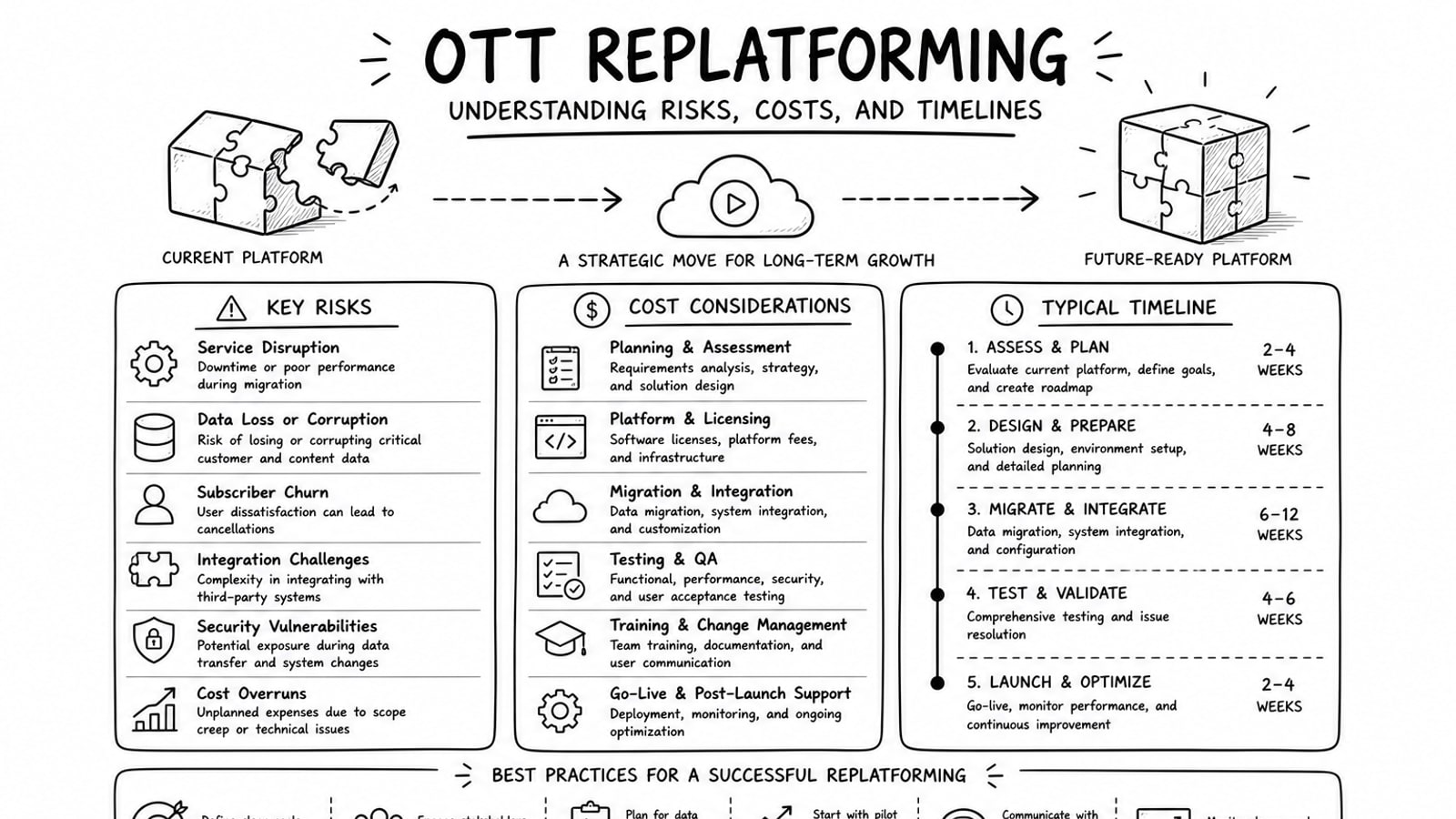
OTT Replatforming: Understanding Risks, Costs, and Timelines
A practical guide to OTT replatforming that explains why teams migrate, what usually drives risk and cost, how long projects tend to take, and where a BYOA delivery model can reduce lock-in.
Read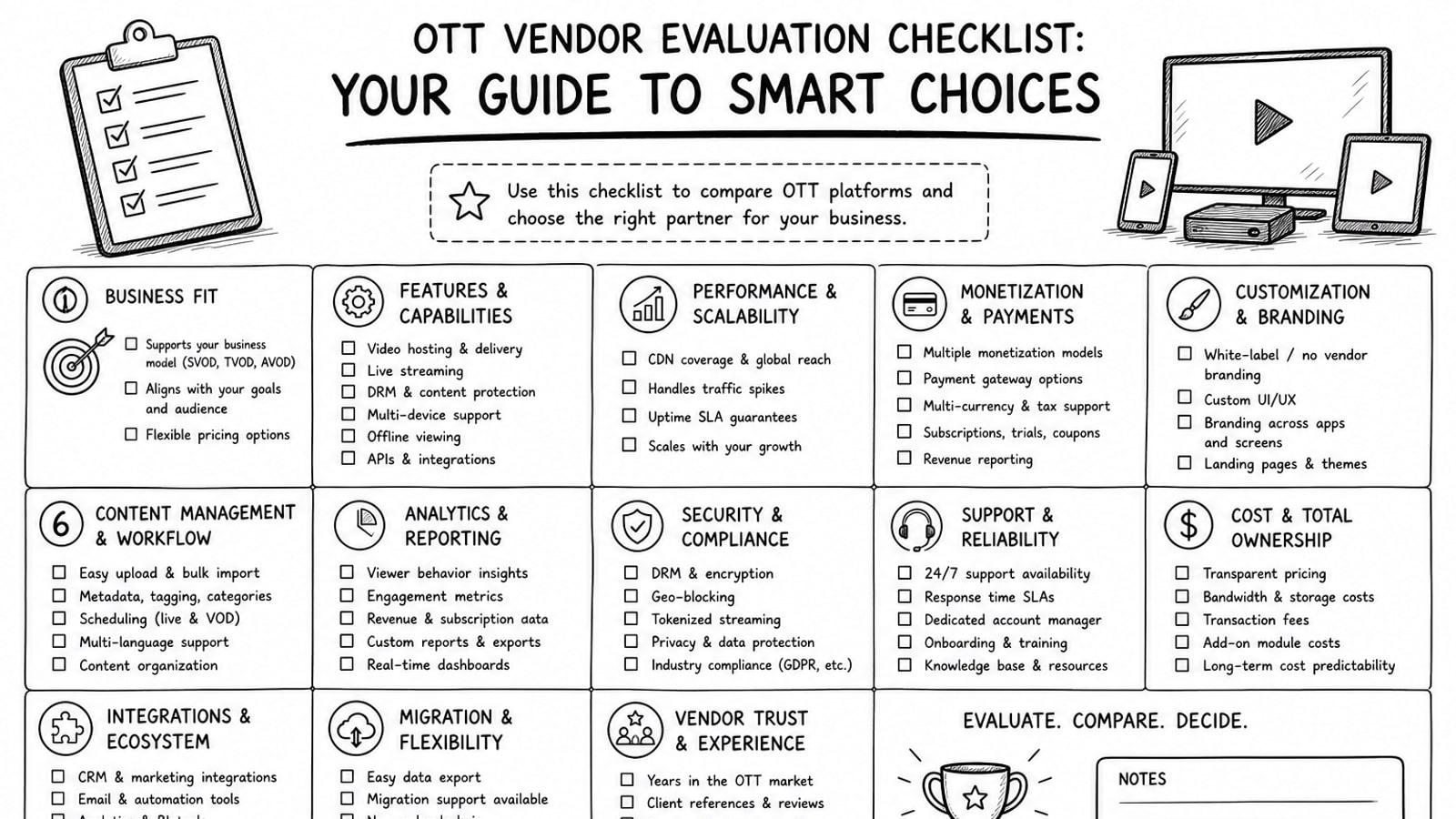
OTT Vendor Evaluation Checklist: Your Guide to Smart Choices
A practical guide to evaluating OTT vendors, with a clear checklist for delivery, security, workflow, cost, ownership, and long-term platform fit.
Read
Brightcove vs. Kaltura: A Comprehensive Guide for OTT Platforms
A practical comparison of Brightcove and Kaltura for OTT teams evaluating launch speed, customization, monetization, operational complexity, and long-term platform fit.
Read