OTT
Leading OTT Platforms for Media Companies: Boost Your Reach
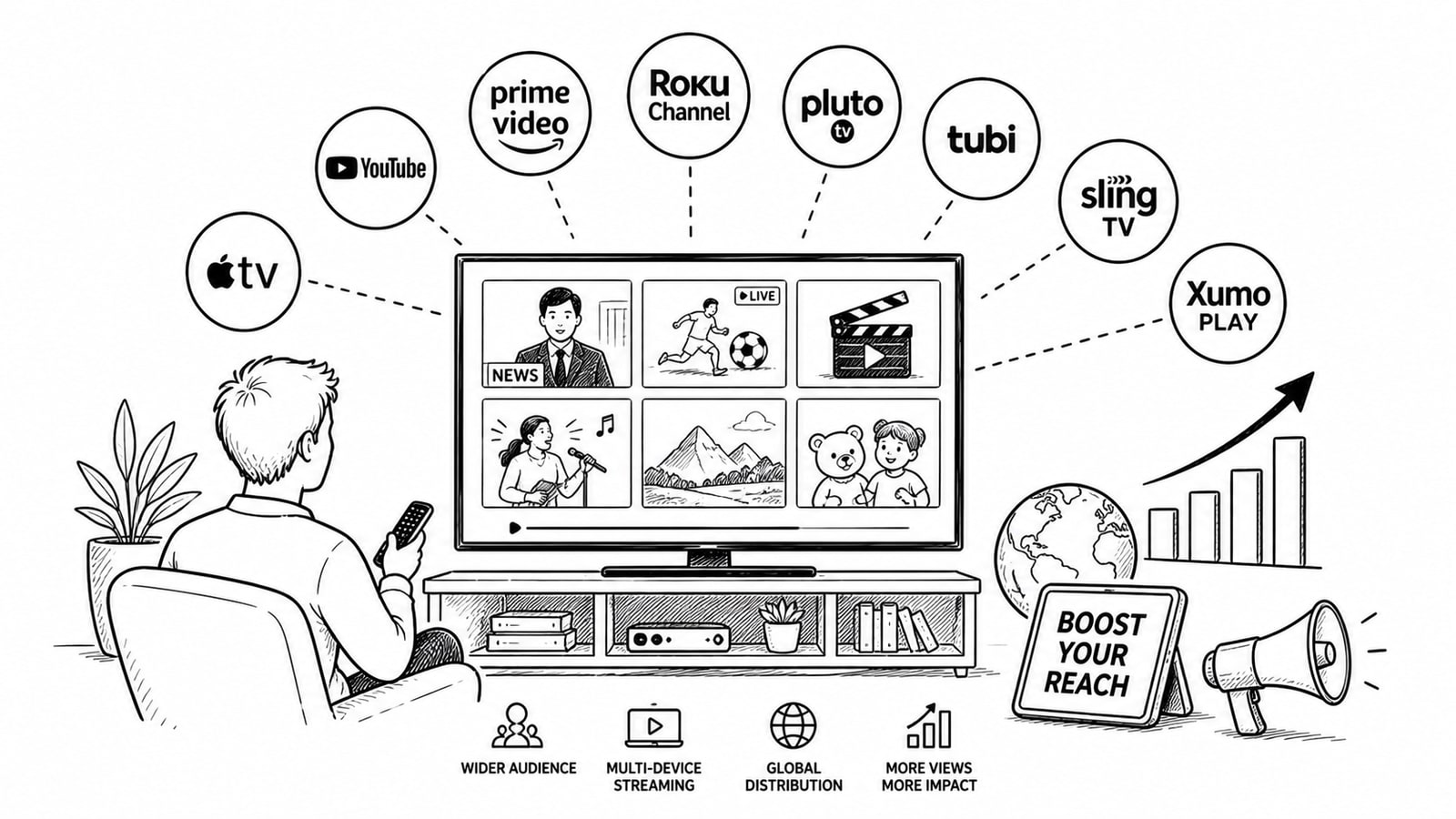
Media companies no longer need to rely only on cable distribution, app-store discovery, or social reach to build an audience. Leading OTT platforms for media companies give publishers, broadcasters, studios, and digital-first brands a direct path to viewers across web, mobile, and connected TV. The opportunity is real, but the right platform depends on your monetization model, operational complexity, and how much control you want over your infrastructure.
Quick Answer
The best OTT platform for a media company is the one that matches its content model, growth stage, and ownership goals. Brightcove, Vimeo OTT, Kaltura, Muvi, Uscreen, and JW Player all serve different needs, while a service partner like Bitbyte3 may fit companies that want a more flexible launch model and tighter control of infrastructure costs.
Key Takeaways
OTT growth is still driven by audience demand for internet-delivered video across web, mobile, and connected TV.
Media companies should evaluate OTT vendors on distribution, monetization, analytics, operational control, and long-term cost structure.
Not every business needs a fully bundled platform; some teams benefit from a bring-your-own-account model that keeps infrastructure billing in the client's own cloud account.
Bitbyte3's OTT offer is notable for companies that want implementation support with potentially lower platform markup and more ownership over services such as Cloudflare Stream and Cloudflare Images inside their own account.
Why OTT Still Matters for Media Companies
OTT, or over-the-top delivery, means distributing video directly over the internet rather than through a traditional cable or satellite gatekeeper. For media companies, that matters because it expands reach, improves ownership of audience relationships, and creates more room to test subscriptions, ads, pay-per-view, bundles, or hybrid monetization.
Recent industry research continues to support the shift. Deloitte's 2025 Digital Media Trends report notes that streaming providers are now competing not only with one another but also with social video platforms for audience attention and advertising. Nielsen's 2025 Streaming Unwrapped coverage also shows streaming increasing its share of total TV viewing time in the US, underscoring how firmly internet video is embedded in viewer behavior.
What Media Companies Should Look For in Leading OTT Platforms
Multi-device distribution: web, iOS, Android, Roku, Apple TV, Fire TV, Android TV, and other connected TV environments.
Monetization flexibility: support for SVOD, AVOD, TVOD, FAST, live events, sponsorships, or hybrid models.
Content operations: CMS usability, scheduling, live-to-VOD workflows, metadata, rights controls, and localization support.
Audience intelligence: analytics for engagement, churn, retention, completion rate, and content performance.
Security and control: DRM, access rules, account ownership, and clarity around billing, storage, and vendor lock-in.
Scalability: ability to handle launch traffic, ongoing growth, and major live or tentpole moments without replatforming too early.
Leading OTT Platforms for Media Companies
Brightcove OTT
Brightcove is a strong fit for larger media organizations that need mature streaming operations, device coverage, and monetization support. Its OTT product is geared toward teams that want reliable playback, advertising support, and room to scale content businesses across multiple devices.
Best for: established publishers, broadcasters, and media brands with multi-device distribution needs.
Strengths: media-grade streaming, monetization options, analytics, and enterprise support.
Watch-outs: may be more platform than a smaller team needs during an early-stage launch.
Vimeo OTT
Vimeo OTT remains a recognizable option for brands launching subscription video services. Vimeo positions it around fast setup, audience ownership, branded experiences, and subscriber analytics. It can work well for operators that want a managed OTT stack without building much infrastructure themselves.
Best for: subscription-led launches and brands that want a relatively straightforward managed platform.
Strengths: branded experiences, customer data access, central dashboard, and subscriber reporting.
Watch-outs: revenue-share and transaction costs should be modeled carefully as scale increases.
Kaltura
Kaltura is often considered when customization, complex workflows, or enterprise-grade video operations matter more than a fast no-code launch. It is commonly evaluated by broadcasters, large institutions, and organizations with technical teams that need deeper workflow control.
Best for: organizations with complex product requirements or advanced operational needs.
Strengths: flexibility, broad video workflow support, and enterprise orientation.
Watch-outs: implementation can be heavier than simpler OTT-first products.
Muvi One
Muvi One targets businesses that want an end-to-end OTT stack with broad feature coverage, including live streaming, on-demand video, apps, monetization, and FAST-oriented capabilities. For media companies looking for one vendor to cover many layers, Muvi is frequently part of the shortlist.
Best for: companies that want an all-in-one OTT package with broad built-in capabilities.
Strengths: white-label apps, monetization options, live plus VOD, and wide device support.
Watch-outs: teams should confirm which features are truly needed so they do not overbuy complexity.
Uscreen
Uscreen is especially strong when the business model centers on memberships, recurring subscriptions, and community-driven video products. It is often associated with creator businesses, but some niche media companies and premium content brands may also find it appealing if direct recurring revenue is the main goal.
Best for: recurring-revenue video memberships and branded app launches.
Strengths: subscription focus, app support, community features, and a clear monetization story.
Watch-outs: may be less ideal for a broad ad-supported publisher strategy.
JW Player
JW Player is attractive for video-driven publishers and broadcasters that care deeply about playback quality, advertising, OTT distribution, and operational efficiency across live and VOD. It is often considered by teams with strong ad monetization priorities.
Best for: publishers and broadcasters balancing reach, ad revenue, and multi-screen distribution.
Strengths: strong player heritage, monetization support, live and VOD workflows, and OTT app options.
Watch-outs: buyers should map product modules carefully to avoid paying for capabilities they will not use.
Where Bitbyte3 Can Fit
Some media companies do not want a classic all-in-one OTT vendor with bundled infrastructure markups and tighter long-term dependence on a single platform. In that scenario, Bitbyte3 offers a different angle. Based on the information provided, Bitbyte3 positions its OTT solution around better pricing and a BYOA model, meaning Bring Your Own Account.
In practice, that means the client can use its own infrastructure accounts rather than being locked into a vendor-owned billing layer. For example, a media company could run video and image services inside its own Cloudflare account, using products such as Cloudflare Stream for video and Cloudflare Images for image delivery where appropriate. That approach can help reduce hidden platform markups, give finance teams cleaner visibility into usage, and reduce storage or fee restrictions that sometimes come with bundled OTT plans.
Potential Bitbyte3 advantage: more direct ownership of infrastructure accounts and billing.
Potential Bitbyte3 advantage: flexibility for teams that want service support without surrendering control of the underlying media stack.
Potential Bitbyte3 advantage: a cost structure that may be more attractive for media companies sensitive to recurring platform fees as they scale.
Editorial note: exact commercial outcomes depend on the client's architecture, usage levels, and vendor mix, so pricing claims should be validated against a live scope.
A Simple Framework for Choosing the Right OTT Platform
Choose Brightcove if you need enterprise-grade OTT distribution with strong monetization and operational maturity.
Choose Vimeo OTT if you want a recognizable managed platform for subscription video with a simpler launch path.
Choose Kaltura if customization and workflow depth matter more than fast out-of-the-box rollout.
Choose Muvi if you want a feature-rich all-in-one OTT stack across apps, monetization, and live plus VOD.
Choose Uscreen if the business is built around memberships and recurring subscriber revenue.
Choose JW Player if ad-driven publishing, playback quality, and multi-screen video operations are the core priorities.
Choose Bitbyte3 if you want implementation support with a BYOA operating model and more control over infrastructure ownership and cost visibility.
Common Mistakes Media Companies Make When Selecting an OTT Platform
Picking based on launch speed alone instead of long-term economics and operational control.
Ignoring billing structure, storage logic, delivery fees, and revenue-share implications until after launch.
Choosing a platform optimized for creators when the real need is broadcaster-grade operations or ad monetization.
Underestimating metadata, workflow, localization, and rights management requirements.
Overlooking who owns the core vendor accounts and what happens if the company wants to migrate later.
Methodology and Editorial Note
This article compares OTT options at a strategic level using vendor documentation and current industry research available at the time of writing. It does not present undisclosed customer results, private implementation data, or unverified commercial claims. Where direct Bitbyte3 proof points, customer outcomes, or detailed pricing evidence were not provided, the article uses cautious language and keeps those items descriptive rather than absolute.
Conclusion
Leading OTT platforms for media companies can absolutely boost reach, but the strongest choice is rarely the one with the longest feature list. The right platform is the one that matches your audience strategy, revenue model, and control requirements. If your team wants a more traditional managed platform, vendors like Brightcove, Vimeo OTT, Kaltura, Muvi, Uscreen, and JW Player all deserve review. If you want more ownership over the underlying infrastructure and billing model, Bitbyte3's BYOA approach is worth evaluating as part of the shortlist.
FAQ
What is an OTT platform for media companies?
An OTT platform for media companies is a system that helps publishers, broadcasters, and content owners distribute video directly over the internet across web, mobile, and connected TV devices.
Why are OTT platforms important for audience growth?
They help media companies reach viewers outside traditional cable distribution, create direct audience relationships, and test multiple monetization models such as subscriptions, advertising, or pay-per-view.
Which OTT platform is best for a broadcaster?
That depends on the broadcaster's size, monetization model, and technical needs. Brightcove, Kaltura, and JW Player are often considered for more advanced media operations, while other platforms may suit faster or lighter launches.
What does BYOA mean in an OTT setup?
BYOA means Bring Your Own Account. Instead of having the platform vendor fully own the underlying service accounts, the client uses its own account for infrastructure services, which can improve cost visibility and account control.
Can a BYOA model reduce OTT costs?
It can in some cases, especially when a company wants to avoid extra markup layers or vendor-controlled infrastructure billing. The actual savings depend on usage, architecture, and implementation scope.
Is Bitbyte3 a full OTT platform vendor?
Based on the information provided for this article, Bitbyte3 offers an OTT solution and positions it around pricing flexibility and a Bring Your Own Account model. Specific implementation scope, supported devices, and delivery model should be confirmed directly with Bitbyte3.
Sources and Further Reading
Deloitte Insights: 2025 Digital Media Trends: Social platforms are becoming a dominant force in media and entertainment - https://www2.deloitte.com/us/en/insights/industry/technology/digital-media-trends-consumption-habits-survey/2025.html
Nielsen: 2024 Streaming Unwrapped / ARTEY Awards coverage - https://www.nielsen.com/pl/insights/2025/top-streaming-tv-trends-2024-artey-awards/
Cloudflare Stream overview - https://developers.cloudflare.com/stream/
Cloudflare Stream pricing - https://developers.cloudflare.com/stream/pricing/
Brightcove OTT - https://www.brightcove.com/products/ott
Vimeo OTT overview - https://help.vimeo.com/hc/en-us/articles/12426980146065-What-is-Vimeo-OTT
Vimeo OTT pricing breakdown - https://help.vimeo.com/hc/en-us/articles/12425768622481-Vimeo-OTT-pricing-breakdown
Muvi One - https://www.muvi.com/one/
Uscreen OTT platform - https://www.uscreen.tv/ott-platform/
JW Player home and OTT resources - https://jwplayer.com/ and https://jwplayer.com/ott-video-apps/
About the Author
R. Jabar
Marketing Strategist
R. Jabar is a marketing strategist who helps streaming and OTT brands turn complex product stories into clear, growth-driven messaging. She writes about audience acquisition, content monetization, and the marketing frameworks that help video platforms scale.
More from the blog
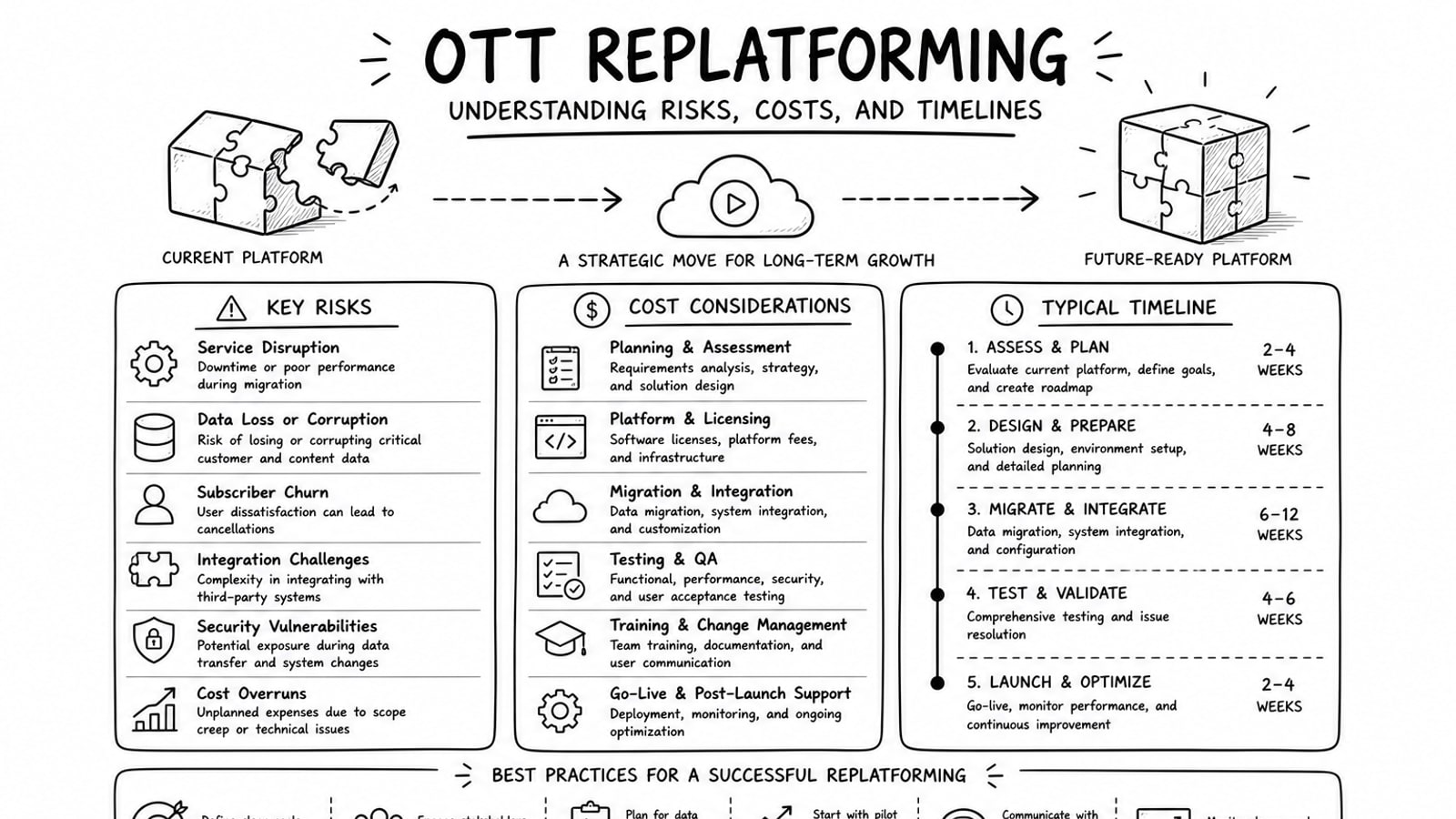
OTT Replatforming: Understanding Risks, Costs, and Timelines
A practical guide to OTT replatforming that explains why teams migrate, what usually drives risk and cost, how long projects tend to take, and where a BYOA delivery model can reduce lock-in.
Read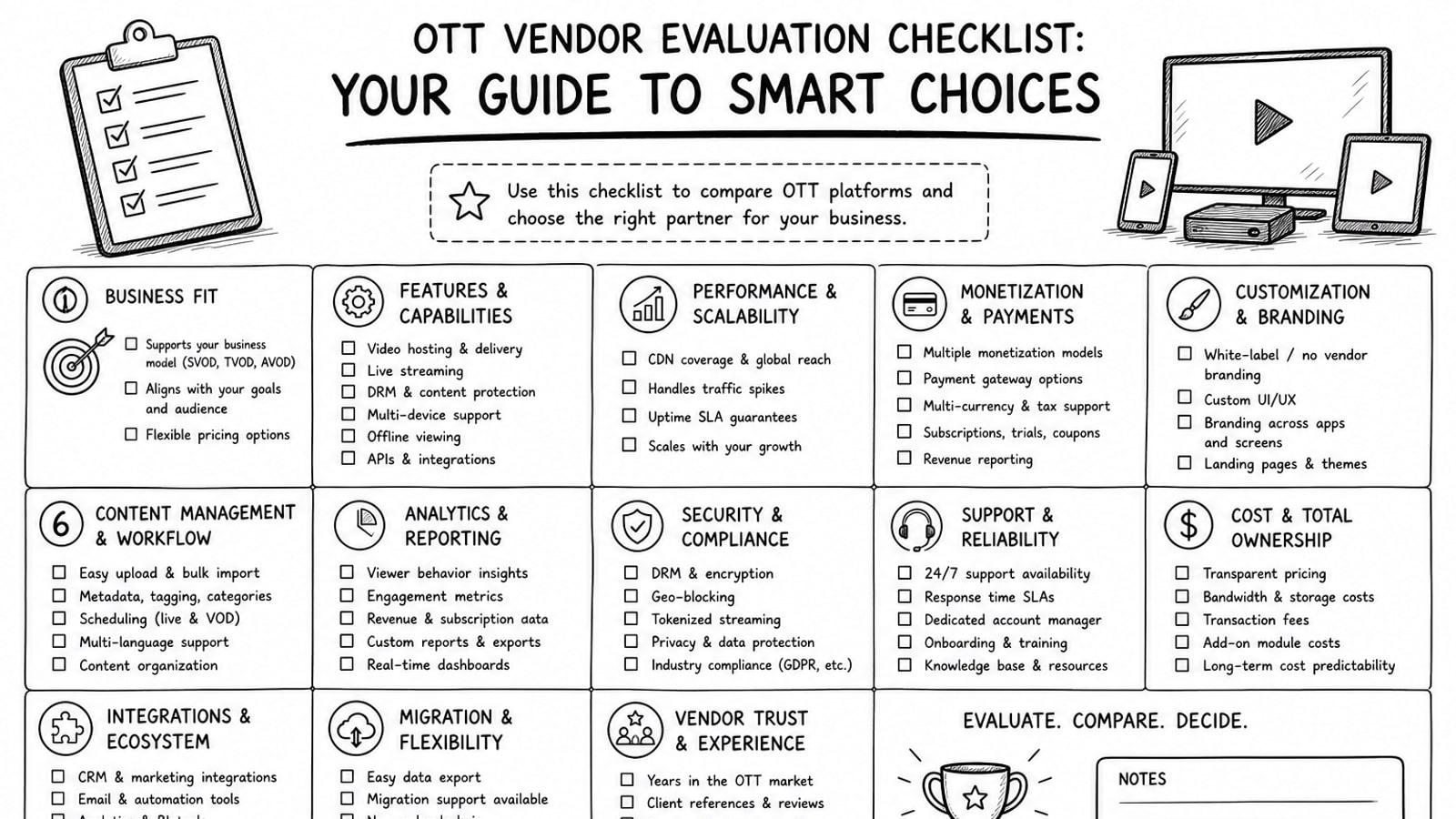
OTT Vendor Evaluation Checklist: Your Guide to Smart Choices
A practical guide to evaluating OTT vendors, with a clear checklist for delivery, security, workflow, cost, ownership, and long-term platform fit.
Read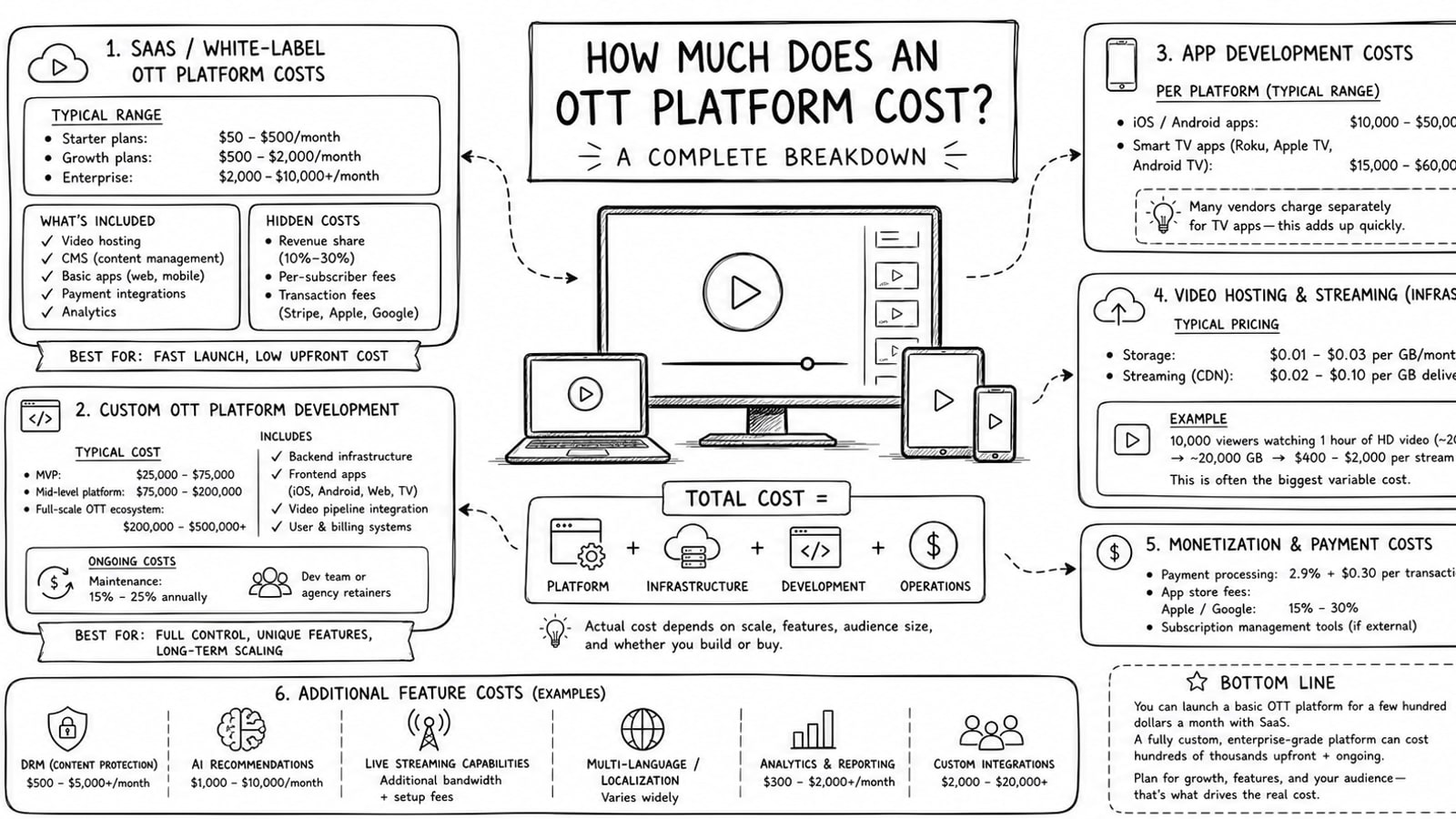
How Much Does an OTT Platform Cost? A Complete Breakdown
A practical breakdown of OTT platform costs, including launch expenses, recurring infrastructure costs, live and on-demand pricing examples, and how a BYOA model can improve cost control.
Read