OTT
Smart TV App Development for OTT Platforms: Reaching the Big Screen
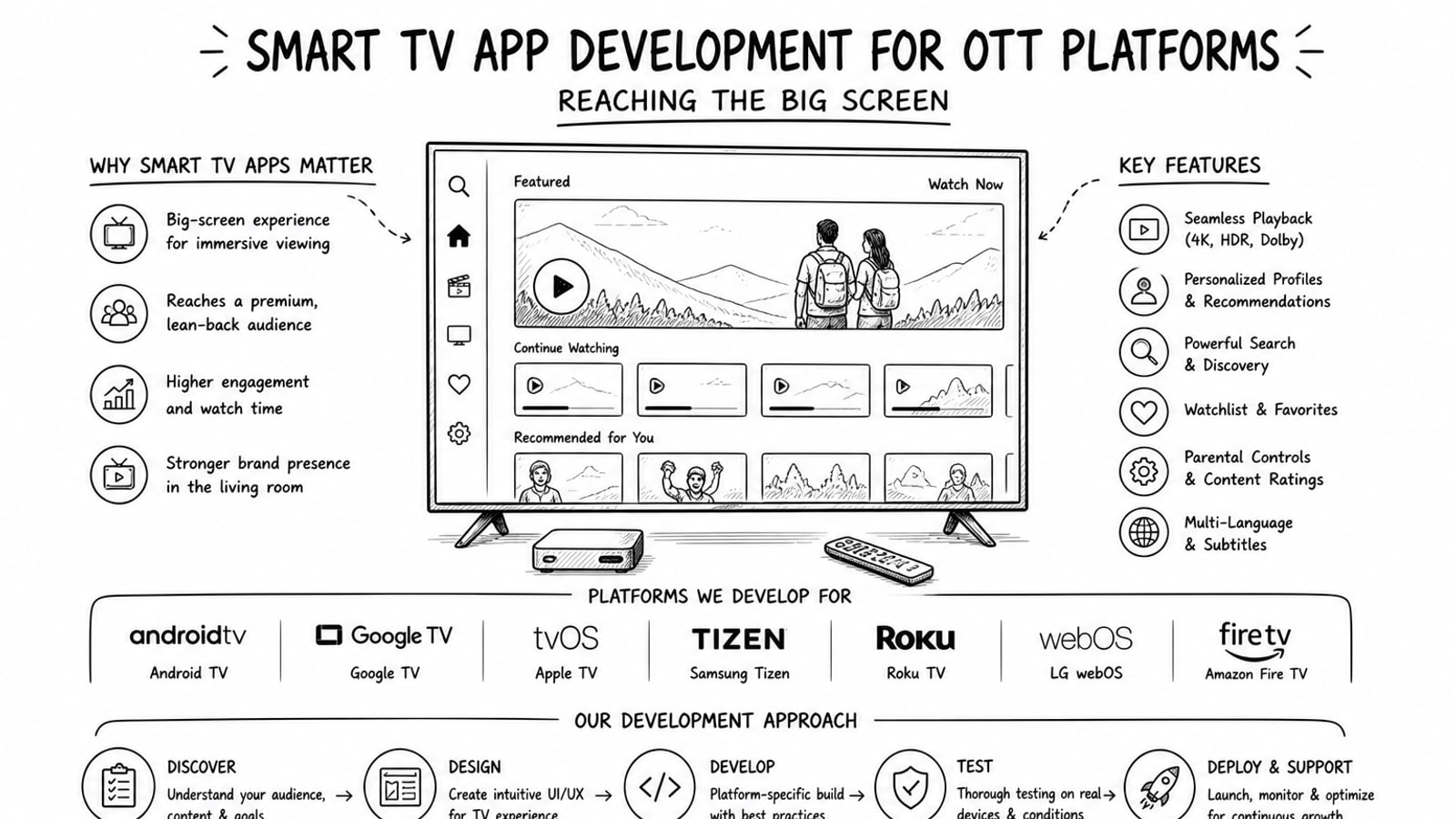
Smart TV app development for OTT platforms is no longer a nice extra. It is quickly becoming part of the core product. As streaming takes a larger share of total TV viewing, OTT brands that stay limited to web and mobile risk missing the screen where long-form viewing feels most natural.
Quick Answer
Expanding your OTT service to smart TVs helps you reach viewers in a high-intent environment, increase watch time, strengthen retention, and support revenue models such as SVOD, AVOD, FAST, and PPV. A well-built TV app also makes your brand feel more established because users can move from phone to living room without changing platforms.
Key Takeaways
Smart TV expansion puts your OTT brand on the screen built for lean-back, long-session viewing.
CTV availability can improve retention because users can start on mobile and continue on TV inside the same service.
The market signal is clear: streaming already represents a record share of television usage, and ad-supported viewing remains significant.
A TV app needs more than a ported mobile interface. Navigation, playback, discovery, and account flows must be designed for remote control use.
Bitbyte3 offers OTT solutions across web, mobile, and TV, with a cost-conscious bring-your-own-account approach that can help clients keep control over services like Cloudflare Stream and related media costs.
Why Smart TV App Development for OTT Platforms Matters Now
The shift is not theoretical anymore. Nielsen reported that streaming accounted for 44.8% of total TV viewing in May 2025, edging past the combined share of broadcast and cable for the first time. That matters because it shows where audience behavior is heading: viewers increasingly expect streaming services to be available directly on the television, not only on a browser or phone.
For OTT operators, this changes the product roadmap. If your service is built for episodic content, films, education libraries, sports, or live channels, the living room is often the most valuable screen in the journey. Viewers may discover content on mobile, but they often prefer to watch premium video on TV.
The Main Benefits of Expanding to Smart TVs
1. Reach Viewers Where Long-Form Content Fits Best
TV remains the most comfortable screen for long sessions, shared household viewing, and premium playback. A smart TV app lets your service meet that behavior directly instead of asking viewers to rely on casting, HDMI workarounds, or mobile-only experiences.
2. Increase Session Length and Engagement
The big-screen environment is built for browsing rows, watching trailers, and moving into full playback with fewer distractions. That can support deeper engagement, especially for series, curated libraries, FAST channels, and event-based releases.
3. Build a Stronger Cross-Platform Brand
Users increasingly judge a streaming product by how consistently it works across web, iOS, Android, and TV. When your app is present on smart TVs, your platform feels more complete, more credible, and more convenient. That is especially important for smaller OTT brands competing with larger entertainment services.
4. Support More Monetization Paths
Smart TV distribution can support subscription video on demand, ad-supported video on demand, pay-per-view, and FAST strategies. Nielsen's Ad Supported Gauge reported that 72.4% of TV viewing in Q1 2025 happened on content that included advertising, which is a useful reminder that ad-supported viewing is still a major opportunity.
5. Reduce Friction for Household Viewing
A native TV app removes the extra steps that often hurt usage. Viewers do not need to cast from a phone, keep a browser tab open, or switch devices mid-session. The shorter the path between interest and playback, the better your odds of keeping the viewer.
What the Platform Ecosystem Tells Us
Smart TV platforms are investing heavily because they know the living room is strategic. Samsung said in October 2024 that Samsung TV Plus had reached 88 million monthly active users, then reported in February 2026 that the service had passed 100 million monthly active users worldwide. LG has continued to expand webOS for both its own devices and third-party brands, while Roku reported 35.8 billion streaming hours in Q1 2025.
The point is not that every OTT company must copy the device platforms themselves. The point is that the major ecosystems are growing because demand is already there. If your content business depends on recurring viewership, app availability on big-screen devices is becoming a baseline expectation.
How Smart TV App Development for OTT Platforms Should Be Approached
The technical goal is not simply to make video play on a TV. The real goal is to deliver a living-room product that feels natural on remote-driven interfaces and remains connected to the rest of your OTT stack.
Design navigation for remote controls, not touch gestures.
Keep playback fast, stable, and adaptive across varying network conditions.
Sync watch history, profiles, subscriptions, subtitles, and resume points across devices.
Plan for storefront and certification requirements on target TV ecosystems.
Make discovery simple with strong home rails, search, continue watching, and genre collections.
A Simple Rollout Framework
Validate demand by reviewing current watch behavior, catalog type, and monetization goals.
Choose priority platforms such as Android TV, Apple TV, Samsung, LG, or Fire TV based on audience and launch budget.
Unify your CMS, playback, analytics, profiles, and billing logic before building separate app experiences.
Optimize the TV UX for discovery, accessibility, subtitles, and remote control navigation.
Launch with clear QA standards for playback, login, entitlement, localization, and device-specific edge cases.
Where Bitbyte3 Fits
Bitbyte3 positions its OTT solution around practical multi-platform delivery: web, mobile, and TV. For teams that want to reach the big screen without taking on a bloated build cycle, that matters. The service is positioned around startup-friendly pricing, faster deployment, and support for business models such as AVOD, SVOD, and PPV.
A notable fit for cost-conscious OTT businesses is Bitbyte3's bring-your-own-account approach. In this model, clients can use their own service accounts for elements such as Cloudflare Stream and media delivery instead of being locked into a provider-managed storage structure. That can make pricing more transparent, reduce restrictions tied to bundled storage fees, and give clients more direct control over their media infrastructure as they grow.
For startups and niche streaming brands, that combination can be attractive: launch across major screens, keep the ownership of core accounts, and avoid carrying unnecessary platform overhead too early.
Common Mistakes to Avoid
Treating the TV app as a simple copy of the mobile app.
Ignoring remote-navigation testing until late in the release cycle.
Launching without cross-device account sync, which weakens retention.
Overlooking app-store and certification requirements for each TV platform.
Choosing an infrastructure model that hides media costs or makes scaling harder later.
Methodology and Editorial Note
This article combines current market signals from Nielsen, Samsung, LG, Roku, and Deloitte with Bitbyte3's published positioning around OTT delivery. It is written as an educational overview, not as financial or legal advice. Product and pricing details should always be confirmed against the latest platform and vendor documentation before launch.
FAQ
Do OTT platforms really need smart TV apps?
Not every OTT business needs every TV platform on day one, but most serious streaming products benefit from at least one big-screen app because that is where long-form viewing and household engagement often happen.
What is the difference between OTT and connected TV?
OTT refers to the delivery model for video over the internet, while connected TV refers to the device environment where viewers watch through smart TVs, streaming sticks, or similar television-connected hardware.
Which smart TV platforms should an OTT company prioritize first?
That depends on audience geography, device mix, and budget. Many teams start with the platforms that give them the best overlap between reach and implementation cost, then expand after validating usage.
How does a bring-your-own-account OTT setup help?
A bring-your-own-account model can give the client direct ownership of core services such as video hosting or media delivery accounts. That can improve transparency, reduce lock-in, and make ongoing infrastructure costs easier to manage.
Can smart TV apps support AVOD, SVOD, and PPV?
Yes. A well-planned OTT stack can support subscription, advertising, and one-time purchase models on TV, as long as playback, entitlement, billing, and analytics are integrated correctly.
Why is the TV user experience different from mobile?
TV interfaces are navigated with remotes, viewed from a distance, and often used in shared spaces. That changes layout, focus states, text sizing, discovery patterns, and playback controls.
Conclusion
For OTT brands, smart TV app development is really about meeting audience behavior where it already is. Viewers are spending more of their television time with streaming, platform ecosystems are expanding fast, and the living room remains one of the most valuable places to build attention and loyalty. If your goal is sustainable OTT growth, the big screen should be part of the roadmap.
Bitbyte3 is one option for teams that want that expansion without overcomplicating the stack, especially if cost clarity, multi-platform delivery, and control over underlying media accounts matter to the business.
Sources and Further Reading
Nielsen, Streaming Reaches Historic TV Milestone, Eclipses Combined Broadcast and Cable Viewing For First Time, June 17, 2025: https://www.nielsen.com/news-center/2025/streaming-reaches-historic-tv-milestone-eclipses-combined-broadcast-and-cable-viewing-for-first-time/
Samsung Newsroom, Samsung TV Plus Hits 88 Million Monthly Active Users, October 28, 2024: https://news.samsung.com/us/samsung-tv-plus-hits-88-million-monthly-active-users/
Samsung Newsroom Korea, Samsung TV Plus passes 100 million monthly active users, February 13, 2026: https://news.samsung.com/kr/1%EC%96%B5-%EB%AA%85%EC%9D%B4-%EC%84%A0%ED%83%9D%ED%95%9C-%EC%84%9C%EB%B9%84%EC%8A%A4-%ED%95%98%EB%93%9C%EC%9B%A8%EC%96%B4-%EC%99%95%EC%A2%8C-%EB%84%98%EC%96%B4-%EA%B8%80%EB%A1%9C
LG Global, LG Launches Upgraded webOS Hub With Advanced AI Solutions for Third-Party Brands, June 13, 2025: https://www.lg.com/global/newsroom/news/media-entertainment-solution/lg-launches-upgraded-webos-hub-with-advanced-ai-solutions-for-third-party-brands/
About the Author
M. Jorani — LinkedIn
Software Engineer & Technical Writer
M. Jorani is a software engineer and technical writer with hands-on experience building streaming infrastructure, video pipelines, and OTT platforms. He writes about encoding, delivery architecture, and the engineering decisions that shape how audiences watch content across devices.
More from the blog
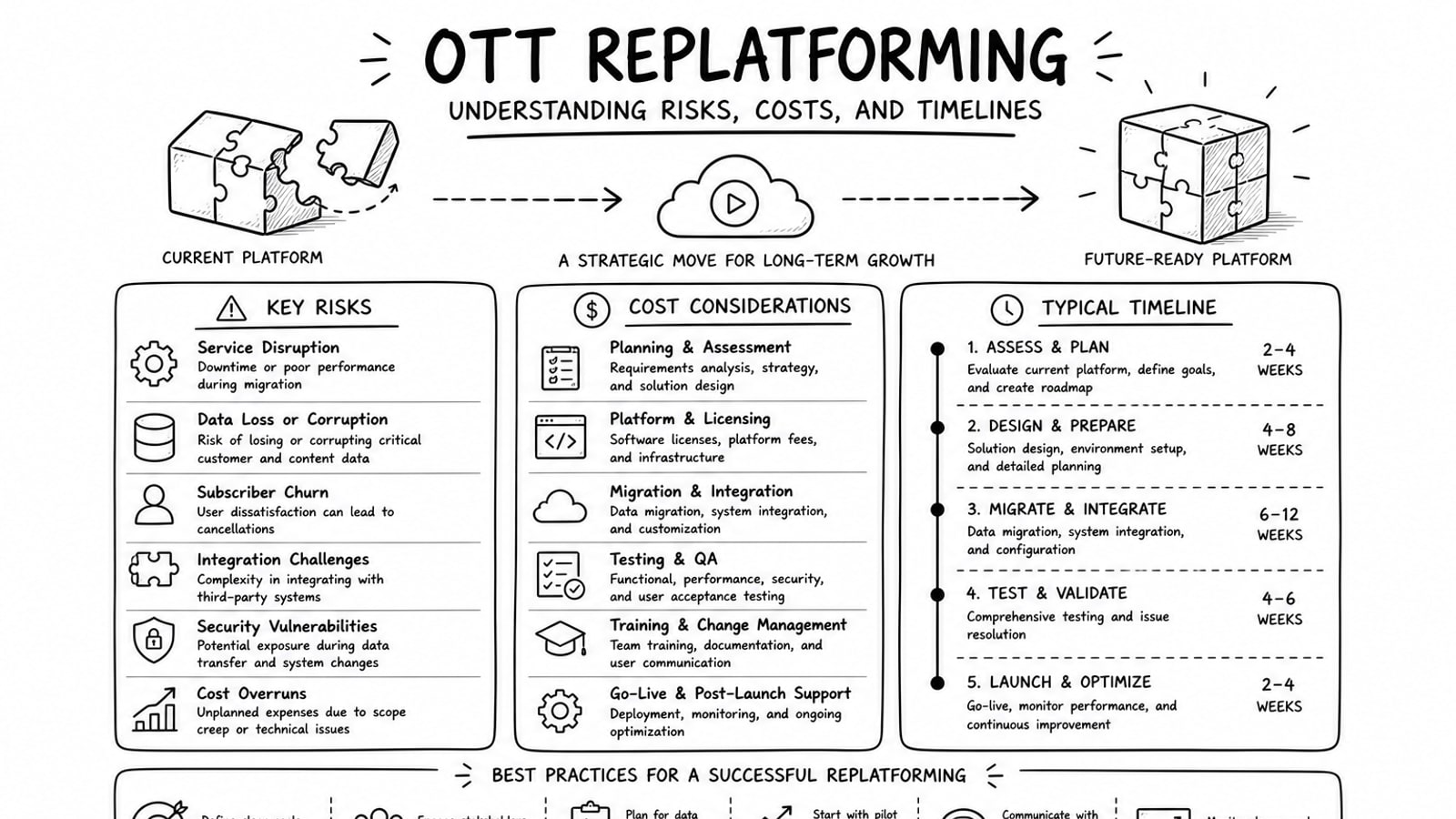
OTT Replatforming: Understanding Risks, Costs, and Timelines
A practical guide to OTT replatforming that explains why teams migrate, what usually drives risk and cost, how long projects tend to take, and where a BYOA delivery model can reduce lock-in.
Read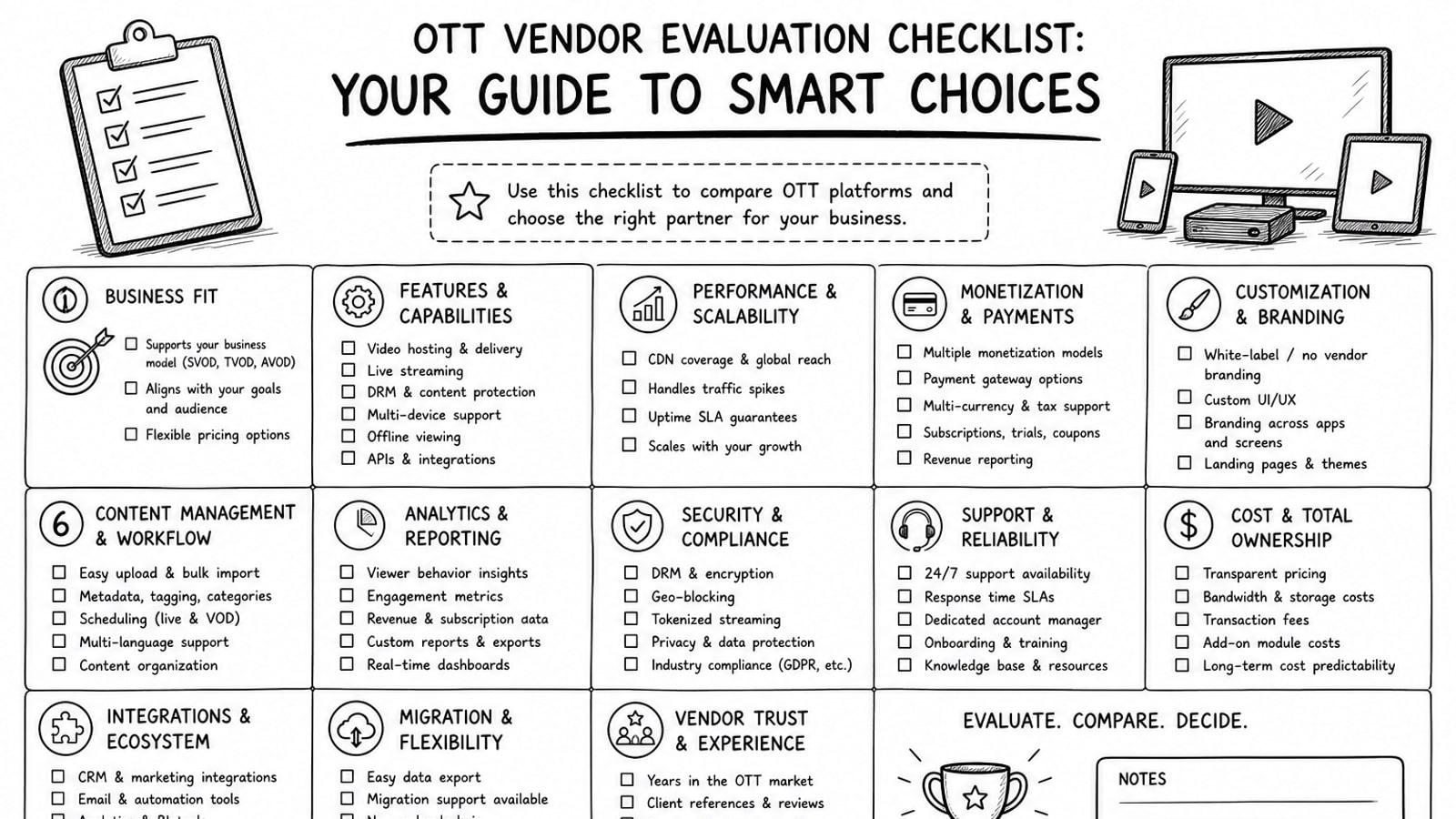
OTT Vendor Evaluation Checklist: Your Guide to Smart Choices
A practical guide to evaluating OTT vendors, with a clear checklist for delivery, security, workflow, cost, ownership, and long-term platform fit.
Read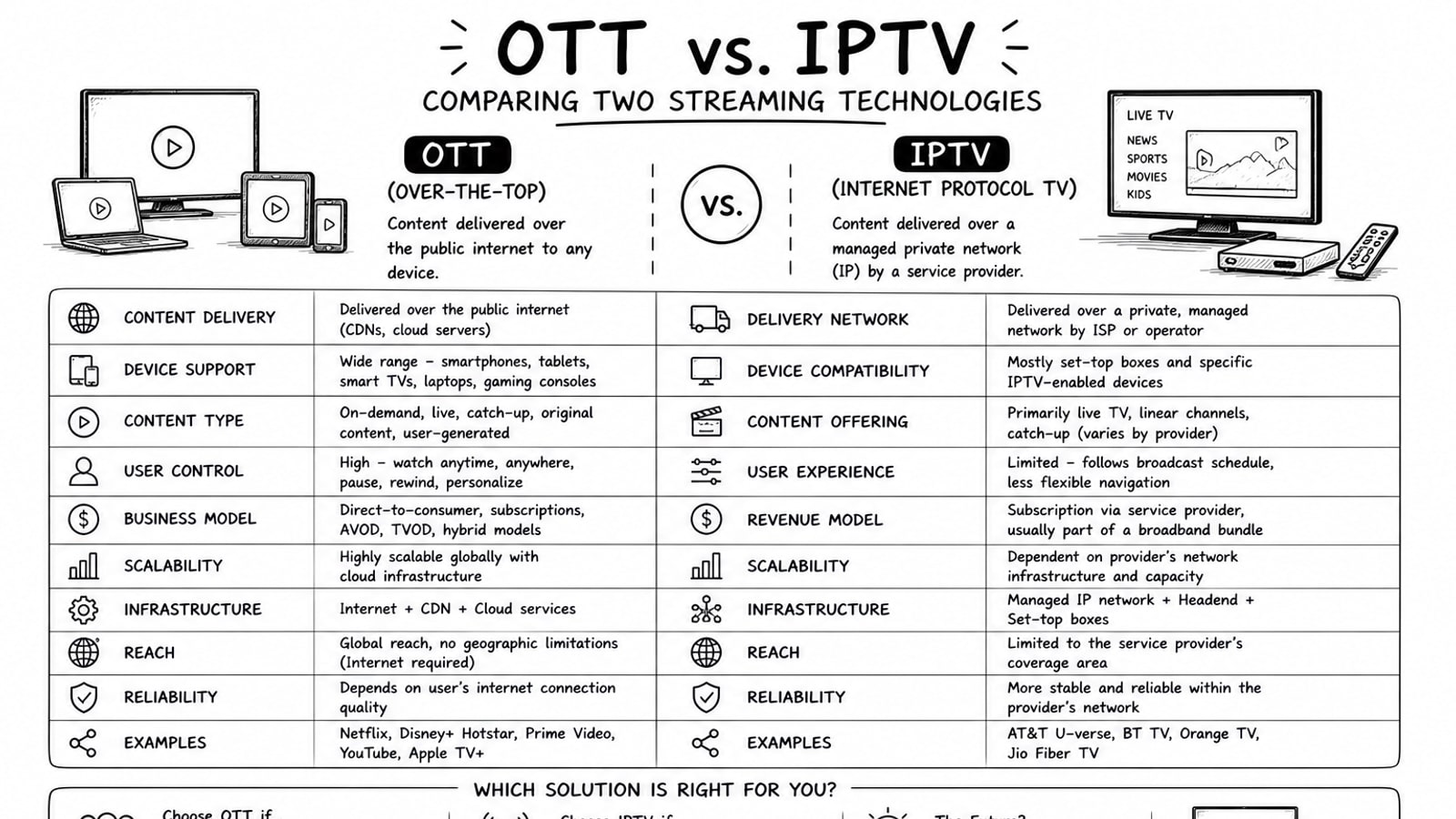
OTT vs. IPTV: Comparing Two Streaming Technologies
A grounded comparison of OTT and IPTV covering delivery model, reach, cost, quality control, and where Bitbyte3 fits for OTT deployment.
Read