OTT
OTT vs. IPTV: Comparing Two Streaming Technologies
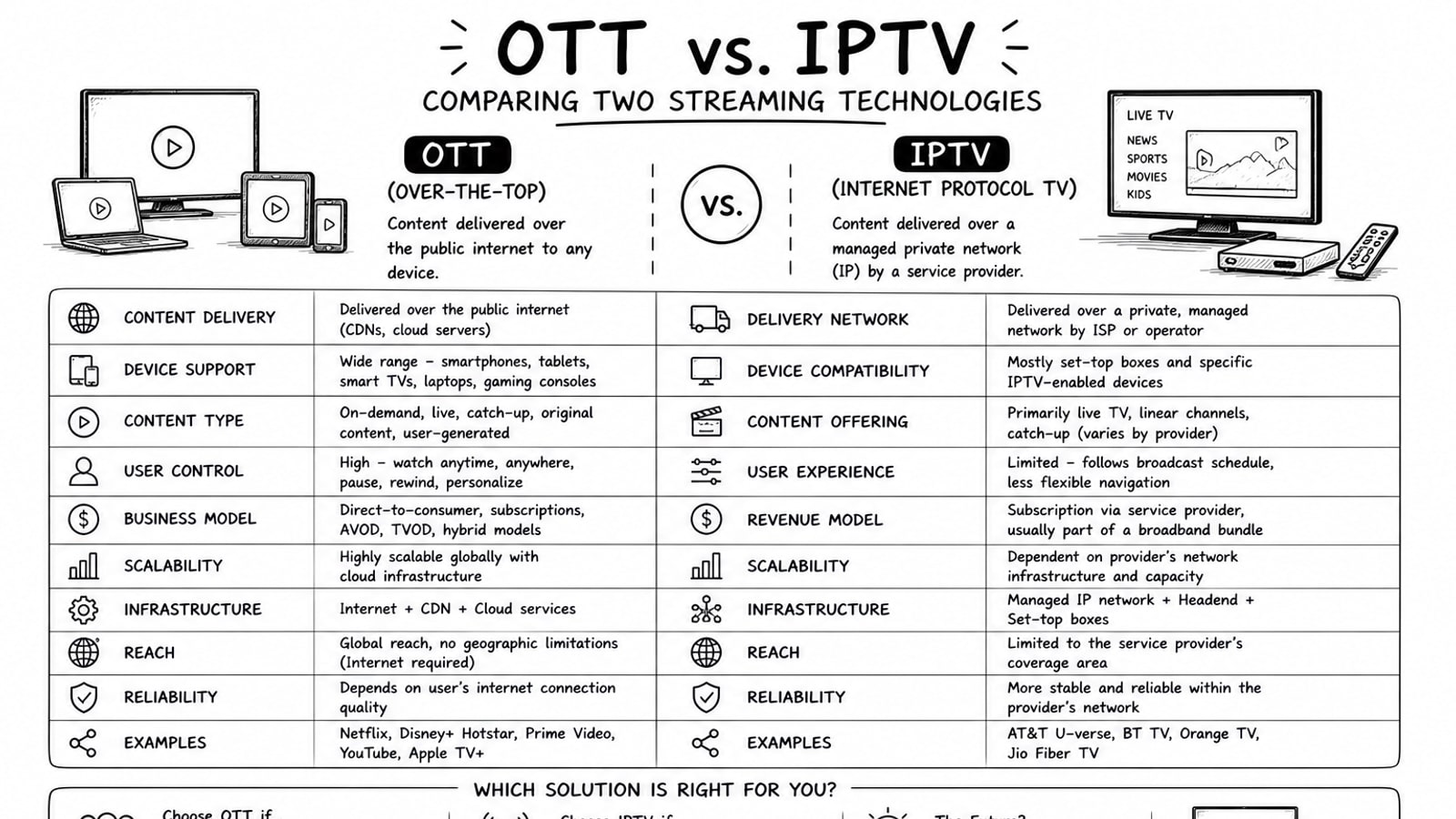
OTT vs. IPTV is a common comparison for media teams choosing how to deliver streaming video. In simple terms, OTT uses the public internet to stream content directly to viewers on connected devices, while IPTV usually delivers television over a managed IP network controlled by the operator. That difference shapes reach, cost, quality control, and product flexibility.
Quick Answer
OTT is usually the better fit when you want broad device reach, direct-to-consumer distribution, and faster product iteration. IPTV is often the better fit when a telecom or managed-service operator needs tightly controlled delivery over its own network. Neither model is universally better. The right choice depends on who you serve, how much control you need, and how you plan to scale.
Key Takeaways
OTT delivers video over the open internet and is built for phones, smart TVs, browsers, and connected devices.
IPTV typically runs on a managed operator network, which can make quality and service control more predictable.
OTT usually offers wider reach and faster app-driven product updates than IPTV.
IPTV often aligns better with traditional pay-TV and telecom service bundles.
For many modern media businesses, OTT offers a more flexible path to launch, monetize, and expand.
What OTT Means in Streaming
OTT, or over-the-top streaming, refers to delivering video over the internet rather than through a traditional cable, satellite, or operator-controlled television path. In practice, viewers open an app or website and stream content on demand or live from internet-connected devices.
That model is attractive because it separates content distribution from a single network provider. A streaming brand can publish to mobile apps, smart TV apps, browsers, and TV platforms without being limited to one access network. For audience growth, product experimentation, and international reach, that flexibility matters.
What IPTV Means in Streaming
IPTV, or Internet Protocol Television, also uses IP-based delivery, but the service model is different. IPTV is commonly delivered over a managed, two-way IP network controlled by the provider. That lets operators manage more of the path between the service and the viewer, which can help with service assurance, channel delivery, and subscriber experiences tied to a set-top environment.
Because IPTV is often associated with telecom and pay-TV infrastructure, it usually makes sense where an operator wants a tightly managed television product rather than an app-first streaming product with open internet distribution.
OTT vs. IPTV: Side-by-Side Comparison
Comparison framework:
Delivery network: OTT typically uses the public internet, while IPTV is usually delivered over a managed IP network controlled by the operator.
Reach: OTT can scale across phones, tablets, smart TVs, browsers, and connected TV platforms almost anywhere with internet access. IPTV is often tied more closely to a provider footprint, managed device environment, or operator-defined service area.
Quality control: IPTV operators usually control more of the end-to-end path, which can make service quality easier to predict. OTT providers rely on adaptive bitrate streaming, CDNs, and player optimization to handle variable connections.
Interactivity and rollout speed: OTT usually makes app launches, updates, and multi-device distribution faster. IPTV can be strong for traditional channel-lineup experiences, but service changes may involve more operator-side coordination.
Business model: OTT often fits direct-to-consumer subscriptions, ad-supported streaming, niche channels, and global video products. IPTV is often a strong fit for telecom and pay-TV bundles.
OTT vs. IPTV for Audience Reach
If your goal is to reach users across many geographies and device types, OTT usually wins. A well-built OTT platform can serve web, iOS, Android, smart TVs, and connected TV ecosystems from one product strategy. That makes it much easier to go after direct subscriptions, ad-supported viewing, or niche audience segments.
IPTV can still be powerful, but its reach is often more closely linked to an operator relationship. That is a strength for managed service providers and bundled TV offerings, but it is usually less flexible for brands that want to build a direct relationship with viewers outside a single network footprint.
OTT vs. IPTV for Quality and Reliability
IPTV has a natural advantage in environments where the operator controls the network. That control can make traffic engineering, multicast delivery, and quality assurance easier to manage. For viewers, that can translate into a more stable experience under the right conditions.
OTT has to work harder because the public internet is variable by design. The practical answer is adaptive bitrate streaming, efficient encoding, strong CDN delivery, and careful player tuning. When those pieces are done well, OTT can still produce a high-quality user experience at scale.
OTT vs. IPTV for Cost and Operations
This is where many teams lean toward OTT. Launching and expanding OTT services often avoids some of the network-specific overhead that comes with managed television delivery. Teams can focus on content workflows, apps, analytics, monetization, and customer acquisition rather than building around a single operator network model.
That does not mean OTT is automatically cheap. Costs still come from transcoding, storage, streaming delivery, app development, support, and platform tooling. But the commercial model is usually more flexible, especially for businesses that want to control their own product roadmap and avoid unnecessary infrastructure lock-in.
Where Bitbyte3 Fits
For companies that want an OTT approach, Bitbyte3 can fit as a practical implementation partner. Based on the details you provided, Bitbyte3 offers an OTT solution with competitive pricing and a bring-your-own-account model. In this setup, clients use their own service accounts for video and image infrastructure, such as Cloudflare Stream for video delivery, instead of being forced into bundled storage or recurring platform restrictions.
That model can be appealing for teams that want more cost transparency and direct control over their media assets. It can also reduce the feeling of being locked into one provider account structure, because the client keeps ownership of the underlying service account relationship.
When OTT Is the Better Choice
You want to launch across web, mobile, and smart TV devices.
You want direct control over subscriptions, advertising, analytics, and user experience.
You need faster rollout cycles for product updates and experiments.
You want to expand beyond one operator footprint or geographic service area.
You want a flexible infrastructure model that can align with tools like Cloudflare Stream and a bring-your-own-account setup.
When IPTV Is the Better Choice
You are a telecom or operator-led business delivering a managed television service.
You need deeper end-to-end control over network delivery and service quality.
Your primary user experience depends on traditional channel distribution and operator-managed set-top environments.
Your commercial model is closely tied to bundled pay-TV or broadband offerings.
Common Mistakes When Comparing OTT and IPTV
Treating OTT and IPTV as the same thing because both use IP-based delivery.
Assuming IPTV is automatically better simply because the network is managed.
Assuming OTT is simple without budgeting for delivery, apps, analytics, and support.
Ignoring device strategy when choosing a platform model.
Choosing based only on current cost without considering audience reach and long-term product control.
How This Comparison Was Evaluated
This comparison focuses on the delivery model, network control, audience reach, operational flexibility, and cost structure of each technology. It does not claim that one technology is universally superior. Instead, it maps each model to the business conditions where it tends to perform best.
The technical framing in this article is grounded in documentation from AWS, FCC materials describing IPTV delivery over managed IP networks, and Cloudflare documentation on video delivery and account-based usage models.
Conclusion
OTT and IPTV solve different streaming problems. OTT is generally the stronger choice for modern multi-device distribution, direct audience ownership, and faster product development. IPTV remains a strong option where a provider controls the network and wants a more traditional managed television experience.
If your team is leaning toward OTT, Bitbyte3 is worth evaluating for a more flexible rollout model, especially if lower pricing and bring-your-own-account infrastructure are important to your operating strategy.
FAQ
What is the main difference between OTT and IPTV?
The main difference is the delivery model. OTT sends video over the public internet to apps and connected devices, while IPTV usually delivers television over a managed IP network operated by the service provider.
Is OTT always cheaper than IPTV?
Not always, but OTT often lowers infrastructure and distribution barriers because it can run on standard internet delivery patterns. Total cost still depends on encoding, storage, delivery, app maintenance, support, and content rights.
Does IPTV provide better quality than OTT?
IPTV can offer more predictable service quality because the provider controls the network path. OTT can still deliver excellent results, but it must be designed to handle varying bandwidth, devices, and network conditions.
Can one business use both OTT and IPTV?
Yes. Some media businesses use IPTV for operator-controlled environments and OTT for broader direct-to-consumer reach. The right mix depends on audience, distribution goals, and operating model.
When should a company choose OTT over IPTV?
OTT is usually the better choice when the goal is broad device compatibility, faster launch cycles, direct audience ownership, or more flexible monetization across regions and platforms.
How does Bitbyte3 fit into an OTT strategy?
Bitbyte3 positions its OTT solution around lower pricing and a bring-your-own-account model, where clients use their own accounts for services such as video and image delivery. That can give customers more control over storage and recurring platform costs.
Methodology / Editorial Note
This article was written as a practical comparison for readers evaluating streaming delivery models. It combines operator-network distinctions, internet delivery considerations, and implementation tradeoffs that affect launch speed, reach, and platform cost. Product mentions of Bitbyte3 reflect the solution details supplied for this article.
Sources and Further Reading
AWS for Media & Entertainment Blog, “Back to basics: HTTP video streaming” https://aws.amazon.com/blogs/media/back-to-basics-http-video-streaming/
Federal Communications Commission, Second Report of the Video Programming Accessibility Advisory Committee https://docs.fcc.gov/public/attachments/DOC-329400A1.pdf
Cloudflare Developers, “Pricing” for Stream https://developers.cloudflare.com/stream/pricing/
Cloudflare Developers, “Upload, encode, and deliver videos” https://developers.cloudflare.com/use-cases/media-streaming/video-delivery/
About the Author
R. Jabar
Marketing Strategist
R. Jabar is a marketing strategist who helps streaming and OTT brands turn complex product stories into clear, growth-driven messaging. She writes about audience acquisition, content monetization, and the marketing frameworks that help video platforms scale.
More from the blog
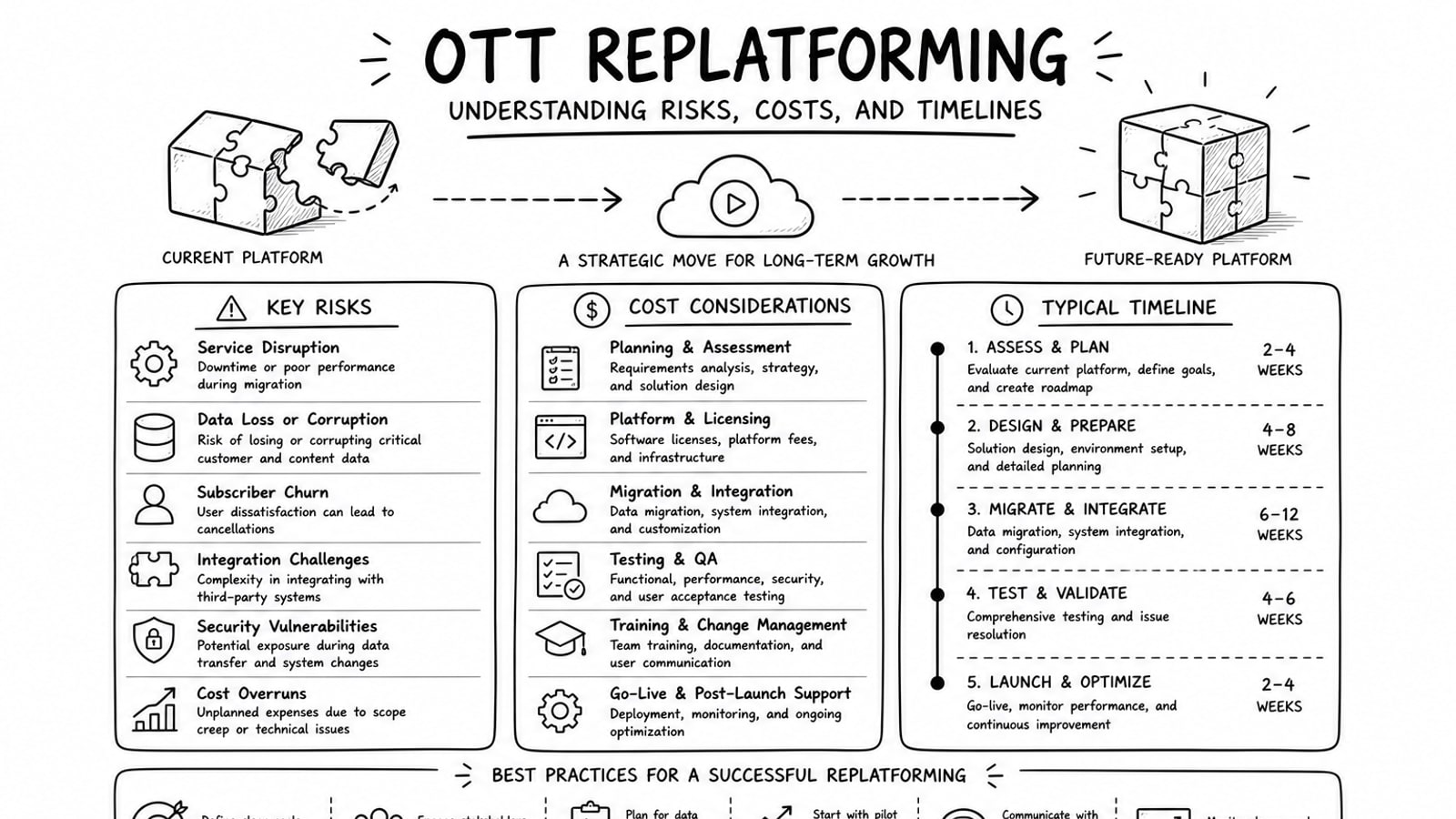
OTT Replatforming: Understanding Risks, Costs, and Timelines
A practical guide to OTT replatforming that explains why teams migrate, what usually drives risk and cost, how long projects tend to take, and where a BYOA delivery model can reduce lock-in.
Read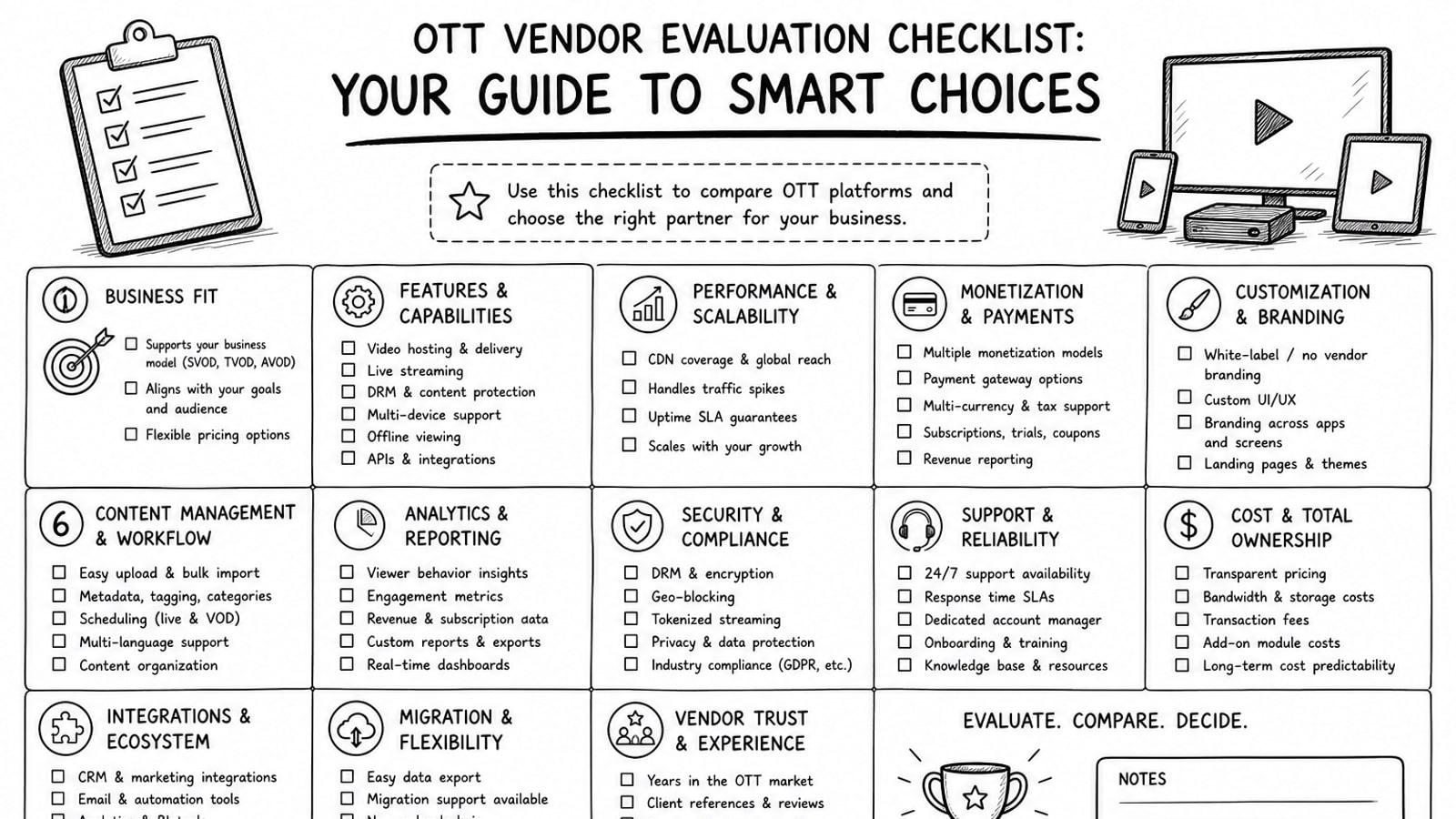
OTT Vendor Evaluation Checklist: Your Guide to Smart Choices
A practical guide to evaluating OTT vendors, with a clear checklist for delivery, security, workflow, cost, ownership, and long-term platform fit.
Read
Launch Your Own Streaming Platform: No Code, No Hassle
A practical guide to launching a branded streaming platform without custom development, with advice on pricing, content packaging, platform selection, and subscriber experience.
Read