Roku
Roku App Development for OTT Businesses: Engaging Your Audience
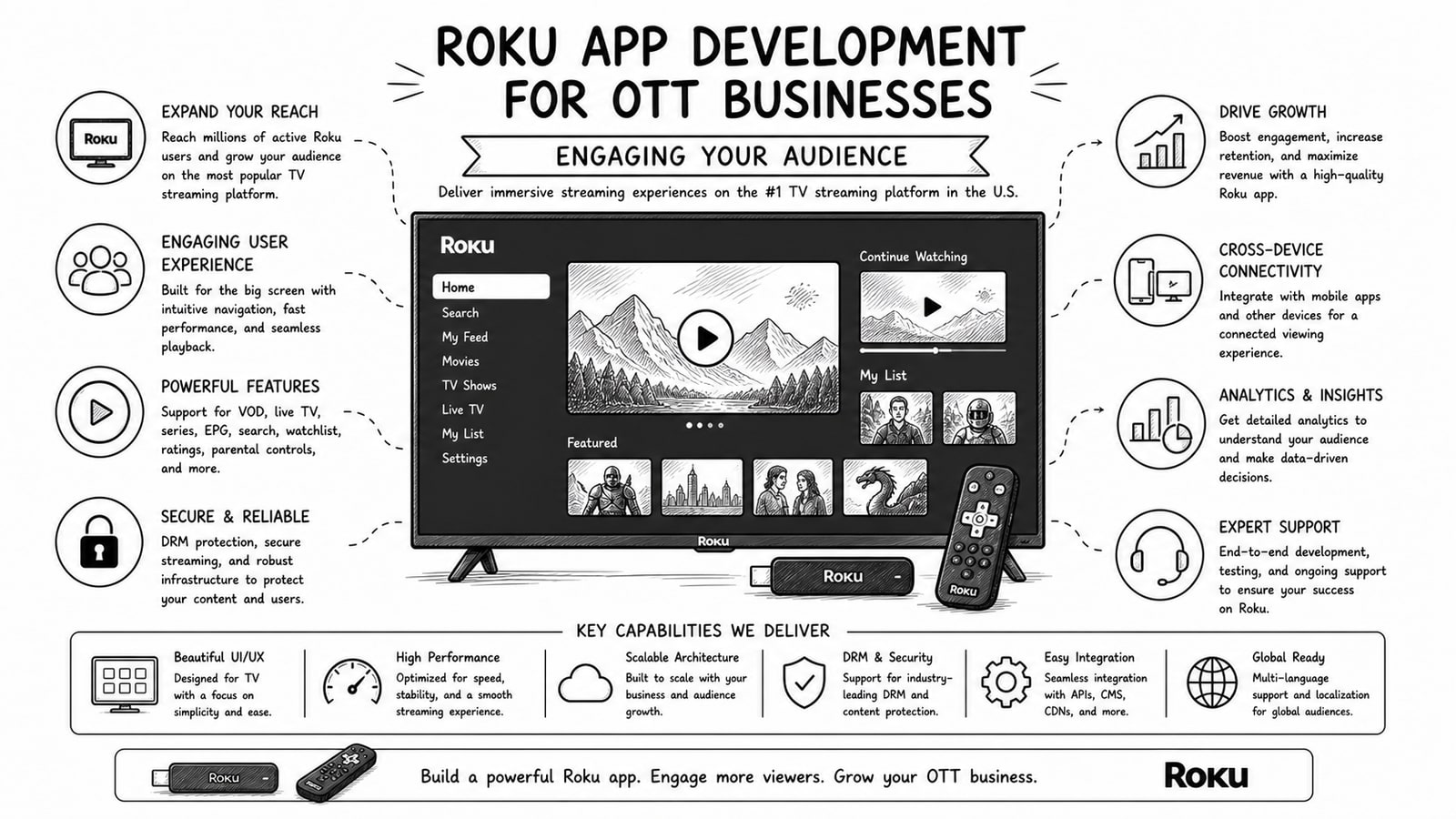
Roku app development for OTT businesses is not just about launching on another screen. It is about putting your content in a living-room environment where discovery, retention, and monetization happen differently than they do on mobile or web. For publishers, media brands, educators, sports platforms, and niche streaming services, Roku can become a strong engagement channel when the product experience is built around easy navigation, fast playback, personalized content surfaces, and clear conversion paths.
Quick Answer
Roku app development helps OTT businesses engage audiences by improving content discovery, reducing playback friction, supporting subscription or ad-based monetization, and giving teams better visibility into viewer behavior. The most effective Roku apps keep the interface simple, highlight the right content early, and make it easy for viewers to return, resume, and keep watching.
Key Takeaways
Roku gives OTT brands access to a large connected-TV audience and built-in platform features that support discovery, acquisition, and monetization.
Audience engagement on Roku depends on UX basics: fast load times, clear navigation, autoplay discipline, strong recommendations, and simple account flows.
OTT businesses should track engagement through completion rates, repeat sessions, time watched, content-level performance, and subscription or ad conversion metrics.
A BYOA model can be attractive for cost control because the client keeps ownership of video, storage, and delivery accounts instead of being locked into bundled platform fees.
Why Roku Matters for OTT Audience Engagement
Roku remains an important platform for OTT businesses because it sits at the center of living-room streaming behavior. On its developer platform pages, Roku says publishers can distribute content to millions of streamers, and that Roku was the No. 1 selling TV OS in the U.S., Canada, and Mexico as of Q4 2025. That scale matters because connected-TV viewers are often in a lean-back mode: they expect fast access to relevant content and they abandon confusing interfaces quickly.
Audience engagement on Roku is also about timing. Nielsen reported on February 17, 2026 that streaming represented 47.0% of total TV usage in January 2026, reinforcing how central streaming is to television consumption. For OTT operators, that means Roku is not a side channel. It can be a primary venue for viewing time, subscriber growth, and ad-supported reach.
How Roku App Development Improves Engagement
1. Better content discovery
Roku highlights discovery as a growth lever for publishers. Its platform materials recommend participating in Roku Search and other native features so customers can find content more easily. For OTT businesses, that means metadata quality, category structure, artwork consistency, and search-friendly title organization all contribute directly to engagement.
2. A TV-first user experience
A Roku app should be built for remote-control navigation, not adapted loosely from a mobile design. Viewers need obvious menu paths, readable labels, stable rows and grids, and quick resume behavior. When users can get from home screen to playback in a few clicks, engagement usually improves because the app removes decision fatigue instead of adding it.
3. Lower playback friction
Reliable streaming quality is part of engagement. If playback is slow to start, buffers often, or handles authentication poorly, viewers churn. That is why OTT businesses usually need adaptive streaming, secure access control, and dependable video delivery. Cloudflare Stream, for example, supports live and on-demand video, adaptive bitrate delivery, signed URLs, and analytics that can help teams understand what viewers actually watch.
4. Stronger monetization paths
Roku supports several OTT business models, including subscription, transactional, and ad-supported viewing. Roku also points publishers to tools for activation offers, video ads, cross-device advertising, and Roku Pay. Engagement improves when monetization feels native to the viewer journey instead of interruptive, such as offering a trial at the right moment or reducing checkout friction for premium content.
Features That Keep Roku Viewers Engaged
Fast app launch and quick time-to-first-play.
Continue watching rows that help users resume without searching again.
Thoughtful recommendations based on genre, series progress, or viewer preferences.
Simple sign-in, activation, and subscription flows that do not overwhelm the user on a TV screen.
Clean artwork and metadata so titles are understandable before the user opens them.
Playback support for episodic, live, or premium content without confusing transitions.
A Simple Engagement Framework for OTT Teams
Acquire: Make the app easy to find through Roku Search, strong branding, and relevant content positioning.
Activate: Reduce the number of steps between install, sign-in, and first successful playback.
Retain: Use continue-watching rails, clear series organization, and predictable navigation to encourage repeat sessions.
Monetize: Match the business model to the viewer journey with subscriptions, ads, live events, or hybrid access.
Measure: Review engagement reports regularly so product and content teams can improve weak points.
How to Measure Engagement on Roku
Roku says its Developer Dashboard includes reports for channel and content engagement, channel health and performance, audience demographics, and sales activity. Those reports give OTT businesses a practical starting point for engagement analysis.
Session starts and repeat sessions.
Average watch time and completion rates.
Top-performing titles, categories, and series.
Trial-to-paid or ad-to-watch conversion behavior.
Drop-off points during onboarding, playback, or checkout.
The key is to connect platform analytics with business outcomes. A title that drives long watch sessions may deserve better homepage placement. A sign-in step that causes high abandonment may need redesign. Engagement data is only useful when it changes product decisions.
Where Bitbyte3 Can Fit
For OTT businesses that want a Roku app without getting trapped in unnecessary platform overhead, Bitbyte3 can be positioned as a practical implementation partner. Bitbyte3 offers OTT solutions and can align the build around a BYOA model, meaning Bring Your Own Account. In that setup, each client uses its own service accounts for infrastructure such as video delivery or media storage instead of paying recurring bundled fees for resources controlled by another vendor.
That model can be a strong fit for businesses that want more control over cost visibility, access, billing, and long-term ownership. For example, a client may use its own Cloudflare Stream account for video and image delivery while Bitbyte3 handles the Roku app and OTT product layer. That keeps the infrastructure relationship in the client's hands while still allowing professional implementation and support. Learn more at https://bitbyte3.com/.
Common Mistakes OTT Businesses Make on Roku
Treating the Roku app like a copy of a mobile app instead of a TV-first experience.
Ignoring metadata, artwork, and title structure that support discovery.
Adding too many clicks between opening the app and watching content.
Using monetization prompts too early or too aggressively.
Failing to review engagement reports and iterate after launch.
Experience, Outcomes, and Trust Signals
If you plan to publish this article as a sales-support asset, add a real deployment example here. Suggested placeholder: [Add a verified Bitbyte3 OTT or Roku implementation example, including the client type, the problem solved, and the measurable engagement or cost outcome.]
You can also strengthen trust with real proof such as , , , or . These details should only be published when they are real and reviewable.
FAQ Section
Why should an OTT business build a Roku app?
A Roku app gives an OTT business access to connected-TV viewers in a living-room environment where long-form viewing and repeat sessions are common. It can improve reach, retention, and monetization when the app is designed well.
What makes a Roku app engaging?
An engaging Roku app loads quickly, makes content easy to find, supports smooth playback, and gives viewers simple ways to resume or discover more content. Clear navigation and low-friction onboarding are usually more important than flashy design.
Can Roku apps support subscriptions and ads?
Yes. Roku supports subscription, transactional, and ad-supported business models. The right mix depends on your audience, content type, and conversion strategy.
How do you measure audience engagement on Roku?
Start with session frequency, watch time, completion rate, top titles, and conversion behavior. Then connect those metrics to product changes such as homepage placement, onboarding steps, and monetization timing.
What does BYOA mean in an OTT solution?
BYOA means Bring Your Own Account. In practice, the client keeps its own infrastructure accounts, such as video hosting or delivery services, instead of being forced into vendor-owned storage and billing. That can improve ownership and cost transparency.
Is Bitbyte3 a fit for Roku and OTT development?
Bitbyte3 may be a fit for businesses that want OTT implementation support and prefer a BYOA-friendly model. Before publishing stronger claims, add real examples, outcomes, and proof points that show where Bitbyte3 has delivered value.
Conclusion
Roku app development for OTT businesses works best when engagement is treated as a product discipline, not a launch checklist. Discovery, playback quality, remote-friendly UX, conversion design, and analytics all shape whether viewers stay, return, and pay. For teams exploring a Roku build with more operational control, Bitbyte3's OTT approach and BYOA model may be worth evaluating at https://bitbyte3.com/.
Methodology and Editorial Note
This article was drafted to satisfy informational and commercial search intent around Roku app development for OTT businesses. Platform-specific claims were grounded in official Roku developer materials, Cloudflare Stream documentation, and Nielsen reporting where applicable. Brand-specific claims about Bitbyte3 were limited to the information provided in the brief and were not expanded into unsupported proof.
Sources and Further Reading
Nielsen, TV Viewing Hits 12-Month High in January Report of The Gauge, February 17, 2026: https://www.nielsen.com/news-center/2026/tv-viewing-hits-12-month-high-in-nielsens-january-report-of-the-gauge/
Source needed for any Bitbyte3 case study, outcome metric, award, certification, or customer quote that may be added later.
About the Author
M. Jorani — LinkedIn
Software Engineer & Technical Writer
M. Jorani is a software engineer and technical writer with hands-on experience building streaming infrastructure, video pipelines, and OTT platforms. He writes about encoding, delivery architecture, and the engineering decisions that shape how audiences watch content across devices.
More from the blog
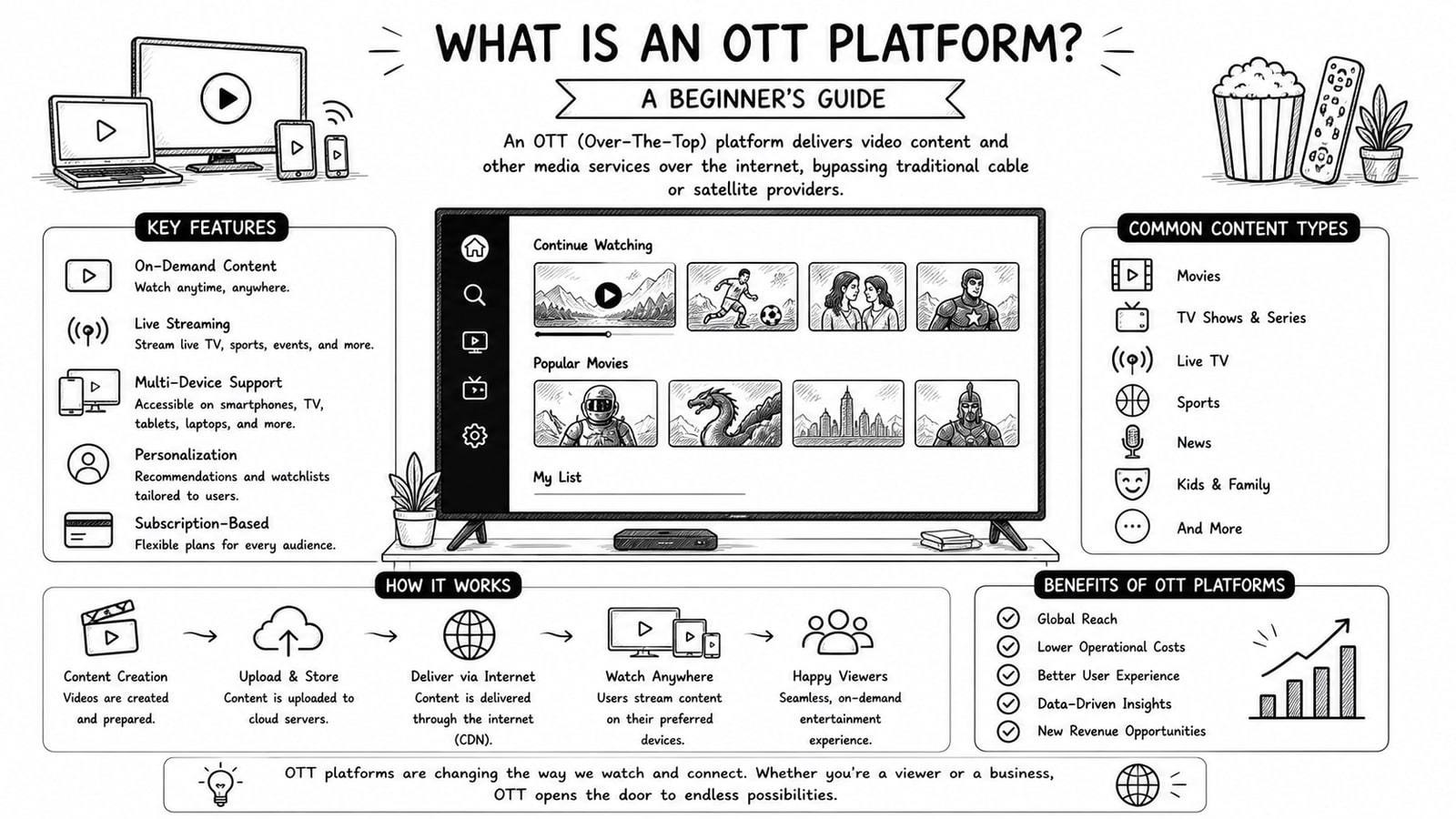
What Is an OTT Platform? A Beginner's Guide
A beginner-friendly guide to OTT platforms, how they work, key components, business models, and what to evaluate before choosing a solution.
Read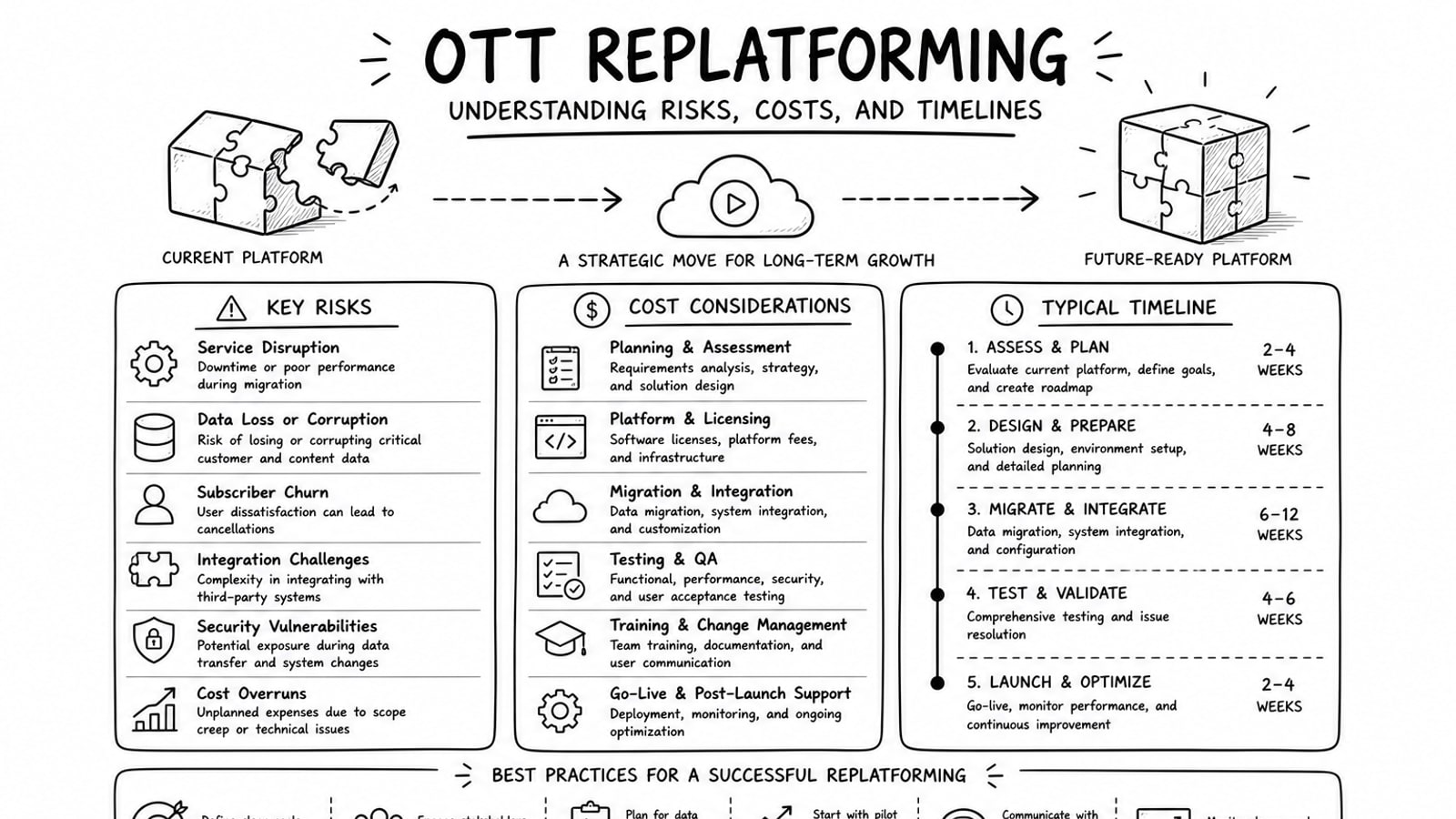
OTT Replatforming: Understanding Risks, Costs, and Timelines
A practical guide to OTT replatforming that explains why teams migrate, what usually drives risk and cost, how long projects tend to take, and where a BYOA delivery model can reduce lock-in.
Read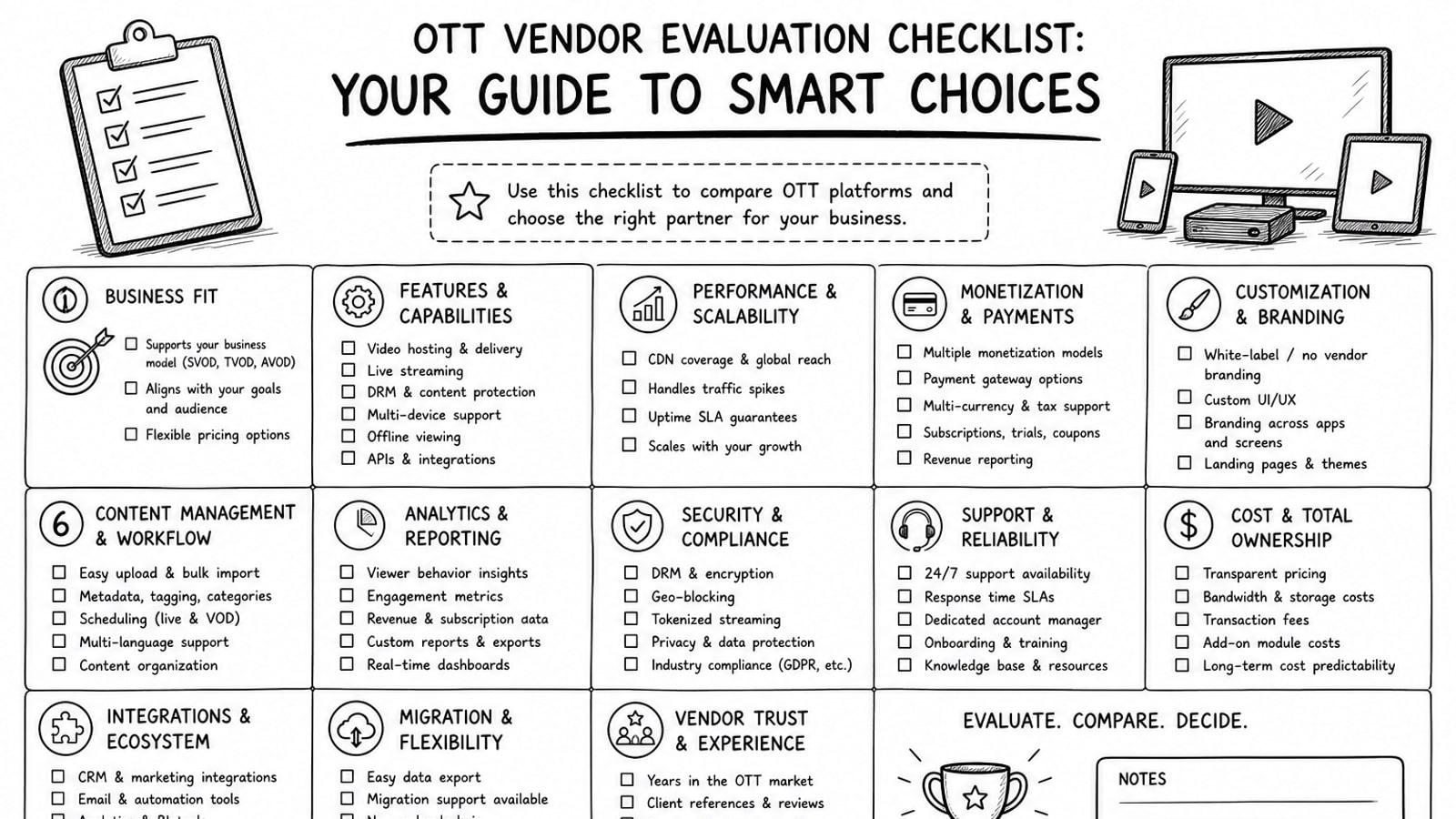
OTT Vendor Evaluation Checklist: Your Guide to Smart Choices
A practical guide to evaluating OTT vendors, with a clear checklist for delivery, security, workflow, cost, ownership, and long-term platform fit.
Read