OTT
OTT vs. YouTube Memberships: Which Is Right for You?

If you are deciding between launching your own OTT experience and turning on YouTube Memberships, the right choice depends less on hype and more on what you want to control. YouTube Memberships can be a fast way to monetize an existing audience inside YouTube. OTT is usually the stronger fit when you want more ownership over pricing, branding, customer relationships, and distribution.
Quick Answer
Choose YouTube Memberships if your audience already lives on YouTube and you want the simplest path to recurring revenue. Choose OTT if you want to build a branded video business you control more directly, especially if you care about owning the customer experience, using your own infrastructure accounts, and avoiding platform limits that can shape pricing, storage, or delivery decisions.
Key Takeaways
YouTube Memberships are easier to launch because discovery, billing, and member access happen inside YouTube.
An OTT setup gives you more control over branding, pricing, delivery, and customer data.
YouTube Memberships work best for creators growing inside one platform.
OTT works better for businesses building a long-term media product, academy, subscription hub, or branded streaming service.
A BOYA model, where clients bring their own video infrastructure account, can reduce lock-in and make storage or usage costs more predictable depending on the setup.
What Is the Difference Between OTT and YouTube Memberships?
YouTube Memberships are a built-in monetization feature for eligible YouTube channels. According to YouTube Help, creators can create up to six membership levels, and each level can include one to five perks such as badges, emoji, members-only posts, and members-only videos.
OTT, short for over-the-top video delivery, refers to delivering video directly over the internet to viewers across devices. AWS describes OTT delivery in the context of sending video from a single source to a wide range of playback devices. In practical terms, an OTT business usually means your own branded streaming site or app rather than a membership layer inside someone else’s platform.
OTT vs. YouTube Memberships: Side-by-Side Comparison
The biggest difference is ownership. With YouTube Memberships, you build inside YouTube’s ecosystem. With OTT, you build more of your own system.
Comparison Table
Audience access: YouTube Memberships reach viewers already on YouTube, while OTT requires you to bring or build your own audience.
Setup speed: YouTube Memberships are faster to launch, while OTT usually takes more planning and implementation.
Brand control: YouTube Memberships have limited design control, while OTT gives far more control over the user experience.
Revenue model flexibility: YouTube Memberships center on recurring channel perks, while OTT can support subscriptions, rentals, bundles, courses, and hybrid offers.
Customer relationship: YouTube handles much of the platform experience, while OTT gives you more direct control over your customer journey.
Infrastructure choices: YouTube is fully platform-managed, while OTT can be built on services such as Cloudflare Stream or another video stack.
When YouTube Memberships Make More Sense
YouTube Memberships are usually the best choice when your goal is to monetize an audience that already watches you on YouTube. Fans can join directly from your channel or video pages, which lowers friction. You can also promote the offer with a /join link and use members-only content to encourage upgrades.
You already publish consistently on YouTube.
Your community wants perks like badges, emoji, live chat recognition, and early access.
You want a simple monthly monetization layer without building a separate platform.
You are comfortable operating within YouTube’s eligibility rules, feature set, and policy framework.
When OTT Makes More Sense
OTT becomes more attractive when you want your video business to feel like a product, not just a channel perk. That can matter for coaches, educators, niche media brands, event operators, and businesses that want a branded member area with their own positioning, pricing logic, and content structure.
You want your own branded streaming experience.
You need more control over packaging, pricing, and offer structure.
You want to organize content beyond YouTube’s native membership layout.
You are thinking about long-term asset ownership, direct customer relationships, or multi-platform distribution.
You want the flexibility to use your own underlying video account rather than being locked into one vendor relationship.
How Pricing and Cost Structure Change the Decision
Pricing is often where the decision gets real. YouTube Memberships are simple for the audience, but the platform owns the environment and many of the rules around the experience. OTT introduces more moving parts, but it can create better cost control if the model matches your business.
For example, Cloudflare Stream publicly prices storage separately from delivery and notes that encoding and ingress are included. That kind of usage-based structure can be useful for businesses that want visibility into how video costs behave as their library and audience grow.
If you are evaluating Bitbyte3, one angle worth considering is its BOYA model, meaning Bring Your Own Account. In that setup, each client uses their own infrastructure account, such as Cloudflare Stream for video and image delivery where relevant. The practical idea is that clients are not sharing one pooled vendor account with hidden restrictions tied to another provider’s storage or fee structure. That can be appealing if you want more transparency and account-level ownership.
Where Bitbyte3 Fits
Bitbyte3 may fit teams that like the flexibility of OTT but want a more affordable path than building everything from scratch. Based on the requester’s positioning, Bitbyte3 offers an OTT solution with a better-price angle and a BOYA approach. That means the service can sit closer to your own infrastructure accounts instead of forcing all customers into one tightly controlled storage and billing model.
That does not automatically make OTT better for everyone. It makes OTT more compelling for businesses that value control and cost visibility enough to trade some of YouTube’s built-in convenience for a more owned setup.
How to Choose the Right Option
Use this simple decision framework if you are stuck between the two.
Start with audience behavior. If most demand already comes through YouTube, Memberships may convert faster.
Define what you need to control. If branding, content packaging, and customer ownership matter, OTT gets stronger.
Map your revenue model. If you only need fan support perks, YouTube may be enough. If you want subscriptions, bundles, courses, or a media library, OTT may fit better.
Review your technical comfort and time horizon. YouTube is easier short term. OTT often rewards a longer-term strategy.
Check cost transparency. If you care about understanding exactly where storage, delivery, and platform fees come from, a BOYA-style OTT setup can be worth a close look.
Common Mistakes to Avoid
Choosing YouTube Memberships only because it is easy, even when your business needs more ownership.
Choosing OTT too early without a clear content strategy or audience acquisition plan.
Ignoring the difference between community perks and a full subscription product.
Failing to compare infrastructure costs, platform fees, and operational complexity together.
Assuming that a bigger feature list automatically means a better fit.
Trust, Sources, and What We Reviewed
This comparison is based on official YouTube Help documentation for channel memberships and official Cloudflare and AWS documentation related to streaming infrastructure and OTT delivery. Because exact pricing, eligibility, and feature availability can change, publish this article only after a final fact check against your target offer pages and current platform documentation.
Conclusion
If you want the fastest way to monetize loyal viewers on a platform they already use, YouTube Memberships are hard to beat. If you want a more branded, flexible, and owner-controlled media business, OTT is usually the better long-term play.
For teams exploring that second path, Bitbyte3 is worth evaluating if you want an OTT solution with a price-conscious angle and a Bring Your Own Account model that can give clients more direct ownership over their video infrastructure. The best option is the one that matches your audience, your operating model, and how much control you want over the business you are building.
FAQ Section
Is OTT better than YouTube Memberships?
Not always. OTT is usually better for ownership, branding, and flexibility. YouTube Memberships are usually better for simplicity and fast monetization inside an existing YouTube audience.
Can I use both OTT and YouTube Memberships?
Yes. Many creators use YouTube for discovery and community while using OTT for premium libraries, courses, events, or subscription products.
What does BOYA mean in an OTT setup?
BOYA means Bring Your Own Account. In this context, it means the client uses their own third-party infrastructure account, which can improve ownership and cost transparency.
Who should choose YouTube Memberships first?
Creators with an active YouTube audience, a clear content rhythm, and a simple perks-based offer often benefit from starting with YouTube Memberships.
Who should choose OTT first?
Brands, educators, publishers, and media businesses that want a standalone subscription or streaming product often benefit more from OTT.
Does OTT always cost more?
Not necessarily. OTT can involve more setup and operational decisions, but the right infrastructure and pricing model may be more efficient for some businesses over time.
About the Author
R. Jabar
Marketing Strategist
R. Jabar is a marketing strategist who helps streaming and OTT brands turn complex product stories into clear, growth-driven messaging. She writes about audience acquisition, content monetization, and the marketing frameworks that help video platforms scale.
More from the blog
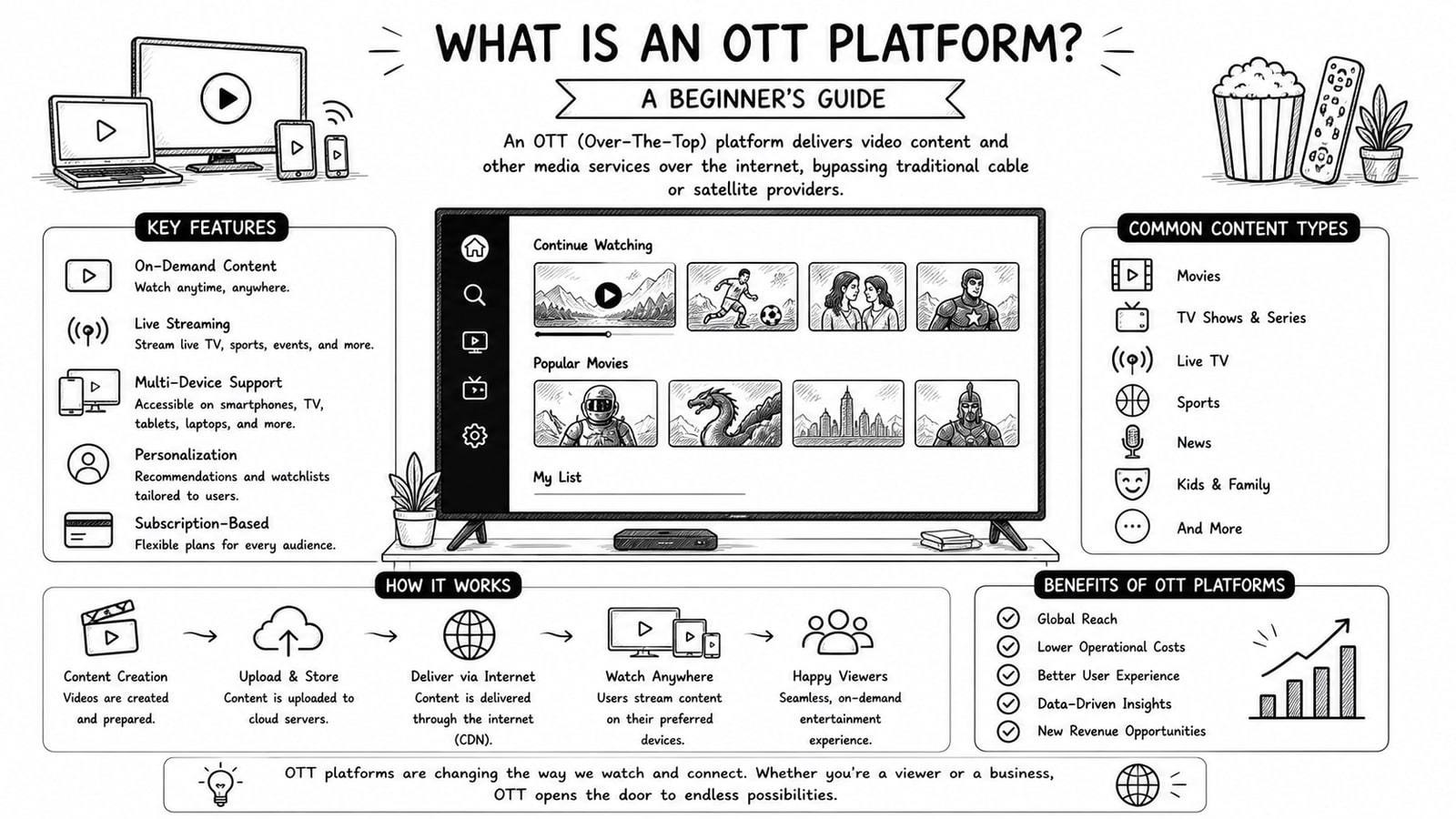
What Is an OTT Platform? A Beginner's Guide
A beginner-friendly guide to OTT platforms, how they work, key components, business models, and what to evaluate before choosing a solution.
Read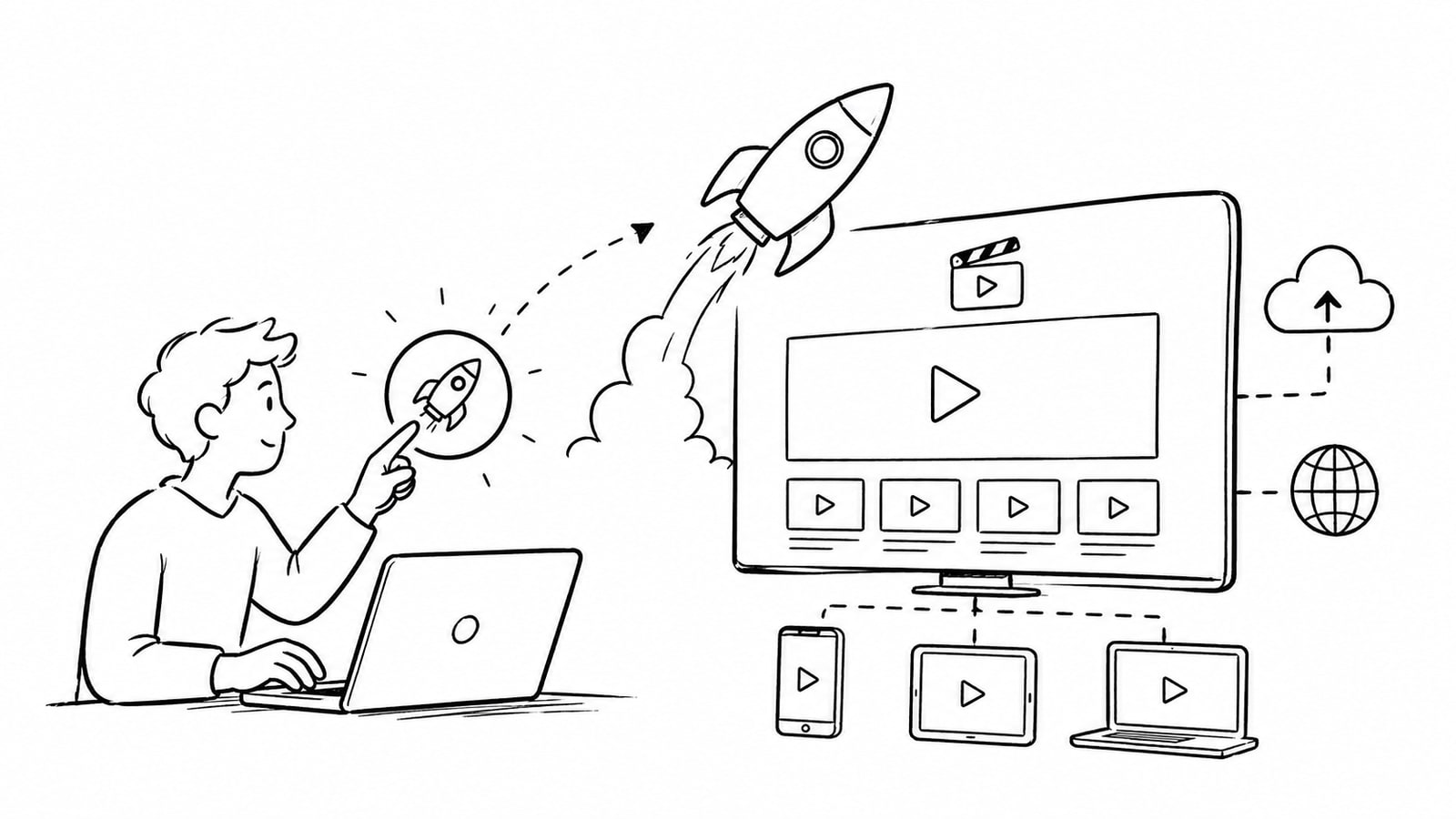
Launch Your Own Streaming Platform: No Code, No Hassle
A practical guide to launching a branded streaming platform without custom development, with advice on pricing, content packaging, platform selection, and subscriber experience.
Read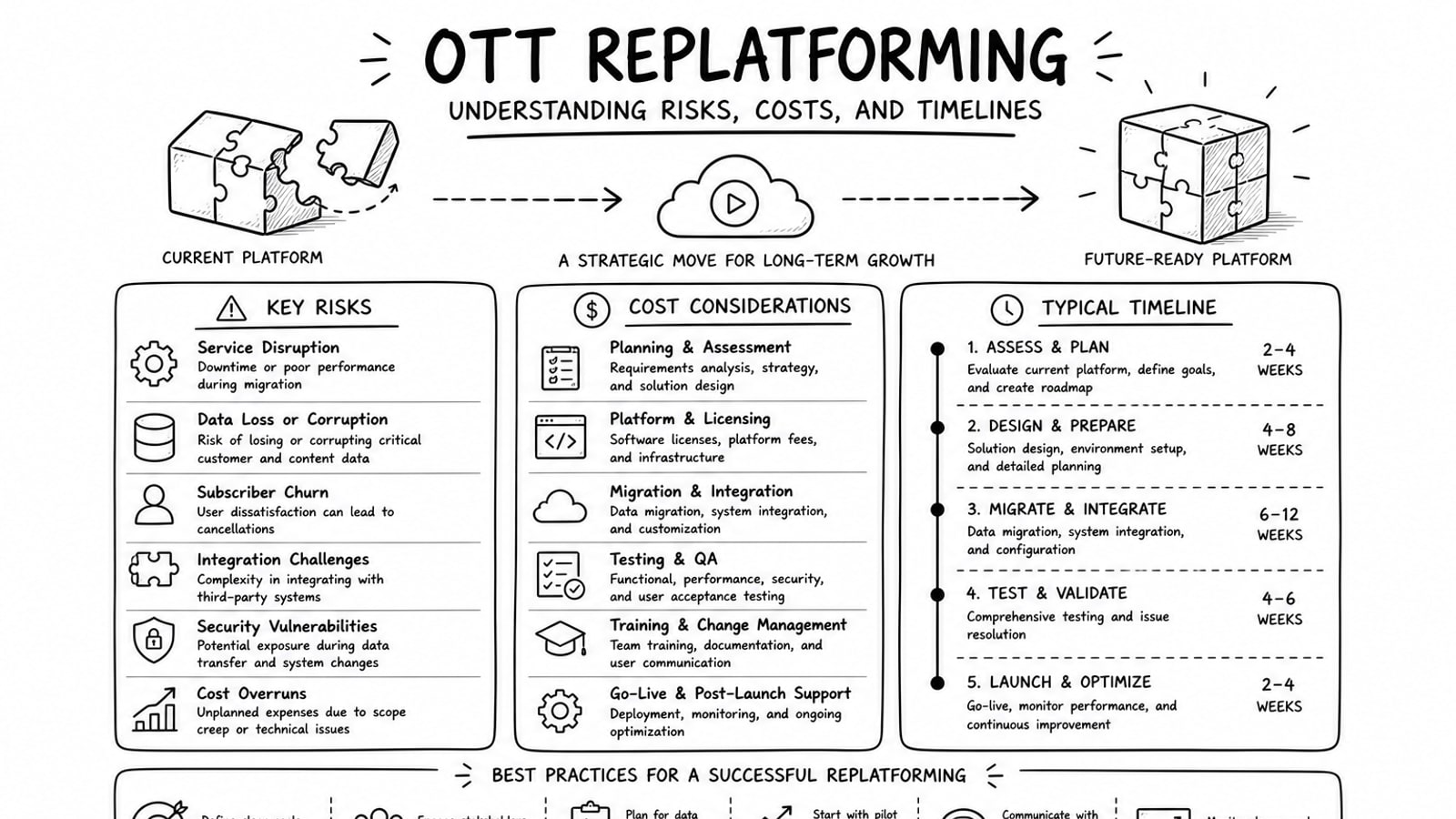
OTT Replatforming: Understanding Risks, Costs, and Timelines
A practical guide to OTT replatforming that explains why teams migrate, what usually drives risk and cost, how long projects tend to take, and where a BYOA delivery model can reduce lock-in.
Read