OTT
OTT vs. Traditional Broadcasting: The Future of Media
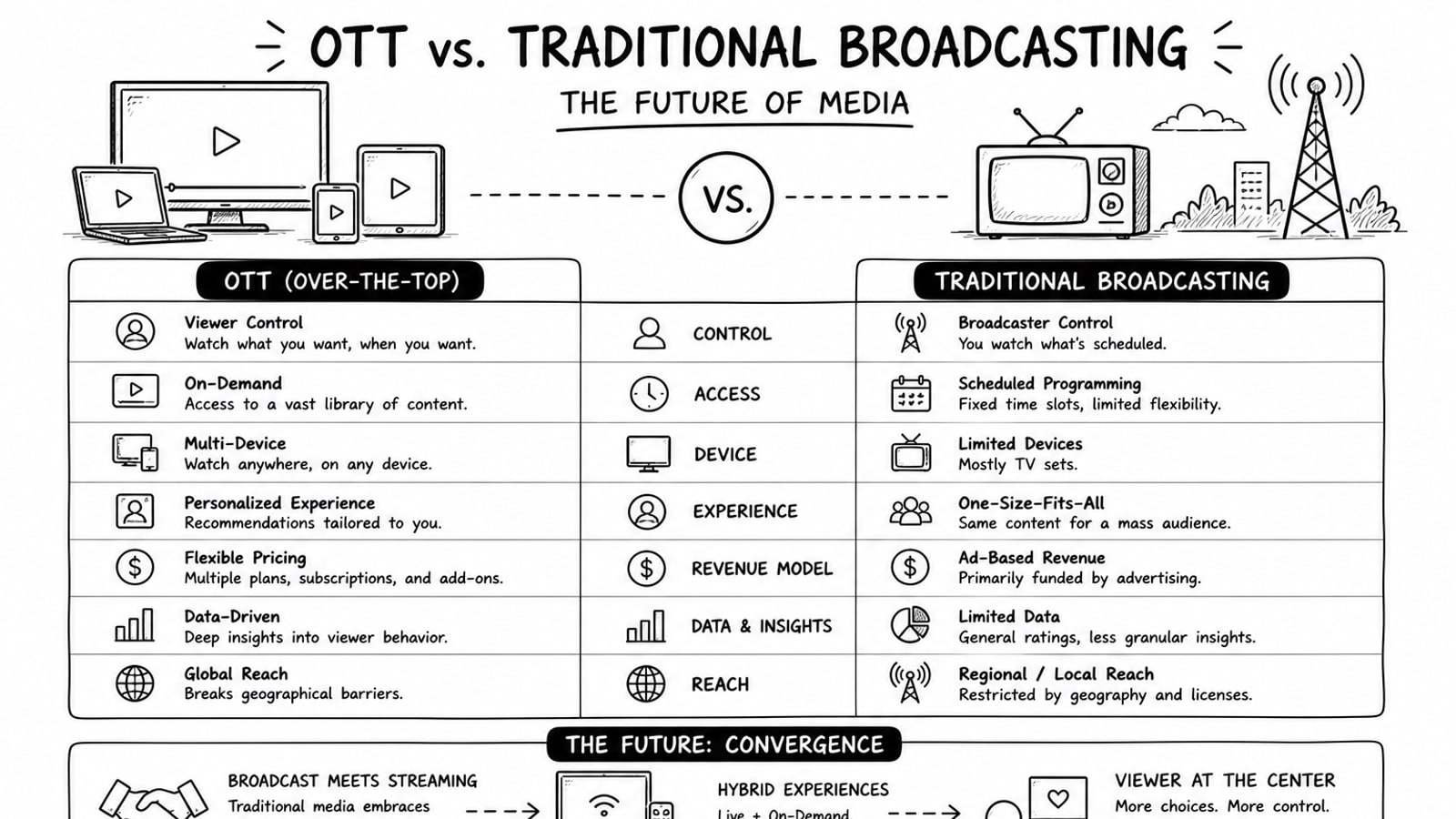
OTT vs traditional broadcasting is no longer a simple replacement story. The future of media is moving toward a hybrid model where streaming, live channels, on-demand libraries, and ad-supported experiences work together. Viewers want flexibility, lower friction, and access across devices, while broadcasters still hold major advantages in live events, mass reach, and trust.
Quick Answer
OTT is leading media growth because it gives audiences on-demand access, device flexibility, direct user relationships, and faster product iteration. Traditional broadcasting is still important for live news, sports, large-scale reach, and ad-supported viewing. The most likely future is not OTT replacing broadcasting entirely, but media companies combining both into one connected experience.
Key Takeaways
OTT gives viewers more control over what they watch, when they watch it, and on which device.
Traditional broadcasting still matters because it remains strong for live programming, trust, and broad audience reach.
The market is shifting toward hybrid distribution, where broadcasters build strong streaming products instead of relying on linear delivery alone.
Pricing pressure, subscription fatigue, and the rise of ad-supported streaming are reshaping the economics of video.
For businesses launching OTT products, infrastructure ownership, storage flexibility, and platform control matter as much as front-end features.
What OTT and Traditional Broadcasting Mean
OTT, or over-the-top delivery, refers to video distributed over the internet without requiring a traditional cable, satellite, or terrestrial television package. Examples include subscription streaming, free ad-supported streaming television, and broadcaster-owned on-demand apps. Traditional broadcasting refers to scheduled television delivered through broadcast networks, cable, or satellite systems, usually with fixed programming windows and third-party distribution control.
The difference is not only technical. OTT changes the business relationship. It allows publishers and media brands to own more of the user journey, collect better product data, experiment with monetization, and release content in more flexible ways.
How OTT vs. Traditional Broadcasting Really Differs
Distribution: OTT runs through internet-connected apps and platforms, while traditional broadcasting depends on licensed channels and scheduled distribution systems.
Viewer behavior: OTT is built around on-demand consumption, while broadcasting is centered on scheduled programming.
Measurement: OTT typically offers more granular product and audience data than legacy broadcast workflows.
Monetization: OTT can combine subscriptions, ads, transactional video, bundling, or hybrid models in one product stack.
Product control: OTT operators can iterate faster on features, onboarding, recommendation flows, and user experience.
Why OTT Is Reshaping the Future of Media
The strongest reason is simple: audience behavior has changed. Nielsen reported that in May 2025, streaming represented 44.8% of total TV usage in the United States, slightly above the combined share of broadcast and cable at 44.2%. Nielsen also reported that streaming usage was up 71% compared with May 2021. That does not mean traditional TV disappears overnight, but it does show that streaming is now a primary viewing mode rather than a side channel.
Economics are changing too. Deloitte's 2025 Digital Media Trends research found that 49% of surveyed consumers still had cable or satellite, down from 63% three years earlier. The same research reported average monthly spending of $125 for cable or satellite subscribers versus $69 for four paid streaming services combined. Consumers are becoming more selective, more price-sensitive, and more willing to rotate between services.
That pressure is also accelerating ad-supported models. FAST services, broadcaster video-on-demand products, and lower-cost ad tiers give media companies more ways to reach users who do not want another expensive subscription.
Why Traditional Broadcasting Still Matters
Broadcasting still performs where immediacy and scale matter most. Live sports, breaking news, national events, and mass-reach advertising continue to favor broadcast and cable environments. Even Nielsen's 2025 data notes that traditional TV remains resilient, especially when live programming and seasonal events pull viewers back to linear channels.
Traditional broadcasters also have deep content libraries, established rights relationships, and strong brand trust. Those assets do not disappear when audiences stream more. Instead, they become inputs for stronger digital products.
The Future of Media Looks Hybrid, Not Binary
The most realistic future is a blended one. Ofcom's Media Nations 2025 report describes how broadcasters are actively moving audiences from linear television to their own streaming platforms, expanding on-demand libraries, testing streaming-first or simultaneous premieres, and adding premium ad-free tiers. In other words, many broadcasters are not defending the old model alone; they are rebuilding themselves around digital delivery.
This is why the OTT vs traditional broadcasting debate is often framed too narrowly. The real strategic question is how media companies combine reach, rights, monetization, and user experience across both models. The winners are likely to be companies that treat streaming as a product capability, not just a content outlet.
What Businesses Should Look For in an OTT Solution
Control over video and asset infrastructure so long-term costs do not become opaque.
Flexibility to support subscriptions, ads, pay-per-view, or mixed monetization.
Reliable playback, mobile support, and smart TV readiness.
Analytics that help teams understand churn, engagement, and content performance.
A delivery model that avoids unnecessary platform lock-in where possible.
Where Bitbyte3 Fits
If a company wants to launch or modernize an OTT offering, infrastructure design matters as much as the app itself. Based on the information provided for this article, Bitbyte3 offers an OTT solution positioned around better pricing and a Bring Your Own Account model. In practice, that means clients can use their own service accounts, such as Cloudflare Stream for video and their own asset accounts for media storage, instead of being locked into platform-owned storage and recurring restrictions.
That kind of setup can be attractive for organizations that want clearer cost ownership, fewer storage limitations, and more direct control over the services behind the platform. Before publication, the exact pricing, account structure, and implementation details should be reviewed and approved by Bitbyte3 so the public copy matches the real offer.
Implementation Example Placeholder
[Add a verified Bitbyte3 customer example here, such as launch timeline, monthly streaming volume, storage model, or measurable cost outcome.]
Common Mistakes When Launching an OTT Service
Treating OTT as only a front-end app instead of a full product and distribution strategy.
Ignoring pricing sensitivity and assuming users will tolerate too many overlapping subscriptions.
Underestimating the importance of content rights, encoding, storage, and delivery costs.
Skipping ad-supported or hybrid monetization options too early.
Choosing infrastructure that makes future migration difficult or expensive.
FAQ Section
What is the main difference between OTT and traditional broadcasting?
OTT delivers video over the internet and is usually designed for on-demand or app-based access. Traditional broadcasting delivers scheduled programming through broadcast, cable, or satellite systems.
Is OTT replacing traditional broadcasting completely?
No. OTT is growing quickly, but traditional broadcasting still holds major value in live sports, news, and broad audience reach. The market is moving toward hybrid delivery rather than a clean replacement.
Why are viewers moving toward OTT platforms?
Viewers prefer flexibility, cross-device access, more personalized experiences, and lower-friction content discovery. Many also see better value in streaming bundles or ad-supported options than in large legacy TV packages.
Why do broadcasters still invest in streaming apps?
Because audiences increasingly expect on-demand and mobile access. Broadcasters use streaming apps to protect their brands, extend content life, reach younger users, and build direct digital relationships.
What does BYOA mean in an OTT solution?
BYOA means Bring Your Own Account. Instead of relying entirely on vendor-owned service accounts, the client uses its own accounts for parts of the stack, such as video hosting or storage. This can improve ownership, visibility, and portability.
Who should consider a solution like Bitbyte3's OTT model?
Media brands, broadcasters, education platforms, and content businesses that want an OTT product with more infrastructure control may find that model useful, especially if they want to avoid unnecessary storage or account restrictions.
Methodology / Editorial Note
This article was developed using recent industry reporting from Nielsen, Deloitte, and Ofcom, combined with the company positioning supplied for Bitbyte3. Where product-specific proof, pricing, or customer outcomes were not independently provided, placeholders or cautious language were used instead of unsupported claims.
Sources and Further Reading
Nielsen, Streaming Reaches Historic TV Milestone, Eclipses Combined Broadcast and Cable Viewing For First Time: https://www.nielsen.com/news-center/2025/streaming-reaches-historic-tv-milestone-eclipses-combined-broadcast-and-cable-viewing-for-first-time/
Conclusion
OTT is changing the future of media because it aligns with how audiences actually watch, pay, and move across devices. Traditional broadcasting still matters, but its future increasingly depends on how well it connects with streaming. For organizations planning the next stage of video delivery, the best strategy is usually not choosing one side. It is building a media stack that can support both. For teams exploring that shift, Bitbyte3 may be worth reviewing as an OTT implementation partner, especially if account ownership and infrastructure flexibility are high priorities.
About the Author
R. Jabar
Marketing Strategist
R. Jabar is a marketing strategist who helps streaming and OTT brands turn complex product stories into clear, growth-driven messaging. She writes about audience acquisition, content monetization, and the marketing frameworks that help video platforms scale.
More from the blog
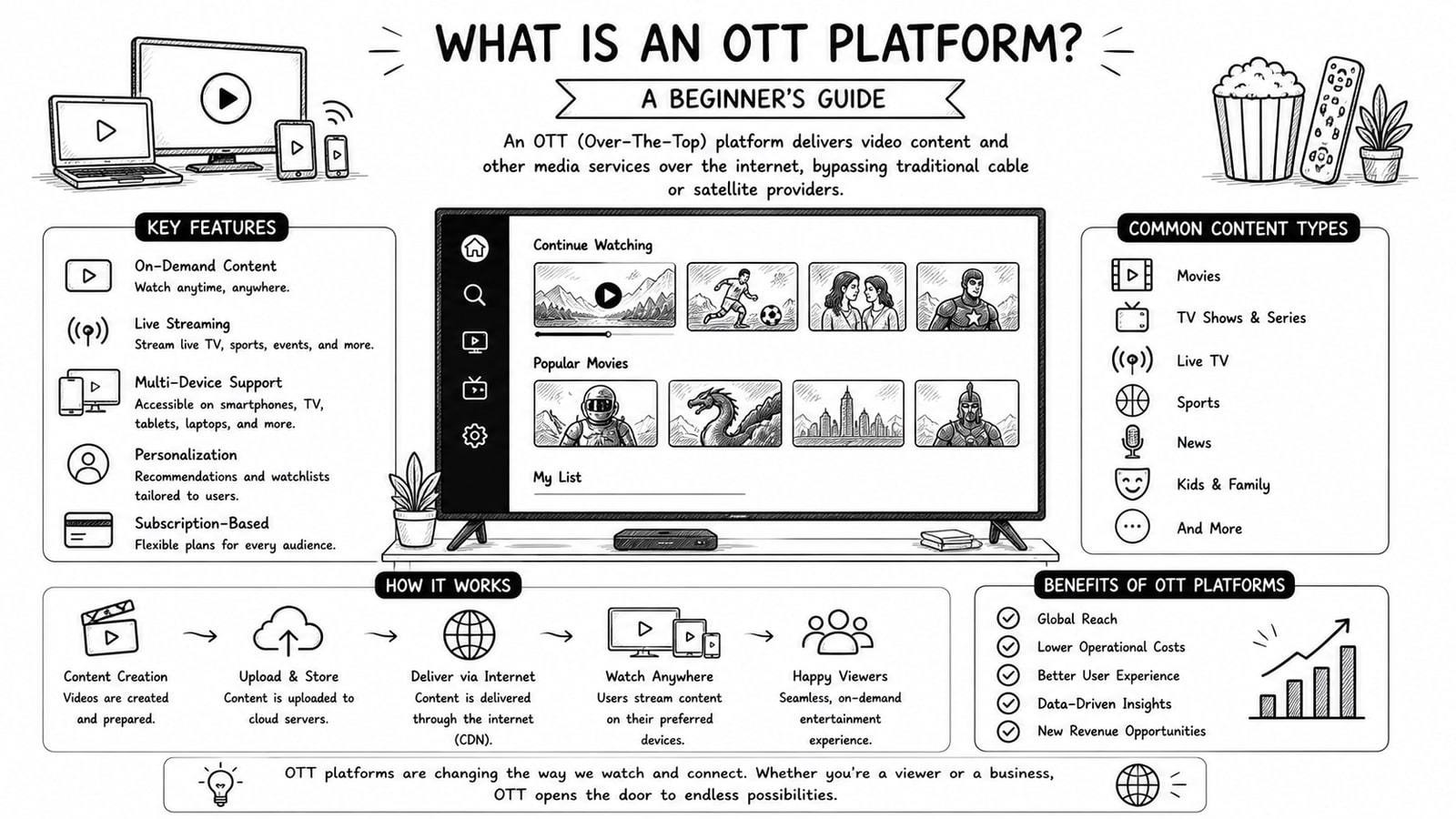
What Is an OTT Platform? A Beginner's Guide
A beginner-friendly guide to OTT platforms, how they work, key components, business models, and what to evaluate before choosing a solution.
Read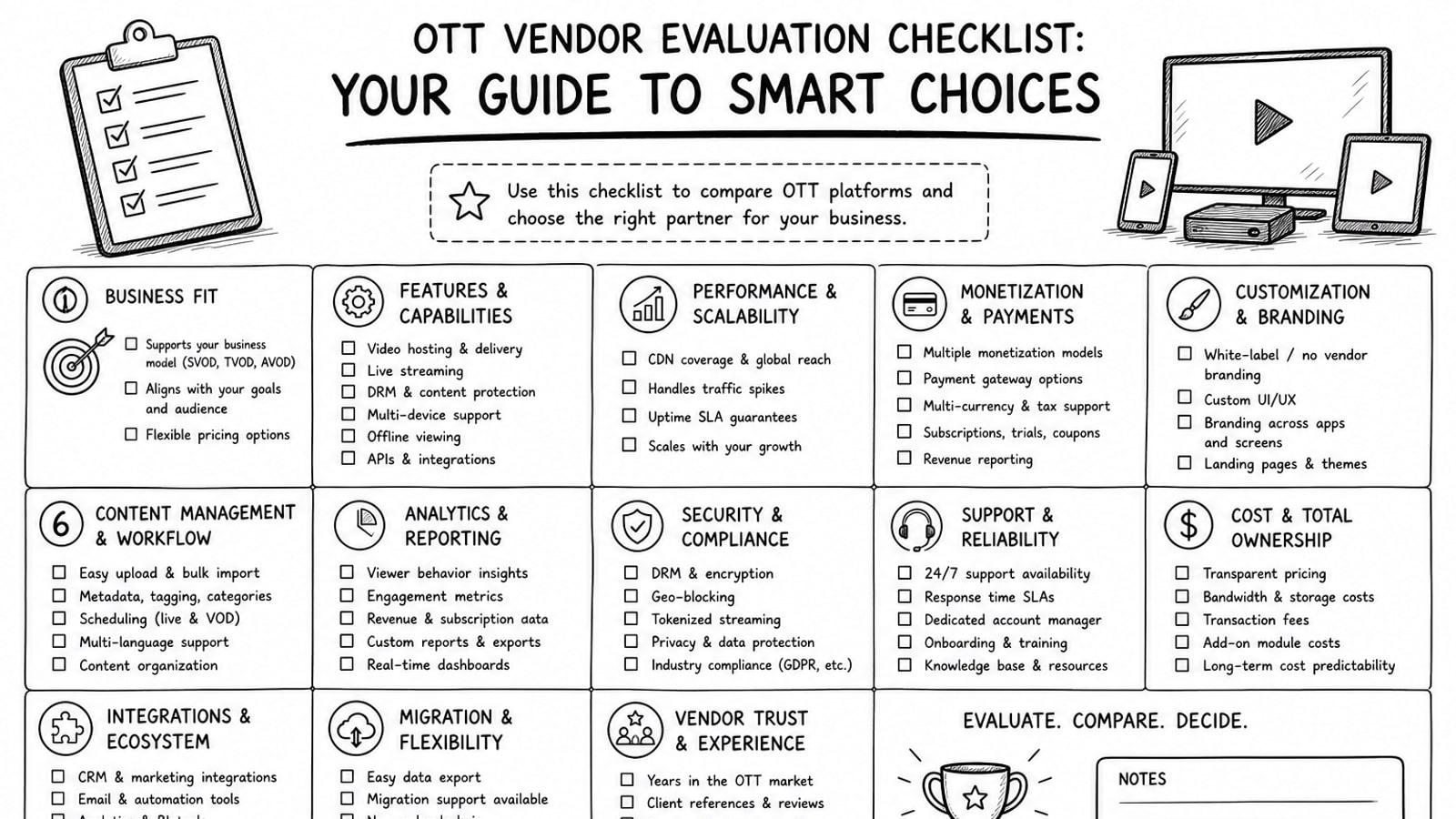
OTT Vendor Evaluation Checklist: Your Guide to Smart Choices
A practical guide to evaluating OTT vendors, with a clear checklist for delivery, security, workflow, cost, ownership, and long-term platform fit.
Read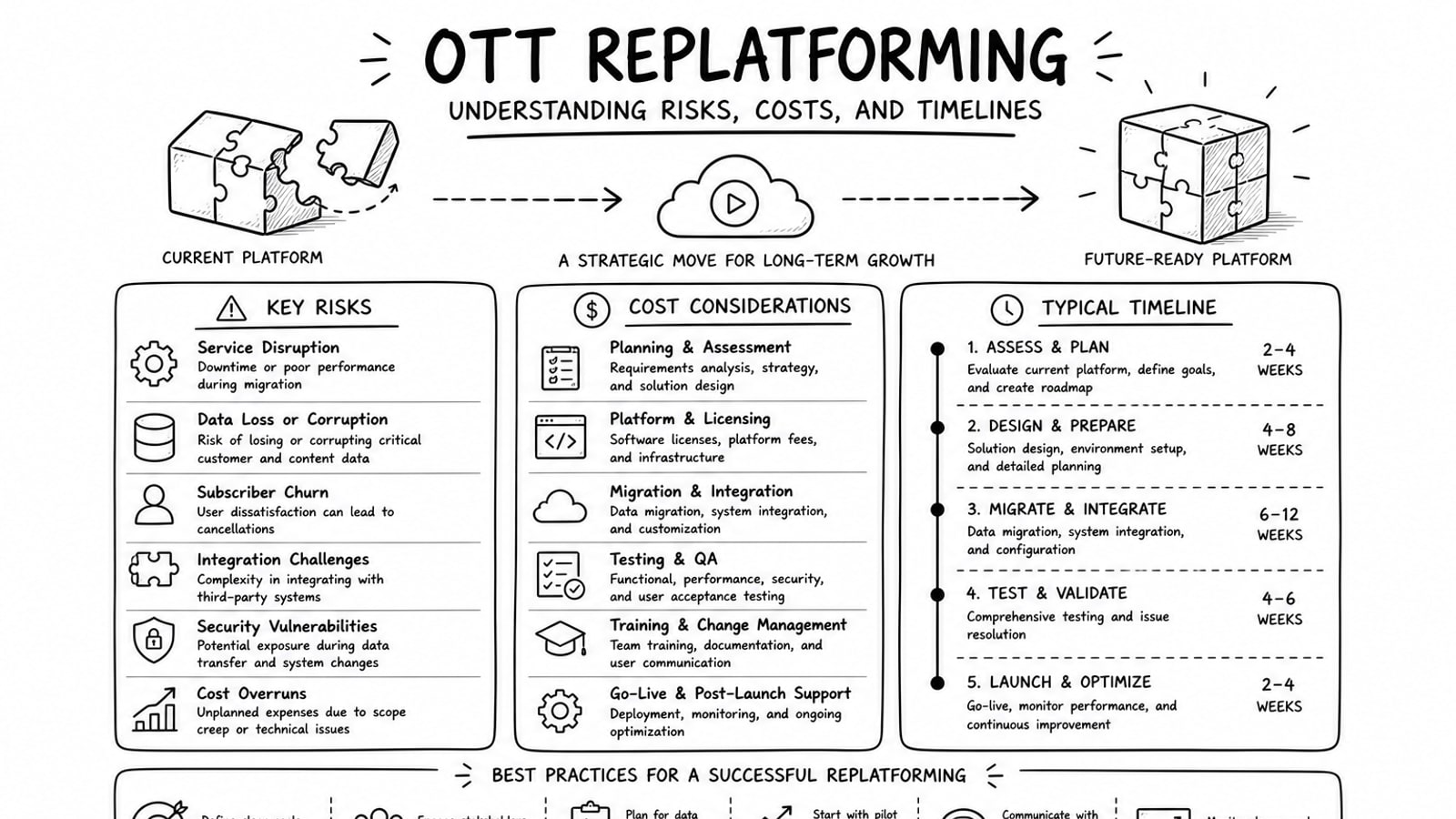
OTT Replatforming: Understanding Risks, Costs, and Timelines
A practical guide to OTT replatforming that explains why teams migrate, what usually drives risk and cost, how long projects tend to take, and where a BYOA delivery model can reduce lock-in.
Read