OTT
Why OTT Apps Matter for Subscription Growth: Unlocking Potential
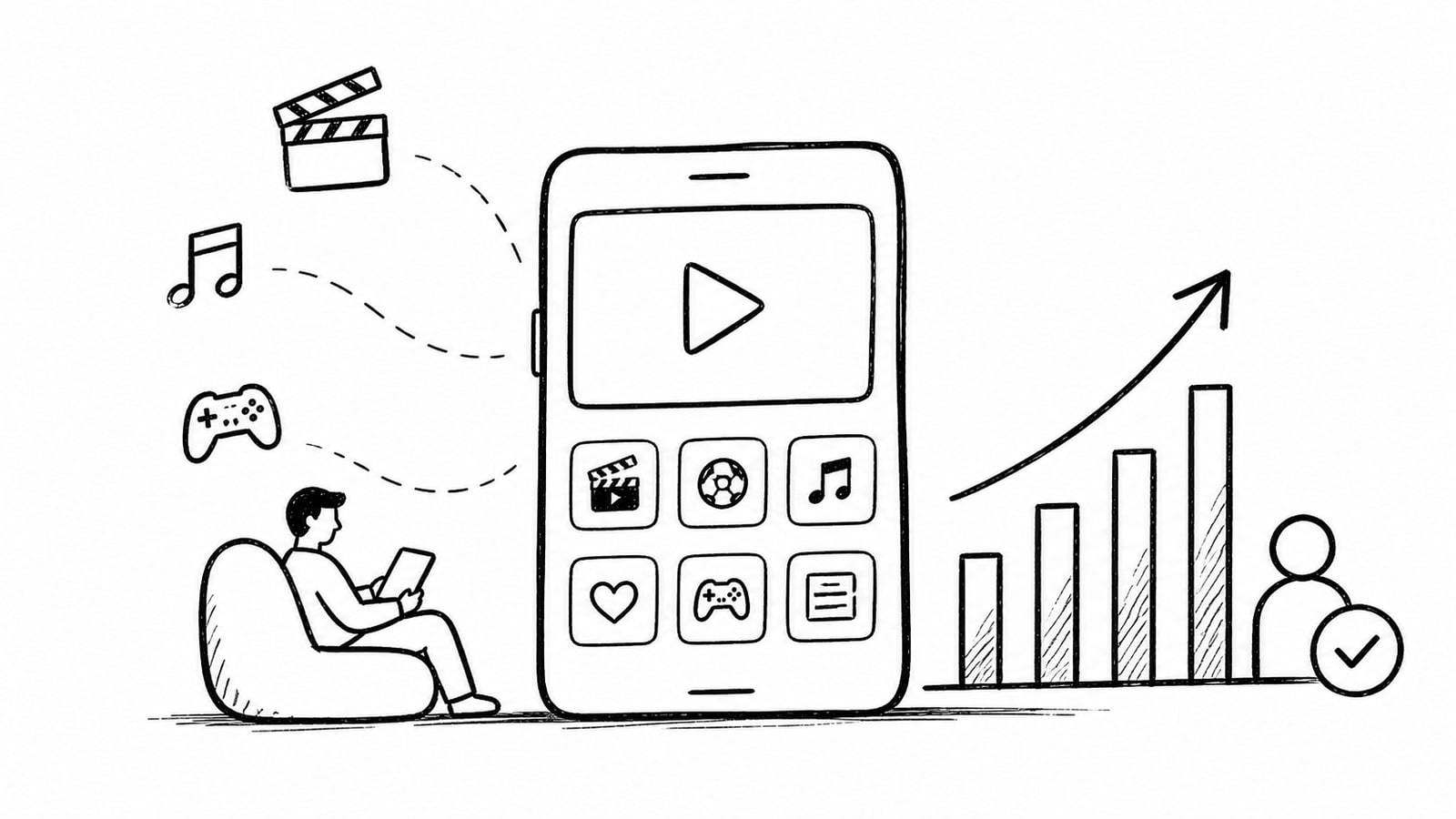
OTT apps for subscription growth matter because they put your service where people already watch, pay, and return. For video businesses, a strong OTT app strategy can improve reach across mobile, web, and connected TV, reduce friction in the subscription journey, and create a more reliable base for recurring revenue.
Quick Answer
OTT apps matter for subscription growth because they improve distribution, make subscription purchasing easier on the devices people use most, and give media brands more ways to retain subscribers through better playback, personalization, and monetization. In a crowded streaming market, the brands that win are usually the ones that combine strong content with a low-friction product experience.
Key Takeaways
OTT apps expand reach across smart TVs, mobile devices, tablets, and the web.
A polished app experience can reduce churn by making discovery, playback, and billing easier.
OTT platforms support flexible monetization through SVOD, AVOD, PPV, and hybrid models.
Cost control and infrastructure ownership can become a growth advantage, especially for startups.
Why OTT Apps Matter for Subscription Growth
Subscription growth is not only about acquiring viewers. It is also about reducing the number of reasons they leave. OTT apps help on both sides. They give users a direct way to discover your service, start watching quickly, and keep returning on the screens they use every day.
That matters because the streaming market is crowded and price-sensitive. Deloitte's 2025 Digital Media Trends press release reported that 53% of surveyed consumers said SVOD services were the paid media and entertainment services they used most often, but 47% said they pay too much for streaming services and 39% had canceled at least one paid SVOD service in the previous six months. In other words, demand is strong, but loyalty is fragile.
A strong OTT app cannot solve weak content or poor positioning on its own, but it can remove avoidable friction. If people can subscribe, watch, resume, and manage their plan smoothly across devices, your platform has a better chance of converting interest into recurring revenue.
1. OTT apps put your service where audiences already watch
A subscription business grows faster when the product is available on the screens that fit the user's moment. Someone may discover content on a phone, continue on a laptop, and complete a long-form session on a smart TV. OTT apps make that journey feel consistent instead of fragmented.
This is especially important for premium video. The larger the screen and the smoother the playback, the easier it becomes to justify a recurring subscription. Apple documents subscription support across iOS, iPadOS, macOS, tvOS, visionOS, and watchOS, while Google documents that users can subscribe to some streaming services directly on Android TV. That device-level support helps OTT apps act as real commerce channels, not just viewing shells.
2. OTT apps improve conversion by reducing purchase friction
Every extra step between interest and checkout hurts conversion. OTT apps can simplify onboarding with fast sign-up, clear plan presentation, remembered sessions, and native payment flows where available. That matters most when a viewer is ready to act in the moment, such as after discovering a trailer, event, or exclusive release.
When subscriptions are easy to start and easy to manage, audiences are less likely to abandon the process. This is one reason OTT apps matter for subscription growth beyond branding alone. They make revenue mechanics part of the product experience.
3. OTT apps support retention through a better viewing experience
Retention is often the difference between a growing subscription platform and a leaky one. Viewers expect reliable playback, adaptive streaming, watch history, recommendations, subtitles, profile support, and continuity across devices. When those basics feel weak, the subscription itself feels less valuable.
Deloitte's research also points to growing pressure on perceived value. If viewers already feel they pay too much, they become less forgiving of weak user experience. OTT apps give publishers more control over the product details that shape satisfaction between billing cycles.
4. OTT apps make monetization more flexible
Growth does not always come from one pricing model. Many video businesses need a mix of subscription VOD, pay-per-view, ad-supported access, or bundles. OTT apps make it easier to present and test these options in a controlled environment that matches the audience and the content type.
SVOD works well for recurring libraries and premium communities.
PPV can fit live events, courses, or exclusive drops.
AVOD or hybrid models can widen the top of the funnel and lower entry barriers.
That flexibility is useful when audience willingness to pay changes over time. A business can start with one model, then add others as its catalog, audience segments, and retention strategy mature.
A Simple Framework for Using OTT Apps to Grow Subscriptions
Start with distribution: launch on the devices your audience already uses most.
Reduce onboarding friction: keep sign-up, login, and plan selection simple.
Improve retention: invest in playback quality, profiles, watchlists, and content discovery.
Expand monetization: test subscriptions, ads, one-time purchases, or hybrid offers.
Track cost structure: make sure storage, streaming, and platform fees do not erase growth gains.
Why Cost Control Matters Almost as Much as Growth
Subscription growth is less impressive if infrastructure costs rise just as fast. That is why OTT businesses increasingly care about ownership, transparency, and the ability to choose the right vendors for storage and streaming rather than accepting rigid bundled fees.
Cloudflare Stream documents a usage-based model tied to minutes delivered and minutes stored. For some businesses, that kind of pricing is easier to forecast than broad platform markups. It also highlights why architecture decisions matter early: the way you store and deliver media shapes long-term margins.
This is where BitByte3 can fit. Based on its public site and the approach described for this article, BitByte3 offers OTT solutions aimed at startups and growing media businesses, with multi-platform apps, monetization options, and a more cost-conscious operating model. A useful part of that positioning is a BYOA, or Bring Your Own Account, approach. In practice, that means clients can use their own third-party infrastructure accounts, such as Cloudflare Stream for video, instead of being locked into opaque platform-controlled storage or usage fees. The result is more direct control over cost, access, and account ownership as the business grows.
Common Mistakes That Limit OTT Subscription Growth
Launching only on the web when the audience expects TV and mobile access.
Treating the app as a branding layer instead of a core part of the monetization funnel.
Ignoring playback reliability, search, recommendations, and account management.
Choosing a platform without understanding long-term storage, delivery, and vendor lock-in costs.
FAQ
What is an OTT app?
An OTT app is an over-the-top streaming application that delivers video or audio content over the internet instead of traditional cable or satellite distribution. It can run on mobile phones, smart TVs, streaming devices, and the web.
Why do OTT apps help subscription growth?
They help by making your service easier to access, easier to subscribe to, and easier to keep using across devices. Better convenience and product quality can improve both conversion and retention.
Are OTT apps only for large media companies?
No. Startups, educators, niche content brands, sports properties, and independent media businesses can all use OTT apps to build direct recurring revenue if they have a clear audience and a strong distribution plan.
Can OTT apps support different revenue models?
Yes. Many OTT platforms support subscription video on demand, advertising, pay-per-view, and hybrid combinations depending on the content and audience strategy.
What does BYOA mean in an OTT setup?
BYOA means Bring Your Own Account. In an OTT context, it usually means the client uses its own accounts with infrastructure providers, which can provide better ownership, clearer billing, and less dependency on a single platform vendor.
How can BitByte3 help?
BitByte3 positions itself as a startup-friendly OTT solution provider for web, mobile, and TV apps, with monetization support and a cost-aware setup approach. Its BYOA model may be especially useful for teams that want more direct control over infrastructure accounts and operating costs.
Conclusion
OTT apps matter for subscription growth because they connect content, commerce, and customer experience in one place. They help audiences find you, subscribe with less friction, and stay engaged longer across the screens that matter most. For businesses that want sustainable growth, the question is usually not whether OTT apps matter. It is whether the app strategy is strong enough to support growth without adding avoidable cost and complexity.
If your team is planning a multi-platform launch, a practical next step is to review device priorities, monetization model, and infrastructure ownership together. That is the kind of decision set that can shape both subscriber growth and long-term margins.
Methodology and Editorial Note
This article was written as an informational piece using the user-provided topic, the public BitByte3 website, and official or first-party reference material for market context and platform support. No customer outcomes, performance claims, or proprietary case-study results were added beyond what was provided or publicly visible.
Sources and Further Reading
Deloitte US press release: 2025 Digital Media Trends. https://www2.deloitte.com/us/en/pages/about-deloitte/articles/press-releases/digital-media-trends-consumption-habits-survey.html
Apple Developer: Auto-renewable Subscriptions. https://developer.apple.com/app-store/subscriptions/
Google Android TV Help: Start or manage a subscription on your Android TV. https://support.google.com/androidtv/answer/9461288
Cloudflare Stream pricing documentation. https://developers.cloudflare.com/stream/pricing/
BitByte3 homepage and streaming platform pages. https://bitbyte3.com/ and https://bitbyte3.com/solutions/streaming-platform
About the Author
M. Jorani — LinkedIn
Software Engineer & Technical Writer
M. Jorani is a software engineer and technical writer with hands-on experience building streaming infrastructure, video pipelines, and OTT platforms. He writes about encoding, delivery architecture, and the engineering decisions that shape how audiences watch content across devices.
More from the blog
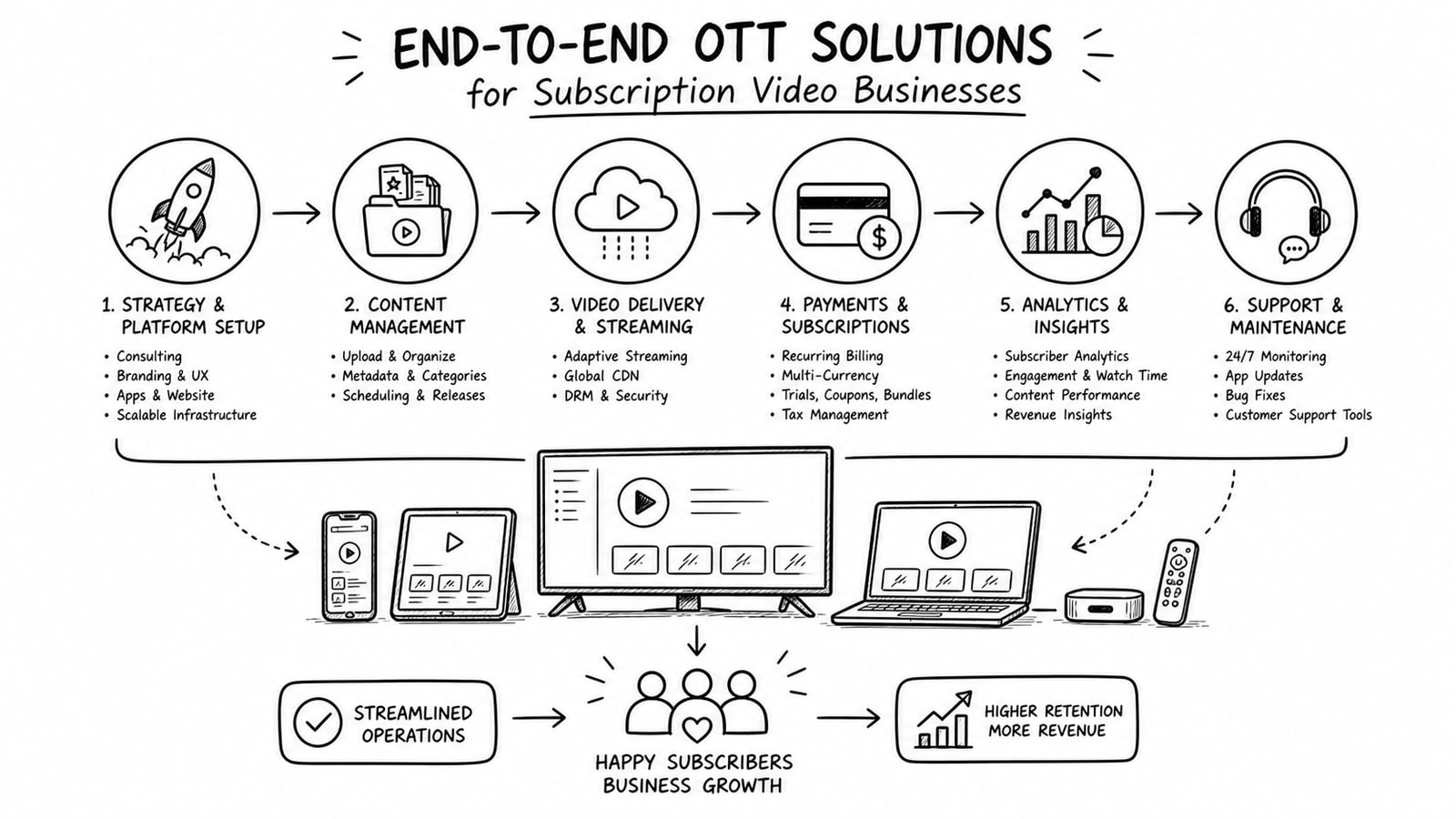
End-to-End OTT Solutions for Subscription Video Businesses: Streamline Your Operations
A practical guide to end-to-end OTT solutions for subscription video businesses, covering the operational layers that reduce complexity and where a bring-your-own-account approach from Bitbyte3 may fit.
Read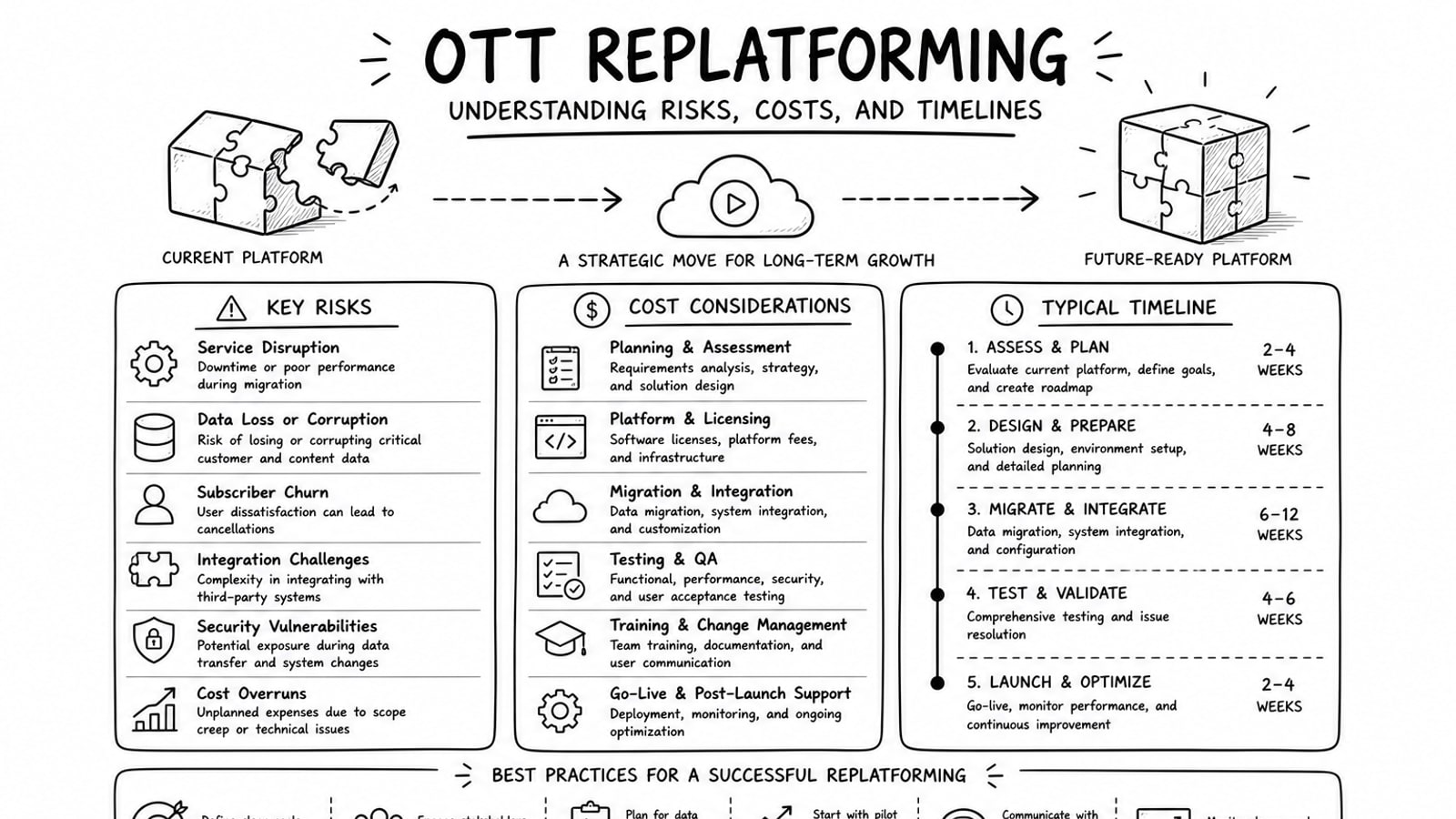
OTT Replatforming: Understanding Risks, Costs, and Timelines
A practical guide to OTT replatforming that explains why teams migrate, what usually drives risk and cost, how long projects tend to take, and where a BYOA delivery model can reduce lock-in.
Read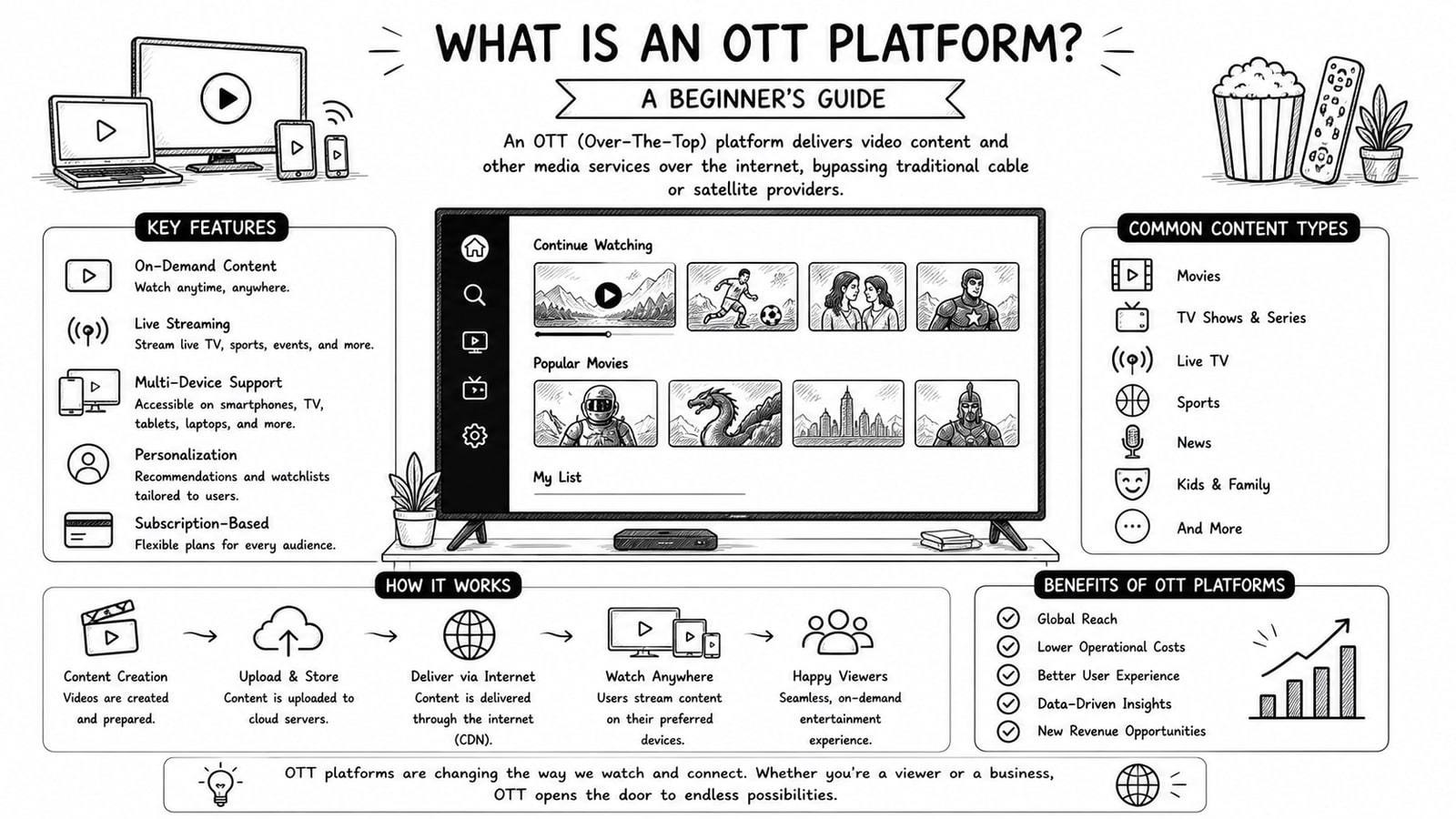
What Is an OTT Platform? A Beginner's Guide
A beginner-friendly guide to OTT platforms, how they work, key components, business models, and what to evaluate before choosing a solution.
Read