OTT
SVOD vs. TVOD vs. AVOD: Choosing the Best Monetization Model for Your Needs
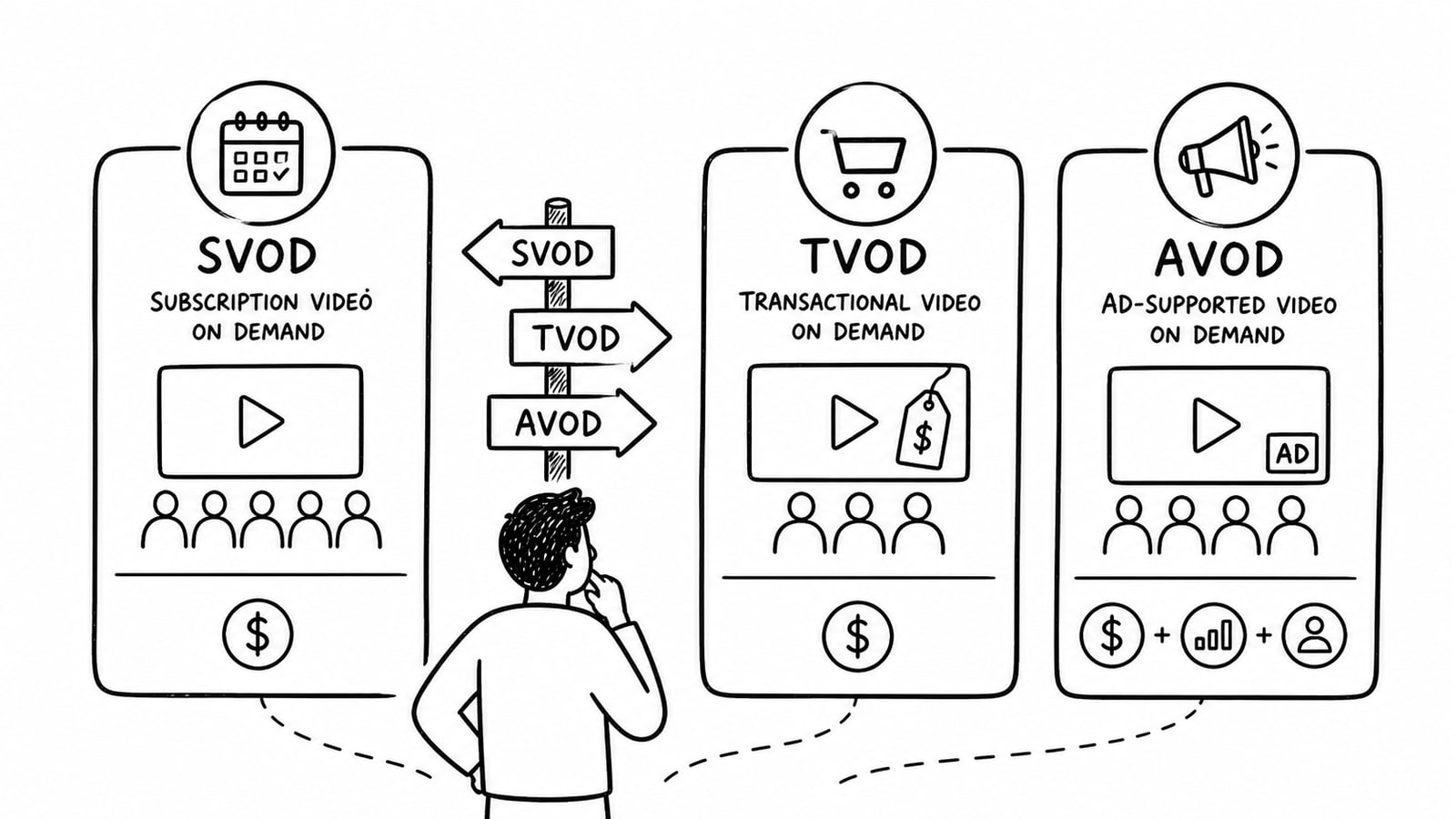
Choosing between SVOD, TVOD, and AVOD is not just a pricing decision. It shapes your audience growth, revenue timing, product experience, and the amount of operational control your team needs. If you run an OTT platform, video library, sports service, education business, or niche media brand, the best model depends less on what is popular and more on what your audience is willing to pay for repeatedly.
Quick Answer
Use SVOD when you have recurring content and want predictable revenue. Use TVOD when people pay for specific titles, releases, events, or premium access. Use AVOD when scale and reach matter more than direct payment, and you can support an ad experience without hurting retention. Many businesses eventually use a hybrid approach, but one model should still lead your strategy.
Key Takeaways
SVOD fits libraries with ongoing value, frequent releases, and strong retention potential.
TVOD works well for one-off value moments such as new launches, film rentals, classes, or live events.
AVOD can lower the barrier to entry for viewers, but it depends on audience scale, ad demand, and a careful experience design.
The best monetization model usually follows audience behavior first, then content economics, then platform architecture.
If flexibility matters, choose an OTT setup that lets you change pricing logic without rebuilding your whole stack.
What SVOD, TVOD, and AVOD Actually Mean
SVOD stands for subscription video on demand. Viewers pay a recurring monthly or yearly fee for ongoing access to a content library. Vimeo describes SVOD as a recurring fee model that gives customers unlimited access to collections of video content through a branded OTT site or app.
TVOD stands for transactional video on demand. Instead of subscribing, viewers pay for a specific title, rental window, event, or purchase. In Vimeo's OTT documentation, TVOD includes rental and purchase pricing for products, while Amazon Ads explains TVOD as paying an individual fee for certain movies or shows.
AVOD stands for advertising-based video on demand. The viewer does not pay directly for access, and revenue comes from ads shown around or during the content. Amazon Ads defines AVOD as VOD where advertising appears within streamed videos.
These models can coexist inside the same OTT business, but they create different expectations. Subscriptions promise continuity. Transactions promise premium or limited access. Advertising promises lower friction for the viewer.
SVOD vs TVOD vs AVOD: How to Choose
The easiest way to choose is to ask three questions. What kind of value does the viewer get, how often do they come back, and when do you need to earn revenue?
Choose SVOD if the value comes from a growing library, ongoing access, or regular new content.
Choose TVOD if the value is concentrated in a specific title, release, bundle, or limited-time experience.
Choose AVOD if broad reach is the priority and your content can attract enough watch time to make ads meaningful.
When SVOD is the better fit
You publish content regularly.
Your audience has an ongoing reason to return.
You want steadier recurring revenue and better forecasting.
You can invest in retention, onboarding, and churn reduction.
SVOD is often strongest for education platforms, fitness libraries, niche entertainment brands, faith-based media, sports memberships, and creator ecosystems with a clear ongoing promise.
When TVOD is the better fit
Your best content has event-level or title-level value.
Your audience is willing to pay for premium access without committing to a subscription.
You need to monetize launches, premieres, classes, or pay-per-view moments directly.
You do not yet have enough content depth to justify recurring billing.
TVOD is a practical choice for live events, film releases, premium workshops, one-time sports access, and limited collections where the buyer expects to pay for a specific outcome rather than for broad catalog access.
When AVOD is the better fit
You want to reduce friction and maximize audience reach.
Your content supports repeat viewing and enough watch time to create ad inventory.
You have access to ad operations, demand, and measurement.
You can place pre-roll, mid-roll, or post-roll ads without damaging the product experience.
AVOD can be attractive for broad entertainment catalogs, news, lifestyle media, and channels that benefit from fast audience growth. It can also support a funnel strategy where free viewing introduces viewers to paid offers later.
A Simple Decision Framework
If you are still unsure, use this practical framework.
Audience habit: Frequent repeat use favors SVOD. One-time intent favors TVOD. Casual mass viewing favors AVOD.
Content depth: A large or growing library favors SVOD. Flagship titles or events favor TVOD. High-volume watch time can favor AVOD.
Revenue timing: Recurring revenue points to SVOD. Immediate title-level revenue points to TVOD. Ad-yield optimization points to AVOD.
Operational complexity: AVOD usually needs the strongest ad setup. SVOD usually needs the strongest retention motion. TVOD usually needs strong packaging and launch discipline.
Common Mistakes When Choosing a Monetization Model
Picking SVOD before you have enough ongoing value to justify a subscription.
Using TVOD for content that really needs a membership relationship to grow lifetime value.
Assuming AVOD will work without enough scale, ad demand, or a solid ad-delivery setup.
Copying a competitor's model without checking whether your own audience, content mix, and margins are different.
Choosing a platform that limits how easily you can change pricing, storage, delivery, or monetization logic later.
Where Bitbyte3 Can Fit
For teams that want more control over OTT economics, Bitbyte3 can fit best when flexibility, pricing transparency, and infrastructure ownership matter. Based on the product details provided in this brief, Bitbyte3 offers an OTT solution with a Bring Your Own Account model, meaning clients can use their own service accounts for components such as Cloudflare Stream for video and image delivery.
That model can be useful for companies that want to avoid being locked into bundled storage or platform markups, keep vendor costs directly visible, and tailor their monetization stack around their own accounts and usage patterns. In practice, that matters most when you need the freedom to test subscription, transactional, or ad-supported offers without losing control over the underlying media infrastructure.
Editorial note: Product positioning in this section is based on the client brief and should be reviewed against the latest public Bitbyte3 product page before publication.
Methodology and Trust Note
This article is written as a decision guide, not as a market-share report. It uses public definitions from OTT and advertising documentation to explain how SVOD, TVOD, and AVOD work, then applies those definitions to practical selection criteria such as audience behavior, content depth, revenue timing, and platform control.
No unsupported revenue claims, case studies, or performance outcomes have been added. If Bitbyte3 wants to include real deployment examples, customer proof, or comparative pricing evidence, those details should be inserted only after review with verified source material.
FAQ
Which model makes the most money: SVOD, TVOD, or AVOD?
There is no universal winner. SVOD can create steadier recurring revenue, TVOD can produce stronger revenue per transaction for premium events or titles, and AVOD can unlock scale when audience size and ad demand are strong enough.
Is SVOD better than TVOD for a new OTT platform?
Not always. A new platform with limited content may struggle to justify a subscription, while TVOD can work earlier if there is a strong launch, event, or premium asset people already want to buy.
Can you combine SVOD, TVOD, and AVOD in one platform?
Yes. Many OTT businesses use hybrid monetization. For example, they may offer free ad-supported viewing for discovery, subscriptions for the main library, and one-off paid events or premium releases through TVOD.
When does AVOD become realistic?
AVOD becomes more realistic when you have enough consistent viewing volume, acceptable ad-fill options, and an audience experience that can tolerate ad breaks without hurting retention too much.
What should I evaluate besides pricing?
Look at retention risk, payment behavior, content release cadence, ad operations, analytics, storage and delivery costs, and how much control your platform gives you over pricing and infrastructure.
Why does infrastructure ownership matter for monetization?
Infrastructure ownership matters because monetization margins are affected by storage, delivery, encoding, and vendor lock-in. A Bring Your Own Account setup can give some businesses more transparency and direct control over those costs.
Conclusion
The best choice between SVOD, TVOD, and AVOD comes down to the relationship between your content and your audience. If the value is ongoing, start with SVOD. If the value is concentrated, start with TVOD. If reach comes first and ad economics are realistic, consider AVOD. And if your long-term plan includes testing more than one model, choose an OTT setup that gives you room to adapt without losing control of costs or core infrastructure.
For teams evaluating a more flexible OTT architecture, Bitbyte3 may be worth reviewing where Bring Your Own Account control and pricing transparency are part of the business requirement.
Sources and Further Reading
Amazon Ads, "AVOD, SVOD, TVOD, PVOD: Video on demand, explained": https://advertising.amazon.com/en-gb/library/guides/avod-svod-tvod-video-on-demand
Bitbyte3 product detail references: https://bitbyte3.com/ and https://bitbyte3.com/blog/[relevant-topic-slug]
About the Author
R. Jabar
Marketing Strategist
R. Jabar is a marketing strategist who helps streaming and OTT brands turn complex product stories into clear, growth-driven messaging. She writes about audience acquisition, content monetization, and the marketing frameworks that help video platforms scale.
More from the blog
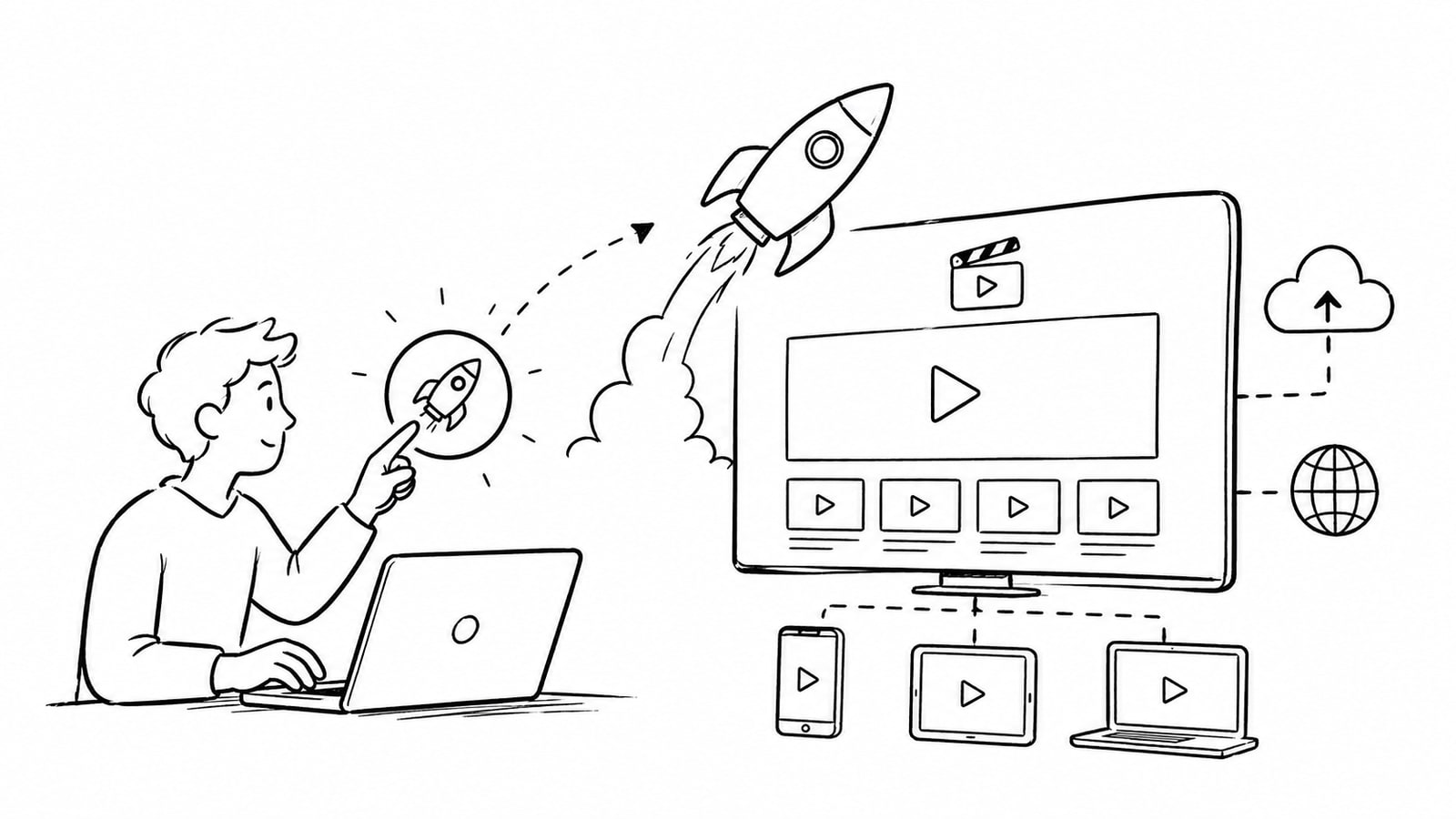
Launch Your Own Streaming Platform: No Code, No Hassle
A practical guide to launching a branded streaming platform without custom development, with advice on pricing, content packaging, platform selection, and subscriber experience.
Read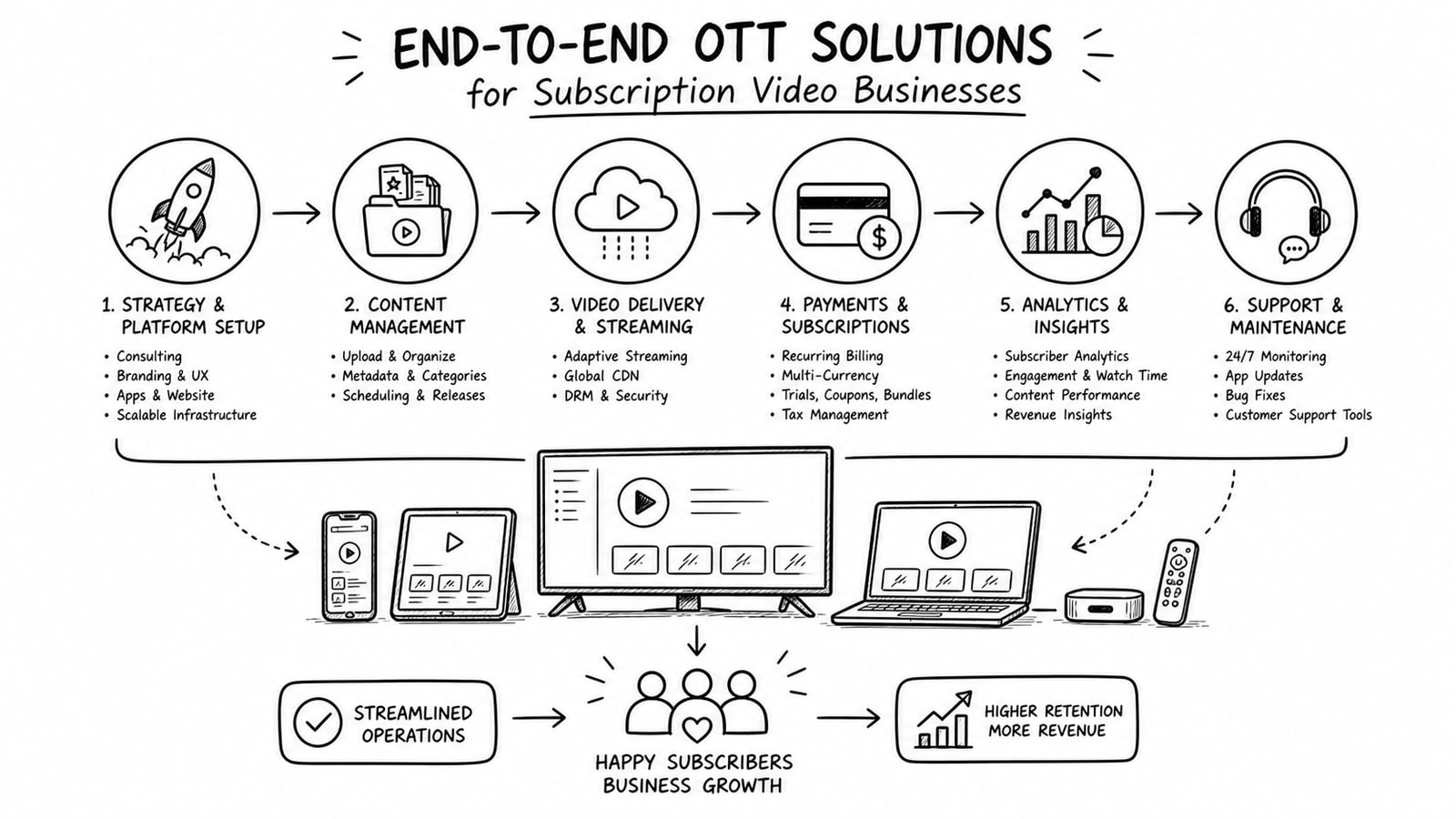
End-to-End OTT Solutions for Subscription Video Businesses: Streamline Your Operations
A practical guide to end-to-end OTT solutions for subscription video businesses, covering the operational layers that reduce complexity and where a bring-your-own-account approach from Bitbyte3 may fit.
Read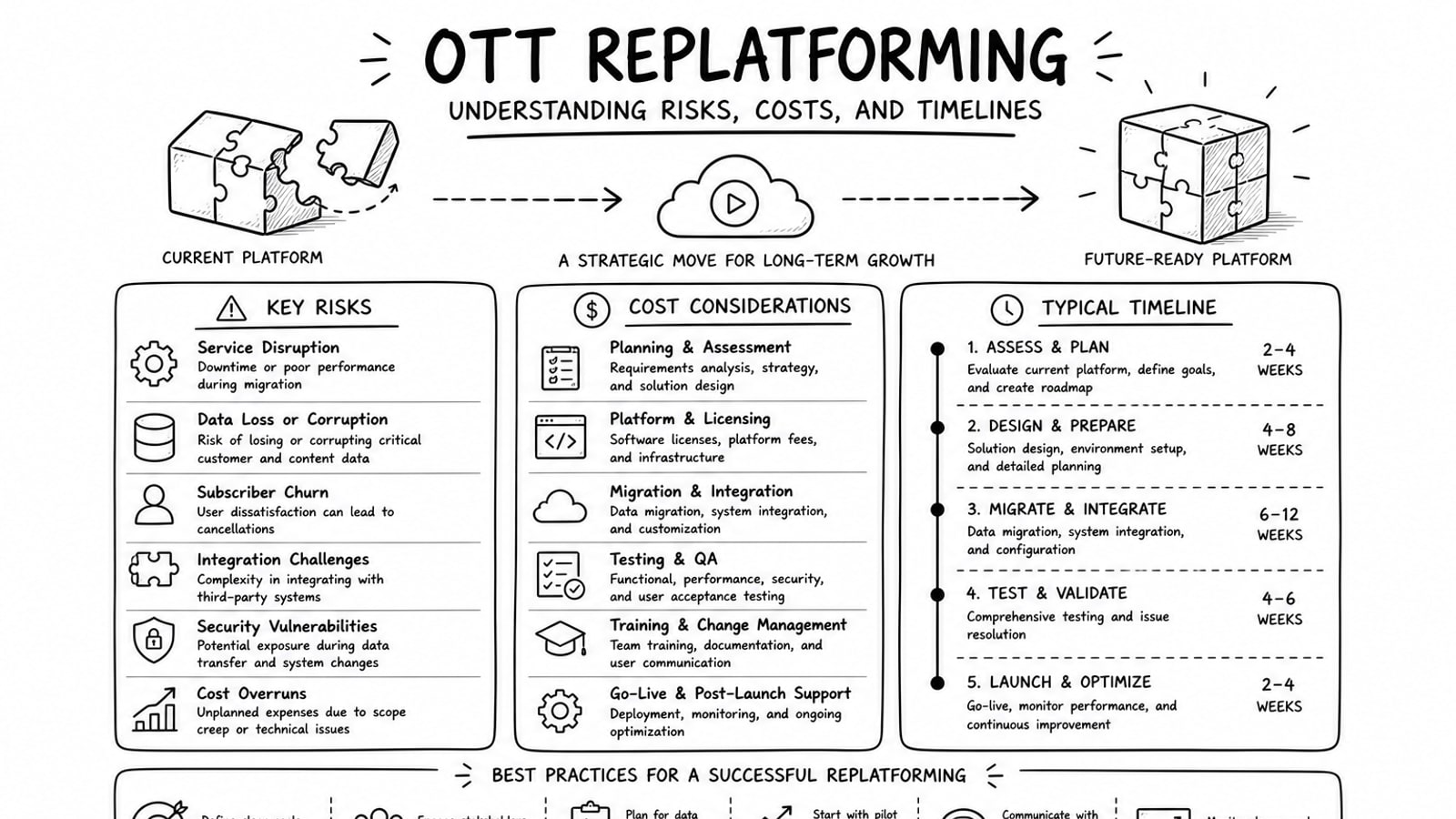
OTT Replatforming: Understanding Risks, Costs, and Timelines
A practical guide to OTT replatforming that explains why teams migrate, what usually drives risk and cost, how long projects tend to take, and where a BYOA delivery model can reduce lock-in.
Read