OTT
End-to-End OTT Solutions for Subscription Video Businesses: Streamline Your Operations
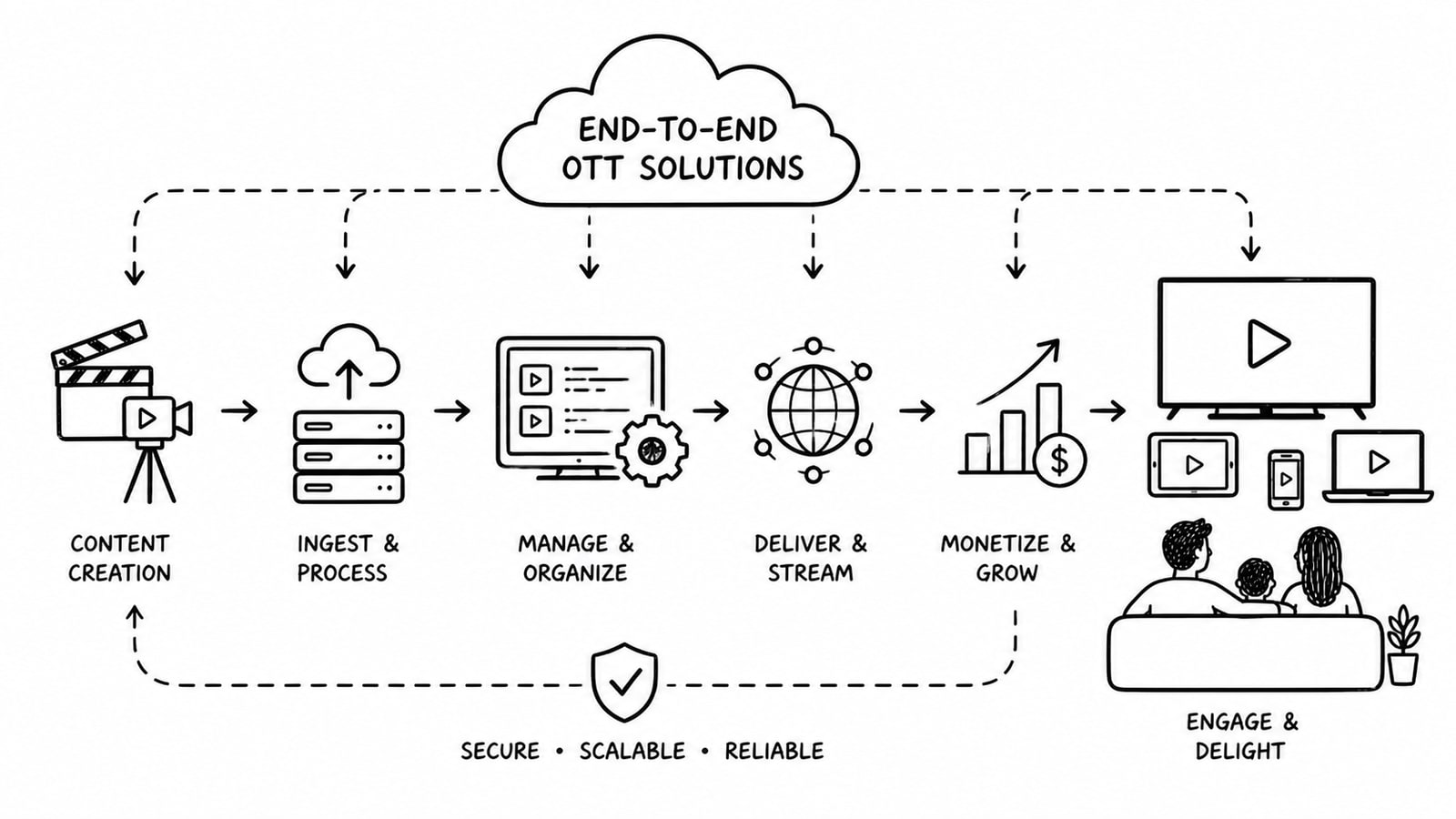
End-to-end OTT solutions help subscription video businesses run content ingestion, encoding, delivery, subscriber access, billing, analytics, and support inside one connected operating model. For SVOD teams, the real benefit is not just launching a streaming app. It is reducing the daily friction that slows releases, creates billing confusion, adds vendor overhead, or makes video delivery harder to manage as the catalog grows.
Quick Answer
An end-to-end OTT solution for a subscription video business brings together video processing, playback, app distribution, subscriber management, and reporting so operators can manage the service with fewer manual handoffs. The best setup is the one that matches your content model, team size, and cost structure while keeping room to scale.
Key Takeaways
End-to-end OTT solutions reduce operational sprawl by connecting media workflows with subscriber workflows.
Subscription video businesses usually need more than a video player. They need packaging, access control, billing logic, app operations, and analytics.
A bring-your-own-account model can make infrastructure costs more transparent because the business keeps ownership of services such as storage, video processing, and delivery.
Before publishing, this draft still needs Bitbyte3-specific proof points, pricing examples, and a real implementation story if those claims will be added.
What End-to-End OTT Solutions Mean for Subscription Video Businesses
In practice, end-to-end OTT solutions are not just about streaming video from point A to point B. They are about creating one repeatable system that supports how a subscription business actually works: uploading content, preparing it for multiple devices, controlling who can watch, collecting recurring payments, measuring usage, and resolving problems without stitching together disconnected tools every day.
Media ingest and transcoding
Packaging for adaptive playback across devices
Authentication, entitlements, and content access control
Subscription billing and plan management
Operational reporting, customer support, and retention signals
Why Operations Get Complex as an SVOD Service Grows
Small teams often launch with a workable mix of point solutions. The problems show up later. New releases take too long because files move through multiple systems. Support cannot easily trace whether a user issue is caused by entitlement rules, playback delivery, or account status. Finance wants clearer infrastructure costs. Product teams want faster launches across web, mobile, and TV apps. At that point, operational complexity becomes the bottleneck.
AWS documents its video-on-demand reference architecture as a workflow that ingests, stores, processes, and delivers content through coordinated services. That is a useful reminder that streaming operations are a chain, not a single feature. If one part of the chain is disconnected, the business feels it everywhere from release speed to support volume.
The Core Building Blocks of an End-to-End OTT Solution
Content ingest and encoding
A subscription video platform needs a reliable path from source file to playable asset. AWS guidance for VOD workflows highlights ingestion, validation, transcoding, metadata handling, and delivery as separate but coordinated steps. CloudFront documentation also notes that VOD delivery depends on packaging content into segmented streaming formats and manifest files such as HLS, DASH, and CMAF. If this layer is fragile, every downstream team feels it.
Subscriber and billing operations
For SVOD operators, subscription logic is as important as playback quality. Teams need plan setup, trial rules, renewals, failed-payment handling, account states, and entitlements that decide who can watch what. The right OTT stack makes those rules visible and manageable instead of hiding them inside scattered dashboards or custom scripts.
App delivery and playback
Playback must work consistently across browsers, mobile apps, and connected TV devices. Cloudflare Stream describes its own platform as handling upload, storage, encoding, and delivery through one API, which is a good example of how infrastructure simplification can help teams move faster. Even if a business does not choose a single-vendor stack, it should still aim for one operational view of playback and delivery.
Analytics and support workflows
Operators need to know more than play counts. They need to understand failed starts, buffering, churn signals, content performance, and account-level issues. Analytics become much more useful when video events, subscription status, and customer records can be reviewed together instead of in separate tools.
How End-to-End OTT Solutions Streamline Your Operations
They reduce manual handoffs. Teams spend less time moving assets, updating records, or reconciling user status between systems.
They speed up publishing. When ingest, encoding, and delivery rules are standardized, new content can move through the pipeline with less rework.
They improve support resolution. Customer-facing teams can identify whether a problem comes from access rights, payment status, app behavior, or media delivery.
They make cost tracking clearer. Infrastructure usage, subscriber growth, and content delivery can be reviewed together instead of guessed from several bills.
They make scaling less chaotic. A business can add more content, more markets, or more devices without rewriting core processes from scratch.
A Practical Operating Model for Lean OTT Teams
For many growing subscription video businesses, the goal is not to own every part of the stack. The goal is to keep control over the parts that affect cost, flexibility, and customer experience while avoiding unnecessary operational burden.
Keep media workflows standardized and documented.
Separate product experience from low-level infrastructure ownership where that creates flexibility.
Choose platforms that make subscriber rules and operational data easy to review.
Build around integration points that reduce vendor lock-in where possible.
Where Bitbyte3 Can Fit
Based on the details provided, Bitbyte3 can be positioned as an OTT solution provider for subscription video businesses that want operational simplicity without giving up control of the underlying accounts they pay for. A useful angle here is a bring-your-own-account model. In this setup, each client uses its own service accounts, such as Cloudflare Stream for video and image delivery where appropriate, instead of being restricted by pooled platform fees or storage limits owned by the vendor.
That model can be attractive for businesses that want clearer ownership, fewer platform-level restrictions, and potentially better economics depending on usage. However, any claim that Bitbyte3 is lower cost than other OTT providers should be supported with a real comparison, a clear pricing scenario, or a customer example before publication.
Implementation Example Placeholder
[Add a real Bitbyte3 deployment example here: client type, content volume, app footprint, infrastructure setup, migration steps, and measurable outcome. This draft does not invent that proof.]
Common Mistakes When Choosing an OTT Solution
Choosing for launch speed only and ignoring long-term workflow complexity.
Treating subscriber operations as separate from media operations.
Not understanding how storage, delivery, and usage-based charges will grow over time.
Overlooking entitlement rules, account states, and support tooling.
Publishing vendor claims without evidence, pricing context, or a real case study.
FAQ
What is an end-to-end OTT solution?
It is a connected setup that covers the full streaming workflow, from media ingest and encoding to playback, subscriber access, billing, and reporting.
Why do subscription video businesses need more than a video host?
Because recurring video businesses depend on plan logic, user access, app support, analytics, and retention workflows in addition to reliable video delivery.
What does bring-your-own-account mean in OTT?
It means the client keeps ownership of the third-party service accounts used for parts of the stack, such as video infrastructure, storage, or delivery, instead of relying only on accounts controlled by the platform vendor.
Can a bring-your-own-account model lower OTT costs?
It can, especially when a business wants direct visibility into usage-based services and wants to avoid added platform markups. The real outcome depends on delivery volume, storage needs, feature scope, and vendor pricing.
How should an OTT buyer evaluate vendors?
Look at workflow fit, account ownership, device support, entitlement flexibility, reporting quality, support needs, and how pricing behaves as the catalog and subscriber base grow.
Where can Bitbyte3 be differentiated?
Bitbyte3 can differentiate around operational simplicity, account ownership, and pricing transparency if those claims are backed by a clear product scope and real proof from deployments or side-by-side comparisons.
Editorial Note and Source Context
This draft uses the user-provided Bitbyte3 positioning and does not invent unsupported pricing, case studies, or product claims. Technical context in the article was grounded with current AWS and Cloudflare documentation about VOD workflows, packaging, and Stream delivery. Add direct Bitbyte3 proof points before publishing any comparative or performance-led statements.
Sources and Further Reading
AWS Solutions Library: Video on Demand on AWS - https://aws.amazon.com/solutions/video-on-demand-on-aws
AWS CloudFront Developer Guide: Video on demand and live streaming video - https://docs.aws.amazon.com/AmazonCloudFront/latest/DeveloperGuide/on-demand-streaming-video.html
Cloudflare Stream Overview - https://developers.cloudflare.com/stream/
Cloudflare Stream Pricing - https://developers.cloudflare.com/stream/pricing/
Conclusion
The right end-to-end OTT solution helps a subscription video business operate with less friction, better visibility, and fewer surprises as it grows. If Bitbyte3 wants to lead with a bring-your-own-account approach, that is a credible strategic angle. It simply needs to be explained clearly and supported with real deployment evidence, pricing scenarios, and product boundaries so buyers can understand why it is a better fit.
About the Author
R. Jabar
Marketing Strategist
R. Jabar is a marketing strategist who helps streaming and OTT brands turn complex product stories into clear, growth-driven messaging. She writes about audience acquisition, content monetization, and the marketing frameworks that help video platforms scale.
More from the blog
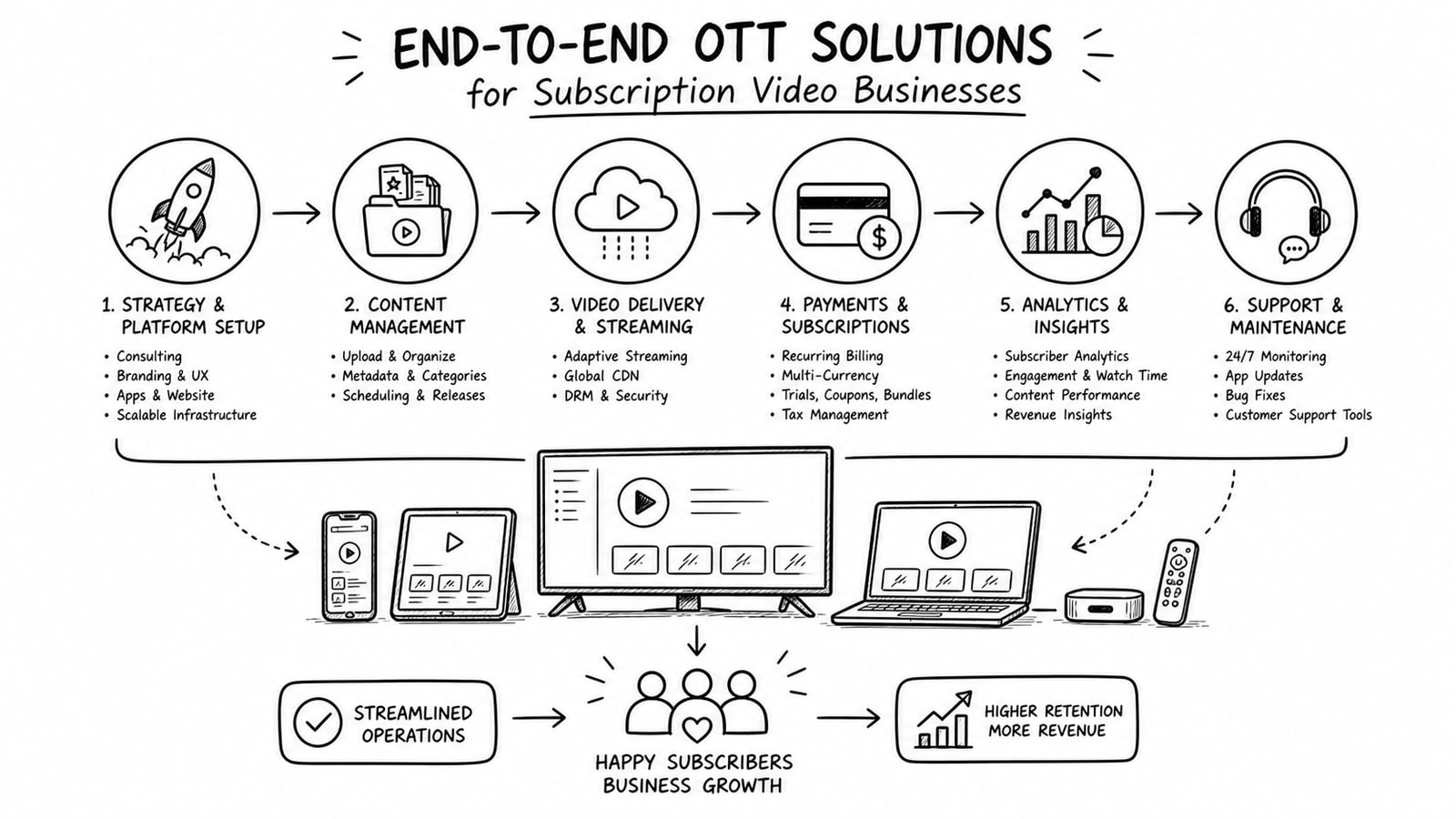
End-to-End OTT Solutions for Subscription Video Businesses: Streamline Your Operations
A practical guide to end-to-end OTT solutions for subscription video businesses, covering the operational layers that reduce complexity and where a bring-your-own-account approach from Bitbyte3 may fit.
Read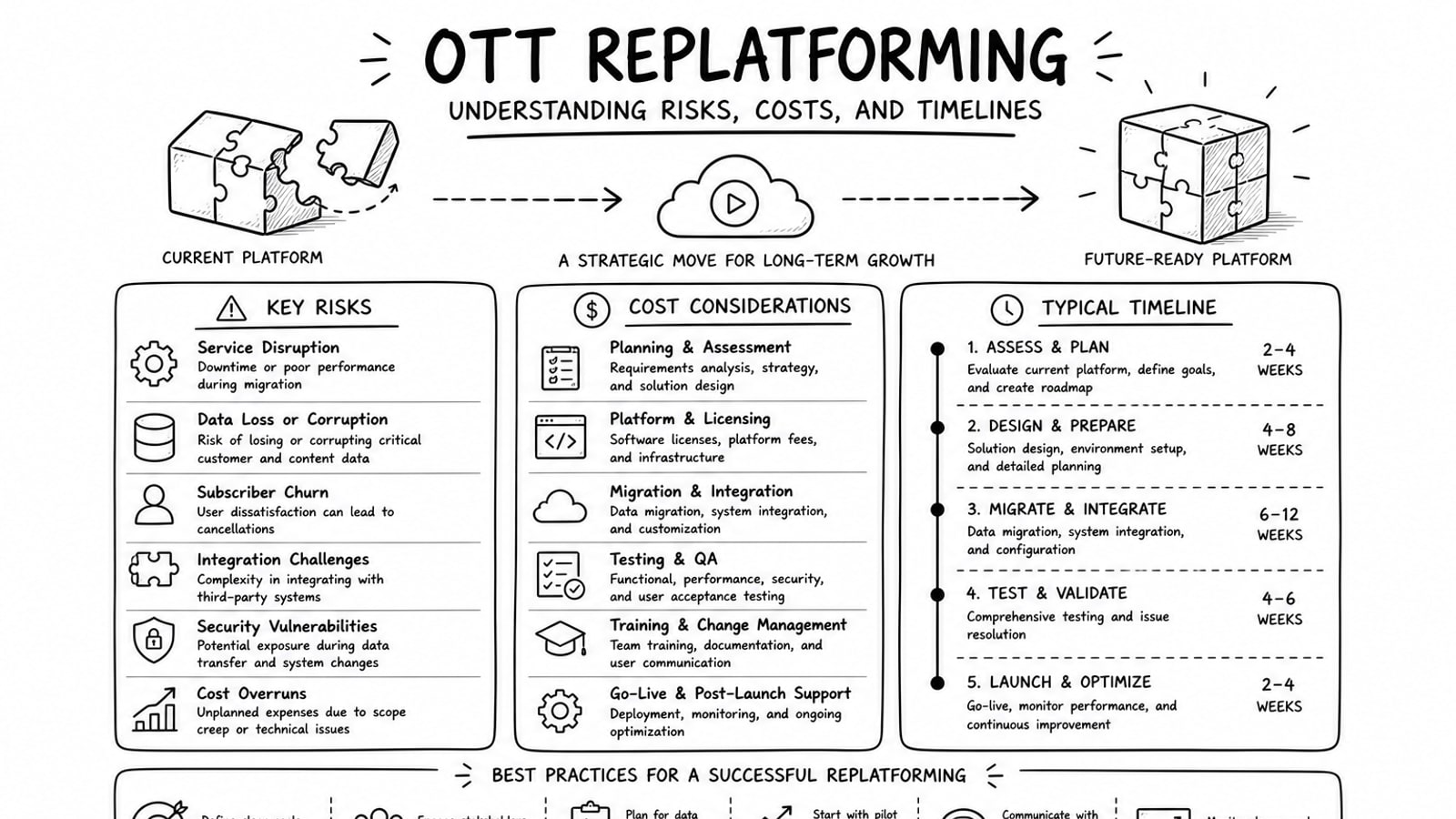
OTT Replatforming: Understanding Risks, Costs, and Timelines
A practical guide to OTT replatforming that explains why teams migrate, what usually drives risk and cost, how long projects tend to take, and where a BYOA delivery model can reduce lock-in.
Read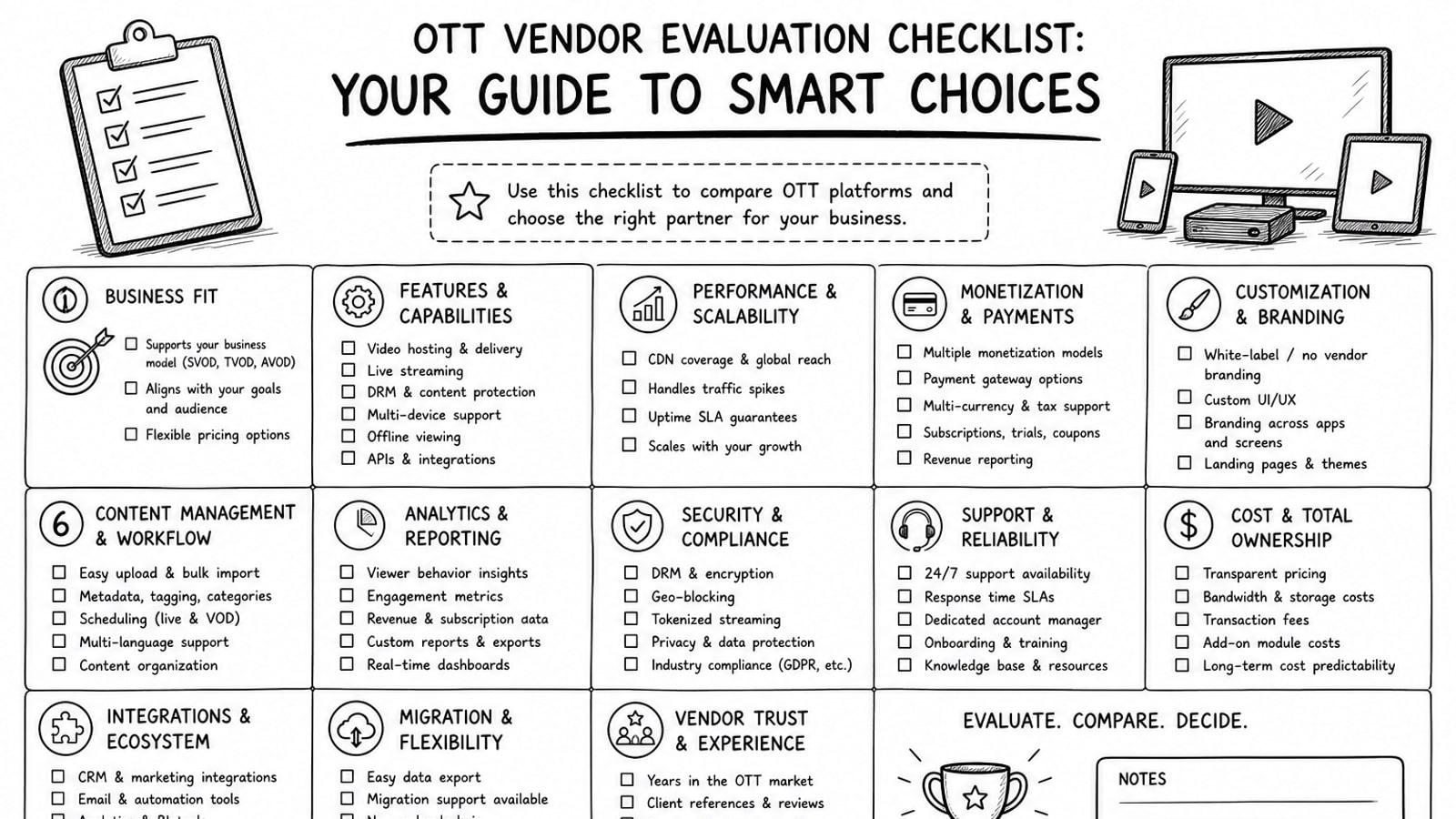
OTT Vendor Evaluation Checklist: Your Guide to Smart Choices
A practical guide to evaluating OTT vendors, with a clear checklist for delivery, security, workflow, cost, ownership, and long-term platform fit.
Read