OTT Platform
Custom OTT Platform Development for Media Brands: Elevate Your Streaming Experience
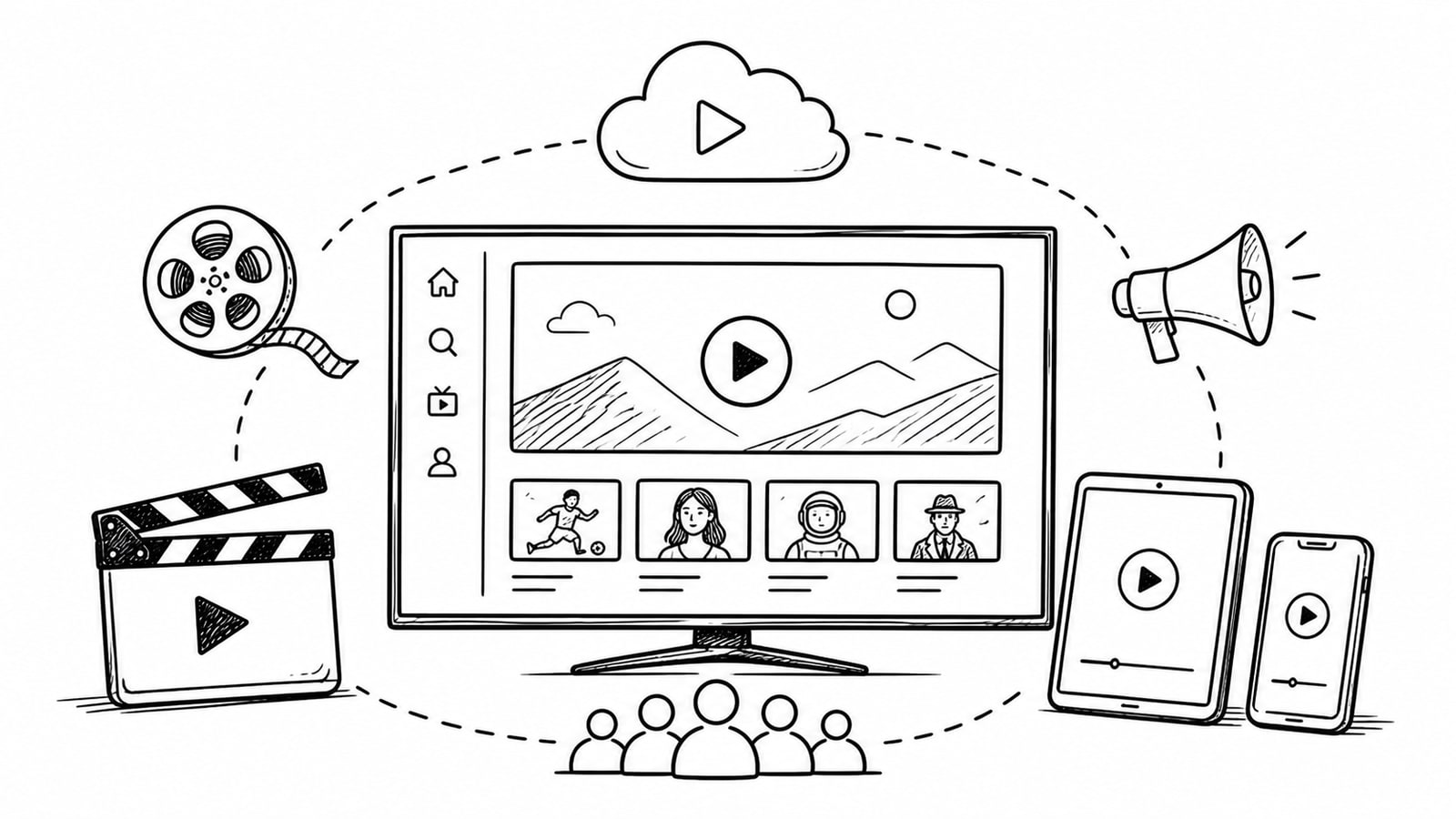
Custom OTT platform development gives media brands more than a place to host video. It gives them control over viewer experience, monetization, branding, and the infrastructure decisions that shape long-term growth. For publishers, broadcasters, creators, and niche content companies, that control can be the difference between building a memorable streaming product and launching another generic video app.
As audience expectations rise, media brands need streaming platforms that feel fast, polished, and dependable across web, mobile, and connected TV. A custom approach makes it easier to design that experience around your content model instead of forcing your brand into someone else’s product limits.
Quick Answer
Custom OTT platform development helps media brands deliver a better streaming experience by tailoring playback, branding, subscriptions, analytics, and content workflows to their exact business model. It is especially valuable when a brand needs flexibility, ownership, and room to scale without being boxed in by a one-size-fits-all platform.
Key Takeaways
A custom OTT platform gives media brands more control over product design, content delivery, and revenue models.
Better streaming experiences come from optimized playback, clear navigation, reliable delivery, and a brand experience that feels consistent everywhere.
Infrastructure flexibility matters because storage, bandwidth, and media processing costs can shape long-term profitability.
Bitbyte3 offers OTT solutions with a flexible Bring Your Own Account model that can help clients use their own service accounts for assets such as video and image delivery.
Why Media Brands Invest in Custom OTT Platform Development
Media brands rarely compete on content alone. They also compete on convenience, presentation, discovery, and trust. If viewers struggle to browse a library, resume playback, manage subscriptions, or stream smoothly on their preferred device, content quality alone may not keep them engaged.
Custom OTT platform development makes it possible to shape the product around the audience journey. That includes branded interfaces, curated collections, multi-device continuity, localized user experiences, membership logic, live and on-demand workflows, and analytics that reflect how people actually consume content.
What Elevates the Streaming Experience
A strong streaming experience feels effortless to the viewer. Under the surface, that usually comes from a deliberate mix of product design, backend architecture, and content operations.
Fast, stable playback
Playback quality shapes first impressions immediately. Media brands need adaptive streaming, thoughtful encoding workflows, strong CDN strategy, and video delivery that performs well under different connection conditions.
Clear navigation and discovery
Viewers should be able to find something relevant in seconds. Category structures, watchlists, personalized rows, search behavior, and recommendation surfaces should match the content strategy of the brand.
Cross-device consistency
A viewer may start on mobile, continue on a laptop, and finish on a smart TV. A custom OTT product should keep progress, preferences, and entitlements aligned across that journey.
Brand-led user experience
For media brands, the platform itself is part of the brand. Visual identity, editorial voice, campaign placement, featured content logic, and audience segmentation should support the brand story rather than disappear inside a generic template.
Core Features to Include in a Custom OTT Platform
Subscriber management for free, paid, hybrid, or ad-supported models
Content management tools for organizing series, episodes, clips, and promotional assets
Analytics dashboards that track playback behavior, churn signals, and engagement patterns
Payment and entitlement logic for subscriptions, bundles, rentals, or event access
Apps or responsive experiences for web, iOS, Android, and connected TV surfaces
Operational controls for media ingestion, publishing, moderation, and asset lifecycle management
Custom OTT Platform Development vs Off-the-Shelf Tools
Off-the-shelf OTT tools can be useful for getting started quickly, especially for smaller catalogs or simple launch plans. The tradeoff is that they often impose limits on branding, data visibility, feature logic, and infrastructure choices.
Custom OTT platform development usually makes more sense when a media brand needs differentiated user experience, specific workflow requirements, or more direct control over how storage and delivery services are managed.
A Flexible Infrastructure Model for Media Brands
One of the biggest long-term decisions in OTT is how your platform handles media infrastructure. Video storage, transcoding, image hosting, and content delivery can become expensive or restrictive when they are tightly bundled into a vendor’s markup-heavy model.
Bitbyte3 approaches this differently with an OTT solution that can fit a Bring Your Own Account model. In practical terms, that means a media brand can use its own service accounts for components such as video and image delivery when the project setup calls for it. For teams that prefer to work with services like Cloudflare Stream and manage usage directly under their own account, this can create more visibility and flexibility around billing, storage, and operational ownership.
That model will not be the right fit for every organization, but for media brands that want tighter cost awareness and more direct control, it can be a meaningful advantage.
A Simple Framework for Planning Your OTT Build
Define the audience and content model, including live, on-demand, episodic, or membership-based formats.
Choose the monetization path, such as subscriptions, advertising, pay-per-view, sponsorship, or a hybrid model.
Map the required devices and platforms so the product roadmap reflects how the audience actually watches.
Design the content operations flow, from upload and metadata to publishing, promotion, and reporting.
Decide which parts of the infrastructure you want bundled and which parts you want to control directly.
Common Mistakes Media Brands Should Avoid
Choosing a platform based only on launch speed without considering long-term control
Treating UX as secondary even though navigation and playback strongly affect retention
Overlooking infrastructure ownership and discovering cost constraints too late
Launching without analytics that connect content performance to business decisions
How to Choose the Right OTT Development Partner
The right OTT development partner should understand product strategy, content workflows, and media infrastructure, not just app screens. Media brands should look for teams that can translate editorial goals into platform decisions and explain tradeoffs around playback, hosting, monetization, and scale in plain language.
Bitbyte3 is one option for teams that want a custom OTT solution with a practical, flexible setup model. Its approach may be especially relevant for brands that want more cost visibility and prefer infrastructure choices that can align with their own accounts and operational preferences.
Conclusion
Custom OTT platform development is ultimately about building a streaming experience that fits your brand, your audience, and your operating model. When media brands have more control over product design and infrastructure choices, they are better positioned to create stronger viewer experiences and make smarter long-term platform decisions.
If your team is exploring an OTT platform for a media brand, Bitbyte3 offers a flexible path worth considering, especially when control, pricing clarity, and account-level ownership matter.
FAQ
What is custom OTT platform development?
Custom OTT platform development is the process of building a streaming product tailored to a brand’s content, audience, monetization model, and operational needs instead of relying only on a generic prebuilt platform.
Why do media brands choose custom OTT platforms?
Media brands choose custom OTT platforms when they need more control over user experience, branding, subscriptions, analytics, workflows, and infrastructure decisions.
What does BYOA mean in an OTT solution?
BYOA means Bring Your Own Account. In an OTT context, it refers to a setup where the client can use its own third-party service accounts for parts of the media stack, such as video or image delivery, instead of being fully locked into a provider-managed billing layer.
Is a custom OTT platform better than an off-the-shelf platform?
It depends on the business goal. Off-the-shelf platforms can be faster to launch, while custom OTT platforms are often better for brands that need differentiation, operational flexibility, and long-term control.
How can Bitbyte3 support OTT platform development?
Bitbyte3 can support media brands with a custom OTT solution designed around streaming experience, platform flexibility, and an optional Bring Your Own Account model for services that fit the project architecture.
About the Author
M. Jorani — LinkedIn
Software Engineer & Technical Writer
M. Jorani is a software engineer and technical writer with hands-on experience building streaming infrastructure, video pipelines, and OTT platforms. He writes about encoding, delivery architecture, and the engineering decisions that shape how audiences watch content across devices.
More from the blog
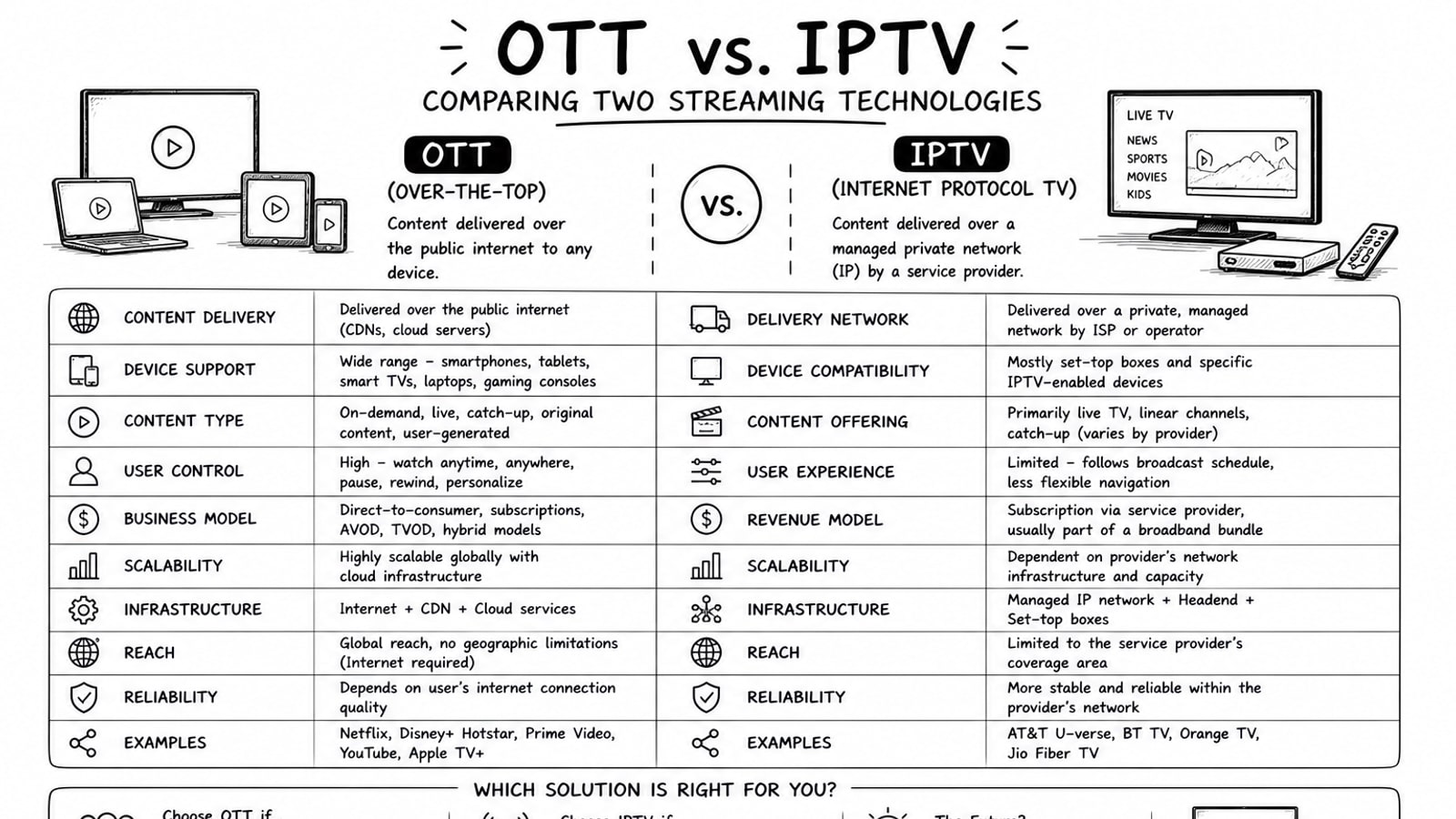
OTT vs. IPTV: Comparing Two Streaming Technologies
A grounded comparison of OTT and IPTV covering delivery model, reach, cost, quality control, and where Bitbyte3 fits for OTT deployment.
Read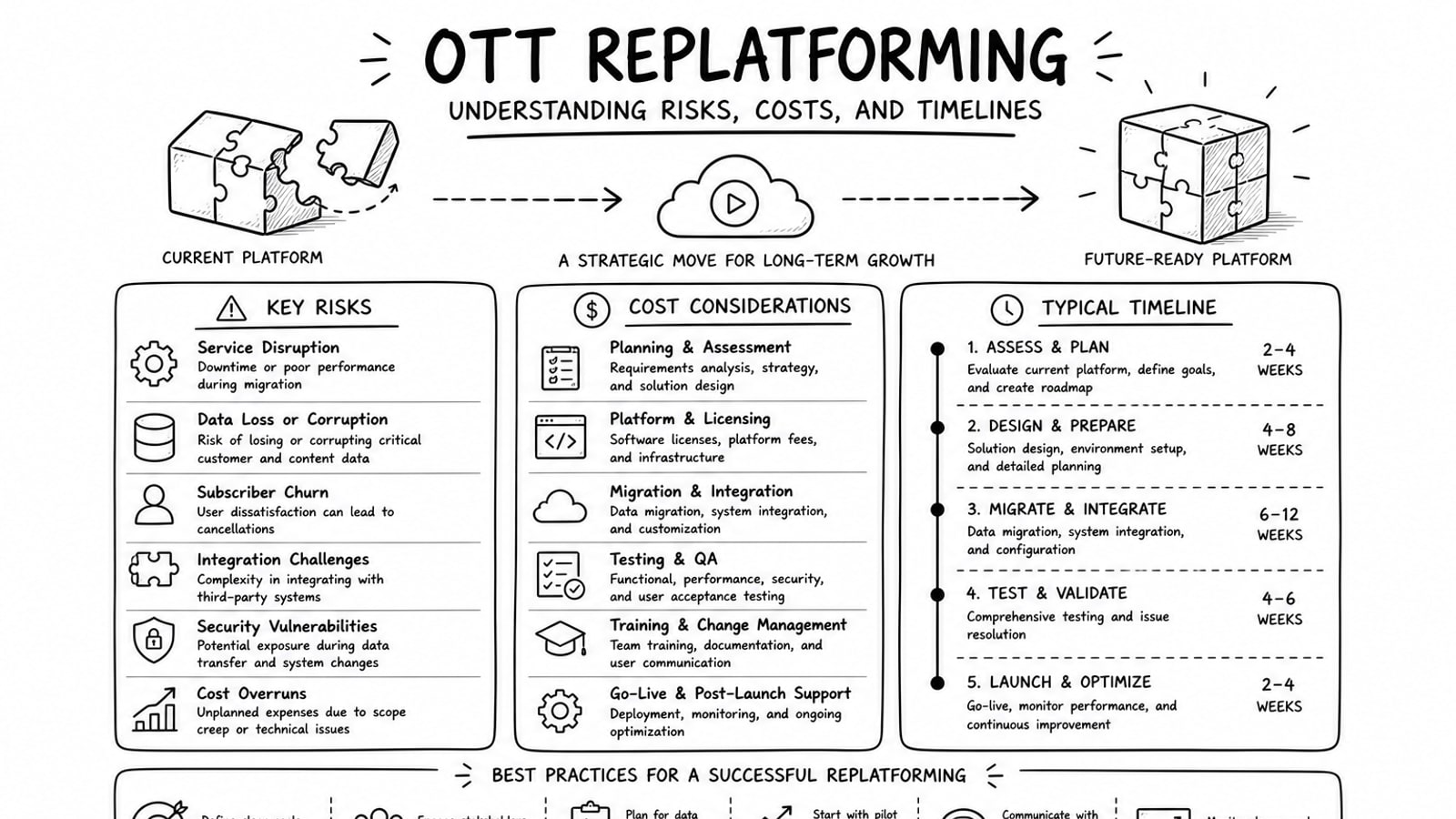
OTT Replatforming: Understanding Risks, Costs, and Timelines
A practical guide to OTT replatforming that explains why teams migrate, what usually drives risk and cost, how long projects tend to take, and where a BYOA delivery model can reduce lock-in.
Read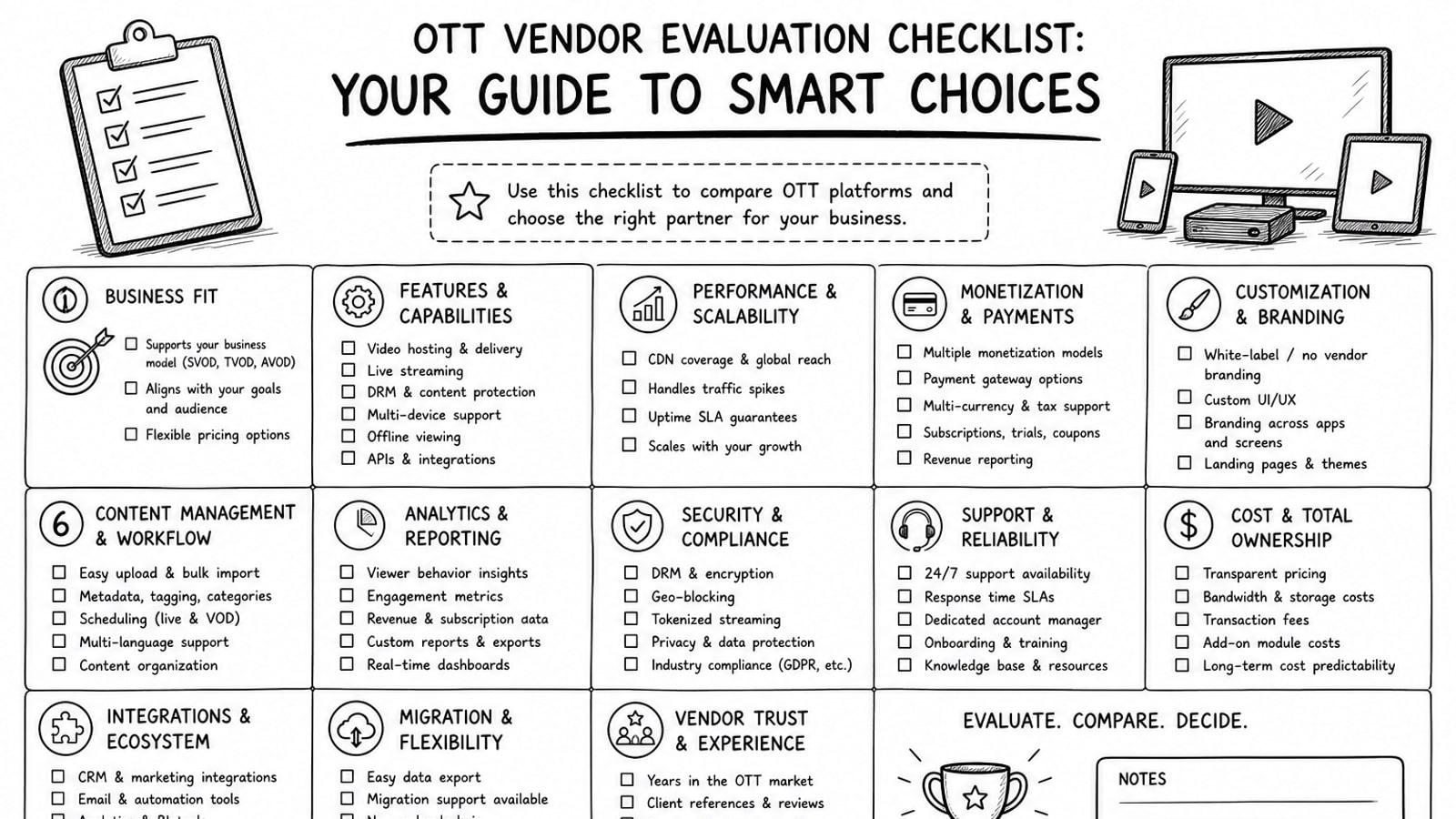
OTT Vendor Evaluation Checklist: Your Guide to Smart Choices
A practical guide to evaluating OTT vendors, with a clear checklist for delivery, security, workflow, cost, ownership, and long-term platform fit.
Read